
At WiseGEEK, we're committed to delivering accurate, trustworthy information. Our expert-authored content is rigorously fact-checked and sourced from credible authorities. Discover how we uphold the highest standards in providing you with reliable knowledge.
What are the Various Levels of Cousins?
 Tricia Christensen
Tricia Christensen
Tricia Christensen
Levels of cousins, also called degrees of cousinship, are fairly tricky to figure out. Especially for people who come from a large family, deciding how to determine first, second, and third cousins, and also what once or twice removed means, can be difficult. Cousins are not based on the relationship of a person's parents to his or her siblings, and they’re not based on marriages, except on an informal basis. Instead, cousinship is based on two people’s common ancestor.
For instance, if a person's mother's sister has kids, he might conclude that these children are his first cousins. This would be correct, but the relationship is not based on the fact that these are the children of the mother's sister. Instead, the children of his aunt are his first cousins because they share a grandparent in common. This is the common ancestor, to whom both individuals claim the same relationship. Note that this doesn't apply for children of the same parents who share the same grandparent. Instead, these children's closest common ancestors are their parents, so they are siblings, not cousins.

When children share the same great grandparent, but not the same grandparent, they are considered second cousins. So, if a man has children, and his first cousin, (his aunt's child) has children, then these children will have a great grandparent in common. It gets a little more complicated when considering a cousin's children.
When the common ancestor does not have the same relationship to two people, then the issue of removals comes into. In the case of a person's cousin's children and the person, the common ancestor is their grandparent, but to these children, that person is their great-grandparent. Therefore, his first cousin's children are his first cousins once removed. Removals occur only when the relationship to the ancestor is separated by generation.
Here are some examples of levels of cousins with removals:
- Jane has a grandparent who is the great-grandparent of Joey.
Jane and Joey are first cousins once removed. - Jane has a grandparent who is the great-great-grandparent of Jim.
They are first cousins twice removed. - Jane has a grandparent who is the great-great-great-grandparent of John.
They are first cousins three times removed.
Cousinship without removals always mean the common ancestor has the same relationship to each cousin:
- First cousins: two people share a grandparent
- Second cousins: two people share a great-grandparent
- Third cousins: two people share a great-great-grand parent.

It gets considerably more complicated when determining second or third levels of cousins and degree of removal. When someone has a great-grandparent who is someone else's great-great-great-grandparent, they are second cousins once removed. If they have a common ancestor who is one person's great-great-great-grandparent and the other's great-great-great-great-grandparent, they are third cousins once removed. Removal essentially counts generational differences or how many generations two people are apart from the common ancestor.

There is one special cousin relationship called double cousins, which makes people doubly related to each other. This occurs when two sisters marry two brothers. The children of these marriages will share not only a common grandparent, but they will share two sets of grandparents. Therefore, they are double cousins and likely to be closely related, from a genetic standpoint, to each other.

Cousinship here is determined from European and American standards. Levels may be different in other cultures, and the term "cousin" may not even exist in certain world cultures. It can get a little murky figuring out these relationships, and some people essentially avoid the issue and just call any relatives they know of as cousins or second cousins. From a genealogical standpoint, this isn’t quite correct, but still implies a family relationship.
Tricia Christensen
Tricia has a Literature degree from Sonoma State University and has been a frequent WiseGEEK contributor for many years. She is especially passionate about reading and writing, although her other interests include medicine, art, film, history, politics, ethics, and religion. Tricia lives in Northern California and is currently working on her first novel.
Learn more...
Tricia Christensen
Tricia has a Literature degree from Sonoma State University and has been a frequent WiseGEEK contributor for many years. She is especially passionate about reading and writing, although her other interests include medicine, art, film, history, politics, ethics, and religion. Tricia lives in Northern California and is currently working on her first novel.
Learn more...AS FEATURED ON:
AS FEATURED ON:









-
![In general, a child's closest common ancestors are her parents and siblings, not cousins.]() By: Alena OzerovaIn general, a child's closest common ancestors are her parents and siblings, not cousins.
By: Alena OzerovaIn general, a child's closest common ancestors are her parents and siblings, not cousins. -
![Conflict may arise between cousins who rarely interact.]() By: Vesna CvorovicConflict may arise between cousins who rarely interact.
By: Vesna CvorovicConflict may arise between cousins who rarely interact. -
![Cousins who are close in age may share a lot of interests.]() By: majesticcaCousins who are close in age may share a lot of interests.
By: majesticcaCousins who are close in age may share a lot of interests. -
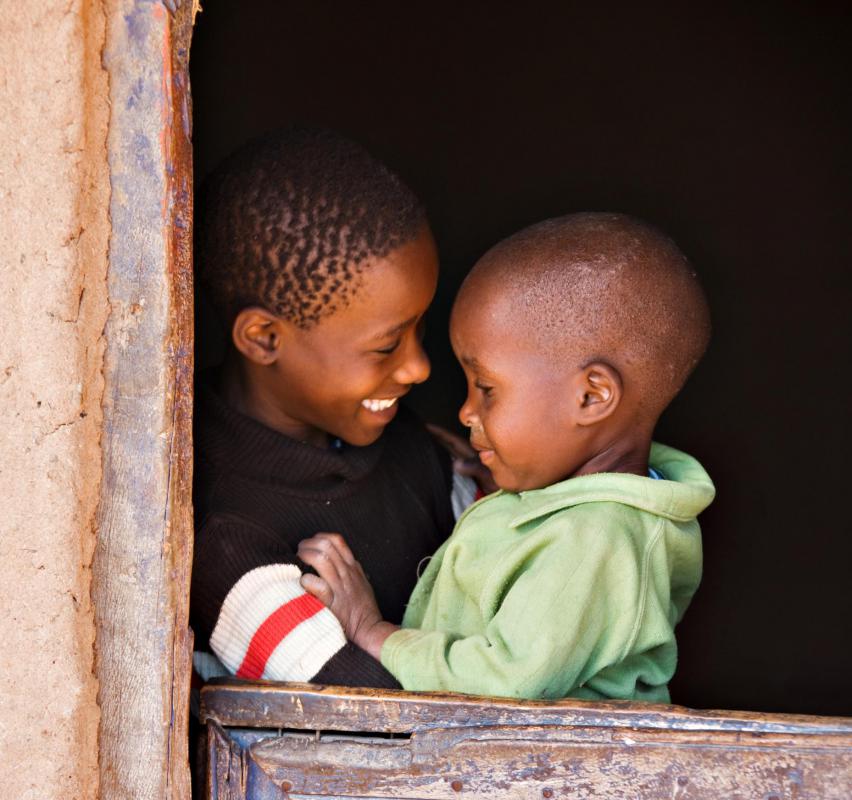
![In traditional societies, children often help look after their younger cousins.]() By: poco_bwIn traditional societies, children often help look after their younger cousins.
By: poco_bwIn traditional societies, children often help look after their younger cousins. -
![Cousins who spend a lot of time together may develop a sibling-like relationship, including rivalries.]() By: IlikeCousins who spend a lot of time together may develop a sibling-like relationship, including rivalries.
By: IlikeCousins who spend a lot of time together may develop a sibling-like relationship, including rivalries.



Discussion Comments
So my great great grandmother (my mom’s mom’s mom’s mom) is the sister of his Great Great Grandfather (his parents, parents, parent, parent). So we are 4th cousins??
Ok what if my great great great grandfather had a brother and he was this guys great great great grandfather. How are we related?
What is the relationship for my 5th great-grandfathers brother's daughter to me?
@stolf, Thank you for taking so much time on deciphering my family lines. My grandmother mentioned was the last one alive when I was born, but died one month later.
For all those worried about birth defects, I can assure them my family was perfectly normal. Each generation served bravely in service of our nation, ending with World War II. My three uncles never had kids, but my three aunts did and mom had five. We are all normal and the deaths of all four of my siblings were the result of car accidents.
I am the last and my mom, at 86, is the last. All my aunts and uncles died from different, normal or habitual deaths (smoking). Seeing this multi-generational habit of marrying cousins, had no effect on their health. In fact, the longevity of all my direct ancestors lives and living in an era and region where typhoid, yellow fever took so many lives. None of my family fell victim to these epidemics. Who knows? Maybe because the bloodlines were so strong – just my opinion. Thank you again. I'll update you when I get DNA and maybe this help to further understand how this all works?
@teryble1: And you are 5th cousins, since you have grandparents who are 3rd cousins. See how it works?
@teryble1: Regarding DNA, I don't know much about it so couldn't tell you for sure. I know testing could tell you two people are related by ¼, but are they grandfather/grandson, aunt/niece, or half-siblings? Dunno.
As to why people married relatives like 1st cousins, 2nd cousins, etc.: Yes, to some degree it was bloodlines. In "Gone With the Wind," Margaret Mitchell talks about that the idea that "like belongs with like." But more often, it was simply a matter of who was available in the marriage pool. Before the automobile, people couldn't conveniently travel very far, for courting or for anything. This is why you will also see in most families (I have an example in mine) of say, two brothers from one family marrying two sisters from another family – and sometimes more than 2!
But since I got your family right, let me explain my last sentence, how your great grandparents being both 1st cousins and 2nd cousins affects you. Say your grandmother, their child, had a brother, your grand uncle. And that grand uncle had a grandson named Joe. You and Joe are 2nd cousins, since you have grandparents who are siblings. But you and Joe are also 4th cousins, since you have grandparents who are 2nd cousins and you are 5th cousins, since you have grandparents who are 3rd cousins. See how it works?
@stolf: Yes! I think you nailed it! Here is another factor: No. 1 grandmothers had another sister who married the father of No. 1M Davis, who married No. 1F, and seems to be the child of that union (she married the son of her sister!) Seems upon reading some history of N. Florida/GA, just a few families populated most of the "Wiregrass Country.”
And in regards to Revolution land grants, three of these families all held land next to each other and all three migrated during the same time period from NC. What makes it even more difficult to sort (besides why in the world would they repeat the marriage practices?) is the naming patterns. Even more difficult is No. 1 and No. 2 families had like 10-15 kids, and each of those kids use the same names e.g., 10 kids naming their kids after parents, uncles, aunts etc. Now you have 10 (example) Elizabeths and James per generation as well as being born so closely together. It's crazy and so many people "make" the different Elizabeths and James "fit" into their family, whether they are truly "theirs" or not. Also before 1850, the kids' names are not listed, just ages. Any suggestions as how to decipher who belongs to whom?
I can follow my families from 1850 forward to my grandmother and know their birthparents from the historical society and cemetery records they provided. So many records burned and children being born at home makes it very difficult. I think that may be why they seemed to have moved a lot. They really didn't, but were living with parents or siblings during a census because of necessity of family helping with birthing and childcare of those born already and dangers of Indian attacks, wars of 1812 and 1860s. Then the next census shows them back where they were.
These questions may remain unanswered, and so be it. I would like to understand why they intentionally, it would seem, kept this marriage practice over generations? Did they think they would keep their bloodlines true? And how would it show (if does) in my DNA? If you have rhyme or reason to the last two questions, I would greatly appreciate your take on them. Great job and thank you very much, but I'm still confused.
@teryble1: Here's my analysis and please tell me if I'm getting it right: Numbers indicate generations, starting with the two sisters as generation 1, and M and F mean Male and Female.
I will call those 2 sisters 1-Davis and 1-Smith. They are your 3G grandmothers.
Their children are 2M-Davis and 2-Smith. Your 2G grandparents, and they married.
Their child is 3-Davis, your great grandmother.
But 1-Davis also had a daughter, 2F-Davis, the sister of 2M-Davis, and she married an unrelated man named 2-Jones.
The child of 2-Jones and 2F-Davis is 3-Jones and he married 3-Davis.
Their child, your grandmother, did not marry a relative, so as you say, she "broke the chain."
The question is, how are your 1G grandparents, 3-Jones and 3-Davis related to each other? The answer is, in 2 ways.
They are 1st cousins, since his mother (2F-Davis) and her father (2M-Davis) are siblings.
They are also 2nd cousins, since his mother (2F-Davis) and her mother (2-Smith) are 1st cousins.
Those are the only relations since his father (2-Jones) isn't related to either of her parents.
Now this means that the children of 3-Jones and 3-Davis are siblings to each other, but also 2nd cousins and 3rd cousins to each other, and this will affect how you are related to the people descended from those siblings. How'd I do?
Seems my 3rd great-grandmothers married "non related men," but the children of these woman married first cousins, and their children married first cousins.
Let's see if I can break it down: my grandmother was the first to break this chain going back to the 1800s when two sisters (3rd great) married. One married a "Davis" and one a "Smith." The Davises had a son and the Smiths a daughter (3rd great grandmothers, who are sisters, their kids). They married and are my 2nd Greats, and their daughter, my 1st Great, married a first cousin, all descending from the two women, and all related except for the father of the Smith's daughter. His wife was the sister of my 2nd Great Grandfather though.
So again, first cousins? It seems my tree only branches of once with a Jones thrown in, but the 2nd great-grandma and grandpa were brother and sister (they did not marry), but their kids did, birthing my Great-Grandparents. Confusing!
My grandmother broke this chain. What does this mean and would it show up in DNA? They all lived pretty long lives for that era. My 2nd Great was born in 1847 and died in 1937, and when I go back farther, I am not certain past 3rd as far as cousins' marriages,
They all lived -- even the men -- to anywhere between 80 -100 years of age and that would be the 1700's. Can you figure this out and why would this seem to be a pattern since really the Revolution?
Thanks whether you can or not.
@anon991780: I am 100 percent certain we can untangle your interesting family tree, but I need more information.
First, how is your uncle related to you? Is he your father's brother, your mother's brother, the husband of your father's sister, or the husband of your mother's sister?
Second, how is your grandfather related to you? Is he your father's father or your mother's father?
My cousin's dad is my grandfather's cousin. But my girlfriend is related to that cousin from his dad side. Her mom is cousins of my uncle but not related to my grandpa. Are we related? We're freaking out. KCLM
My mom is engaged to a guy and I'm attracted to one of his cousins. My mom and the guy she is engaged to now don't plan on getting married but if they did plan on getting married would that make me and his cousin not able to see each other in the future and yes I'm the daughter of the mom.
@stolf: Thank you so much for the clarity and taking the time to reply to me. ( anon990497).
@anon990497: For you to be your girlfriend's uncle, you would have to be the brother of one of her parents. But her grandfather is your uncle, which means his children are your first cousins. And one of those children is her parent, so you are the first cousin of either her father or her mother.
Looked at the other way, she is the daughter of your first cousin. In English, this is called "first cousin once removed." It is called different things in other languages. For example, in Spanish you are her "second uncle" or tio segundo.
But again, you are not uncle and niece. That would be a relationship of 1/4, and as first cousins once removed yours is four times more distant, or 1/16. In terms of percentages, you are about 6 percent related, and 94 percent not related. You can legally marry in any state in the US. About half the states prohibit first cousins or closer, but you are more distant than that, first cousins being 1/8 and you are 1/16.
I have fallen in love with this girl from Asia. We are two years apart. At the time, she was just my language teacher in her country I had stayed in. Time passed and I asked her to marry me. She said "Yes" and we had an engagement ceremony. The morning after, I had found out that she was related to me. Her grandfather is my uncle; my father's brother.
Apparently, I was the only person that didn't know we're related. We had a quarrel not too long ago and she blurted out that she was my niece.
I wanted to know if I am her uncle, as in the culture of her country, she would consider call me an uncle or be considered something else. Can someone confirm or deny with/against me if I am, in fact, her uncle and is it illegal in the U.S. to marry in this particular situation? Thank you and sorry if this post was too long to read for anyone.
@taymae830: I will assume that you and your best friend are females. She will be your aunt's sister-in-law. You will be her sister-in-law's niece. While that's certainly a connection, I wouldn't call it a relation. But you're perfectly free to!
One of my best friend's brothers is getting married to my aunt. How would I be related to my best friend?
@Harriet18: You almost had it, Harriet! Your "old husband" is a third cousin to your "new children," so they are third cousins once removed to your "old children," who are of course one generation removed from your "old husband." To figure cousins, always look back for siblings and start with them. I'll call your husband's common ancestor Anna.
Since Anna is the new husband's mother's aunt, the new husband's grandparent (mother's parent) and Anna are siblings. Thus, the old husband's grandfather (old husband's great grandmother Anna's son) and new husband's mother are first cousins. The old husband's father and new husband are second cousins. And their children, old husband and new children, are third cousins. In addition, old children are second cousins twice removed to new husband, and old husband is second cousin once removed to new husband. Whew!
Half-siblings share one parent, and have one parent they don't share. Usually, these two unshared parents are not related to each other, but sometimes they are, as in your case. Genealogists call them "enhanced half-siblings." Their degree of relationship is 25.4 percent, compared to 25 percent for normal half-siblings -- not a big difference, but a difference nonetheless.
I just learned that my ex husband's great-grandmother on his father's side is my new husband's great aunt on his maternal side. So new hubby has a marriage relation to ex hubby. But my kids. What would the relation to my kids be from first hubby to my kids with second hubby? They are half siblings first, I know, but are they also third cousins and third cousins once removed? Another way to say it is: The woman gave birth to my first hubby's grandfather and the woman is second hubby's great aunt genetically on maternal side. So again, my children each other are related to each other, how?
@anon940387: Please don't be confused. Charlie is not your blood relative. He is related to you second cousin Mary on the other side of her family, not on the side you're related to her on.
It's true that when Mary's parents married, they created a connection between their two families -- a connection that is real for as far as those families extend. Even so, most people wouldn't even call Charlie your "in-law," reserving that term for the immediate family of your spouse, the family of your child's' spouse, or for your siblings' spouses, but not their families.
In any case, there is no blood relationship between Mary's parents' families, unless Mary's parents are related to each other, and I'm assuming they're not, right?
Let's suppose there is a girl and her name is Mary. I am her second cousin (through Mary's paternal side). Let's suppose Charlie is Mary's first cousin through the maternal side. What does Charlie become to me? Is he a brother by marriage or can we have a relationship and go ahead and marry? Please help me out. I am confused!
@anon935120: You see a lot of ads on the internet promising to solve some problem with "a weird trick." In genealogy, there are many of these, that even people who understand the basics aren't aware of. Here, the question is: What relation to you is your Ath cousin's Bth cousin? The answer is: whichever number is larger, A or B. So your 5th cousin's 8th cousin is your 8th cousin, since 8 is greater than 5. It also works the other way around: your 8th cousin's 5th cousin is your 8th cousin, since 8 is still greater than 5. But adding 5 + 8 = 13 represents nothing!
If A and B are equal, the answer could be anything from first cousin up to and including Ath cousin, along with sibling, and even you! Think about your first cousin's first cousin. That could be you, couldn't it? Or one of your siblings, or another of your first cousins. And it works the same all up and down your family tree.
Now this answer is correct, assuming Cristin is related to you. If Cristin is related to Lewallen on the "other side" of Lewallen's family, then Cristin is not related to you at all. Lewallen has two sets of "cousins," one through her father's family, one through her mother's family. If you are part of one family, and Cristin is part of the other, you are not blood relatives. "By marriage" would generally refer to a relative you get because either you or Lewallen is married. Since these categories don't apply to Cristin, I would simply say Cristin is an 8th cousin on the other side of your 5th cousin's family.
@anon935142: Always start with the siblings, which in your case, are your great grandfather and Freidrich Ebert's father, who are brothers. The offspring of brothers are first cousins, so your grandparent (child of your great grandfather) and Ebert are first cousins. You are two generations removed from your grandparent, so Ebert is your first cousin twice removed.
My Great Grandfather is a brother to the father of Germany's first president, Friedrich Ebert. Who am I to the president?
I am a 22 year old male, and my fifth cousin is a young girl person with the last name "Lewallen" who is an eighth cousin to a girl named Cristen Walker (who happened to be my crush, when I was younger -- preschool through fourth grade crush), so what are Cristen and I? Are we 13th cousins by marriage or what?
@jaylanb: Right away, you know that whatever kind of cousins you are, you will be once removed. That's because your grandmother and her grandmother are one generation apart: her grandmother's mother or father is a sibling to your grandmother, which makes your grandmother the aunt of her grandmother.
So your grandmother and her great grandparent are siblings. Their children are first cousins. Their grandchildren, which are you and her parent, are second cousins. Thus you and her are second cousins once removed. A way to say it that more people will understand is that she is the daughter of your second cousin. Really.
I'm dating this girl and found out she and I are related somehow because my grandmother is her grandmother's aunt. So does this really make us some type of cousins or kin in any type of way?
@anon926146: For sure. You and she are third cousins. Completely legal in every state in the union and every country in the world. And you have mathematics on your side. Your degree of relationship is 1/128, which means you are 99.2 percent unrelated. Woo-hoo!
I'm a teenager and I'm in a relationship with my grandmother's cousin's grandchild. I've never known her until this previous Christmas when I met her at a party. My family doesn't make a big deal out of it, however they aren't sure for themselves if this is wrong or not. Not like I care too much but could anyone please tell me for sure?
@anon360270: Forgive me, but some people reading your first sentence might think it means your Dad's brother married your Dad's sister. I am assuming that's not what you mean. The "aunt" in question is on your mother's side, completely unrelated to your Dad and his brother.
While unusual today, this was more common up until just a few generations ago: siblings from one family marrying siblings from another -- in this case your father and his brother marrying your mother and her sister. You and your cousins are thus "double first cousins."
That means first cousins through both your fathers' side and your mothers' side. While most first cousins share one pair of grandparents, and each has another pair they don't share, you and your double first cousins share both pairs of grandparents. In other words, you are first cousins in two different ways, and you are as closely related as half-siblings 1/4, versus 1/8 for "single" first cousins.
My Dad's brother married my aunt, and they have three kids, obviously, my direct cousins, My question is exactly what does that make their grandparents to me since we obviously share my grandma as theirs? Would it be nothing beyond in-laws, or what? This is rather confusing and I've spent years trying to figure it out.
@anon354252: To figure out relationships like this, take it one step at a time. I suggest after each step, stop a moment and think about where you are. And remember, practice makes perfect!
Step 1: What is your grandfather's niece? It is your parent's first cousin, the child of your grandfather's sibling.
Step 2: Your parent and your parent's first cousin each have a child. Your parent's child is you. Your parent's first cousin's child is this guy's parent, since your parent's first cousin is this guy's grandmother.
Step 3: You and this guy's parent are second cousins, since you two are the children of first cousins.
Step 4: This guy is the child of your second cousin, thus you are second cousins once removed.
Genetically, second cousins once removed are 1/64 related, that is, related by 1.56 percent, and unrelated by 98.44 percent. And that's pretty distant, I think you'll agree.
I have a question regarding a guy and myself. All this is so confusing. His grandmother is the niece of my grandfather. What cousin does that make him to me?
@anon347207: There is a mistake in your description of your family. You are correct in saying that your mother Miriam and Christy are first cousins, since their mothers Milena and Eless are sisters. But you are wrong in saying that Miriam and Christy are also first cousins to Alan. Instead, they are second cousins to Alan, since Alan's father Phil is first cousin to Milena and Eless.
You are a second cousin of Joe, since your mother Miriam and Joe's mother Christy are first cousins. But you are also a third cousin to Joe, since your mother Miriam and Joe's father Alan are second cousins. Thus you are related to Joe two ways: third cousin (1/128) and second cousin (1/32 = 4/128) for a total degree of relationship of 5/128.
It's easier to see how distant this is if we convert the fractions to percentages. You and Joe are 3.9 percent related and 96.1 percent unrelated. Nowhere in the US are relatives beyond first cousin forbidden by law to marry, which is 12.5 percent related and 87.5 percent unrelated, so you're in the clear legally. And yes, Jeff has nothing whatsoever to do with any of this!
My Grandma, Milena had a cousin named Phil who had a child named Alan. Milena's sister, Eless had a child named Christy while Milena (my grandmother) had Miriam (my mum). Christy and Alan are my mums first cousins, while being first cousins with each other and are married to each other and have a child named Joe. Now my mum married outside of the family so in comes Jeff who shares 0 to no blood with us does that change things? Or am I still pretty much strongly related to Joe? I really like him and just want to know how much blood/DNA we share?
@anon346384: Since you mention that your grandmother had half-siblings from Bill's first wife, and you also wonder if your husband might be your "half cousin," I will assume that Bill's first wife is your husband's great-great grandmother. In that case, you and your husband are half second cousins once removed. This also means you are a half second cousin to one of your husband's parents.
About half the states allow marriage between first cousins, and all allow marriage between second cousins. You are more distant than that, so you are completely legal. Still, I understand that "half second cousins once removed" might sound close enough to be wrong in your mind. After all, "second cousins" sounds close compared to eighth cousins or tenth cousins, right?
So how close are you? By way of comparison, first cousins are related by 1/8. In terms of percentages, that's 12.5 percent. It's a quarter of that for second cousins, so about 3.1 percent. For half second cousins once removed it's a another quarter, or .78 percent. This means that you and your husband's genes are .78 percent the same and 99.22 percent different. Yes, you and your husband are related to a small degree, but you are over 99 percent unrelated. Not very close at all, is it?
Help! I have recently found out that my grandmother's father Bill (my great grandfather) is also my husband's great-great-grandfather. Bill was married before and had two sons and a daughter from his first marriage. He later remarried my great grandmother then they had a daughter, my grandmother.
I understand that my grandmother is half sister to the two sons and daughter of Bill, but what does that make my husband and me? Are we half cousins? I am worried as it feels wrong. We are married with a 5 year old daughter. Please help me understand.
@lovelyme1: You can figure it out by taking it one step at a time. Your grandma's nephew is the son of your grandma's sibling, who is also your parent's uncle or aunt, right? And the son of your parent's uncle or aunt is your parent's first cousin. But that first cousin is also your husband's father. So your parent and your husband's parent (father) are first cousins, making you and your husband second cousins. Completely legal in all 50 states -- lovely!
My husband's father was my grandma's nephew. What does that make us? I can't figure it out.
@anon345586: No removeds. Your son and his friend are third cousins free and clear. Simply count down the "Cousin Line": your Dad and the friend's grandmother are first cousins, as you said. You and the friend's father are second cousins. Thus, your son and his friend are third cousins. On the other hand, you and the friend are second cousins once removed.
My son has a friend whose father's mother and my Dad are first cousins. How does that make them related? How many times removed?
@cousin X4: This is a fascinating question but also a tricky one, so I'll try to explain it as best I can.
First off, your description of your family contains one mistake: you say Walter and Betty are fourth cousins, but if you count down, you will find they are actually third cousins.
As to whether your mother is your fifth cousin once removed, you can say that if you like. It will also mean that your mother is fifth cousin to herself, since as your mother's fifth cousin once removed, you are the child of her fifth cousin, her fifth cousin in this case being herself. For that matter, you are your own sixth cousin.
Here's the problem with that sort of reasoning: our assignment of kinship terms is based on genetic inheritance, that is, genes passed along from ancestors to descendants. In the relationships I just described involving your mother and you, there is no additional genetic sharing, over and above the mother/child relationship. I mean, how could you be more related to yourself if you were your own sixth cousin than if you weren't?
Here's the key: The only way you can be related to your mother, over and above parent/child, is if your parents are related to each other. In such a case, since she is your mother, you automatically have half of the genes she has, because she passed them to you. You would also share additional genes with her, not because she passed them to you, but because you got them from your father, and your father shares them with your mother, since they are related.
Now if your mother really were your fifth cousin once removed, you'd share 1/4096 of your genes with her, over and above the half you share as mother and daughter. But where did those "extra" genes come from? All the genes you got from her are already accounted for in the one half. See how it works?
How about your mother's sister, I'll call her Aunt Martha? Mary and Martha's mother is Ann, and since Ann didn't marry somebody related to her, her children are only related to her, and to each other, by the normal half. Now going back another generation, say Ann's sister is Alice. Ann and Alice are both siblings and double fourth cousins, since their parents are third cousins to each other. Thus your mother and you, as descendants of Ann, have an "extra" relationship with the descendants of Alice, owing to the fact that Ann and Alice have an "extra" relationship.
The bottom line is this: when you have interbreeding like this, some of the lines of descent that you can count back to common ancestors do not result in any additional genetic sharing, like the lines that make you appear to be your own sixth cousin. Whether you should assign kinship names to these relationships is your choice. But since they do not result in any additional genetic relationship, they are generally ignored.
Stolf, I hope you can help me figure this out. I've been working on my mom's family tree (her maternal line) up to my 5th great grandparents and need help determining kinship/relationships:
John and Nancy (my 5 great-great grandparents) have two sons:
Robert and William
Robert has daughter Nancy. William has son Bill.
Nancy has daughter Eliza. Bill has son Will.
Eliza has son Walter. Will has daughter Betty.
Walter and Betty marry (they are 4th cousins).
Walter and Betty have Ann (my grandmother)
Ann has Mary (my mother).
So John and Nancy are my 5th GGParents. Their sons Robert and William are each my 4th GGFs and 4th GGUncles because 4th cousins Walter and Betty married.
My biggest question out of many is: Using John and Nancy as the common ancestors, does this mean my mother is also my fifth cousin once removed?
Are my aunts (my mom's sisters) also my fifth cousins once removed?
Obviously the parent/child relationship would take precedence and I wouldn't introduce my mother as my cousin, but she is equally descended from my 4th GGFs who are also my fourth GGUncles. The rest of the family will be asking questions when I show them the family tree so I need to know how this is handled because it is what it is. Thank you!
@joe1973: We'll call her father Zeke. Your father is Zeke's uncle. Zeke is your father's nephew. That means Zeke is the son of your father's sibling, so Zeke is your first cousin. Your girlfriend is the daughter of your first cousin. She's your first cousin once removed, but since many people don't understand what that means, it might be better to just say you are her father's first cousin and she is the daughter of your first cousin. That is more distant than first cousin, and no state prohibits marriage beyond first cousins, so you'd be in the clear if it comes to that.
I need to ask a question. My dad is her dad's uncle. How are we related?
Start with Jim's grandmother and Jane's great grandmother, who are siblings. Their children are Jim's parent and Jane's grandparent, who are first cousins. Their children are Jim and Jane's parent, who are second cousins. Thus, Jim and Jane are second cousins once removed, since Jane is the daughter of Jim's second cousin. Can they get married? I don't know of a jurisdiction anywhere in the United States or the world that would say no. The effect on future children? Jim and Jane are related by just 1/64 and that isn't considered genetically very close.
If Jim's grandmother and Jane's great-grandmother are sisters, how are Jim and Jane related? Could they get married, and would it affect future children?
@anon339028: I will give you all names to make it simpler. As I understand it, your sister Sis and Joe had a son, your nephew Ned. Now let's say Ned has a first cousin, the son of his father Joe's brother Bubba; I'll call this cousin Cal. Is Cal a blood relative of yours? No. Is Cal related to you by marriage? Again, no, there was no marriage. I think most people would not consider Joe your brother-in-law.
And even if Sis and Joe were married, Bubba would be Sis's brother-in-law, but not yours. Any way you look at it, there is simply no relation between you and Cal. Yes, you are Ned's aunt, but you are nothing to the other side of his family, his father's side. Heck, you could date Bubba, or even Joe. Legally, you're completely in the clear. As to what the families would think, that's for you to deal with. Good luck to you!
@anon338492: The rule to remember is: the children of cousins are cousins of the next degree. Thus the children of first cousins are second cousins, the children of second cousins are third cousins, etc. In your case, your grandparents are first cousins. Their children, the parents of you and your girlfriend, are second cousins. And you and your girlfriend are third cousins.
My sister had a son -- my nephew. She never married the father and they have been separated for years. My nephew's cousin wants to date me. As I am my nephew's auntie, is that wrong?
My grandpa and my girlfriend's grandpa are first cousins. Just found that out. How are we related?
@anon332866: No, you're not related. See below.
@anon335329: Well, Michelle is your mother's sister-in-law, so you could be Michelle's niece-in-law and she your aunt-in-law, but most people don't consider in-laws beyond mother/father, son/daughter, brother/sister.
My mother just recently married my neighbor Michelle's brother. What does that make Michelle and me in relation to each other?
I met this guy who is the cousin of my brother-in-law. Does this mean we are related?
@anon331686: You are essentially correct. Your mothers are half-siblings, so you and this guy are half-first cousins, and his son is your half-first cousin once removed. Well, my spell-checker said "sonic removed," but we know better, eh?
So mine and my male relatives (half cousin?) mothers are half sisters and he has a son. What is the son to me?
The common ancestor is one grandma who remarried.
I think the son would be a half cousin once removed but I just wanted to make sure.
@anon331317: They are second cousins. Now may I ask you a question? As you can see from my responses to other questions here, kinship/genealogy is my hobby. I would like to know why you said this guy's grandfather was your daughter's grandfather's brother, instead of saying he was your uncle? Am I missing something?
My daughter met a guy and found out his grandfather is her grandfather's brother. Does this make them cousins? If so, at what level?
@anon330341: The word "married" is the key: unless there is some actual connection further back in your families, somebody married to your blood relative is not a blood relative of yours. So your girlfriend and you aren't cousins. To stretch this into some sort of "in-law" relationship is more than most people these days would bother to do. Suffice is to say, you're "related by marriage."
I might also mention that your father's sister's son is not your uncle but your first cousin, right? If he's close in age to your father, because your father is much younger than his sister, then it would be natural for you to call him your "uncle," but he's still your first cousin.
My uncle, who is my dad's sister's kid, is married to my girlfriend's auntie. Does that make us cousins?
@anon329916: If you have parents who are siblings, you are first cousins. If you have grandparents who are siblings, you are second cousins, since your parents are first cousins. Marriage between second cousins is legal in all 50 states, and is now even acceptable in the Catholic Church without dispensation; they used to be stricter about that. And the fact is, in Western culture today, anything beyond first cousins is considered "distant." The degree of relationship between second cousins is just 1/32, compared to 1/2 for full siblings and 1/8 for first cousins, so it shouldn't be a problem.
At the same time, among many people today there is great ignorance about kinship matter. I am reminded of Kyra Sedgwick freaking out when she discovered she and her husband Kevin Bacon were tenth cousins once removed. Tenth! Genetically, anything beyond fourth or fifth is virtually the same as a stranger off the street.
I like a girl but her grandmother and mine are sisters. Her grandmother had her mother and my grandmother had my mother. How related are we?
@anon328204: Since your grandfathers are half-brothers, your parents are half-first cousins and you are half-second cousins. Your degree of relationship is 1/64, compared with 1/8 for full first cousins and 1/2 for siblings. People tend to view second cousins as "distant" cousins, and you're even beyond that. Legally, about half the states allow first cousins to marry, and all allow second cousins, so no worries there!
My cousin and I have been together going on two years. We would like clarification how close we are. My grandfather and her grandfather are half brothers. They share the same dad but not the same mother.
@anon326719: No, you are not wrong. Your first cousins through your aunt have first cousins on the other side, their father's side. Likewise, your girlfriend's first cousins through her uncle have first cousins on the other side, their mother's side.
In this case, it just so happens that both "other sides" are the same for those two sets of cousins, since the father of your cousins and the mother of your girlfriend's cousins are siblings. It's unusual, but it happens. Even so, you and your girlfriend are not related to each other. Your family and her family are both connected to the same family through marriage, but that's all.
@anon326392: Cousins are descended from siblings. If those siblings are your parents, then you're first cousins. If those siblings are your grandparents, then you're second cousins. And that's you guys, second cousins!
My girlfriend and I just found out that my aunt was married to a man (been divorced for 20 years) who happens to be the brother of her uncle's wife. My aunt has two children, my first cousins. My girlfriend's uncle and his wife have two children, her first cousins. So, our first cousins are cousins. Is this wrong?
My grandfather is a brother to my boyfriend's grandmother. My grandfather had my mom, and his grandmother had his dad. How are we related?
@anon322305: You and this guy are half-fourth cousins. In our culture, second cousins are considered "distant," and they share only one out of every 32 genes. By the time you get beyond fourth cousins, you are as genetically related as you would be to a random person off the street. For the record, half-fourth cousins share only one out of every 1024 genes, so no worries!
I met a guy and found out his mother's maiden name is the same a mine. I was concerned and my aunt told me that we are related, but didn't know how, so I looked it up online.
We share the same great-great-great grandfather, but not the same great-great-great grandmother, because our grandfather's first wife died (who was my great-great-great grandmother) and he remarried and had another child so that child was in turn, his great-great grandfather.
So, his great-great grandfather and my great-great grandfather are half brothers (only sharing the same father). What does this make us, please? Would it be gross to even consider a relationship? This stuff was in the 1800's.
Please help me. I like the guy and he's good with my child and I do not want to break this off because of stuff that goes more than a hundred years back.
@321111: Let's call your 4G grandparent Anna. Anna's nieces are her sibling's daughters. These nieces are also a first cousins to Anna's own child, correct? And Anna's child is your 3G grandparent. So the nieces are your first cousins five times removed. Once removed is your parent's generation; twice, grandparent; three times, great grandparent; four times, second great-grandparent; five times, third great-grandparent. As you can see, the "times removed" is always two more than the number of "greats."
If my fourth great-grandparent had two nieces, what would the nieces be to me? --Cody
@anon319767: Here's your help! What you're asking is the basic definition of "removed" cousins. They are cousins to somebody in your direct line of descent, just not cousins to you -- that's why they are called "removed." And the number of times removed refers to how many generations away from you they are.
Your parents' cousins are once removed from you; your grandparents' cousins are twice removed from you. So assuming your grandma's cousin is her first cousin, that is, the son or daughter of one of her parents' siblings, that person is your first cousin twice removed. By the way, that person's children are the second cousins of your parent and that person's grandchildren are your third cousins.
I need some help. If my grandma is cousins with this person, what is that person to me?
My cousin and I are double cousins. Our fathers are half brothers and our mothers are sisters. Both of us were born the same day on my dad's birthday and we are Gemini, so I always claim to have a twin cousin.
@anon302104: No, you are only half-fourth cousins. Cousins are reckoned from the closest common ancestor, and that would be your 3G grandfather. Since he had two wives, and thus you and your cousin have different 3G grandmothers, you would indeed be half-fourth cousins.
But your 3G grandfather's parents -- your shared 4G grandparents -- are not your closest common ancestor. Their son, your 3G grandfather, is. Using your reasoning, siblings would also be first cousins since they share grandparents, second cousins since they share great grandparents, third cousins since they share 2G grandparents, etc.
I have 2 parents. I have 4 grandparents. I have 8 great grandparents (I call them the great 8. If we were from a cannibalistic tribe, I might change that to the great ate). I have 16 gg gps. I have 32 ggg gps. I have 64 gggg gps. I have 128 ggggg gps. I have 256 gggggg gps.
I just found out my Mom and Dad had the same sixth ggps which made them seventh cousins, which explained the distance and neglect I experienced from being reared by my seventh cousins once removed, which made me my own seventh cousin twice removed and cheated me out of two of my 512 seventh ggps. Now I only have 510 ggggggg gps.
So, If my cousin and I have the same great-great-great grandfather, that makes us fourth cousins. But, our common third GGF had 2 wives. His first wife is my third GGM. And his second wife is my fourth cousin's third GGM. So actually, we are only half-fourth cousins.
What I want to know is, if we skip up to the next generation, where we do have the same fourth Great Grandparents, does that eliminate the "half" and make us whole fifth cousins straight-up?
I just figured out the answer. The answer is "yes"
We are half-fourth cousins from our common third GGF. And, we are also fifth cousins from our common fifth GGparents.
Thank you. Unless someone would like to disprove that.
@anon297658: Count the G's to determine cousins. If the numbers are the same, you are simply cousins. Same Grandparents = one G = first cousins. Same Great Grandparents = two G's = second cousins. Same Great Great Grandparents = three G's = third cousins.
If the numbers are different, the lower one indicates cousins, and the difference between the two numbers is the times removed. So in your case its three G's versus four G's. That's third cousins once removed.
So if my Great-Great-Grandparents are someone else's Great-Great-Great Grandparents, how are we related?
You don't say how your boyfriend is related to your step-parent's father -- your step-grandfather as you call it. If he's a grandson, you'd be step-first cousins, I suppose. If a grand nephew, that is grandson of your step-grandfather's sibling, you'd be step-second cousins. But none of these would be blood relatives, so most people would say you aren't related at all.
If my boyfriend is related to my step grandfather, does that make us related?
@anon288467: Legally, you are on solid ground. No state prohibits the marriage of two people who are *not* blood relatives. Some do prohibit adopted or step relations but that's not the case here.
If you truly believe that someone from family A marrying someone from family B means no one else from one of the families can marry anyone else from the other family, then you're stuck…unless you and your boyfriend get married first! But do you really feel that way?
You might think about this: If your uncle and your boyfriend's mom got married, then got divorced, you and your boyfriend wouldn't be "related" any more. Can a real kinship relationship start and stop like that? Blood relations are forever. You are still related to your great-great-great grandparents, even though they are long gone. Good luck to you!
My boyfriend and I have been going out for several months now. But then my uncle came for a visit and fell in love with my boyfriend's mom, and I have a feeling he's not going to give up on her. I want my boyfriend's mom and my uncle to be happy, but I love my boyfriend and I don't want to go out with my cousin in marriage. Help!
@anon285685 - if your grandmothers are first cousins, your parents (whichever it is, your mom and his dad, your two moms, etc.) are second cousins, and you and your boyfriend are third cousins.
If my grandmother and my boyfriend's grandmother are first cousins what does that make us?
Throughout human history, up until only about a hundred years ago, cousin marriages were the norm. Queen Victoria and Charles Darwin married their first cousins, and the vast majority of your ancestors were the result of first and second cousin marriages. Recent studies have proved what our ancestors instinctively knew: that first and second cousin marriages are the most fertile, resulting in the most children, second cousins slightly more. True, bad genes can be passed along, as was the case with Victoria and hemophilia, but in the long run, these genes die out; the system is "self-correcting," whereas the good genes propagate and are reinforced.
There's nothing you can do about how other people feel. Scientifically and medically, the bias against cousin marriages has been shown to have no basis in fact. In your case, half-first cousins are more closely related than second cousins, but not as close as 1st cousins. Bottom line: not everybody is against you, although it may seem that way. Good luck to you!
@anon285096: Call this cousin "Zelda." For Zelda to be your second cousin, you and she must be of the same generation. Are you? Your grandmother and her brother (your grand uncle) are of the same generation. Zelda is one generation down from them, but you are two generations down from them, so you and Zelda are not second cousins. Zelda belongs your parent's generation. She is your parent's first cousin, because their parents are siblings.
Since Zelda is your parent's first cousin, you and Zelda are first cousins once removed. If Zelda has children, those children would be your second cousins, because you and they would be of the same generation, since their parent (Zelda) and your parent are first cousins. It's easier to see if you try drawing it out on paper!
I am anon273282. If I was in love with my half-first cousin, is that considered bad if we both experienced love at first sight? Take into consideration I never had met him or seen him my whole entire life and he had never met me, until we met one day and we were told in that moment we were cousins.
My family thinks it's bad and so does his. Is it really that bad if we wanted to get married? I mean, how can society look at you bad and I feel bad for feeling how I do, but I just can't look at him in that way, since I was not raised knowing he was my cousin and I never saw him.
I'm kind of confused, I've been told all my life that my cousin is my second cousin, but now that I go over it in my head I'm just confused. Well, my grandmother is my great uncle's sister, and my great uncle is the father of my cousin. What degree of cousin is he to me? Please help me.
@anon282594: Let's call the son of your aunt and your boyfriend's cousin "Zack." Zack is your 1st cousin. Zack is also the son of your BF's first cousin, thus your BF's 1st cousin once removed. You are a blood relative to Zack's mother's side only, through your aunt, Zack's mother. Your BF is a blood relative to Zack's father's side only, through his cousin, Zack's father. Assuming the two sides of Zack's family are not related to each other in any way, you are *not* a blood relative of your boyfriend.
No laws forbid the union of non-blood relatives, with the exception in some states of adopted relatives, which doesn't apply here. It then boils down to what *you* consider "family." But since you and your BF are not blood relatives, at least the the law is on your side.
My boyfriend and I have an issue. My aunt has a son with his cousin, so we have him as a mutual cousin. Does that make us kin? I need to know. I don't want to marry my family. Thanks for your help.
@anon278813 nothing more than just roommates.
@anon278813:When two people get married, and unless each is an only child, they are likely to have nieces and nephews. These children of the bride and groom's siblings are obviously not blood relations to each other. But are they related "by marriage"? People look at it in different ways.
Your spouse's family are your "in-laws." But are you an "in-law" to each of them? With respect to siblings, the answer is yes: the man my sister marries is my brother-in-law. Notice that I can thus have an in-law without being married myself. But is my first cousin's spouse my in-law, or my niece's spouse? Some people indeed use the terms "cousin-in-law" and "niece-in-law," but many don't. They would say "cousin by marriage" and "niece by marriage."
In your case, "first cousins by marriage" could describe you and your roommate, but the more common assessment would be that you simply are "not related" in any way. For example, think of one of your cousins. That cousin has cousins through their parent who is not the sibling of your parent. Do you think of yourself as related to those "other side of your cousin's family" cousins? My guess is you do not.
My mom's sister married my roommate's dad's brother (in other words, my roommate's uncle married my aunt). What does that make us?
@whywhywhy: Call "this guy" Vince. Since he is your dad's third cousin, Vince is your third cousin once removed. And since Vince is your girlfriend's dad's second cousin, he is her second cousin once removed. But where does that leave your and your girlfriend?
Your dad and your girlfriend's dad are third cousins. Because Vince is your dad's third cousin, all of Vince's siblings, first cousins, and second cousins are also your dad's third cousins, and of course your girlfriend's dad is one of Vince's second cousins.
As the offspring of third cousins, you and your girlfriend are fourth cousins. The fraction of genetic inheritance you share is 1/512. If you imagine 512 pennies, 1 penny is what you share, the other 511 is what you don't. Thus you and your girlfriend as about as closely related as two random people off the street -- so no worries!
This guy in my area is somehow related to me; he has the same surname as me. He and my dad are third cousins and my girlfriend's dad is his second cousin. Where does this leave me and her? It's so confusing.
@anon273282: Because your father and aunt are half-siblings, you and your aunt's son are half-first cousins. You are more distantly related than full first cousins, but closer than second cousins.
In a legal sense, I would imagine that you could marry (not that that's what's going on here, but just as a for instance) in a state that didn't allow first cousin marriages since you are more distantly related than first cousins, although they may very well treat full and half relations the same, in which case you couldn't.
The point is, your relationship to this son is similar to that of full siblings versus half-siblings, just one step further "sideways" on your family tree. For the record, the degree of relationship for siblings is 1/2; half-siblings 1/4; full first cousins 1/8; half-first cousins (you guys) 1/16; full second cousins 1/32.
My aunt (dad's sister) and my father are from the same mom but they have different fathers. Would that make my aunt's son and I first cousins? Or no, because my aunt and father didn't share same father? Please, I need an answer if anyone could tell me if we are or not?
If someone is my aunt's second cousin, what does that make them to me?
What relationship is my father's first cousin's child to me?
I met this guy and his mother's brother had a child with my aunt, which made him and my aunt's sons first cousins. Does that make me and my friend kin?
My boyfriend and I just found out his dad's brother was my grandfather's sister's husband. What does that make us?
Just wondering if my cousin's brother's cousin is related to me or my sister.
So my aunt (my mom's sister) married a guy. That guy's cousin has a daughter. What am I to her? Am I related to her in any way.
My cousin is my boyfriend's cousin. Are we related, even if it was my uncle who was with his cousin?
If my grandmother and my boyfriend's grandfather are first cousins, what does that make us?
My mother and her sister married two men who are first cousins, so what does that make me to my aunt's children?
My mother has twenty-seven first cousins. She is related to four of these cousins twice because my mother's father and their father are brothers and my mother's mother and their mother are first cousins. She's clearly their first cousin through the paternal side but what level of cousin is she to the these four on the maternal side?
If you are related to the same GG(10x)father on both your parents' side, what is he?
On my mother's side, it's 10 generations and father's side is 11 generations. I am the link that joins them.
Jules, double first cousins are as genetically similar as 1/2 or step-brothers and sisters. Your and your brother's children are double second cousins. Their common ancestors are their great-grandparents, who are two generations apart from them.
Remember, their relationship isn't based upon their relationship to you and your brother. It's based upon their relationship to their common ancestor.
I met this guy and we found out that our great grandfathers were brothers. What type of cousins are we?
If my cousin has children, does that mean me and her children are second cousins?
I just found out that my boyfriend's great uncle (his mother's uncle) is also my grandfather's first cousin. Does that make us related too? If so, how?
My friend is dating a guy whose grandfather is first cousin to her own great-grandmother (her father's grandmother) What is the relationship of my friend to her boyfriend? And is it acceptable?
My friend's uncle married my cousin. What is our relationship other than being friends?
If my friend's grandfather is married to my great aunt (grandmother's sister), what degree of cousin are we?
My Aunt (dad's sister) and my father are from the same mom but they have different fathers. Would that make my Aunt's son and I first cousins? Or no, because my aunt and father didn't share same father?
Each and every one of your questions is going to be answered, complete with a colored chart, on my daily blog which deals with genealogy and kinship on Sundays.
I have an example: My mom and your mom are first cousins so what would that make you and I: second cousins?
my best friend is cousins with my half sister's half sister. does that make her anything to me?
If your boyfriend's grandma is my grandma's aunt, what does that make us?
I have a seventh great grandfather who is also another person's great great grandfather. Can someone please tell me how exactly will me and that other person be related?
can i marry the girl whose great grandmother is my great aunt?
Me and a friend found out we have a common family member today. If my first cousin once removed is her great-great uncle, what does that make us?
A friend of mine has an uncle, which just so happens to be my great-aunt's son. But my mother shares a different father than all the rest of her siblings. Since my friend's uncle is my mother's cousin, would that make me and my friend related?
OK my question is this: my great-grandmother has a half brother, and he has a son. does that make us related by blood or what? i have always been told we are cousins but recently my cousin is saying we aren't related. I'm so confused. please help me.
okay so i know this guy from school and we think we are related in a way, but not sure of it.
His aunty married my uncle but my uncle has passed away. does that make us related?
So. If my 1st cousin's mom is the aunt to another person, but she divorced my uncle, would that remove the cousinship of her nephew? If that makes any sense.
My mom shares a grandparent so she is first cousin to Bob. Does that mean Bob is my first cousin once removed since I am next generation?
Bob has a daughter Lynn we share a great-grandparent so that makes us second cousins, correct? Thanks, Sass.
my grandmother is first cousins with another person's grandmother. What does that make us?
OK what if my grandma has a cousin and that cousin has kids, are the kids related to me in some way?
me and someone are both first cousins to someone. does that mean that we ourselves are related? if so, how? thanks.
My name is Dominick. OK, my grandma on my mom's side is first cousins with the other person's (tim) dad, so what would that make us?
@83173: Your first cousin's children are your first cousins once removed. You are their second cousin, and your children are their second cousins once removed. It sounds complicated, but that's how it works, as I understand it.
I have a first cousin whose son just died. We are trying to figure out how he is related to my kids. I am thinking he is my second cousin and he would have been my children's third cousin. My first cousin and I share grandparents! Please help.
@cjh - your girlfriend and you are second cousins. yes in several countries it is legal
My mom's sister married my dad's brother so I see that we are called double-cousins, but this also implies an incestuous relationship as well. Is there a more specific name that does not carry this implication? Apparently we share 25 percent of the same gene pool vs. 12 1/2 percent for regular cousins.
My aunt (my mother's brother's wife) is a distant cousin of my boyfriend. what does that make us?
I have a two and a half year old son. What is his relationship with my husband's cousin (Husband's mother's cousin's daughter)? What should he (my son) call her: aunty, or should he call her by her name?
Love the article. Thanks for clearing up much confusion about my relationship to my first cousin's kids! But by your own (correct) definitions of cousinship, I believe two of your examples are faulty: 1) "If you have a great grandparent who is someone else’s great, great, great grandparent, you are second cousins once removed." The relationship should be second cousins twice removed. 2) "If you have a common ancestor of a person who is your great, great, great grandparent and to some else is a great, great, great, great grandparent, you are third cousins once removed." The relationship should be fourth cousins once removed. -- Jedi Master Jordan
If our great grandparents were first cousins, what does that make us?
If my girlfriend's grandmother and my grandmother are sisters what does that make us? is it legal
I have a question, Katherine Isham is Thomas Jefferson's second great grand mother. Katherine is also my tenth great grandmother, What is my relationship to Jefferson? thank you Thomas
My brother and I have two "double cousins," we share the same four grandparents. We all have our own children now, all of our children obviously share the same great grandparents as each other. I am wondering what term is used to describe the relationship between all of our children because I guess genetically they are closer than second cousins or first cousins once removed. I imagine that the term for them would be either be second double cousins or double cousins once removed?? I would love to know so we can tell our kids. Thanks.
Post your comments