
At WiseGEEK, we're committed to delivering accurate, trustworthy information. Our expert-authored content is rigorously fact-checked and sourced from credible authorities. Discover how we uphold the highest standards in providing you with reliable knowledge.
Will Reading Glasses from the Pharmacy Work As Well As Prescription Glasses?
 Tricia Christensen
Tricia Christensen
Tricia Christensen
Reading glasses from the pharmacy, which retail for about $15-20 US Dollars (USD), are often preferred by people who don’t want to pay the expense of prescription glasses. Some people also want to skip eye exams, and assume if their vision is slightly improved by these glasses, then there’s no need to see an ophthalmologist or optometrist. While there are some people who can benefit from these less expensive glasses, others do themselves a disservice by avoiding an eye exam, and won’t reap the same benefits from these glasses because of eye conditions that aren’t identified and treated.
If you truly have presbyopia, you’ll have difficulty reading things that are close up, and have challenges focusing on small print. People often hold things like books and newspapers at arm’s length in order to focus better, and this condition tends to affect more people as they hit their 40s. While presbyopia may be a likely cause for your eye condition, there are other conditions that can't be treated by reading glasses from the pharmacy. Further, you may not be equally far-sighted in both eyes. Most pharmacy reading glasses have lenses with matching strengths of magnification, which you may not need.

More commonly, people have different degrees of sight in each eye, and when you see an eye doctor, he or she measures exactly what strength lens is needed for each eye. This is usually a better choice than using reading glasses from the pharmacy, since the glasses available by prescription will be better designed for your eyes. In the rare circumstance that your eyes are both equally far-sighted, you can ask your optometrist what strength reading glasses are best for you, which can save a little money.

As we age, it is very important to have yearly eye examinations. If you’re concerned about payment for these, do know that many communities have free eye screening programs. Check with a local optometrist, a senior center, or free medical clinics if you don’t have a health plan that covers eye exams. Other conditions may be present that require not just glasses, but treatment. For instance, people with glaucoma may not even know they have the condition, or they may already be experiencing symptoms like blurred vision. This blurred vision can be mistaken for trouble with reading, but it’s not a condition that can be fixed by reading glasses from the pharmacy.

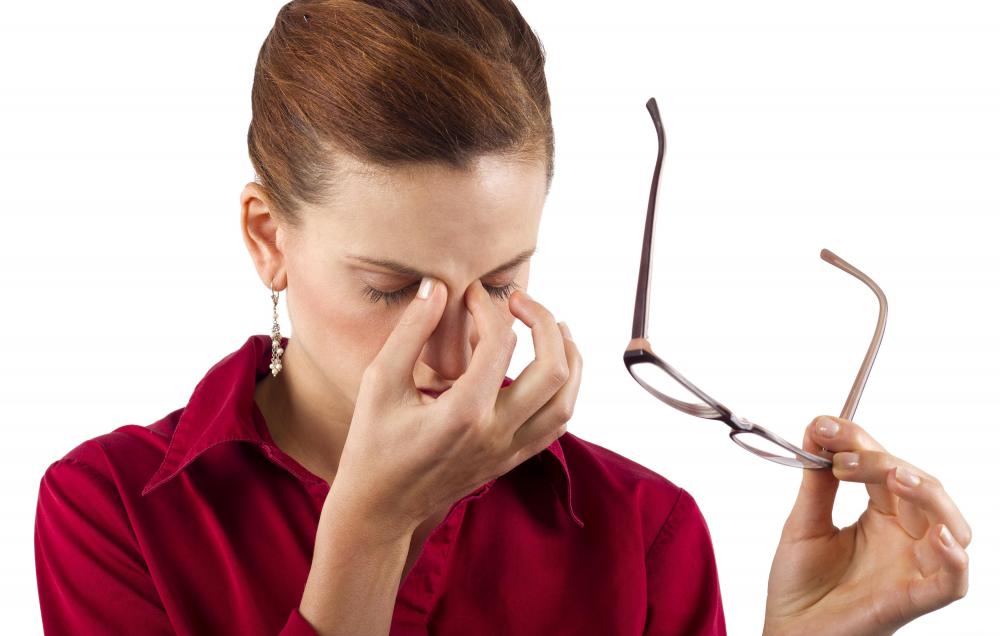
Challenges reading small text can also be due to conditions like astigmatism, or alternately, you may be developing both nearsightedness and farsightedness. We tend to compensate for minor changes to our eyes, and may not know we need glasses to correct vision problems. The main point is that correcting vision problems with pharmacy reading glasses can be risky to the health.

Before buying a pair of glasses from the drug store, you really should get an eye examination to rule out common diseases of the eyes, which may not even affect vision, initially when there is the best chance for treatment. The eye doctor also gets a more accurate measurement of lens strength you require, and makes sure that you don’t need prescription lenses or medications to correct other problems of which you are not aware. Without seeing an eye doctor first, those reading glasses may work for a time, but might mask more severe problems that are easily identified by a professional.
Tricia Christensen
Tricia has a Literature degree from Sonoma State University and has been a frequent WiseGEEK contributor for many years. She is especially passionate about reading and writing, although her other interests include medicine, art, film, history, politics, ethics, and religion. Tricia lives in Northern California and is currently working on her first novel.
Learn more...
Tricia Christensen
Tricia has a Literature degree from Sonoma State University and has been a frequent WiseGEEK contributor for many years. She is especially passionate about reading and writing, although her other interests include medicine, art, film, history, politics, ethics, and religion. Tricia lives in Northern California and is currently working on her first novel.
Learn more...AS FEATURED ON:
AS FEATURED ON:









-
![Prescription glasses.]() By: Nikolay PozdeevPrescription glasses.
By: Nikolay PozdeevPrescription glasses. -
![It is best to consult your optometrist to decide what strength reading glasses are best for you.]() By: RemziIt is best to consult your optometrist to decide what strength reading glasses are best for you.
By: RemziIt is best to consult your optometrist to decide what strength reading glasses are best for you. -
![The anatomy of the human eye includes the cornea, retina, lens, pupil, optic nerve, and more.]() By: blueringmediaThe anatomy of the human eye includes the cornea, retina, lens, pupil, optic nerve, and more.
By: blueringmediaThe anatomy of the human eye includes the cornea, retina, lens, pupil, optic nerve, and more. -
![Correcting vision problems with pharmacy reading glasses may be risky to the health.]() By: Glenda PowersCorrecting vision problems with pharmacy reading glasses may be risky to the health.
By: Glenda PowersCorrecting vision problems with pharmacy reading glasses may be risky to the health. -
![Many optometrists urge against buying non-prescription reading glasses from the drugstore.]() By: Innovated CapturesMany optometrists urge against buying non-prescription reading glasses from the drugstore.
By: Innovated CapturesMany optometrists urge against buying non-prescription reading glasses from the drugstore.


Discussion Comments
@croydon - There are a few places your mother might be able to find cheaper glasses online once she knows her prescription. It usually ends up cheaper. Some optometrists are reluctant to give an exam without selling the patient glasses as well, but if you ask them to give you all the measurements needed by the website, you should be able to buy glasses for about two years without needing another exam. It's harder to pick out glasses frames without being able to see them on, but the price is worth it I think.
My mother was using cheap reading glasses for years before she went to the optometrist. I think she was afraid of what he might tell her, but she suffered from headaches because she couldn't seem to get the right kind of glasses. It turns out that she had nearsightedness as well as farsightedness, and needed progressive lenses. She was relieved that it wasn't anything worse.
Buying glasses from the optometrist cost a lot of money though (in the hundreds of dollars) so now she is reluctant to go back.
At least, with her new, expensive glasses, she doesn't get the headaches she used to.
Post your comments