
At WiseGEEK, we're committed to delivering accurate, trustworthy information. Our expert-authored content is rigorously fact-checked and sourced from credible authorities. Discover how we uphold the highest standards in providing you with reliable knowledge.
Why does the US Government Give out Farm Subsidies?
United States farm subsidies are government payments — typically in the form of cash or credit — provided to domestic farmers and agribusinesses as a means to supplement their income and manage the supply and pricing of certain commodities. Introduced in the 1930s by President Roosevelt, the original subsidies were initially designed to alleviate the effects of the Great Depression. American farmers, up until that time, had ruled the global market under the free-enterprise system. Although intended as a temporary fix, the distribution of these payments continued long after the Depression, evolving into the multi-million dollar political platform it is today.
The question of why the United States government continues to pass millions in subsidy farm bills is one that tops the political scale in controversy. The government argues that now, more than ever, farm subsidies secure the domestic farm sector as a measure of homeland security. The intent — if a world-changing event should occur — is to protect the American people from having to rely on food imports to feed the population. Strong opponents, however, argue that political gain alone now determines subsidy distribution. With the largest percentage of subsidies awarded to big farms and agribusinesses, many argue that only a small percentage of the allotted millions ever find its way to the family farmers who need it the most.

Farm bill proponents argue that subsidizing farm income and supporting commodity pricing helps to offset unexpected fluctuations in agriculture. Historically, certain events that occur internationally such as war, government seizures, and natural catastrophe have a direct impact on the food supply available for purchase in the global market. On domestic soil, crop yields fluctuate year to year due to such things as floods and unpredictable temperatures. Subsequently, ensuring the solidity of the domestic sector with subsidized farm assistance would seem a logical alternative. Other subsidy advocates feel that, without this type of government aid, domestic farmers would simply be driven out of business by foreign competition, thus placing the United States at the mercy of other countries to supply even the simplest commodity.

While, in theory, this type of government assistance seems justified, opponents speak loud from every platform. One outspoken criticism comes from those who feel that handing out agricultural subsidies goes against the principles of free trade. The argument states that subsidizing farmers eliminates any incentive to produce according to the demands of the market. Instead, subsidies encourage farmers to produce for profit alone without monitoring profit and loss signals that might suggest otherwise. According to free market economics, production based on profit and loss — and demand and supply — is the key to maintaining fairness in the competitive market. In addition, free trade proponents argue that subsidies based upon unpredictable weather conditions are disingenuous considering that industries nationwide suffer the same risks but must rely on insurance to assist only after the fact.
AS FEATURED ON:
AS FEATURED ON:









-
![Farm subsidies were first introduced by President Franklin Roosevelt in the 1930s to aid domestic farmers during the Great Depression.]() By: airFarm subsidies were first introduced by President Franklin Roosevelt in the 1930s to aid domestic farmers during the Great Depression.
By: airFarm subsidies were first introduced by President Franklin Roosevelt in the 1930s to aid domestic farmers during the Great Depression. -
![Supporters argue that U.S. farm subsidies will save the American public from relying on food imports in the event of a global disaster.]() By: EvrenKalinbacakSupporters argue that U.S. farm subsidies will save the American public from relying on food imports in the event of a global disaster.
By: EvrenKalinbacakSupporters argue that U.S. farm subsidies will save the American public from relying on food imports in the event of a global disaster. -
![Opponents say that farm subsidies encourage farmers to ignore supply and demand and to only produce for profit.]() By: simaOpponents say that farm subsidies encourage farmers to ignore supply and demand and to only produce for profit.
By: simaOpponents say that farm subsidies encourage farmers to ignore supply and demand and to only produce for profit. -
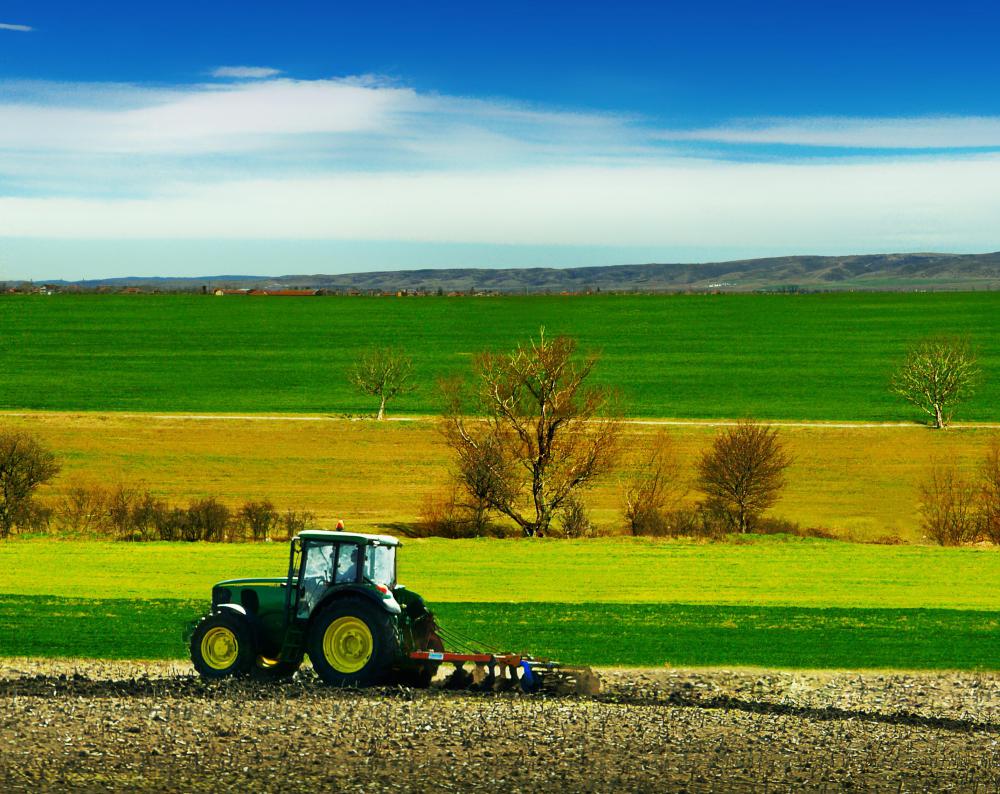
![Subsidies may help make farming profitable in some places.]() By: ValchoSubsidies may help make farming profitable in some places.
By: ValchoSubsidies may help make farming profitable in some places. -
![Subsidies may help pay for the care of livestock.]() By: ellisiaSubsidies may help pay for the care of livestock.
By: ellisiaSubsidies may help pay for the care of livestock. -
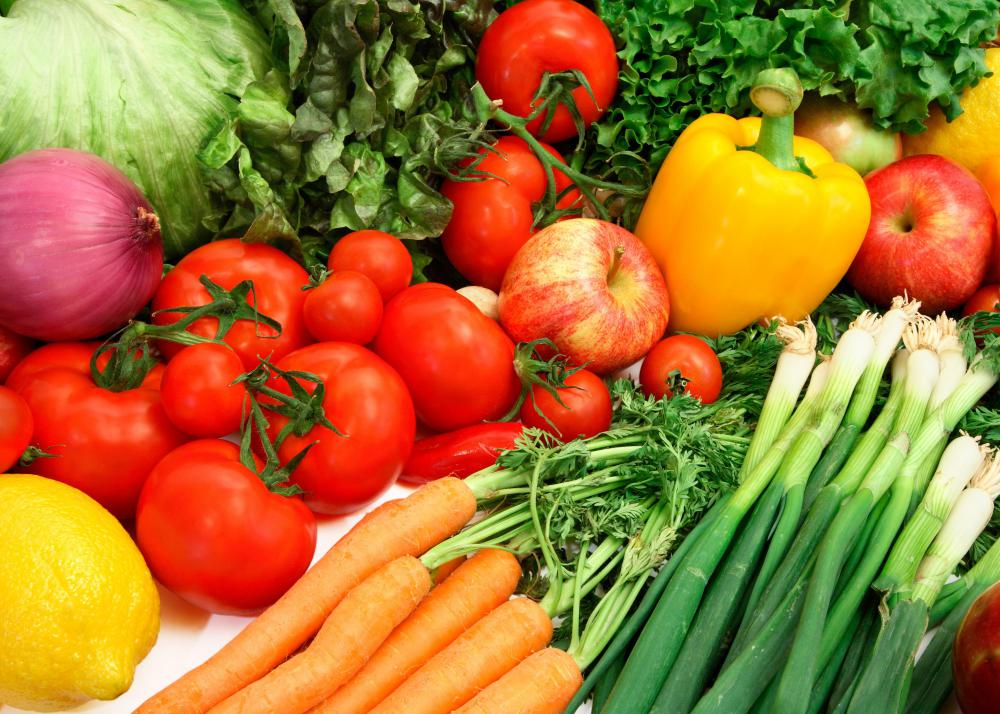
![Domestic agriculture subsidies help guarantee that there is an adequate, secure food supply.]() By: Goran BogicevicDomestic agriculture subsidies help guarantee that there is an adequate, secure food supply.
By: Goran BogicevicDomestic agriculture subsidies help guarantee that there is an adequate, secure food supply. -
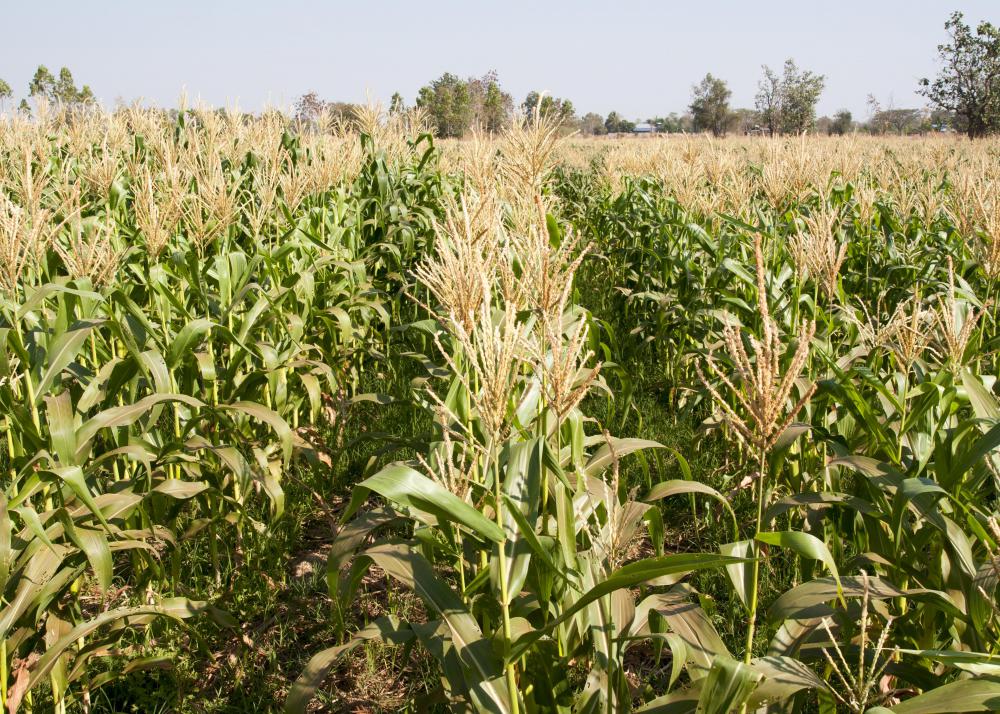
![Corn is subsidized due to its high demand, in part due to its use in ethanol.]() By: k_kronCorn is subsidized due to its high demand, in part due to its use in ethanol.
By: k_kronCorn is subsidized due to its high demand, in part due to its use in ethanol. -
![Some critics allege that most farm subsidy funds never reach the family farmers who are most in need of them.]() By: Denis PepinSome critics allege that most farm subsidy funds never reach the family farmers who are most in need of them.
By: Denis PepinSome critics allege that most farm subsidy funds never reach the family farmers who are most in need of them.




Discussion Comments
What is the processes like if I want to apply for a farm subsidy? I am sure that I will need to fill out forms, but do I need a lawyer or some other kind of professional representation?
Also, after I apply, how long do I have to wait before I hear about whether or not I have got a subsidy?
Are there any farm subsidies directed at organic and sustainable farms? It seems like these are the farms that we should most be trying to support. They might need to be subsidized if they are going to become a feasible part of the food supply.
@NightChef is on the right track of thinking when it comes to these USDA farm subsidies. Not only does it allow corporations to take advantage of cheap and easy labor over seas, these trade agreements will drastically change the way that we support our own farmers.
But it isn't just farmers that are upset with this change in policy and how corporations handle international trade. Unions of all types of workers are being affected by this upset in markets and specifically the heavy manufacturing industries have been affected.
Steel workers, the AFL-CIO and many other working man groups are in a constant struggle to keep jobs in America so they can continue to support their families and way of life.
Some of our nation's largest political protests have occurred because of the radical farm subsidies that we provide to our farmers in certain markets. When these subsidies are used as a means to further control the policies of trade then there is political contention to be had.
This has taken form in the many trade agreements that encompass our current trade relations. Specifically the World Trade Organization and the North American Free Trade Agreement have see some of the most fierce debate. These organizations are structured to allow an easier flow of products and food trade across international borders but have ended up turning markets upside down due to discrepancies in policy between nations.
I grew up on a corn farm in Iowa and I think that there is a critical part that people miss in this debate. My family depended on those subsidies to keep our farm and to sustain our lives. We will loose middle America to the cheap labor of other countries if we stop small farm subsidies.
I hope the farm subsidy program continues to help the people where I learned how to be a true American.
Perhaps the largest effect that the use of subsidies on a farm crop has is the external relations that come along with an unfair market advantage with the rest of the world. The real reason we see these subsidies is because that way we can sell corn to other countries cheaper then they can produce it. This has the effect of increasing our overall exports and helping our economy.
This sometimes and depending on the crop or product being manufactured or grown can have very adverse political effects that will soon became an even bigger problem then what was being experienced in the market before the subsidies started.
@jeancastle00, you logic on how these subsidies help our society is very interesting but there is a serious negative effect that creating these false markets will bring. Just as we are seeing now, the use of bad mortgages is now bringing the entire value of the housing market down. Anytime we falsely represent the value of something then the reality of what that products value really is will eventually come back into play as to balance out the natural market.
This concept applies to subsidy policy as well because when you create a force to lower the value of these goods then we will soon adapt to this lower price as the natural market price but when the people feel too taxed or the government's budget becomes too strained to keep up with the subsidy then the market will experience upheaval and prices will skyrocket because the farmers will have to charge the real value of the corn.
@ronburg44, the politics of why the US government gives out farm subsidies is a very complicated and clouded subject among lawmakers in Washington D.C. I fear that through this disillusion we have missed the original intention and while it may seem like a lot of money, I can assure you that our markets need these subsidies to exist to continue our American way of life.
You can think of it this way, when we pay taxes that end up subsidizing corn farms here in America then we end up seeing lower prices on the actual shopping mart shelf. Essentially this means that we are all paying for a group discount on the product.
Some might disagree with this concept but it is certainly a truthful effect that the subsidizing of corn farms has created.
I think that it is an abomination that we are still providing farm subsidies to the American farmer. As a hardworking middle-class man and heavily taxed family, I simply cannot agree with this market policy and don't support it.
The original concept as the author points out was intended to help our agriculture industry during the great depression. What it has become today is despicable and a downright ripoff to the society we live in.
Post your comments