
At WiseGEEK, we're committed to delivering accurate, trustworthy information. Our expert-authored content is rigorously fact-checked and sourced from credible authorities. Discover how we uphold the highest standards in providing you with reliable knowledge.
Why do We get Fevers?
Fevers are the body’s way of letting us know that something is wrong. They are also the body’s way of combating viruses and infection. Normal body temperature is around 98.6°F (37°C). If the body has a fever, the temperature will steadily rise higher than this.
When infections invade the body’s system, toxins are produced. This usually results in a temperature rise. The response by the body is to activate the immune system. White blood cells combat bacteria by raising the temperature.

White blood cells produce certain substances that raise the temperature, sine toxins do not have a very good tolerance to heat. Therefore, a high temperature helps fight these toxins and eliminate them from he body. When we sweat, we are expelling toxins from the body.
Fevers are important and helpful in combating illness, but a person suffering prolonged elevated temperatures should be seen by a doctor. Normal fever is about three to four degrees higher than normal temperature, and if caused by infection, does not usually rise more than this. If the temperature exceeds this guideline, then medical attention is necessary. Brain disorders can occur if a fever becomes too high.

Many illnesses are accompanied by fever, including measles, chicken pox and smallpox. Influenza and the common cold can also produce high temperatures. There are other symptoms that usually accompany fever. These are dependent on the illness, but a loss of appetite is common. There may also be an overall feeling of tiredness or weakness. Chills in the body are also common.

Children and the elderly are often most susceptible to high temperatures. When it occurs, the goal is to not eliminate it, but to keep it at an infection fighting level. Children who are ill and a running a high temperature, but are drinking fluids, sleeping well and comfortable, should be in no danger.
If temperature must be reduced, then all excess clothing and bed linen should be removed. The room should be kept cool, and cool damp cloths should be applied to the body. There are also medicines that can be given on advice from a doctor. Medicines prescribed to reduce these temperatures in children are usually ibuprofen and acetaminophen. A doctor should always be called in the case of persistent elevated temperatures.
AS FEATURED ON:
AS FEATURED ON:









-
![Fevers are the body's way of responding to infections.]() By: Szabolcs SzekeresFevers are the body's way of responding to infections.
By: Szabolcs SzekeresFevers are the body's way of responding to infections. -
![A fever indicates a body is fighting a virus.]() By: Ocskay BenceA fever indicates a body is fighting a virus.
By: Ocskay BenceA fever indicates a body is fighting a virus. -
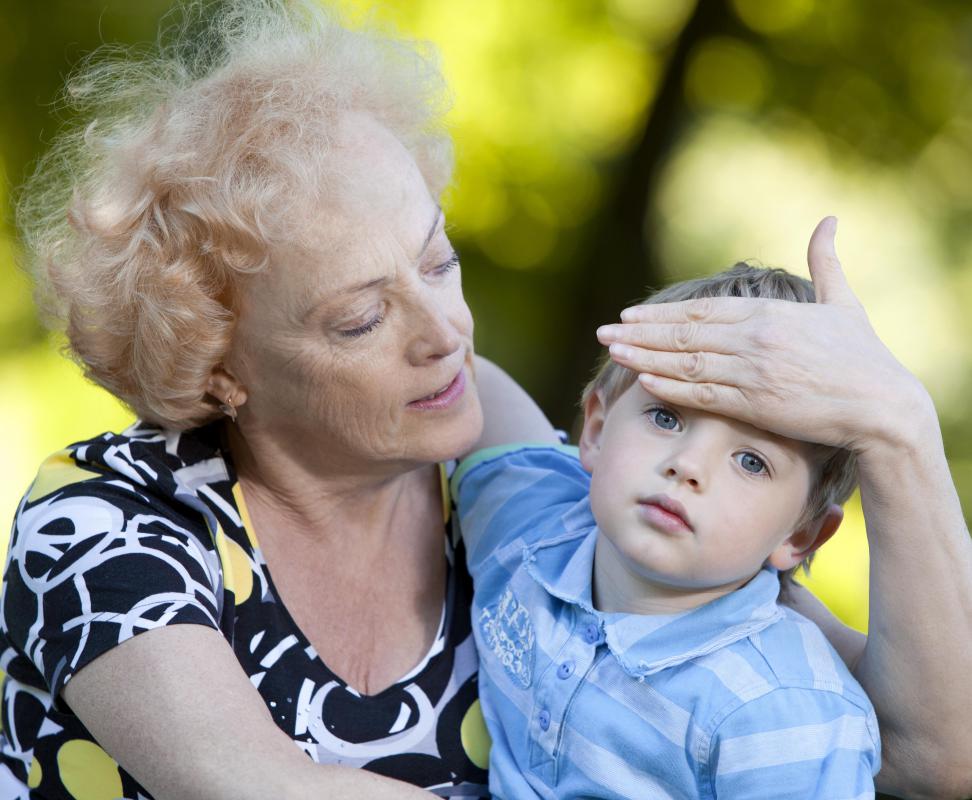
![Children are particularly susceptible to fevers.]() By: Thomas PerkinsChildren are particularly susceptible to fevers.
By: Thomas PerkinsChildren are particularly susceptible to fevers. -
![Fever may accompany chicken pox.]() By: Ocskay BenceFever may accompany chicken pox.
By: Ocskay BenceFever may accompany chicken pox. -
![Our bodies can fight pathogens by increasing its temperature.]() By: svetlana larinaOur bodies can fight pathogens by increasing its temperature.
By: svetlana larinaOur bodies can fight pathogens by increasing its temperature. -
![Common indicators of most influenza strains include fever, chills, and headache.]() By: emde71Common indicators of most influenza strains include fever, chills, and headache.
By: emde71Common indicators of most influenza strains include fever, chills, and headache. -
![Medicines prescribed to reduce fevers in children are usually ibuprofen and acetaminophen.]() By: Yeko Photo StudioMedicines prescribed to reduce fevers in children are usually ibuprofen and acetaminophen.
By: Yeko Photo StudioMedicines prescribed to reduce fevers in children are usually ibuprofen and acetaminophen. -
![Failure to properly wash hands can spread fever causing illnesses.]() By: peacebutsFailure to properly wash hands can spread fever causing illnesses.
By: peacebutsFailure to properly wash hands can spread fever causing illnesses.



Discussion Comments
Why do we get a fever? What are the main food or drinks which can cause a fever? Other than mosquitoes, are there any other ways we can be affected by a fever? Is fever fatal? Please advise. William F.
Twice a year I am getting an illness with mild fever and weakness that lasts about four and half weeks. This has been happening for two years, and every time I saw the doctor he has ordered all kinds of tests, but every test was normal.
The last time I was ill, the doctor suggested I take a mantoux skin test, which came back positive. The doctor told me my body had been exposed to some TB bacteria and my immunity is fighting with bacteria so I am getting mild fever and weakness.
He hasn't suggested any medicines to me, only prescribed some vitamin capsules. After four weeks, the fever is gone. Now again I have the same type of mild fever with weakness, and already three weeks have passed. I don't know what to do. Kindly help.
What can cause a fever with no other symptoms?
@Planch -- The first thing I can tell you is don't worry about it too much -- it's easy to freak yourself out if you start thinking of all the things that can go wrong.
That being said, there are a lot of things that can cause children's fevers.
Most common causes of a high fever in children include pneumonia, measles, mumps, rubella, and all those good things you get them vaccinated against.
Ear infections can also cause a fever.
However, again, you should consider fevers with other symptoms, and don't start freaking out just because your baby has a fever.
You'll start to learn with experience when a baby's fever is serious and when it's not.
What are some different kinds of childhood fevers? My sister is having a baby in a month or two, so we are trying to research all the things that could go wrong so she can be prepared.
Thanks!
Remember the old maxim: starve a fever, feed a cold. You still need liquids when you're starving that fever. Water is generally preferred but diluted flavored drinks are OK too.
Post your comments