
At WiseGEEK, we're committed to delivering accurate, trustworthy information. Our expert-authored content is rigorously fact-checked and sourced from credible authorities. Discover how we uphold the highest standards in providing you with reliable knowledge.
Why do Some People Have Trouble Showing Affection?
 Tricia Christensen
Tricia Christensen
Tricia Christensen
There are many theories on why people have trouble showing affection, and also cultural studies on how different groups show affection. Medical researchers can focus on specific groups that have an extraordinarily difficult time with any displays of affection, such as autistic children, or children and adults with varied degrees of autism based disorders. A significant problem with most of these studies and theories is that affection itself is a tricky thing to define.
Is affection latching on to a husband or wife with a big sloppy kiss, hugging your children or telling your parents you love them? Is affection remembering anniversaries, picking out thoughtful gifts, really listening to another person, or patting your dog on the head? Our different definitions of what constitutes affectionate behavior may make it very challenging to explain why some people have trouble showing affection; what appears to be trouble to one person may seem like a reasonable level of affection to another person. For the purposes of this article, let’s consider affection as small or large physical gestures that convey emotion, a hug, caress, kiss, a pat on the shoulder, et cetera.

Some theories suggest that such gestures of affection are often determined by our degree of nurturance as children. In families or cultures where affection is common, people will more commonly show affection. Others also suggest a gender difference, especially in many Western cultures, between showing affection to boys and girls. Girls may receive more affection than boys, especially when they are emotionally distressed. Boys, alternately, may be told when they seek affection, such as when they are injured, to toughen up. Even though we think we’ve shed these gender differences, evidence to the contrary is available in a variety of studies; we are still harder on boys.

This can matter a lot when boys and girls grow up, because girls will expect a higher degree of affection than boys, who have been nurtured to give less. Women will claim their husbands have trouble showing affection, and men may actually complain that their wives show too much. Studies on lesbian and gay couples include some interesting reveals on affectionate behaviors on same sex couples. By in large, lesbian couples tend to give and show more affection than do gay male couples, which can argue the case that men have been taught to be less affectionate. There are certainly exceptions and numerous wonderfully affectionate males, and less affectionate females.

There are other reasons why people may have difficulty showing affection. People who have experienced sexual or physical abuse may find it very difficult to receive or give affection, even very simple things like a caress or hug. For these folks, touching itself has become a violation of self, and they don’t want to receive touching, or give it and possibly be considered as abusers too.

More simply, some children are just less acclimatized to affection than others. Parents can love their children but have trouble showing affection to each other or to children. This doesn’t mean that these parents love their children less; it simply means that physical affection is expressed less frequently in a home. Generally what you’re shown as a kid tends to have an influence on adult behavior; the old nurture argument, and certainly the difference in cultural views of affection come into play.

With so much today being shown to have a genetic basis, many people question whether trouble showing affection may be in the genes. Research on autism, though genetic basis for this condition has not been clearly established, clearly shows that many of these children are completely cut off in their ability to show affection. Some make the leap and say some people may simply be “wired” to be less affectionate than others. Strong cultural precepts on displays of affection, and nurturing may tend to bring out what is already genetically predetermined. Even the most affectionate parents, may not produce the most affectionate children if there is a genetic factor determining a lesser degree of affection.

Can you fix such a problem? There are certainly many mental health professionals and marriage and family counselors that believe you can, when the condition is not medical. People may be able to learn to show affection, though at first it may seem unnatural or forced. For those with trouble showing affection, especially when this becomes a problem in couple relationships or in parenting, it may be worthwhile to get through this awkward phase to improve relationships. This may be very true when other parties in relationships are unhappy with the level of affection they receive.
Tricia Christensen
Tricia has a Literature degree from Sonoma State University and has been a frequent WiseGEEK contributor for many years. She is especially passionate about reading and writing, although her other interests include medicine, art, film, history, politics, ethics, and religion. Tricia lives in Northern California and is currently working on her first novel.
Learn more...
Tricia Christensen
Tricia has a Literature degree from Sonoma State University and has been a frequent WiseGEEK contributor for many years. She is especially passionate about reading and writing, although her other interests include medicine, art, film, history, politics, ethics, and religion. Tricia lives in Northern California and is currently working on her first novel.
Learn more...AS FEATURED ON:
AS FEATURED ON:









-
![Different cultures and individuals define affection differently.]() By: MaridavDifferent cultures and individuals define affection differently.
By: MaridavDifferent cultures and individuals define affection differently. -
![Theories suggest childhood nurturing impacts an individual's show of affection.]() By: michaeljungTheories suggest childhood nurturing impacts an individual's show of affection.
By: michaeljungTheories suggest childhood nurturing impacts an individual's show of affection. -
![Abuse victims may find in difficult to show affection.]() By: Tatyana GladskihAbuse victims may find in difficult to show affection.
By: Tatyana GladskihAbuse victims may find in difficult to show affection. -
![Many marriage counselors say people can learn to show affection if the problem is not medical.]() By: DURIS GuillaumeMany marriage counselors say people can learn to show affection if the problem is not medical.
By: DURIS GuillaumeMany marriage counselors say people can learn to show affection if the problem is not medical. -
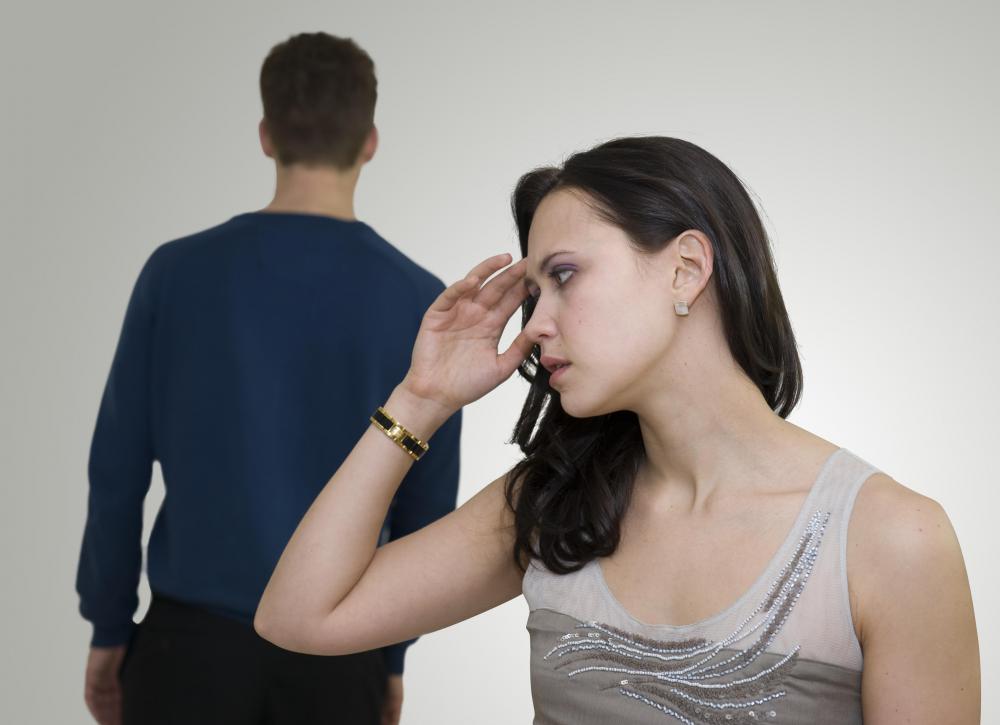
![Gay male couples tend to show less affection than lesbian couples, making some argue that men have been taught to be less affectionate.]() By: Felix MizioznikovGay male couples tend to show less affection than lesbian couples, making some argue that men have been taught to be less affectionate.
By: Felix MizioznikovGay male couples tend to show less affection than lesbian couples, making some argue that men have been taught to be less affectionate. -
![Affection doesn't have to be shown through physical intimacy.]() By: neirfyAffection doesn't have to be shown through physical intimacy.
By: neirfyAffection doesn't have to be shown through physical intimacy. -
![Lesbian couples tend to be less afraid to show affection than other gay couples.]() By: Patrick HermansLesbian couples tend to be less afraid to show affection than other gay couples.
By: Patrick HermansLesbian couples tend to be less afraid to show affection than other gay couples. -
![New couples tend to show affection in public more than couples who have been together a while.]() By: bercNew couples tend to show affection in public more than couples who have been together a while.
By: bercNew couples tend to show affection in public more than couples who have been together a while. -
![Some people feel self conscious about showing affection in public.]() By: sumnersgraphicsincSome people feel self conscious about showing affection in public.
By: sumnersgraphicsincSome people feel self conscious about showing affection in public.







Discussion Comments
One thing I don't say is I love you to anyone except my daughter. I just can't say it and I don't like to. I don't show affection at all -- no hugs, no kissing, or anything like that. I just don't have the feelings in me and never have, I also don't like the focus to be on me. I know it sounds stupid but that's just the way it is.
@anon993496: Hey, Sarah here. It is so hard. I struggle with that damn wall every single day. But, on the plus side, once you start pushing yourself out of that comfort zone, it gets easier.
I started with baby steps. Small changes that force me to push myself, like just grabbing his hand. Force myself to do it. Push against that wall as hard as I can. Or like you said, running up to him for a kiss when he comes home from work. I constantly remind myself it's what he wants. This makes him happy and I want to make him happy. And it makes me feel relieved once I've done it.
Also, communication is huge for this. He has to remind me, "Hey, I'm not feeling loved" in so many words. And it will remind me to work on it. I even have to "schedule" a time In which I will do something for him. Like, last week he had a hard day at work. So I told myself, "Okay, make sure you have a beer and a kiss ready for him at the door." That way, I give myself some time to prepare my brain and get used to the idea. Then once I've done it, I feel relieved, and he feels happy! It's a win win.
As far as sex goes, one that one I haven't quite been successful. I really have a hard time. But I'm working on it, using the "scheduling" method (and maybe even a little alcohol) to loosen my nerves a bit. Hopefully it will work and this aspect will get easier over time.
My husband seems to like how things are going for now. Hopefully I can make progress, and he knows this is a huge struggle for me, which helps.
And the final thing that probably gives me that extra push to break through that wall is this article and what I wrote. It is a reminder to myself that I love my husband, and I don't want him to feel like that ever again. I reference this article from Time to time, and have it saved.
I wish you all the best, anon993496. I hope my advice may help you!
@sarah. How are you accomplishing this long term? I have exactly the same problem and I don't even know where to start. I want to be the girlfriend who makes my man feel like a king but I hit that same invisible wall. I stand next to him and know I should hold his hand. I sit at the kitchen table and know I should greet him at the door with a kiss when he comes home but I too, freeze up. I don't get it but something keeps me from doing it. I know he wants these things. I know they will make him happy. Why can't I?
I don't show a whole lot of affection, but I don't consider it a problem. I couldn't be happier with how I am!
@anon978210: Wow, I could have written exactly what you have. We've been married for 16 years and love each other so much, but he has a high sex drive and mine is non-existent! My husband threatened to leave me and our 13 year old daughter last week because he couldn't take it anymore; he wanted someone to love him.
I also find it very difficult to initiate affection or sex. I feel that if I show affection, he'll take it as a come on for sex so I just don't do it. I convinced him not to leave me and give me a chance to change. We've become closer and bridged the gap over the past few days and affection feels easier now and I'm determined not to let it drift again.
I'm a kind, caring person but sometimes I just feel emotionally numb. I'm suffering from depression at the moment and I'm on meds and I have a counseling session in a couple of weeks. I spoke to my doc today who advised me to discuss my issues fully with the counselor. I'm hoping this will help and I'll get some answers as to why I am the way I am. I would do anything to be "gushy and touchy feely" with my hubby.
@stevenhill: It is not sad and my heart reaches out to you. I have to post this because you have helped me in so many ways with your story.
My husband and I are newly married, but have been together for seven years. He is always asking me to initiate sexual relations but I never can seem to muster the courage to do so, and I know it makes him feel rejected. I always tell him the same crap -- I love him, I'm sorry it's not him, it's me. And it's all true. It's just I can't seem to make myself do it for him often enough.
And for me, the sad part is that I truly want to! I feel there is an invisible wall that literally stops me from making any sort of advance towards him, almost like a fear of rejection (which is ridiculous because I know he never would). And not just sexually. I can't seem to tell him he looks handsome or that he is appreciated without him saying something first. He is the most wonderful husband, as you yourself seem to be, and I cannot imagine my life without him.
Tonight, we had a rather large fight because I rudely asked him not to grope me and he felt very rejected and upset that I didn't want him to touch me. We made up as we always do because we have a very open and communicative relationship, but I have this inner battle that I wish could be resolved. So I took to the Internet to see if there was anyone out there who could possibly be feeling the way I do (I feel very alone).
To my surprise, I found many, and then I read your post, feeling as though it came straight from my husband. Our beginnings resemble yours and that literally scares me to death. I love him so much and with all my heart would be devastated if I lost him.
So, I would just like to say thank you for posting your feelings. Without you, I wouldn't have run to my husband tonight bawling in his arms, telling him about your story and how I never want to be like that. Because of you, I am going to make sure that I make a conscious effort to initiate intimacy, cuddling and kisses, etc. It may make me uncomfortable and claustrophobic at times, but to me those feelings are worth my husband's happiness.
Tonight, he told me he appreciates the fact that I care enough to try to make a difference. If you are a praying man, please pray for me to succeed and for my husband to forgive me when I fail from time to time. I hope over time I will overcome this dichotomy I find myself in. I will pray for you, stevenhill, that your wife discovers that is all she needs to do to win your affections is a text or a hug, and that she too realizes the pain she causes. Thank you from the bottom of my heart. --Sarah
@lew0049 -- Your girlfriend is without a doubt wishing she was single. She simply doesn't have the guts to break up with you. It also sounds like she is cheating on you if not in a completely separate relationship with someone else also. You probably give her everything she needs and wants (money, rides, gifts, cuddle buddy) but she is getting laid by someone else. Man the hell up and walk away dude. Plain and simple.
My girlfriend for over four years has gone from showing affection relentlessly for the first two years and now shows zero affection. Our sex life was amazing for both parties and now sex and/or affection in general is non-existent. We are both attractive people so that is not a problem (although sometimes I naturally think it is). Also, she never says she loves me, but previously she used to tell me all of the time. Part of this is because her mom probably told her 10 times ever that she loved her. When her mom says it to her now, she always turns to me and doesn't know what to say back.
She came from a family (her mom as her real dad left when she was 2 years old) that showed no affection/love whatsoever, so initially she yearned for sex 24/7 (as she did with men prior to me). She, like so many other girls, thought this would make guys like her more but now realizes that it doesn't. She is now much more mature and is desperately trying to get her life together as she is 24 and I'm 32, hence I know stress plays a major role in her life.
She knows this bothers me, but of course I have heard every excuse in the book as to why she doesn't want to. And I will note that I know that she is faithful and is not interested in other people. I firmly believe that she is just very depressed and stressed about life, so her sex drive is non-existent. Not matter what she says though, as a guy, I naturally think it is me.
This past weekend I told her point blank that I just cannot do "us" anymore because of this and walked away. About 15 minutes later she came to me and said, "Just give me a little time to sort out my life and if things don't change then you can leave me."
My question is what should I do in the meantime? Should I act more distant and minimize how much I randomly say I love you or call her things of endearment? Not bring up sex? I have got to the point where I don’t even initiate anymore because I know that I will get rejected. She knows that I love her and that I will leave her if things don't change. Any advice or tips are greatly appreciated. Other aspects of our relationship have been much better recently and that is why I am still here.
Last thing, a perfect example was this past weekend. We had tickets for an electronic show and the day of she said that she needed to sleep at her place after the show/night, gave me every crap reason as to why, and essentially said that I was not welcome. She knew that we were going to be intoxicated (on things besides alcohol) and didn't want to put us in a position where she might “make herself vulnerable.”
Please help and thank you for any advice.
Reading some of those posts makes me feel like I am reading my own story! My husband doesn't want sex or affection, but shows it liberally to the kids and dog. I feel so lonely, ugly, and unloved even though other men still find me attractive. Sometimes I think we who are not getting the affection we need should swap spouses with others in the same boat. The cold people deserve each other.
I have been in an unloving relationship now for the last few years. We have been together for 16 years and married for nine. She was only 19 at the time and I was 26. She was impressionable I suppose, but had relationships before, as had I.
The sex was great and regular but the spontaneous affection shown, or not, by her even then when I think back, was limited but at that point not non-existent as it is now.
I can’t really recall any time when she made any effort or initiated intimacy as it was always left to me. As I say, the sex was great and we had no problems really as time went on other than me wanting a little more and me having to initiate it but I put this down to the way she was. She was shy and happy to let me lead the way. As time went on, the honeymoon period naturally settled down, but sex was never an issue as long as I initiated.
We had our first child in 2005 and we were intimate throughout pregnancy and again with our youngest child. I was lucky in that respect. The hugs and affection though, were never there from the start but over the years, this has bothered me more and more as time has gone on.
My wife never, ever cuddles me and I can remember only one time ever that she ever cuddled me when it was her idea, back when we were dating, so for that to stick in my mind shows me how sad this situation is.
My wife never kisses me and only does so when I make the first move. Having a quick kiss and cuddle is always initiated by me and after 10 seconds she is trying to pull away as if she had better things she could be doing. I am never told or showed by my wife that she loves me, period! She will say it back though, when I say it to her.
We, or more like I, have had a few talks with her over the years, telling her that I need more love and attention, but she will always roll her eyes and say, “Not this again,” or that she can’t be the person that I want her to be. My wife has even told me to go and find someone else before now. She will also say something like, “Is this about the sex again?”
The void in my life and how I tackle it with her always comes to a head maybe every six months or so. The last time we locked horns was about six months ago when we went through a rough patch for a month or so. It was a huge build up of frustration and we nearly ended up selling the house when she finally decided to talk it out with me, but it just ended up, as usual, with me conceding that she can’t and doesn’t want to change and I have to accept that this is the way she is. I honestly thought she was going to go through with selling up and it terrified me.
What hurts though, is that my wife doesn’t even try or want to get close. She is quite happy for me to give her a foot rub or massage, but will never initiate a kiss or a cuddle, let alone sex. I now know better than to try initiate sex as there will always be some excuse. My wife simply thinks that she can’t show affection as I will interpret that as her wanting sex, which is nonsense since she doesn’t show her feelings in any event. If I had experienced her affection and been given the opportunity of learning her boundaries, then I would be more than happy with a cuddle and a kiss.
She joked once that she could happily live without sex and become a nun. Her parents are not demonstrative in any way and I have never seen them as being close. I know her mother has told her that she doesn’t love her father anymore. Her mother said once that, “Most men just want to bonk.” She does not about our problems, but her mum’s general contempt for men, sex and closeness, along with some of my wife’s girlfriends being divorced has added to her reassurance that sex is somehow wrong or just there to benefit men.
Sex at the time was a once a week event in the same old position. It never used to be, though. I always, without exception, have to initiate it and she wants it over and done with as soon as possible. She never says so but her body language does.
I always make sure that I meet her needs properly and before my own, but I must just be a really bad lover. I love oral sex, but she hates reciprocating. I know that I have more chance of winning the lottery than of her ever initiating it and getting intimate more than once a week. I was initially resigned to this weekly effort so I didn’t dare push it anymore. If her time of the month falls over the weekend, then that is great. She is secretly relieved that she can gain some respite from me.
I try to be a good husband and father. I’m not perfect, but I know a lot of women fall over themselves when they hear that their husband has washed the pots or vacuumed the house. These men who don’t do squat around the house or show their wives attention deserve this, not me. I go the extra mile, by trying to earn brownie points with my wife, a bit like the loyal dog always trying to please. I am a very modern man, having lived by myself for some years. I am very domesticated but I am never appreciated or at least I am never told that I am. I am a firm believer in a 50/50 partnership.
For the last few weeks, I have been rejected completely but I don’t know why. She makes me feel like a sex pest, which I suppose I now am. She thinks that all I think about is sex, which is just not true. If I don’t try and initiate, then we just end up back to back, going to sleep. I long for her to love me, to feel her touch and for her to reassure me, but she never will. I know that and guess I have always known that.
She doesn’t get annoyed or anything when she feels that she has to reject me in bed or pulls away from a cuddle in the kitchen, but it still hurts. I have grown a beard and this has now added to her arsenal of excuses not to kiss me.
I have reached the end of my tether again, but I haven’t mentioned why I seem upset. I just appear irritated to her about something, but she’s not bothered in knowing what it is. Deep down she will know, or at least she will be guessing why I am not approaching her but she hasn’t the interest or the energy to want to resolve it.
One time I asked her if she could change and just try to make a little effort but she countered this with, “Well, what if I can’t? I don’t want to make any promises that I can’t keep but I will try.” Nothing ever came of that argument, not even a half-hearted attempt. Talking is pointless as we have been there before and it doesn’t do any good. I just have to accept this situation for my kids’ sake and financially, I can’t afford to leave.
I have finally decided to stop showing all affection to her and initiating sex. I continue to help out around the house and with the kids and keep things as normal as possible, but I cannot reach out to someone when they will not invest in me. This has led to me feeling even more isolated and masturbating in the bathroom like some frustrated teenager. She must know something is wrong, but she doesn’t seem to care or maybe she is completely oblivious, I don’t know, but as long as I am still smiling hey? It’s more of a brave face than a smile, I can assure you.
My wife is very affectionate with the children and the dog, so she can show love if she wants to. I don’t hold this against them as they are lovely girls and our puppy is so cute, but when there is no affection left for me, it leaves me very sad and wondering what I could have done that was so wrong. The irony is that my wife is a lovely person, she is attractive and I fancy her like mad. I still love her too, in spite of the fact that she doesn’t seem to love me. She is one of those women who, I suppose, likes to make a cup of tea or iron her husband’s shirts to show him she loves him rather than to display affection. If that were the case, I should have married her mother and that way I could have had all the cuppas I could drink and I would never be out of clean shirts.
We are both practicing Catholics and very involved in the Church. She has friends and people love her. She is a good person. She unfortunately, has a very stubborn and unforgiving streak towards me, though, which I have fallen victim to for some reason. I have never cheated on my wife and never will do so.
At this point, I am going to carry on keeping myself to myself. A quick peck when I leave the house to go to work to keep things looking normal is the best I can do. I know this isn’t the answer but I need to gain some self respect if nothing else. I do not feel emotionally attached to even want sex even if she asked for it. The sad thing is that if she sent me a text saying that she loved me or put an arm around me this evening then I would forgive everything. How desperate is that?
@anon33960: I completely understand where you are coming from. I am assuming you are a man, considering the way you talked about your friend however, I could be just way off base here.
I am a woman and I have a very hard time with affection. My husband is very affectionate and we have a four year old who also is very affectionate. I have learned over the years that I don't like to be touched; it bothers me. My husband does like affection. He doesn't understand why I don't like affection and I don't know why he likes it, to be honest. I enjoy sex, but not in a cuddle, touchy-feely way. I am a woman who likes to have sex and does not like affection. You would think most men would enjoy that, but I have found that not to be the case.
Touching stresses me out -- literally! I don't want to think about it; it makes me feel claustrophobic in a way. Have any of you actually sat down and asked the question what's a hard limit for you and if it's touching in any way then you know they aren't the right spouse or girlfriend if your hard limit is touching. For instance, I never know what my four year old will do, so at the end of the day. I can't take anymore. However, if I know where my husband will touch me, I can prepare myself. Other days are too stressful and I can't stand anymore touching.
It's very simple, so don't make it complicated. Some people don't like touching and if you try to make them affectionate, it's like them making you hate affection. If they can make you hate it (which I sincerely doubt unless it's a ploy) then please try to accept them and find other ways to be affectionate that you would both enjoy. For instance, kissing is hard for me, however, holding me from behind my back to his front is fine. I have learned what we can do and can't do. I try for him and he tries for me. The important thing is that we continue to talk about it. That way he knows I'm not rejecting him and I know he doesn't always need my affection every day, all day.
My wife was not very affectionate when I married her years ago, but I figured that it was just because she did not have enough experience in this area (I was the first man she had ever really been with). I guess I thought it would get better over time, but it hasn't. Now we have two young children together and I am miserable. She knows how I feel but can't seem to bring herself to be any more affectionate past the first 24 hours of my complaining. I know this is making her miserable as well, as she usually does not see anything wrong when I mention her lack of affection/attention for me.
She has told me that she would be fine if we only sex about once per month and thinks that I am some kind of sex hound for wanting it more than that. It has been difficult to convince her that most guys crave sex on a daily basis and I don't need to see some kind of doctor for this.
Like most who post, I love her and have had some great times with her. Whenever we talk about this issue, she assures me that she loves me, needs me, is attracted to me, blah, blah, blah. I am just sick of the constant feelings of rejection, anger, sadness and resentment. Not to mention how pathetic I feel every time I have to remind her that, "I am here and it is okay to touch me now. You may even enjoy it". I have even taken to withholding my affections to eliminate the rejection I feel when the affection is not reciprocated. Of course she does not seem to notice when I am not affectionate, anyway.
Again, I am so tired of talking about this and am ready to get out because I do not to have to live like this for the rest of my life. If you are having issues like this early on in the relationship, don't expect it to change. If it feels like pulling teeth now just to get a little bit of affection, it is likely only going to get worse. Get out while it is still easy to get out before you have children, etc. Find that someone who wants and needs love like you do. Good luck!
@anon342813: Here's my take from a woman's point of view. Basically, there are three types of heterosexual women: women who want a man like you who will be good to them and will love them (I'm in that category and feel blessed to have a wonderful husband); the ones who really don't care about affection or love as long as there's someone else in the house with them; and the ones who seem to feel, as my dad said, "the sorrier the man is, the better these women like them." It's a mystery to me why some women gravitate to these kinds of men. I won't put up with that kind of crap.
If this woman is something of a thrill-seeker to start with, then you're probably just not fulfilling that craving for danger. Some women want to walk the edge all the time, whether it's in their hobbies, or their men. They crave the "high" that comes from dealing with a ticking time bomb of a relationship.
The reasons for this? Who knows? But you are obviously miserable, and you seem like a good guy, so you definitely deserve better.
Here's the classic Dear Abby question: Are you better off with or without her? Answer that, then make an appointment with a relationship therapist and ask her to go with you. If she won't go, then go alone. You need help to figure out why you're willing to stay with a woman who makes you feel like less of a man. Good luck.
I have to say that I am totally blown away by how many people posted on this question. I now feel validated and less "weird", now that I understand I am not the only man or woman struggling with this issue.
I am in love with the most amazing woman I have ever met. She is funny, smart, spiritual and full of life. She is the most tolerant, forgiving, accepting and optimistic person I know and I love those things about her. I had to chase her hard and fight off some stiff competition, and when she said yes when I proposed, I felt as if I'd won the lottery three times over! It was the greatest feeling of happiness I'd ever felt.
I definitely have her on a pedestal and treat her like a princess and I know she appreciates it. I am wildly attracted to her and I barely notice other women anymore. I can't even indulge a sexual fantasy about another woman. I know this is a common feeling for women who are truly in love, but it’s something rare for a man.
She is also beautiful, flirty, sexy, and generally grabs takes the attention of men in every room she enters. She definitely makes you feel like if you ever got anywhere with her, you would be in for a wild ride! That's what makes this next part so very difficult for me to write.
We plan to be married soon and I have a concern about her attitudes toward sex and affection. I am concerned enough to doubt our ability to stay intimately connected over the long term.
Recently, I've come to view my own strong desire for affection and passion as a shortcoming. I am certain that she views me as needy and clingy, making me feel less desirable and "manly". I am also fairly certain that she feels less attracted to me as a result.
I love her deeply and I truly believe she loves me. When we dated over the first few months, she seemed sexually insatiable. We kissed a lot and she would go on and on about what a wonderful kisser I was and talked about what great lips I had and so on. Though we still kiss and "peck" often enough throughout the day, when it’s time for intimacy, it’s just not the same. I still feel those fireworks sometimes but it usually leaves me wanting more instead of being satisfied. She doesn't like to french kiss and I can always feel her holding back now.
She also isn't what you'd call a snuggler. I've all but given up on spooning with her when we go to bed, or reaching out for her in the morning to cuddle. She acts as if these needs are odd, making me feel needy and clingy all over again. I can feel her stiffen and sometimes even repulsed by physical affection. She says the problem is with her and not me, but no man can experience that over time without feeling rejected and unattractive.
Sex is less frequent and she "participates" sexually but she doesn't seem so much "there". Frequency will diminish once the honeymoon period is over of course, but we've been together for only 10 months and in the beginning it was such a whirlwind romance. She actually now seems almost repulsed by foreplay and that makes it difficult for me to become aroused. Usually, she just seems to want to get it over with, then shower the "sex" off and get on with her day. The mystery is that she usually orgasms. She appears to genuinely enjoy the act of coitus itself, but little else. She wants it to start fast and end fast. In fact, sometimes our sex is so wooden that I feel as if she could do without altogether. Afterward, I often end up feeling like a lousy lay and a tool.
We've talked about it and she seemed to make some effort to adapt, but I already feel her resisting any real effort to change. I am afraid to discuss it anymore as she has suggested that if I feel that way I should just leave her, every time I bring it up. She has never suggested that we are anything but completely compatible or had such a strong reaction to anything else. In fact, I feel I can talk to her about anything else, other than intimacy and affection. And that is what concerns me the most. It is the one and only taboo subject.
She is younger than I am, but experienced in relationships. She says that I am the best man she's ever known and that makes me feel good. However, I am not the sort of man she dated in the past. The sort of man she seems to be attracted to, isn't how I view myself.
I am a masculine and capable man, but not a macho jerk, to be certain. That said, it's the macho jerks who seem to turn her head. In fact, she seems to feel a strong attraction to all the sorts of men that I'm not. Men she described in her past were generally crude, self-absorbed and sexually objectifying. As a type, she’s seems far more attracted to rednecks, thugs, cops and narcissistic personality types. Judging by what she's told me about her past relationships, these are the sorts of men she always ended up with. Now as I write this, I'm really starting to wonder why she's with me at all! Help. --At a loss
I did not read too many of the posts before mine, but I have heard every possible diagnoses for why I am not a very affectionate individual. Everyone jumps on the “blame the parents” bandwagon, or something happened during your childhood. If I were to agree with any potential possibility in regards to my own lack of affection based on this article, I would look at the autism in varying degrees and genetics. I can say my father was not very affectionate and my mother was the normal type of mom from my perspective, as far as how affectionate she always was.
I personally don't have a problem with people showing small amounts of affection in public either. I find that most people who have problems with affection seem to hate public displays, although excessive amounts of PDA and baby talk does get annoying.
I have to believe at this point of my life that I am just not like many people. I seem to have something very different with me about the way I feel about 'love' in general. I also look at affection as something people have made to be more important than it really is, regarding how people think we are "supposed to" show affection if we are in a relationship. It seems sometimes that people get all twisted up inside when they see couples who are not affectionate and ask what is wrong. Neither of us are affectionate in my relationship and people say things to the both of us regularly, as if we are obligated to show everyone around us that we are, in fact, together.
This leads me to another point. I believe some people are so jealous and insecure, maybe even fearful about their relationship the way it stands or of the possibility of it ending, that they tend to show affection to constantly make themselves feel the relationship is OK and there is no sign of infidelity or the end of what they cherish. I have a friend who has told me he will touch his woman in public and kiss, hug and whatever else is necessary to let other men know that "she" is "his" and that no one should try to show interest in her.
In my opinion, the whole argument over whether one should be affectionate or not has really gotten blown out of proportion. Just as not being affectionate can be looked at as strange and could be an issue with that person, I would say, so could being obsessed with needing affection. Both sides could have an argument for and against this reasoning. I see normal people who display a healthy amount of affection and I see nothing wrong with that. I also see nothing wrong with a couple who are not as affectionate and feel absolutely fine with their situation. What I think is more of an issue that people should address much deeper, is that feeling of such an overwhelming "need" for attention and affection from their significant other, that it actually affects their relationships, love life and controls their lives. Like my friend whom I mentioned who needs to show it for potential signs of infidelity and to announce to the world that his girlfriend is 'his" woman. To me, it seems there are many more underlying issues than with those who are content with very little affection.
I suppose its all six of one and half a dozen of the other. Then again, it could all just be my opinion and I might be full of crap. Either way, I found the article interesting.
My girlfriend, whom I've lived with for just over a year is unaffectionate to the point of being cold. She tells me she loves me and wants to be with me but can't even be affectionate at a basic level. The only time we have ever made out was after I was going to leave her when I found out she had been cheating on me for five months with her ex.
I stayed and am slowly regretting my decision. We just argue all the time because she is just incapable (or unwilling) to change. She blames her lack of desire to be affectionate on my neediness, which is a direct result of her lack of affection. It's a catch-22, if you will. She never kisses me goodbye when I go to work and has only once greeted me with a hug on my return.
When talking the other night about how she checks on her daughter every night before bed, she said she sometimes kisses her because she never knows if it will be the last time she gets to. I once again attempted to point out that that's exactly what I've been trying to say about our own relationship and her lack of affection and it just fell on deaf ears.
I would do anything for her and she would not do the same for me. She has even stated she will probably never love me as much as I love her -- something that resonates within me and is slowly killing me every day. She says we will eventually be "normal" and sleep together because the longer we're together, it's "expected." Seriously? I wake up every day hoping this is the day she treats me like a boyfriend and not a roommate. I try not to pressure her or complain all the time because of the whole push pull dynamic, but every day is the same and I just feel empty, rejected and used.
The only affection I get each day is at the end of the night before she goes to her own room, which is a hug, with an occasional kiss, or she "lets me" rub her feet or give her a massage. Just writing this out makes me feel like a fool for putting up with it for so long. The signs are there and there are red flags beating me in the face.
A feminist would be thrilled with such a man? What? Where do you get this warped definition of a feminist. I am a feminist and I love sex with men. I am super passionate and affectionate. Contrary to your stupid stereotype, I think feminists are the best lovers because they are smart and have courage. Feminism does not equal lesbianism and lesbianism doesn't equal hating men. How stupid.
I have always had trouble with showing affection. I'm more a "show" you I care by doing things for them rather than kissing and cuddling. (I'm 31) But it's pretty much ruined all my relationships with girls and it looks like I'm about to lose another one. I've tried doing it, but I think I have a fear of rejection.
I am currently on the verge of ending it with my partner and am sat open mouthed reading some of these threads, as some are similar to my experience.
When my partner and I started dating, it took a while for him to show affection, which I thought was endearing, because it was nice to know he wasn't just someone who wanted me for sex. Now, he doesn't seem to want sex.
He seems to be stuck in a vicious cycle. He has money troubles so is depressed. His depression is having an impact on his physical health (e.g., he is having back and leg pains for which he is now having physio). Due to this he is constantly tired and so he never initiates sex.
I am finding it incredibly difficult to talk to him about it all as he becomes so low, and in the end I blurt a load of stuff out, during which I end up blaming him.
I feel completely rejected, and he doesn't understand why I feel like that. I don't think his childhood was particularly intimate, and recently I asked if his ability to feel emotion had changed since the death of his grandparents, which he confirmed it had.
While I don't want to give up on him, I am anxious that he is not bothered by the situation, and is therefore unlikely to become able to show more emotion and affection towards me.
I don't show it in the traditional way because I had a really rough childhood, and I was never nurtured as a child. I was shown 'tough love' my whole life. I'm 23, by the way. I don't have a problem with it, though. I'm not 'touchy-feely' and don't need to touch to show affection. I show it by making people gifts for Christmas or their birthday. That's an acceptable way to show you care, in my eyes.
Like if someone mentions casually that they wish they had something to stick pens and pencils in at work/school, I make them a pencil holder. I make it in their favorite color and include a nice little note. So yeah, you don't have to touch people in order to show affection. I don't like to touch people and I don't like being touched.
@wilteddaisy: No, probably not. The only way would be for him to seek medical help, but that's a weakness. Trust me, I know. I hope things get better for you.
My boyfriend and I have been dating for a few weeks I am a very affectionate person but he isn't. I really like my boyfriend but if he isn't satisfying my needs that is why people cheat. I don't cheat I just leave them. I don't do cheating. I just wish he would be more affectionate.
I'm an 18 year old girl. I've been seeing this guy for a while and I finally got up the courage to tell him that I love him, but when he asked me why and how I knew it was love that I was feeling, I began tripping over my own words like an idiot and couldn't get the words out of my mouth to tell him what I feel. It's gotten to the point where I'm afraid to even open up to him, even though he constantly is open with me.
Whenever I'm with him, I never can bring myself to make the first move, no matter how badly I want to, no matter what the situation, even if it's just a phone call, a kiss, a hug, anything remotely intimate. What's wrong with me?
Gosh, some women are never happy. If the guy wants sex, the women complain. If the guy doesn't want sex, the women complain. Ladies, count your blessings if your hubby doesn't touch you. Not all men are depraved sexual monsters! A feminist would be thrilled with such a man.
So this girl I was with has withheld affection at critical times at least three times now. The first time I had given her a back massage and she never returned the favor. The second time we had sex and I gave her multiple orgasms but she refused to let me have one and finish up. I found this to be cruel and stupid and abhorrent.
She told me she never understood why both people needed to have an orgasm and I told her that sex is like Chinese food; it's not over until you both get a fortune cookie.
It really upset me and rubbed me wrong, literally. I have given up being with such a person who cannot reciprocate affection at such basic levels.
My boyfriend is the most perfect partner in every way. They say it is the small things that show a person that you love them and he does them all, but over time our intimate relationship has disappeared. He always holds my hand and cuddles me but will not touch me in a way that will maybe lead to deeper intimacy.
He says that I am his life and that he wants to spend the rest of his life with me, so why not show me in a intimate way? I have told him that I need this and he says that he will try, but then nothing changes. Please, can any guys out there help me to understand this?
I have also tried not saying anything and waiting for it to come from him but he seems fine with the way things are now. I don't want to lose him. What can i do? Please help!
I am in a relatively new relationship. Well, we dated when we were young, then moved on we both got married, and then divorced. We reunited after 25 years over the internet, as I had moved countries. We fell hopelessly in love and after visiting each other for extended periods of time over two years he moved countries to join me.
In the beginning, the love was obvious and things were amazing but he has been here for four months now and things have gone downhill rapidly. He maintains that he is totally in love with me and shows it in every area outside the bedroom. His days are totally dedicated to me and he calls and texts me the most amazing things through the day declaring his love, but when he gets home he seems to pull away.
I am in a much better financial situation than he is and he has come into my home with my car and says this makes things difficult for him because he feels like nothing is his. I have done everything in my power to show him what is mine is his, but he just seems to pull more and more away.
We have had his testosterone tested and it is low, but I feel there is more to it than that, because it has always been low, but before he was able to and wanted to show me affection, and now he is not interested, even though he knows how important it is to me. I have tried talking about it and tried ignoring it but neither option seems to change his behavior.
He says he is desperate for us to be together forever and I don't want to lose him, so what do I do? I would love to hear from any men out there who may be in love with their women but not want to be intimate with them. Maybe you can shed some light on this for me. I am desperate to save our relationship but feel so rejected.
I feel that maybe he has experienced something in his past that is blocking him from wanting to be intimate. He is very affectionate in holding me and being close but not in an intimate way. For example, he will rub my arm for hours but won't hold my waist, nothing that could lead to sex really. Any professional advice will be most appreciated!
Affection is not physical health. It is purely a mental health based upon the perception of human mentality to others. Affection should be within oneself and it is up to the other person to take it positively.
I am an adult man, 35, now going through the same situation with my current partner. The difference is that I have recognized that I have a problem with affection, due to a combination of childhood trauma and male chauvinist socialization for some time. I have learned that affection is the lubricant of both platonic and romantic love.
It is easy to recognize that what is in the past is in the past on a conscious level, however nothing, not even living in a Latin American country, where affection is very open, has been able to undo the sometimes anxiety-ridden experience and the sometimes natural experience of giving affection.
I don’t know what to do. I can see the pain and dejection of my partner in not getting what she expects from her man. I can’t know in every moment when she expects affection and those around me become a measure for how much I ought to give.
I love her and my frequent attempts at affection are deemed inadequate, or my bright moments are quickly forgotten. I know that I have made leaps since my childhood and am anything but a macho guy now, but I get disheartened when, and it is understandable, my partner gets on my case for not behaving as she expects.
I feel angry and hurt, but no matter how much I try to understand my partner’s position, thus defusing my anger with empathy, it does little to allay the fact that despite my best efforts there is no satisfying her.
My reaction to her voicing her needs, because it does touch a sore spot that has festered for some time, touches the seeds of anger. I don’t think that most men can control their anger in such a situation. Whether such an incident would entail verbal abuse, is, in my opinion, missing the pain and frustration of our loved one and therefore potentially selfish.
Much to my dismay, most disputes over affection turn into a blame game, it appears, instead of a sincere reflection by two people who apparently love another. It appears the rampant sense of self-entitlement in modern consumer societies with their cult of the individual has come to infect the last sacred bastion of hope -love.
Is it my destiny to live like this the rest of my life? I have very many positive qualities, but it is so hard to push the affection barrier for me.
I have read hundreds of Internet posts on this phenomenon and what strikes me is the lack of understanding on both sides. I feel that if someone just let me do it my way, and if society as a whole could accept differences, as one of the previous posters mentioned, then maybe this would not be such an issue.
A shared moment of silence can be profoundly emotional and spiritual. Not all needs to be said with words or touch. It is in how we care for others that affection can be demonstrated, as well.
That such a conversation can be held in a global public sphere does seem to shed some light of hope on this phenomenon, however it takes mutual effort, to overcome something that we have recognized as a social problem. In other words, it should not be about women getting what they need, but also about men discovering that there is something lacking in their lives, or that maybe, as was suggested above, their should a broader recognition of what it means to be affectionate.
I have three children. My eldest daughter is turning 29, my second child is a 25 and my youngest is 15 years old. We do a lot of hugging and kissing in our home. My youngest (boy) is the most affectionate of the three. He remains unmindful of what other people say when we hug and kiss in public. Just recently, someone told me to stop doing this. He said that my son might get teased by his schoolmates. Being a mother, I didn't take this lightly. I found it offensive and very intrusive. It's no one's business if my family is comfortable in showing affection to those they love. My friends told me not to mind him.
I am a female in my early 30’s. I have always had trouble with affection. When I was younger, I would freeze if someone touched me, or I would jerk my hand away. I became aware because I realized it came off snobby to other people and tried to work on it.
In my early thirties, I was diagnosed with a mixed connective tissue disease and fibromyalgia. I’m pretty certain that is the reason this whole time because I am extremely sensitive to touch and pressure, no matter how minute, and although I didn’t recognize it as pain, it was uncomfortable to me. I didn’t know why, and because of all the things people say, I thought maybe I was abused and don’t remember.
I also was always covered up, just felt more comfortable that way, and come to find out the sun causes an autoimmune response. I was unconsciously protecting myself for health reasons. Now, I know all these things, and I also know that there are always other reasons for things we would not normally think of that even the experts couldn’t tell us.
I think that some people are just naturally more physically affectionate than others and some are less physically affectionate than others. Both are perfectly okay. I think it's important for people to try not to change others and just accept others the way they are. This would solve so many problems.
I've been with my husband for almost eight years and i have trouble showing him affection. he's always showing me in all type of ways but me never. he sometimes says that i don't love him but i know deep down in do. i really don't want to lose him because of that. i need help please.
I have been in a relationship with my boyfriend for about six months now. i feel in my heart that he is the one. i am 18 and he is 22. we have talked about moving in together, and we are looking forward into the future.
there is just one thing. i know how sincere i am when i say i love you, and i know that he is as well, but he is the type of reserved person who doesn't really show affection and only texts me i love you or you are cute. i don't know if he does this because he is afraid to show his true feelings or if he is simply just not that into it.
i just recently came out gay and he has known for a long time that he was. it's just weird that he doesn't act gay at all, and hates PDA, although, so do i. i just need a way to get more affection behind closed doors.
There's no such thing as a typical male. Being abused as a child is not typical. So first off, get off your high horse.
Look: you're both adults. He has to know that sex and love are essential parts of a successful marriage. It is unfair to you for him to try to ignore that. But it is unfair to him that he got messed with.
So what do you do? You need to make it clear that affection, love, and sex are all important parts of a marriage. If he is unwilling to accept that, you will need to move on. If he is at least willing to realize that his attitude is flawed, then there is hope. This is a fine line. I am not suggesting that you need to convince him to change. In fact, you shouldn't even try. You need to convince him that there is a problem.
I have loved a woman friend for over 30 years with a love relationship with her for just a few months of that time.
She had been married to men three different times and lived with another man, before turning into a lesbian and has stayed that way for over 30 years. I myself am a f-male transsexual whom she has always seen as a total male. I think that is her problem. Though my background started as female she sees me as a threat even though she loves me as a dear close friend.
I might also mention too, that she has been the victim of rape several times in her life. While I am a liberated male, she has never been attracted to me sexually, even when I was younger and fit and trim. Her current relationship has been for about 14 years to a woman whom she hasn't had a sexual relationship for 10.
She is 67 years old now and I will be 53 in a few short months. I recently told her that I have always loved her and will until the day I die. I am married to a wonderful woman for 14 years myself but am going though this mid life crisis with my ex lover/girlfriend.
After two months of emailing and long distance calls we have decided that we can't be together because neither of us wants to give up the people we are with. My wife has walked this twisted path with me these past weeks but I think now things are going back to the way it was. Before I told my ex of my true feelings. We never had sex. But my mind and heart wanted to.
She thought about it even though she doesn't know if she is physically able to do so. But it's all moot now.
I just feel let down again with this unrequited love and I know it was because I am a male and she wouldn't or couldn't respond because of her past sexual assaults. We are going back to being very close loving friends.
My dear girls, I am a trained counselor myself!! I am having counseling myself, however it would make my husband angry to know that I am doing so as he doesn't want anyone to know, and again it comes back always to being my fault anyway.
My options are : (1) stay and continue to wilt (2) tell him to leave (3) leave myself.
Fortunately there are no children to consider in this matter.
Considering he also verbally abuses me, threatens me, mind, never physically, so far I've put up with it. I know, girls, this is a victim mentality, but I grew up in such a situation, so it is familiar to me. I don't want a show-down while things are peaceful/boring, I feel I must wait until he becomes abusive again and then WHAM from me verbally. I will tell him to get out, get counseling and not to come back until he has sorted himself out. Did you know that to deny / withhold affection is also sexual abuse? (as it is one of the most basic human needs). At least I have a very supportive network around me, which is buoying me.
Thanks for your comments. I guess it all boils down to what my personal threshold of suffering limits are, doesn't it?
Wilted Daisy,
My next thought would be get counseling for you. You may be facing some major decisions and can probably use support and help figuring out what to do with your life. Standard advice on the hubbies who won't get counseling, is to get counseling for yourself to find out whether or not this is a marriage you can sustain, and what your options are in a marriage. As you move through that process, sometimes hubbies get interested, and you might ask if he will attend a few sessions for your sake, to improve your mental health-- sometime after you start.
If it's difficult to afford, look at some of the clinics where educated counselors work under supervision to fulfill their hours requirements to get their licenses. Many of these therapists are excellent, and they work under supervision of trained and licensed therapists. They often offer low cost and sliding scale fees.
Again, I know this is extremely difficult, and this is just girl to girl advice, not WG advice. Please keep us posted on how you are doing.
Tricia C.
Dear WGwriter, Husband is typical male who will not seek therapy, as everything with affection is my fault. Prayer has not helped so far either.
Dear WiltedDaisy, I am so sorry for your situation and for your husband's, who must see your attempts at showing affection as possibly violating. Is there any way your husband will consider therapy? Would he go with you to a therapist jointly for couples counseling? This is just straight advice, gal to gal, but I would strongly suggest you ask him to see a therapist with you if he is willing. Pick a male therapist, if you think he will be more comfortable talking to a guy than a woman. This may be a long term issue, and a lot depends on his willingness to work the process of recovery from abuse.
Unfortunately, we seldom cure the ones we love, unless they want to be changed or "cured." Best of luck to you.
My husband was in that unenviable position of being "interfered with" as a child, and not being able to show me affection when I need it, seeing me as "pathetic" in needing it, has brought me to the end of my ability to stay married to him. He doesn't see his attitude as a problem. I thought that by loving him a cure would be effected - naive me. Is there anything that can be done to "open" him up? I am at the threshold of leaving..
Post your comments