
At TheHealthBoard, we're committed to delivering accurate, trustworthy information. Our expert-authored content is rigorously fact-checked and sourced from credible authorities. Discover how we uphold the highest standards in providing you with reliable knowledge.
Why do Lymph Nodes Become Swollen?
 Tricia Christensen
Tricia Christensen
Tricia Christensen
Lymph nodes are tiny capsules, about the size of a pea or small bean that are filled with the cells that help protect the body from illness, which are types of white blood cells called macrophages and lymphocytes. When you get ill, these cells go into action to fight disease, and the lymph nodes may swell due to presence of disease or abnormal tissue in the lymph nodes. There are actually several reasons why lymph nodes become swollen, and many conditions that can cause painful swollen nodes. Which lymph nodes become swollen can sometimes help track which diseases are creating the problem.
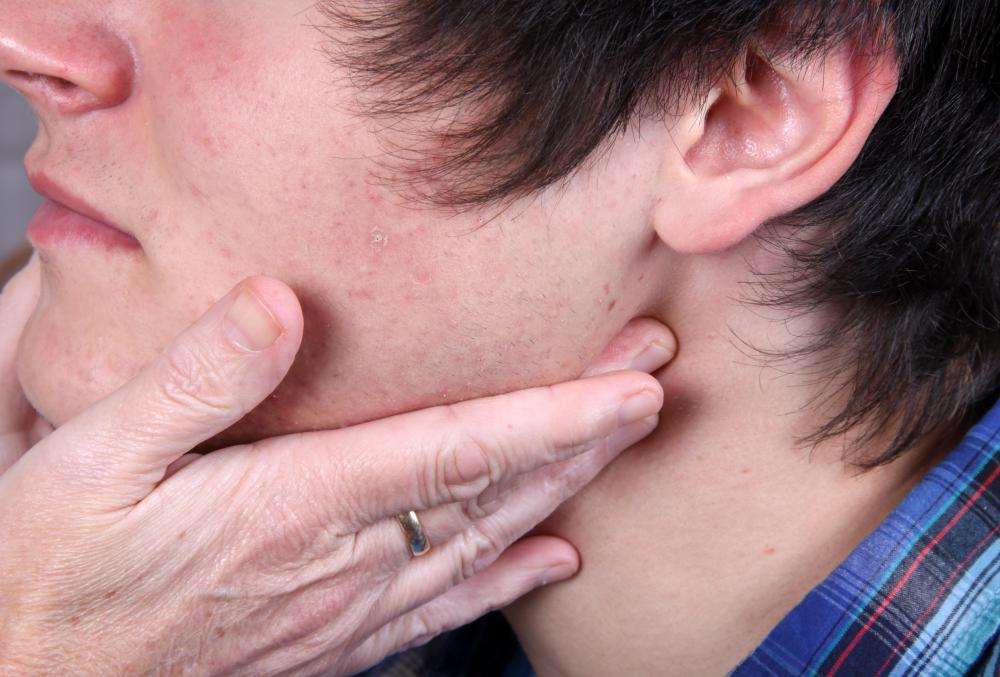
Lymph nodes become swollen usually from bacterial or viral infections. As bacteria or viruses invade the nodes, they harden and inflame, and they can really begin to hurt. With colds and flus, you may note painfully swollen nodes around the throat, under the arms and at the groin. When lymph nodes reach very large sizes, especially those around the throat and under the jaw, you may have mumps. Other conditions may sometimes cause large lymph nodes around this area, like strep throat, measles, ear infections, cat scratch fever, gonorrhea, syphilis, toxoplasmosis, or mononucleosis.

Sometimes lymph nodes become swollen and indicate an infection present elsewhere in the body. For instance, if you have an infected cut or wound, or you have a blood infection, you may note lymph nodes become swollen throughout the body. Usually they are most swollen closest to the infection, if it’s on the skin.
In some cases, autoimmune disorders mean lymph nodes become swollen more or less chronically. This is because the body turns on itself, and produces extra white blood cells to attack regular aspects of the body it views as foreign tissue. Typical autoimmune disorders like lupus, rheumatoid arthritis, Hashimoto’s thyroiditis, or HIV may mean lymph nodes become swollen or remain swollen for long periods of time.

Swollen lymph nodes can also indicate the presence of foreign abnormal tissue in the nodes, in other words forms of cancer. Lymphoma for instance, specifically attacks the lymph system, and may result in one or more lymph nodes swelling. In other cases, blood cancers like leukemia, mean lymph nodes become swollen.
A swollen lymph node is usually considered to be .39 inches (about a centimeter) in diameter. You’ll definitely be able to feel swelling in most cases, and it can be painful. When you’ve had a doctor identify the cause, treatment of the causal factor can help gradually bring down lymph node swelling. In the interim, while treatment has not yet worked, you can address the discomfort by taking anti-inflammatory medications like ibuprofen. You can also use warm compresses on the swollen nodes to help bring some relief for the condition. Given the potentially serious causes of swollen lymph nodes, do check with a doctor if lymph node swelling doesn’t reduce in a few days.
FAQ on Why Lymph Nodes Become Swollen
What are the common causes of swollen lymph nodes?

Swollen lymph nodes, also known as lymphadenopathy, can be caused by a variety of factors. Infections, such as viral illnesses like the common cold, bacterial infections like strep throat, or more serious conditions like mononucleosis, are frequent culprits. Immune system disorders, including lupus or rheumatoid arthritis, and cancers like lymphoma or leukemia can also cause lymph nodes to swell. It's important to consult a healthcare provider if swelling persists or is accompanied by other symptoms.
How can I tell if my lymph nodes are swollen?

You may notice that your lymph nodes are swollen if they feel tender, enlarged, or firm when you touch them. Common areas where swollen nodes can be detected include the neck, under the chin, in the armpits, and around the groin. Swelling can range from pea-sized to as large as an olive. If you're unsure, a healthcare professional can help determine if your lymph nodes are swollen and the potential cause.
When should I see a doctor for swollen lymph nodes?

It's advisable to consult a doctor if your lymph nodes are swollen for more than two weeks, continue to enlarge, or are accompanied by other symptoms like night sweats, weight loss, fever, or if they feel hard or don't move when you press on them. Immediate medical attention is recommended if the swelling appears suddenly and is painful, as this could indicate a more serious condition.
Can swollen lymph nodes be a sign of cancer?

While swollen lymph nodes are often a sign of infection, they can also be an indicator of cancer in some cases. Cancers such as lymphoma or leukemia can cause lymph nodes to swell. According to the American Cancer Society, if the swelling is painless, persistent, and accompanied by symptoms like weight loss or fever, it may warrant further investigation for cancer or other serious conditions.
Are there any treatments for swollen lymph nodes?

Treatment for swollen lymph nodes focuses on addressing the underlying cause. If the cause is a bacterial infection, antibiotics may be prescribed. For viral infections, rest and fluids are often recommended. Over-the-counter pain relievers can help alleviate discomfort. In cases where cancer is the cause, treatment may involve chemotherapy, radiation, or surgery. Always follow the treatment plan advised by your healthcare provider for the best outcome.
Tricia Christensen
Tricia has a Literature degree from Sonoma State University and has been a frequent TheHealthBoard contributor for many years. She is especially passionate about reading and writing, although her other interests include medicine, art, film, history, politics, ethics, and religion. Tricia lives in Northern California and is currently working on her first novel.
Learn more...
Tricia Christensen
Tricia has a Literature degree from Sonoma State University and has been a frequent TheHealthBoard contributor for many years. She is especially passionate about reading and writing, although her other interests include medicine, art, film, history, politics, ethics, and religion. Tricia lives in Northern California and is currently working on her first novel.
Learn more...AS FEATURED ON:
AS FEATURED ON:


-
![The lymph nodes of the head and neck, shown in green, may become swollen because of throat or sinus infections.]() By: AlilaThe lymph nodes of the head and neck, shown in green, may become swollen because of throat or sinus infections.
By: AlilaThe lymph nodes of the head and neck, shown in green, may become swollen because of throat or sinus infections. -
![Samples of blood from a healthy person and one with leukemia. Leukemia can cause swelling in the lymph nodes.]() By: AlilaSamples of blood from a healthy person and one with leukemia. Leukemia can cause swelling in the lymph nodes.
By: AlilaSamples of blood from a healthy person and one with leukemia. Leukemia can cause swelling in the lymph nodes. -
![Lymph nodes usually become swollen due to bacterial or viral infections.]() By: Klaus EppeleLymph nodes usually become swollen due to bacterial or viral infections.
By: Klaus EppeleLymph nodes usually become swollen due to bacterial or viral infections. -
![A fever might cause swollen lymph nodes.]() By: evgenyatamanenkoA fever might cause swollen lymph nodes.
By: evgenyatamanenkoA fever might cause swollen lymph nodes. -
![Swollen lymph nodes are one of the first signs of illness.]() By: ShakzuSwollen lymph nodes are one of the first signs of illness.
By: ShakzuSwollen lymph nodes are one of the first signs of illness. -
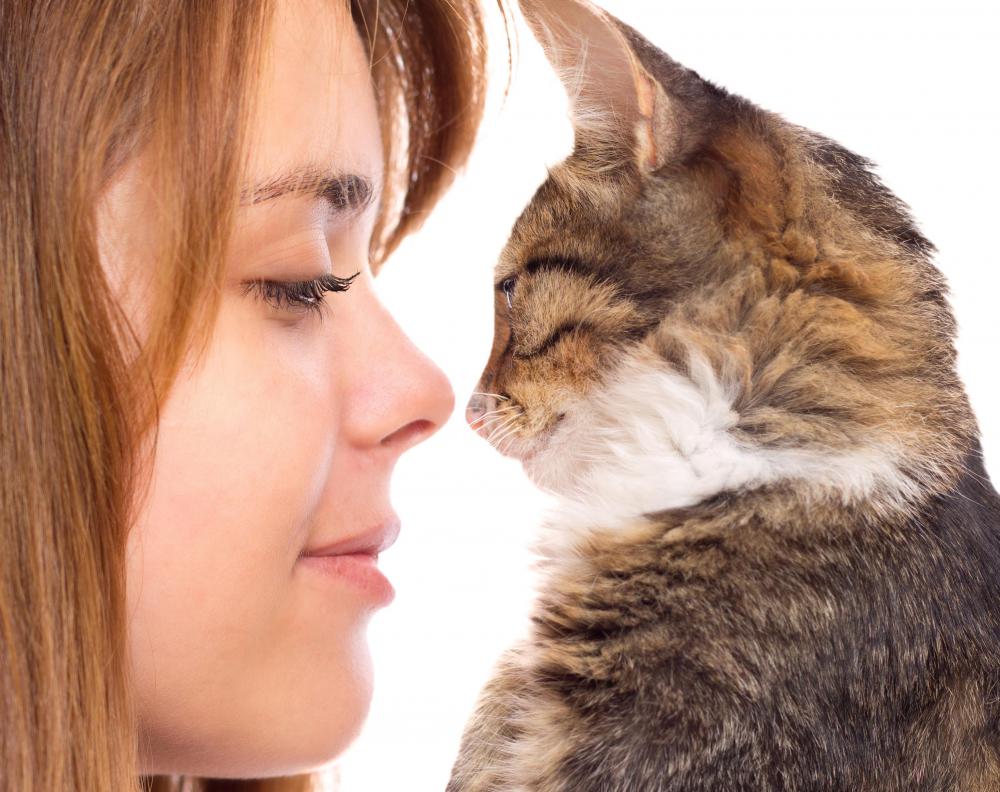
![Cat scratch fever can cause swollen lymph nodes.]() By: fantom_rdCat scratch fever can cause swollen lymph nodes.
By: fantom_rdCat scratch fever can cause swollen lymph nodes. -
![A sexually transmitted disease may cause swollen lymph nodes in the groin.]() By: Hunor KristoA sexually transmitted disease may cause swollen lymph nodes in the groin.
By: Hunor KristoA sexually transmitted disease may cause swollen lymph nodes in the groin.





Discussion Comments
I have a 2 year grand daughter who gets swollen and sometimes hurts on one side of her outer lip of her private area. My ex daughter in law says the doctor says it is a swollen lymph node from her wearing a pull up or diaper at night time while she sleeps. I find this hard to believe. I think there is more going on and she needs to be checked out further.
I'm a 15 year old girl and I've just come back from an hour of ice skating with really swollen lymph nodes (number 3 on the diagram)! Is this anything to be concerned about? Or should I just take some ibuprofen and wait for it to pass?
Gland cells are particularly sensitive to radiation. Look up the biological effects of weak electromagnetic fields. Your cell phone or any other wireless device may be the cause and slowly killing you.
I just found two big lumps behind my ear where number 2 is on the picture above! They feel like bone but I know they are not!
I am now really worried!
I've been worrying about a lump around my jawline, like where number 3 is. My sister thinks it's a swollen lymph node. I don't have any symptoms other than pain, so does that mean I need to go to the doctor?
I am 24 years old and married. Today I noticed a small, swollen bump next to my ear, similar to the position marked "3" in the picture. Now it hurts around my jaw. I recovered from a fever a few weeks ago. Please help me out on whether it indicates anything serious.
I was playing soccer in the dirt, and it was dusty. After the game, I started coughing. Since then, my throat has been swollen and it hurts to swallow. What can I do to help it to go away?
I am a 23 year old female. I have had a swollen gland in my right groin since my period started about two days ago. I usually have a lot of pain, but never experienced swollen glands during my period, before. Last week I had a bit of a cold, but nothing serious.
I am a 24 year old female and when i went to sleep last night everything was okay. When I woke up this morning, the left side around my jawline became really badly swollen on only my jawline on the left side.
Does anybody know what this might be and what might be making this happen to me? If anybody has any information about this, please let me know about it. I am getting very scared about what is happening to me right now. Please help me. Any kind of good news would be greatly welcomed.
I'm 17. Ive been known to suffer from hypochondria, but my neck hurts so bad. The back of my throat on the inside is like green and yellowish, and I have a lump on my neck that is not noticeable unless you actually touch it.
I get random pains in my neck and sometimes the back of my neck. It scares me because I can never tell if its my hypochondria or not. Also sometimes it's hard to swallow my food and the pains keep me from sleeping. Anyone know if I should be worried?
Syphilis has a lot of the symptoms you guys have stated. I am currently waiting for my blood results. I believe I may have caught it ten years ago from an older woman. I am only 26 now and have been ill for two months.
I'm convinced I've got syphilis and it is clear to me now this woman knew she had it as she got a check-up soon after and told me not to worry because she was all clear. The unprotected sex was accidental and she kept it from me. I feel cheated that my life will end very soon.
I first noticed this lump about a centimeter long on the right side of my neck a couple years ago and I'm only 15. I went to my doctor and he said that as long as it doesn't get bigger, then I'm okay. I've had this lump for about two years or so. However, I'm sick right now and I noticed that the lump as started to hurt. Is this normal?
I have been getting these swollen glands ever since I started to wrestle again. I don't have any sort of diseases or anything and I am a perfectly healthy 17 year old. I would really like to know the reason why I keep getting these swollen glands other than serious/ slight infections. Could it be from not drinking enough water, holding my breath when lifting something heavy, or even stress?
My seven year old son has a swollen lymph gland on the right side of his neck and it hurts when he touches it.
My dad has got swollen ankles and hands. He is 49 years old and he has been suffering from diabetes since age 13. His serum creatinine is 1.3 and he is feeling as though some weight is hanging from his ankles. He wants to go to the hospital soon, but I want some advice.
On an x-ray several years ago, the doctor said I had a nodule in my left lung, but it was nothing to worry about. Every year they took an x-ray and it was still there.
I lost my insurance and had to go on medically indigent care (they are in no hurry). However, she decided that a ct scan was needed. The results were three very large lymph nodes around my trachea, ranging in size from about 10mm to 13mm. I have no clue what size that is. She has put in for me to see a specialist of some kind to consider a biopsy. The problem is I have severe copd with emphysema, and am high risk, but that was three weeks ago, and I haven't heard anything. I am getting concerned. I need help.
I had experienced lymph nodes swelling (lots of them) two years ago and had one sent for biopsy and was normal, nothing to be alarmed of cancer but the Doctor prescribed me medicines for TB because he told me that i have developed TB of the veins.
I finished the meds after six months but then early this year, the swelling came back again in the same area in the left side of my neck. Does it mean my TB is back? I'm going home for my vacation and will definitely consult my Doctor about this. Thanks and God bless!
I have had this thin lump that runs from slightly under my armpit to the middle of my chest.It does not hurt until I touch it. It is weird because it runs from my armpit over my chest and stops slightly in the middle of my chest. What is this?
I just want to know what's happening. I had a swelling in the sides of the neck. After a few days, i started getting wounds all over my scalp in the head and a disgusting fluid began pouring out. It smelled awful and was as sticky as an adhesive that I could not touch my hair and had to shave my head totally.
I was then treated for the infection and the swelling in the neck is reduced and the liquid oozing out has reduced. What is actually happening?
my throat has been hurting since monday and it hurts when i swallow. could you tell me the problem.
To number 26, you may be deficient in stomach acid. Ask your doctor to test for this or you can do it yourself, just search google for how to test your stomach acid level.
My name is Lola. I'm not very good at explaining this, but I'll try my best.
So, I have been feeling a bump about half an inch below my left ear (straight down from where you put an earring on) and kind of between my jaw (see I'm very bad at explaining but hope you understand),
and every time i touch it i feel pain. Could this be a cyst? please, someone, help!
i had my tonsils out three years this april and ever since then my glands have not come down. i have been on every antibiotic since and i have tried all vitamins and last week i had another blood test and the doctor weighed me again and i have lost heaps of weight since he weighed me last visit. He gave me an iron tonic. can you help me and tell me what i might have please?
I have a swollen lymph node to the left of my neck close to the collar bone. I have undergone a surgery and now that lump is gone for biopsy. There was also a pus formation that they extracted. The reports will be out next week. What is the reason for this?
Why does a lymph node swell and my lymph node was not hurting at all -- only that it was jerking out of my neck which looked weird. Please advise. Regards, Leanne, female, age 26.
Swollen nodes in the neck and sore throat with white puss is classic for mono. My 12 year old son is getting over this now. Dr said it was far more contagious and easy to pick up than people think.
His started with what seemed to be a cold and fever. Mainly runny nose and finally the bad sore throat and swelling after a few weeks of the fever starting. There's a blood test for it, but not a lot of anything they use to treat it with but lots of rest, ibuprofen or Tylenol for pain and fever and lots of fluids.
Has to run its course. Ssometimes they give prednisone with it because the swelling can be so bad, also your spleen can swell so you have to be careful about exercise and sports, or any heavy lifting for a few months.
I have had a lymph node for almost ten years now on the right side of my right jaw the size of a pea. It only feels painful/sore when it inflames and my body is due to fight an infection. Is this normal for this lymph node to always be there? I am very worried about this and am making myself very ill over it.I lost my mum due to mouth cancer when I was 20 which makes me more paranoid. please help, someone.
My throat has been hurting for quite awhile now. it became inflamed and its hard for me to swallow. i have no medical insurance but i went to a clinic to get it checked. they told me to drink amoxicillin. there are several days that i missed drinking the antibiotics and became immune to it. i don't know what to do to reduce the swelling. please help.
my son had the bad kind of meningitis (bacteria) and almost died two years ago. he has been checked out and had follow ups during the last two years. In the last two months he told us that he had a knot in the groin area. He had it checked out and the doctor asked him if he been bitten or scratched by a cat. he said he had and now he said he has another knot on the other leg. he has an appointment with a doctor on the 11th of this month.
He has told all doctors that he has visited that he had meningitis. He has, as far as i know, no other problems arising from the meningitis. He is scared to death that he has cancer. He is 27 years old. He has no other knots anywhere else. What do you think can be his problem. thanks for any information.
@anon70381: This seriously sounds like an infection. If you could find a doctor who would call in an antibiotic for you it would more than likely help. Oh, I found the comment about having a lot of bacteria in your mouth sort of funny because that is really all that lives in your mouth anyway. We have staph living all over our bodies and strep all inside our mouths. Great thing we have an immune system.
Get some antibiotics because it really sounds like a bad progressive infection. About the dental issues: Peridex really helps in killing bacteria that causes gingivitis and other oral problems. Try to get some of this from a free clinic or something similar if possible. Hope this helps.
I have two swollen lymph nodes on the right side of my neck. Went for a ct scan and came back 2 cm lymph node. The md wants me to go for a biopsy. But it has gotten smaller since the day of the ct scan, but still there. What do you think it is? I am so paranoid about it. It's all I think about. Please help me.
I just noticed that I have swollen lymph nodes in the crease of both of my elbows. They are hard, but don't hurt. No other symptoms.
I feel a bubble under my armpit. what could this be?
I'm 16 and yesterday i found that i could feel two bumps on either side of my neck. After reading up on what it could be, i think it's swollen lymph nodes. I have not gone to a doctor, because i live at a boarding school, so it wouldn't be easy to get there.
Today, i can feel a few more lymph nodes that are smaller but seem to be swelling as well. I'm a health freak about this kind of thing. Can someone please help me? I always get very worried and expect that i have the worst condition possible, mainly because my mother died of cancer two years ago. Does this mean it could be cancer? Please, help.
Six days ago i felt like i had a kink in my neck, and two days later i starting getting a lump. Now it's been six days and it's the size of a golf ball, and I'm in so much pain and getting very bad head aches and a fever. i went to the walk-in clinic, and the doctor told me it's an infected lymph node. He prescribed me cephalexin 500mg. It's day one of taking it and the pain is still here but he said it would take about three days for any signs of healing.
You should go to your doctor because mine's getting worse day by day.
Lymph swelling is most common for head infections, like sinus or gum disease, things that are treatable and non-life-threatening.
However, if your lymph nodes begin to swell unexpectedly and for no good reason, you begin to have a spiking fever, you need to get to your doctor right away.
You should never try to self-diagnose yourself using the internet; you're just going to run into awful stuff like 'cancer' and 'tumor' and you're going to worry your benign condition into something worse.
Drink lots of green sencha tea no matter what ails you and rest easy, get some sunshine once a day as well and after a week, 90 percent of the time you'll be feeling like your old self again.
Peace and well-being to all.
I have had a swollen lymph node in the hollow space above my left clavicle for four months now. My CBC shows a high WBC but everything else is OK. I've had an ultrasound and they can't find anything. I'm very worried. It feels better with an anti-inflammatory but it's still there. It also seems to semi go away when I take Bactrim but comes back. Could this be just a bad infection or cancer?
Looking for answers. My doctor cannot figure this out.
My son has a swollen lymph node behind his right ear that has been there for six weeks. He saw his ENT a week after I noticed it and he said it is very common.
At the time he didn't have any type of infection but a few days later he developed a rash from a viral infection. Since then the node behind his ear hasn't changed at all -- hasn't gotten bigger or smaller. Should I be concerned that it has lasted this long without any change?
A side effect of bulimia is swollen lymph nodes around the jaw.
I've had two swollen lymph nodes that haven't gone away for three or four years. They're located behind both my ears and I'm really unsure of what could have triggered them to swell. Any clue as to what caused this would be appreciated.
i have what i think to be a swollen gland on the right side of my throat by my ear under my jaw. i have had my wisdom teeth removed a few months ago i am not sure if it could be from my teeth or something else. i have also been having my jaw crack a lot more recently could it be from that?
Mike - you should find a free clinic in your area. They can fix you up before this gets worse. If you don't know where to start, try calling your county department of heath and human services. You're in my thoughts!
About two days ago I woke up with a sore like on my chin and a node in my throat. I did some research and I'm pretty sure it's a lymph node but now it's hurting around my jaw line and it hasn't gone away. The node is also starting to hurt a little.
Any suggestions on what it could be? I haven't been able to go to the doctor because I don't have insurance. I'm taking ibuprofen for the pain.
If anybody could give me some answers I'd appreciate it. Also I have a runny nose and it has been that way for quite awhile now and it's starting to drive me crazy. Could that be the reason why I have a lymph node? Thank you.
Dear "anon70381" I doubt you have cancer, especially if they did blood work on you and everything. What it sounds like to me is a very nasty infection. Most likely strep throat if you have the white dots on the back of your throat with pus coming out.
Strep throat can also cause lymph nodes to become swollen especially around the site of infection. But please, try to think positively, as our thoughts do have a major affect on our bodies. If you truly believe you're sick then you will be! You should read "You Can Heal Your Life" by Louise Hay.
I'm 22. And a few days ago I woke up with my neck being very sore, like I got hit. Two days later it turned into a lump, and a big one at that. The largest part is just under my chin, but it follows my jaw line and then down my neck.
I went to the doctor and he said I had and infection in my lymph node, but it is abnormally hard. I'm currently on penicillin. I hope it works.
i am mike, a 32 year old smoker trying to stop! Three or four months ago i got a severe scratchy throat, then a very, very sore, on fire throat. My right tonsil started to swell and got inflamed then had flu like symptoms.
I went to doc and got antibiotics and it cleared up in a week. But a week later it came back in my left tonsil and inflamed it and now it goes up and down. Except i had no flu symptoms this time.
I notice now lately my neck has what i think are swollen nodes and some small nodes have gotten pretty hard to the touch on both sides. I'm not sure if that is just normal for me or not.
I had something affect the left side of my jaw where it was really sore, just below the ear and right at the ear and now cleared up.
I am concerned about cancer although the doc did not see any signs of oral cancer and i had no other symptoms. Today i notice a whitish/clear color, either swelling or lump with looks like a pus ball on my right tonsil which appears to have very small hole leaking yellow fluid!
The skin, or whatever it is, around the front of my tonsils are red and yellow i have a lot of yellow in my mouth all over, mostly around the tonsils. Also i notice the very back and the very back sides of my tongue have a white coating on it, kind of thick in places. some of that i can remove with a toothbrush, but not all, as i gag way too bad!
Now i am ashamed to admit this part, very ashamed, but i have several rotten teeth that have went into the gums and maybe the bone. I kept really poor oral hygiene i know i made a mistake and i am dearly sorry and will see a dentist when i have money to do so. i am very poor!
What i am asking is, yes i know this can be cancer -- hell anything can be cancer -- but from what you read does it sound like cancer? Everyone, including doctors i have spoke to on the radio, says it sounds like a really nasty infection. One year ago or a little over, i was scanned from head to toe looking for cancer, blood work and all, and nothing found.
Yeah i worry about cancer a lot! Also around a year ago i got bad meningitis which almost killed me and i think my teeth caused that. Please keep in mind i have very severe panic disorder.
Please be careful with your reply as a doctor is not an option for me at the moment, with no cash. Just from what you read the symptoms, the way it started out and all that is going on now, does this sound more like cancer to you or very severe infection?
And please note my mouth is most likely full of bacteria! I really can't wait to hear from you. My main worry is the lymph nodes in the neck now i recall several months ago i thought they were very large too, and the doc felt them and said none of them were swelling and to stay off the internet lol.
But i can feel a difference. the smaller ones do feel a lot harder then before. And the white crap on back of my tongue what can that be bacteria? I had two hiv tests done lately which were negative!
No weight loss, no sickness, no energy loss -- just very very depressed! Please help me to calm down just a little. But i swear i will visit a doc as soon as i damn well can. lol!
I have implants (two years now) and I was just squeezing the skin under my armpit. Minutes later it started to pulsate and a twinge of pain started to make me aware of that location I had just squeezed. Is this any indication of anything? Not too happy with they way it is not going away! I will for sure go to my doctor asap, but any info on this -- anyone?
Did you know there's something like 600 lymph glands (lymph nodes) in the body -- most are in the head and neck. Those that usually swell are those in the armpits, neck, or groin, or below the chin.
Post your comments