
At AllThingsNature, we're committed to delivering accurate, trustworthy information. Our expert-authored content is rigorously fact-checked and sourced from credible authorities. Discover how we uphold the highest standards in providing you with reliable knowledge.
Why do Cats Have Whiskers?
 Mary McMahon
Mary McMahon
Mary McMahon
Cats have whiskers to help them gather information about the natural world around them. The extremely sensitive tactile hairs are able to detect subtle vibrations and wind currents, and can also be used as a measuring tool to determine whether or not a cat will fit into an opening. Studies have suggested that whiskers are crucial to a cat's sense of balance and spatial relationships. Whiskers are known by the Latin name of vibrissae, which is a generic name for any sort of stiff, large, extra sensitive hair used as a sensory tool by animals. Mammals of all sizes from mice to horses have vibrissae, and are highly attuned to small changes in their environment as a result.
The whiskers of a cat are much thicker than conventional hairs, and the hairs are also more deeply rooted so that they cannot be dislodged as easily. Pet owners may have noticed that cats have whiskers on the whisker pad around their noses, above their eyes, and behind their front legs. The whiskers grow in multiple locations so that a cat can collect different types of information which contributes to an overall big picture of a scene.

On the face, whiskers are used to feel out obstacles. If a cat is trying to slip into or under something, he or she will test it out with whiskers first. The whiskers around the nose and eyes are a little bit longer than the width of the cat's body, so if the whiskers are heavily compressed, the cat knows that the hole is too small. Facial whiskers are also used to feel for slight breezes and changes in temperature. Wind currents can indicate the location of furniture, open doors, and other matters of interest to a feline, just as temperature changes can.

Leg whiskers help cats keep track of prey animals. They help cats to figure out how large a prey animal is and where exactly it is located, useful for a shortsighted animal like a cat. Some animal behaviorists suspect that cats have limited close up vision, and that cats have whiskers and an acute sense of smell to assist with handling prey in close quarters.

Whiskers can also be used to judge mood. A curious cat often thrusts the whiskers forward to explore. Relaxed, confident cats have whiskers with a forward tilt as well, indicating that the animal feels secure and interested in his or her surroundings. When a cat is tense or unhappy, the whiskers are pulled back against the face.
Because cats' whiskers help them navigate, damage to their whiskers can be debilitating. Whiskers should never be cut or trimmed, and excessive handling of whiskers should be avoided, as manipulation of the whiskers can be painful. Whiskers do periodically fall out and grow back, which is normal, but if a cat loses a large number of whiskers, it may be a sign of fighting or health problems.
Frequently Asked Questions
What is the primary function of a cat's whiskers?
Whiskers serve as highly sensitive tactile hairs that help cats navigate their environment. They detect subtle changes in air currents, enabling cats to sense obstacles and movements nearby, even in the dark. This sensory tool is essential for measuring spatial awareness and hunting precision.
Can a cat's whiskers affect its balance?
While whiskers are not directly responsible for a cat's balance, they contribute to the cat's spatial awareness. They help cats understand their surroundings and move with agility and grace. A cat's inner ear primarily governs balance, but whiskers provide additional sensory input that aids in coordinated movement.
Do cats experience discomfort if their whiskers are cut or damaged?
Yes, cats can experience discomfort and disorientation if their whiskers are cut or damaged. Whiskers are deeply embedded in the cat's skin and are connected to sensitive nerve endings. Damaging them can impair a cat's ability to navigate and can cause stress or anxiety.
How do whiskers assist cats in hunting?
Whiskers help cats determine if they can fit through openings and aid in detecting the location and movement of prey, even in complete darkness. The sensitivity of whiskers to vibrations in the air also allows cats to detect nearby prey, making them more efficient hunters.
Do whiskers grow back if they fall out or are trimmed?
Yes, whiskers can grow back if they fall out or are trimmed. However, it's important not to trim a cat's whiskers as it can cause them discomfort and disorientation. Whiskers shed and regrow naturally, just like other hair, but the process can take time.
Are a cat's whiskers connected to their emotions?
Cats often use their whiskers to communicate emotions. When a cat is relaxed, its whiskers will be still and positioned slightly to the side. In contrast, a cat that is curious or on high alert may push its whiskers forward. Fear or aggression can cause a cat to pin its whiskers back against its face.
Mary McMahon
Ever since she began contributing to the site several years ago, Mary has embraced the exciting challenge of being a AllThingsNature researcher and writer. Mary has a liberal arts degree from Goddard College and spends her free time reading, cooking, and exploring the great outdoors.
Learn more...
Mary McMahon
Ever since she began contributing to the site several years ago, Mary has embraced the exciting challenge of being a AllThingsNature researcher and writer. Mary has a liberal arts degree from Goddard College and spends her free time reading, cooking, and exploring the great outdoors.
Learn more...AS FEATURED ON:
AS FEATURED ON:









-
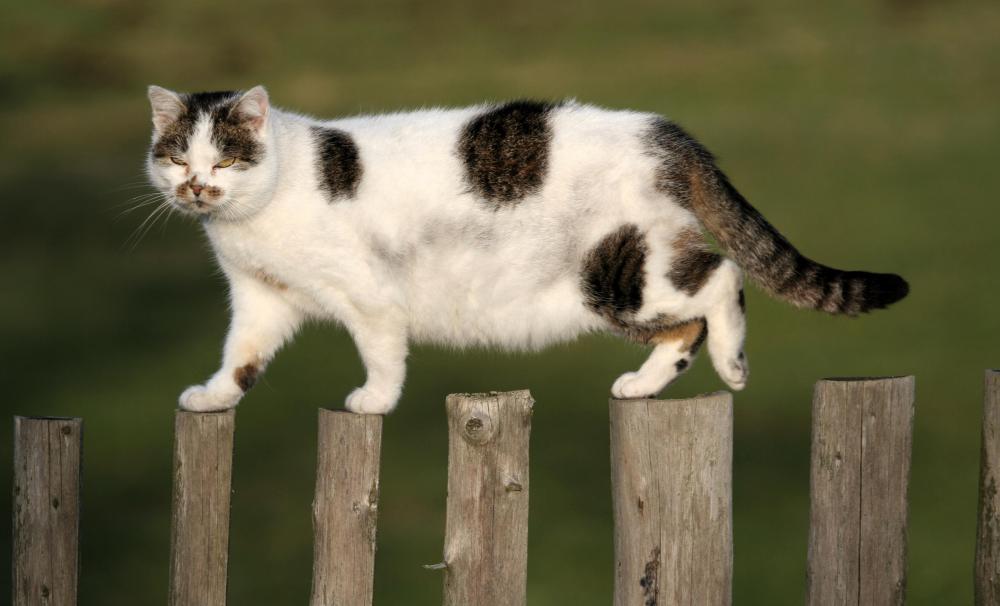
![Whiskers help cats with balance.]() By: Marcel SchauerWhiskers help cats with balance.
By: Marcel SchauerWhiskers help cats with balance. -
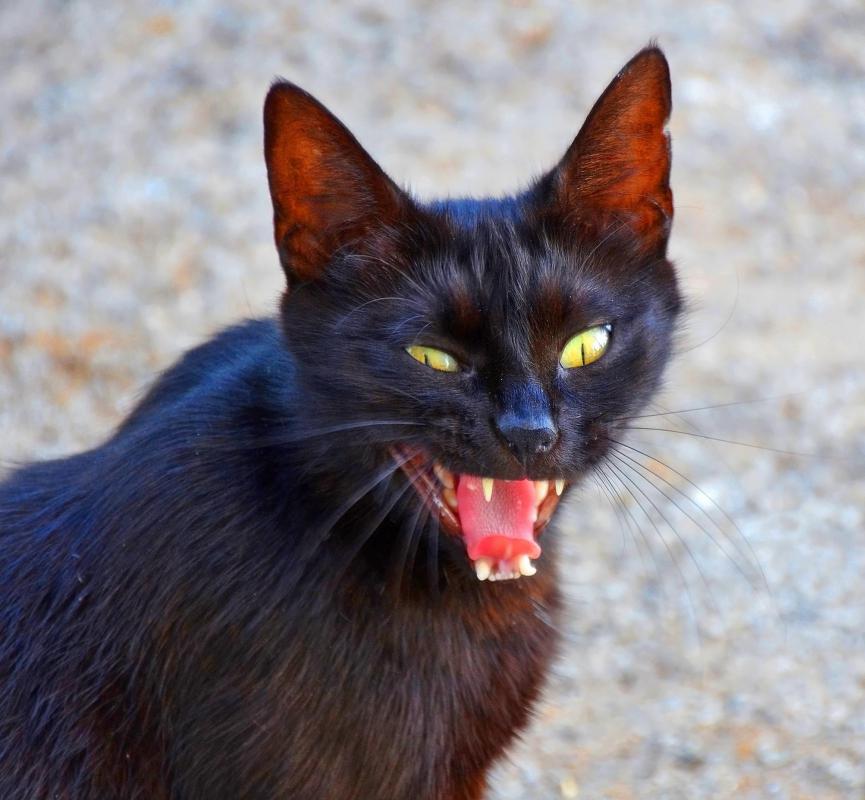
![When cats are confident and secure about their surroundings, their whiskers have a forward tilt.]() By: cynoclubWhen cats are confident and secure about their surroundings, their whiskers have a forward tilt.
By: cynoclubWhen cats are confident and secure about their surroundings, their whiskers have a forward tilt. -
![Whiskers help cats size-up prey.]() By: nico99Whiskers help cats size-up prey.
By: nico99Whiskers help cats size-up prey.

Discussion Comments
@John57-- This is precisely why we have to make sure that our cats are not overweight. Because when a cat is an adult, the whiskers stop growing and that is the measurement the cat will use to determine if it can fit into a space or not.
If the cat becomes overweight, it will continue to think that its body is the same width as its whiskers and can get stuck in tight spaces.
Have you ever seen a chubby cat stuck somewhere and you wonder to yourself why the cat went in there in the first place? This is why! It's because of the whiskers.
I'm toilet training my cat and I noticed that she moves her whiskers back and forth while taking care of business at the toilet.
Does this have a special meaning? Is she happy or upset?
@anon159392-- I also found a whisker on the carpet today and I was worried. I know cats need their whiskers to get around and I had never seen my cat lose one before.
It's good to know it can sometimes fall out and it will grow back. I guess it's sort of like hair in that way.
I am constantly amazed at the places my cat will nose herself in to and curl up to take a nap. I had always read that their whiskers were a way for them to judge if they would be able to fit their body through whatever opening they were trying to get in to.
Cats are very curious by nature, and can easily get themselves in trouble - that must be where we get the expression that they have nine lives. I have a cat that must have used up all her lives a long time ago, but she is still around.
It is interesting to know just how important a cats whiskers are to them and that there is more than just one use for them.
Our family adopted two feral kittens 2 years ago and have grown to love them. I found a long thick whisker on the sofa and was wondering why they have them in the first place. Now we'll be a better judge of their moods. Thanks for your explanations.
This article helped me with my essay on "What are Whiskers used for?" It is a quick reliable source and helped me do my project. I got an A+ with 97% because of you wisegeek! Thank You!
All the information helped me with an essay "Why Cats Have Whiskers" It helped a lot. Wow!
Post your comments