
At WiseGEEK, we're committed to delivering accurate, trustworthy information. Our expert-authored content is rigorously fact-checked and sourced from credible authorities. Discover how we uphold the highest standards in providing you with reliable knowledge.
Why are There Four Human Blood Types?
 Niki Foster
Niki Foster
Niki Foster
Humans haven't always had different blood types, but rather evolved to have them over time in response to disease. The reason individual humans have different blood types is that they inherit the trait of their blood having certain antigens on the outside of the blood cells from their parents. Antigens are molecules that trigger an immune response. There are actually vastly more than four blood types — the International Society of Blood Transfusion (ISBT) recognizes 29 different blood group systems, encompassing over 600 distinct antigens. However, the most well known and medically useful blood group system, called ABO, distinguishes four types of blood.
Not all human blood types have always existed. In fact, they developed over time because of genetic changes and mutations. It's thought that type A is the oldest type of blood, which then mutated into type B about 3.5 million years ago. About a million years later, type O developed. Some people also have type AB blood, which has both A and B antigens. The reason the blood changed is thought to be in response to disease — for instance, type O blood appears to be more resistant to malaria, and many people in malaria-prone areas have type O blood.

The ABO blood types are important because blood of a different type than one's own can cause a fatal immune response if introduced into the body. Along with antigens on the red blood cells, the body carries antibodies in the immune system that recognize and fight off the antigens in foreign blood. The ABO system deals with the presence or absence of two specific antigens, called A and B.

Red blood cells can have A or B antigens, or both A and B antigens, or neither. Blood with A antigens alone is classified as type A, while blood with only B antigens is type B. Blood with both A and B antigens is classified as type AB, and blood with neither antigen is type O.
The immune system has antibodies that protect against antigens that are not present in the body's own blood. Those who have type A blood possess anti-B antibodies; type B blood possesses anti-A antibodies; AB blood has neither of these antibodies, and people with type O blood have both. Patients cannot receive blood transfusions from donors whose blood contains an antigen that their own blood does not, because their antibodies will launch a defense against it. Ideally, both the donor and recipient in a blood transfusion should have the same blood type. If this is not possible, however, other combinations are safe.

Type O blood is known as the "universal donor." Since it carries neither A nor B antigens, it can exist in the presence of both anti-A and anti-B antibodies and is therefore compatible with any recipient blood type. Conversely, type O people can only receive blood from another type O person.
Type AB blood is likewise called the "universal recipient." People with type AB blood have neither anti-A nor anti-B antibodies, so they can accept any ABO blood type from a donor. However, those with AB blood can only donate blood to recipients with the same blood type. Blood types A and B are mutually incompatible for blood transfusions, but both can donate to a type AB recipient or receive blood from a type O donor.

The ABO blood group system is often supplemented with the Rhesus blood group system. Though the latter system deals with five specific antigens, it defines only two significant blood types, according to the presence or absence of the D antigen: RhD negative and RhD positive. Those with blood types in the ABO system are sometimes said to be positive or negative, as in "type O negative," as RhD negative recipients are not compatible with RhD positive donors.
Niki Foster
In addition to her role as a WiseGEEK editor, Niki enjoys educating herself about interesting and unusual topics in order to get ideas for her own articles. She is a graduate of UCLA, where she majored in Linguistics and Anthropology.
Learn more...
Niki Foster
In addition to her role as a WiseGEEK editor, Niki enjoys educating herself about interesting and unusual topics in order to get ideas for her own articles. She is a graduate of UCLA, where she majored in Linguistics and Anthropology.
Learn more...AS FEATURED ON:
AS FEATURED ON:









-
![Two types of blood on a blood typing test card.]() By: lkordelaTwo types of blood on a blood typing test card.
By: lkordelaTwo types of blood on a blood typing test card. -
![Two packs of O- blood.]() By: dazzi-bTwo packs of O- blood.
By: dazzi-bTwo packs of O- blood. -
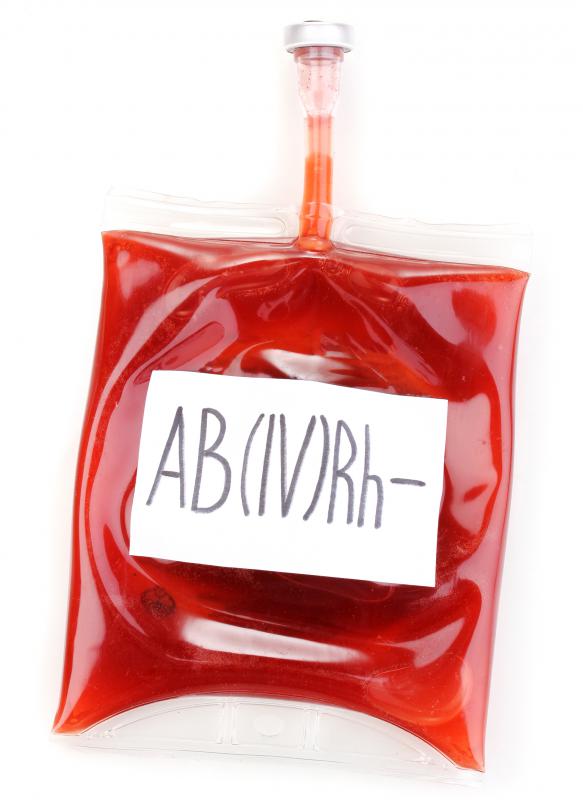
![A pouch of AB- blood.]() By: Africa StudioA pouch of AB- blood.
By: Africa StudioA pouch of AB- blood. -
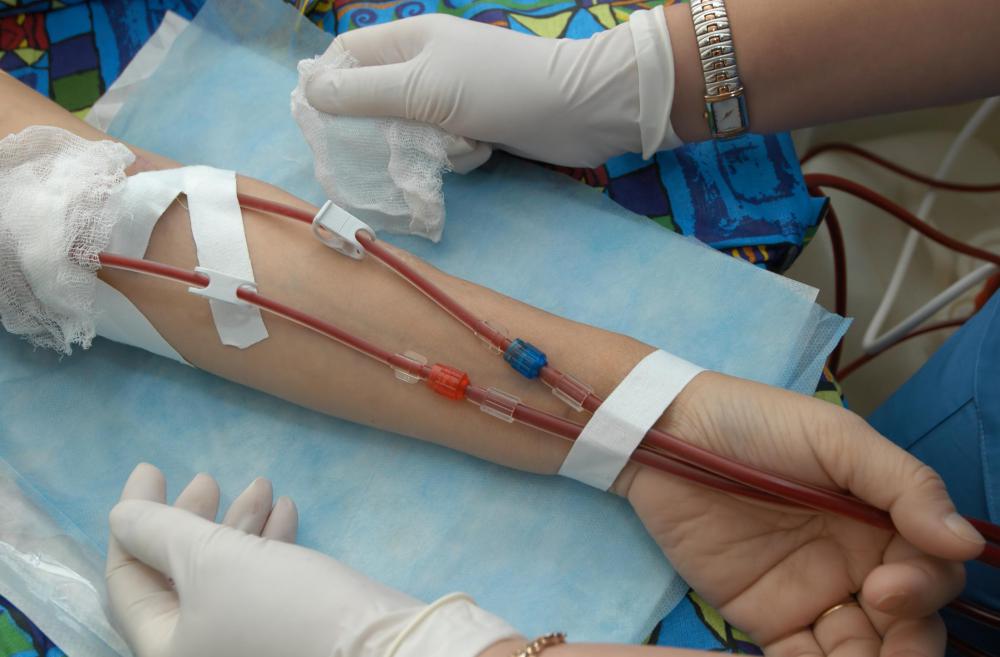
![Patients cannot receive blood transfusions from donors whose blood contains an antigen that their own blood does not.]() By: Max TacticPatients cannot receive blood transfusions from donors whose blood contains an antigen that their own blood does not.
By: Max TacticPatients cannot receive blood transfusions from donors whose blood contains an antigen that their own blood does not.


Discussion Comments
@ Submariner- To find out your blood type, you simply need to have your blood drawn. You can get your blood drawn at any doctor’s office or hospital. There are some situations where a doctor will automatically determine your blood type. A doctor will administer a blood type test before you can give or receive blood, donate or receive organs, before surgery, and in the early stages of pregnancy. Blood tests are also used in legal situations to determine relationships, and to convict or acquit a criminal suspect.
As for getting married, states do not actually test for blood type. Rather, they test for genetic and venereal diseases.
How do you go about determining your blood type? What situations would you need to know your blood type besides blood transfusions? Finally, why do you have to have a blood type test before getting married in some states?
can a father with O+ and a sister with RH- and a mother of an unknown blood type have a sister with AB+ blood have the same father?
Post your comments