
At BeautyAnswered, we're committed to delivering accurate, trustworthy information. Our expert-authored content is rigorously fact-checked and sourced from credible authorities. Discover how we uphold the highest standards in providing you with reliable knowledge.
Why are the Back Teeth Called "Wisdom Teeth"?
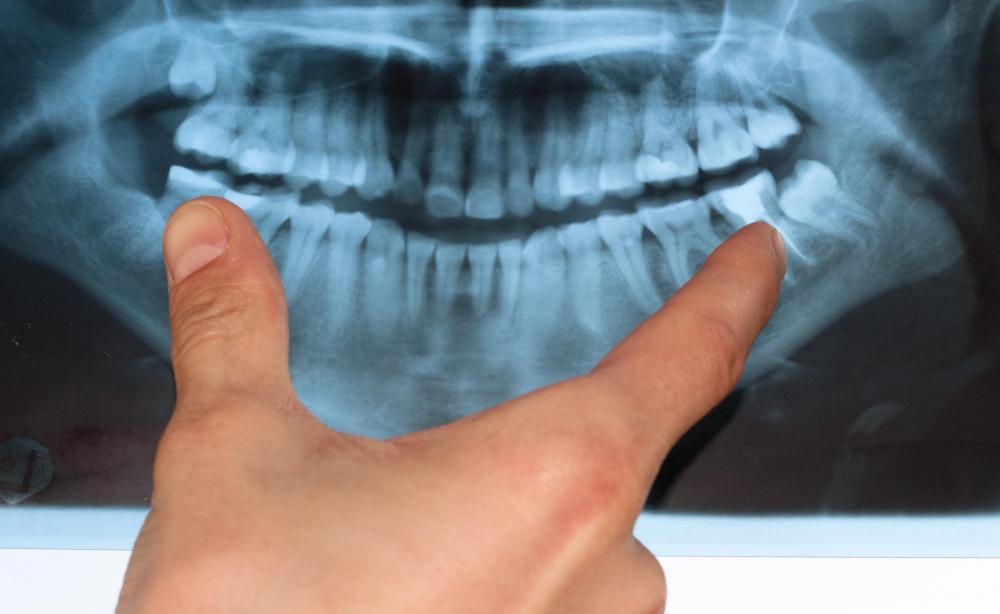
The wisdom teeth are the maxillary and mandibular third molars. They are located all the way back in the jaw, and they tend to come in some time between the ages of 16 and 25, if they come in at all. For many people, they affect the other teeth when they come in, and they often require surgery to remove them to allow the jaw to remain healthy. Wisdom teeth are so named because of the time they appear, generally in the late teens or early 20s, when people are supposed to be gaining some bit of wisdom in life.
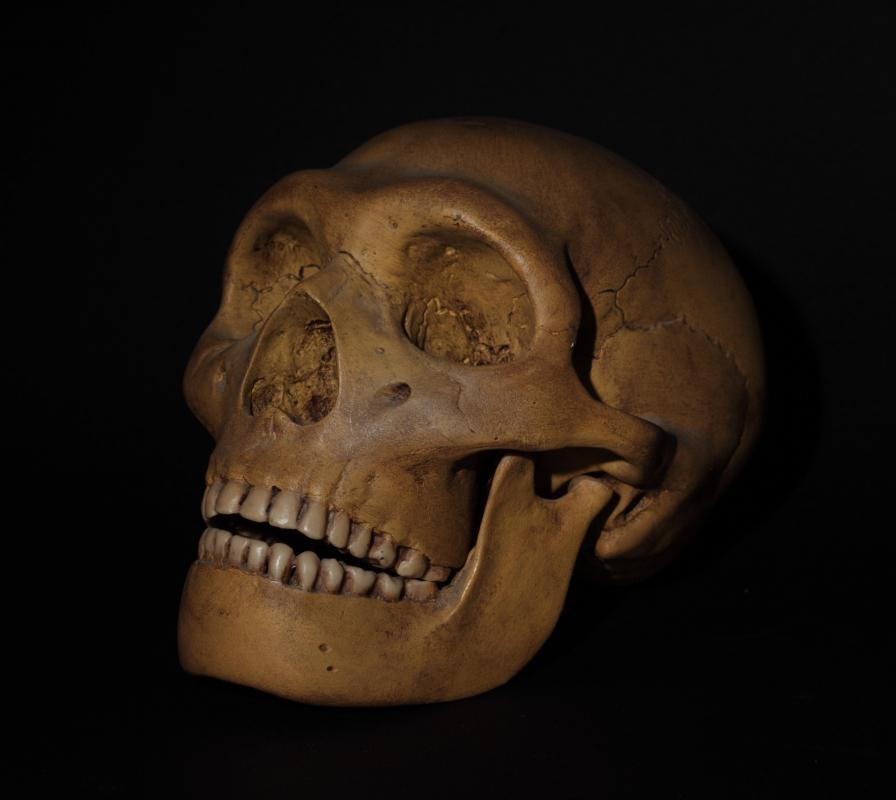
There are two main theories as to why these teeth exist at all, since in most cases in the modern world, they cause problems and have to be removed or else mess up the jaw line. One theory is that, in ancient times, tooth loss was much more common, because of rot or trauma, and so most people by the time they were in their early 20s, had already lost a tooth or two. The wisdom teeth, then, would help fill the empty space that the lost tooth left, making for a more complete bite. Another theory holds that in the past the human jaw was significantly larger, so that there was room for these teeth to grow in. As the human diet shifted, the jaw shrank, but the teeth continued to form.

In fact, wisdom teeth form to varying degrees in different segments of the population. Nearly all Mexican Indians, for example, form them during their life, while less than one in 500 Bantu speakers in Angola have them. This is related to the PAX9 gene, and may also be influenced by other genes as well.
Wisdom teeth are so obviously different from their appearance than other teeth, so it makes sense that most cultures have come up with their own way to describe them. Generally, infants form a first set of teeth, commonly called baby teeth, which eventually fall out and give way to the adult teeth, that will remain until old age. Wisdom teeth are, except in rare circumstances, the only other set of teeth that appear, and they come quite a bit after the full set of adult teeth have grown in for most people.

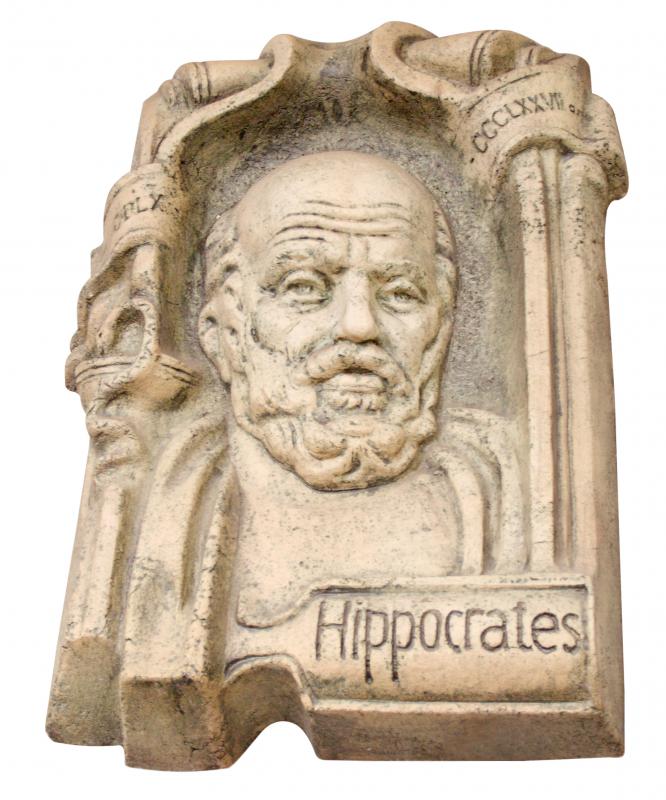
In fact, the association of these teeth with wisdom in terms of age dates back to antiquity. Hippocrates refers to these teeth as sophronisteres, from the Greek sophron, meaning prudent. So in Classical Greece, they were the prudent teeth. Later, in Rome, they were given the name dentes sapientiae, which literally translates as teeth of wisdom. This was the term first used in English, around the mid-17th century, and continued to be used until the mid-19th century, when the current name was adopted.

Other languages have other takes on similar themes. For example, in Arabic, the teeth are called Ders-al-a'qel, or teeth of the mind. In Dutch, they are known as verstandskies, which can be glossed as teeth of wisdom. In a number of Spanish-speaking countries, the teeth are referred to as muela de juicio, or the teeth of judgment, referring to the fact that they appear around the same time people in theory begin to develop good judgment.
AS FEATURED ON:
AS FEATURED ON:


-
![Wisdom teeth may exist because either tooth loss was more common in the past or jaws were larger.]() By: Pedro BigeriegoWisdom teeth may exist because either tooth loss was more common in the past or jaws were larger.
By: Pedro BigeriegoWisdom teeth may exist because either tooth loss was more common in the past or jaws were larger. -
![The wisdom teeth erupt at the ends of the jawline during late adolescence.]() By: Georgiy PashinThe wisdom teeth erupt at the ends of the jawline during late adolescence.
By: Georgiy PashinThe wisdom teeth erupt at the ends of the jawline during late adolescence. -
![In some groups, like the Bantu of Africa, wisdom teeth are rare.]() By: michaeljungIn some groups, like the Bantu of Africa, wisdom teeth are rare.
By: michaeljungIn some groups, like the Bantu of Africa, wisdom teeth are rare. -
![Hippocrates called wisdom teeth "sophronisteres," which meant prudent teeth.]() By: Pakhay OleksandrHippocrates called wisdom teeth "sophronisteres," which meant prudent teeth.
By: Pakhay OleksandrHippocrates called wisdom teeth "sophronisteres," which meant prudent teeth. -
![When wisdom teeth become impacted, they are typically removed.]() By: eyetronicWhen wisdom teeth become impacted, they are typically removed.
By: eyetronicWhen wisdom teeth become impacted, they are typically removed. -
![Impacted wisdom teeth can cause pain and swelling.]() By: 9nongImpacted wisdom teeth can cause pain and swelling.
By: 9nongImpacted wisdom teeth can cause pain and swelling.



Discussion Comments
How many people don't come out of wisdom teeth removal loopy?
Is it uncommon for a 6 year old to get her wisdom teeth?
I am 12 and I am already getting them. They are not my 12 year molars since I got those when I was only 10, and my mom got hers around the same time but she grew a fifth one after she got all four removed.
I don't think it's silly but it is absolutely incredible: a 72 year old lady still has all her teeth: 32 of them, including all four wisdom teeth. That's unheard of. Wow. I still can't get over it. What's her secret?
I'm Vietnamese and in here people call it the same thing "răng khôn" which literally means wisdom tooth.
I am Dutch and it's true that in Dutch they're called "verstandskiezen".
The word verstand does mean common sense, or wisdom. But if you split up the word verstand it says ver (far) stand (standing).
That's why they're called that, and I actually think the English literally copied it.
I am not sure how it could be so similar all over the world. In my language "Gujarati" it is known as "Dahpan ni Dadh". Which literally means "wisdom tooth".
I am 72 years old and still have all four of my wisdom teeth. When I was a young woman I had a fear of losing my teeth. Although it may sound silly - I still have all my teeth.
Well I've had all four of mine out, which no doubt explains my lack of wisdom. What little I had was removed. And that's my excuse. :P
Post your comments