
At AllThingsNature, we're committed to delivering accurate, trustworthy information. Our expert-authored content is rigorously fact-checked and sourced from credible authorities. Discover how we uphold the highest standards in providing you with reliable knowledge.
Why are Chicken Eggs Different Colors?
 Mary McMahon
Mary McMahon
Mary McMahon
Chicken eggs from various chicken breeds emerge in different shades because of pigments which are deposited as the eggs move through the hen's oviduct. The pigment depositions are determined by the chicken's genetics, with some breeds producing rich dark brown eggs, for example, while others lay snow white eggs. The eggs inside are essentially identical; there are no major flavor differences between chicken eggs from different birds, as the flavor is determined by the chicken's diet.
There are three main colors for chicken eggs. Most eggs in the store come in white or shades of brown. It is also possible to find blue to green chicken eggs, which come from the Aracuana, a breed of chicken developed in Chile. Araucanas have also been crossed with other breeds to produce the Americauna, sometimes called the “Easter egg chicken” in a reference to its multicolored eggs.

Originally, all chicken eggs were probably brown. Over time, people selectively bred chickens with progressively lighter eggs, ultimately producing white chicken eggs, which came to be the norm. Brown eggs were reintroduced to the market in the late 20th century, although people on farms were already quite familiar with them. Some classic white egg laying breeds include Andalusians, Faverolles, Dorkings, Leghorns, and Lakenvelders. Barnevelders, Rhode Island Reds, Jersey Giants, Delawares, and Orpingtons are well known for their brown eggs, which vary in color from light cream to dark brown.

In many cases, a chicken with white ear lobes will produce white eggs, while chickens with red ear lobes lay brown eggs, although this is not always true. Size is not a determining factor, with white eggs coming from tiny Bantams just as they do from large Leghorns. The color of the chicken is also irrelevant; chickens actually come in a wide range of shapes, colors, and sizes which run the gamut from strange-looking Frizzled Cochins to sleek black and white Lakenvelders.

The color of chicken eggs should not influence your purchasing decisions at the market, as the contents of the egg are what counts. Chickens who eat free range, varied diets tend to produce healthier eggs, as their free range lifestyles allow them to consume the dietary minerals they need for their own health, and these minerals will be passed down in their eggs. You may also have noticed that farm-fresh eggs tend to have dark yolks, whereas chicken eggs from battery hens tend to have lighter yolks; this color is determined by what the hen eats.
Frequently Asked Questions
What determines the color of a chicken's egg?

The color of a chicken's egg is determined by genetics. Specific genes dictate whether a hen will produce brown, white, or blue eggs. The pigment biliverdin gives blue eggs their color, while protoporphyrin results in brown eggs. White eggs lack these pigments, revealing the eggshell's natural color.
Can you predict the egg color by looking at the chicken?
Yes, often you can predict the egg color by looking at the chicken's earlobes. Chickens with white earlobes typically lay white eggs, while those with red earlobes usually lay brown eggs. However, this is not a foolproof method, as there are exceptions based on breed and genetic variations.
Does the color of the eggshell affect the nutritional value of the egg?
No, the color of the eggshell does not affect the nutritional value of the egg. The nutritional content is more influenced by the hen's diet and environment than by the eggshell color. All eggs, regardless of shell color, contain similar levels of protein, vitamins, and minerals.
Why do some breeds lay blue or green eggs?
Some chicken breeds, like the Araucana, Ameraucana, and Cream Legbar, have a unique gene that causes them to lay blue or green eggs. The blue color is created by the pigment biliverdin, which is deposited during egg formation. Green eggs result from brown pigment overlaying a blue shell.
Is there any difference in taste between eggs of different colors?
There is no inherent difference in taste between eggs of different colors. Taste variations are more likely due to the hen's diet and living conditions. Free-range hens that forage for a varied diet may produce eggs with a richer flavor compared to those fed a standard commercial diet, regardless of egg color.
Are certain egg colors more expensive or rare?
Some egg colors can be more expensive or rare due to the scarcity of the chicken breeds that lay them. For example, blue and green eggs are less common and may be pricier in some markets. The novelty and demand for these unique colors can drive up costs compared to the more common white and brown eggs.
Mary McMahon
Ever since she began contributing to the site several years ago, Mary has embraced the exciting challenge of being a AllThingsNature researcher and writer. Mary has a liberal arts degree from Goddard College and spends her free time reading, cooking, and exploring the great outdoors.
Learn more...
Mary McMahon
Ever since she began contributing to the site several years ago, Mary has embraced the exciting challenge of being a AllThingsNature researcher and writer. Mary has a liberal arts degree from Goddard College and spends her free time reading, cooking, and exploring the great outdoors.
Learn more...AS FEATURED ON:
AS FEATURED ON:









-
![Brown and white chicken eggs.]() By: aoatesBrown and white chicken eggs.
By: aoatesBrown and white chicken eggs. -
![Eggs from hens kept in battery cages tend to have lighter yolks.]() By: emirkooEggs from hens kept in battery cages tend to have lighter yolks.
By: emirkooEggs from hens kept in battery cages tend to have lighter yolks. -
![Farm-fresh eggs tend to have darker yolks.]() By: ginaufFarm-fresh eggs tend to have darker yolks.
By: ginaufFarm-fresh eggs tend to have darker yolks. -
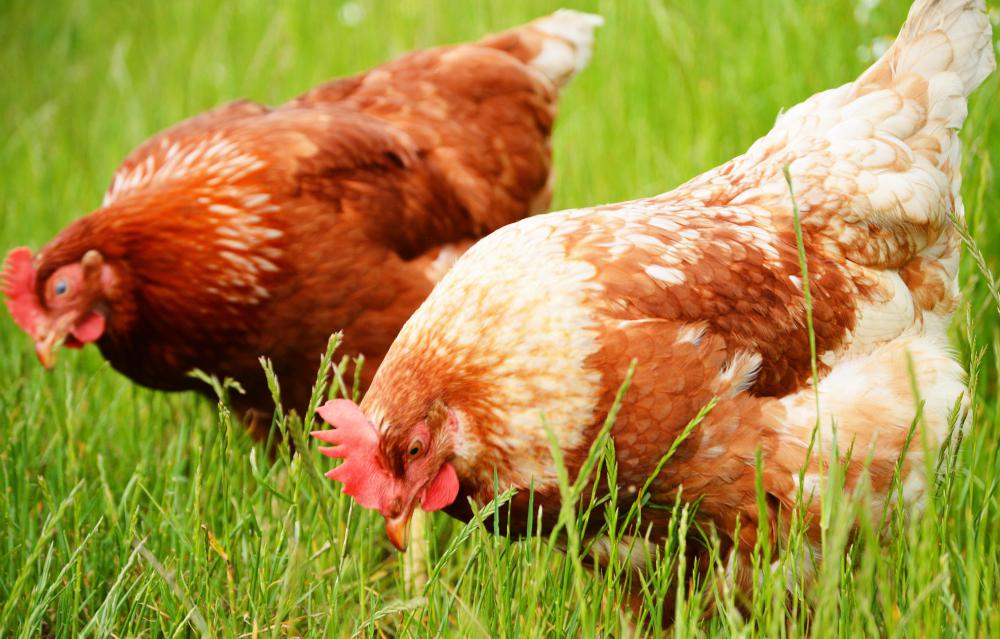
![Free range chickens tend to produce healthier eggs.]() By: monticelllloFree range chickens tend to produce healthier eggs.
By: monticelllloFree range chickens tend to produce healthier eggs.


Discussion Comments
Original egg color was white not brown. The two base colors of eggs are white and blue; brown is a coating paint on the eggs.
I was under the impression that green eggs had no "bad" cholesterol. This did not really clear that up.
This may have already been mentioned before, but Ameraucanas and Easter Eggers are not the same thing. Ameraucanas are a breed that was developed from Auracanas, and Easter Eggers are mutts produced by crossing ameraucanas or auracanas with other breeds. Easter eggers are often mis-represented as pure-bred ameraucanas by hatcheries and farm stores, but there is a significant difference as pure-bred ameraucanas have a consistently blue-green egg and uniform appearance among the breed, while Easter eggers vary widely in appearance and egg color.
Also, discussing earlobe color in relation to egg color is irrelevant and will serve only to confuse the average reader. Nothing in a chicken's outward appearance indicates the color of that chicken's eggs, and any relation is coincidental.
I was born in India, but live in the north of Spain and have had hens on the farm for more than 10 years here feeding them a mix of wheat, chopped corn and special hen food and it is really a good diet for them. I was just checking about why eggs shells are white or light brown and I read that hens with white earlobes will lay white eggs and hens with red earlobes will lay light brown shells, which seems like a more plausible explanation. The number of eggs you have will also depend on the age of the hen as well as the season of the year as they lay more eggs in summer than in winter if I am not mistaken. Thanks for reading my comments.
Who ate bald eagle eggs? They are an endangered species! That is awful.
Chicken egg colors are dependent on the breed of the bird. Of course, all the same breed will have the same ear color, thus the same egg color. And, as with anything else, more or less, organic is always better. Anyone ever heard of GMO's? How do you think chickens are treated/raised that lay for your local store? I can guarantee they're not free-ranging. They're crammed into tiny cages, unable to move, and fed all kinds of gross crap with hormones and meat proteins to make the biggest eggs. Do some research.
Do fertilized eggs have less or no cholesterol?
Now I am totally confused. Seventy years ago when I was living on my uncle's farm, he told me that brown eggs came from chickens that ate off the ground. That is why we would toss the chicken feed around and that white eggs came from chickens that were fed a fixed diet and inside coops. I have been telling this to people for years and finally was told I was wrong. Live and learn.
I always thought that brown eggs were better then white. I still prefer brown, mostly because, they seem to have thicker shells, look healthier and usually have darker yolks, which to me indicate more nutrients, which free range chickens get from natural sources. They also do taste better, meaning they are not tasteless as some chicken eggs can be.
I once had a chicken egg so fresh (right after it was laid) that it was bitter, so I would not recommend it. Let the egg cool to neutral before cooking and consuming it. Also, lately, the brown eggs in the supermarket cost more than white, where before it was the opposite. They caught onto me and others like me, who are buying more brown than white.
@anon129189: "'Free Range' chickens are no more healthy..."
Baloney. Commercial feeds are loaded with soy products, which is not healthy. Free-range and organic eggs are proven to have better nutrition by numerous studies. Most noticeably, the yolk color is richer and more golden, which is a sign of a higher choline content and higher omegas.
Eggs are bleached before they are packaged to get rid of the little dots on the egg and make it more appealing to the buyer's eye.
I come from a farming area in New Zealand, known for agriculture, etc. I have an issue with the topic where it is stated that all eggs were probably all brown. If you cannot define the issue, then why bother? White or brown, the interior is much the same. What I would like to know is why the interior colours change?
I have a hen that lays pink eggs, possibly an easter egger. When you put them away in the fridge, the eggs turn brown, when you hold it in the palm of your hand it starts changing back to pink! Crazy huh? It is not the warmth of your hands that causes the color change. I know this because if you run warm water over it, it turns solid brown. The egg shell is normal and the yolk inside is normal. Has anyone had a similar experience like this? You can repeat this as many times as you want to changing the egg from pink to brown, and brown to pink!
Would eggs sold in supermarket be colored to make them more attractive to buyers?
I raised Aracuans and did research re: their eggs reducing cholesterol levels and found that it is not true but I have a friend who is adding flaxseed to her chicken feed and her husband's cholesterol level has dropped.
red color in the egg whites. is this bad?
hi, we are in northeast pa. it's cold. i have seven brown chickens with brown ears, and they give brown eggs. i have 3 white chickens with white ears, they give us brown eggs why? we keep them warm, and feed the right food for egg layers, they get some scraps, in the spring, summer and fall they roam, so why do my white chickens with white ears give us brown eggs? thanks dave and kim.
Response to anon33876: re food coloring changing chicken egg colors.
Probably in the yolk but not sure about the shell. I live in Louisiana and after crawfish boils if the chickens find/are allowed to eat the scraps, their yolks will have a bloody orange color. It tastes the same, but it looks nasty.
Chicken eggs are chicken eggs. Period. The longer they sit in a warehouse, distributor, and grocers' shelves, the lighter yellow the yolks and the runnier the whites. White eggs are not bleached and brown, green or blue eggs are laid by chickens bred to lay those colors.
"Free Range" chickens are no more healthy, nor are the eggs any better than chickens fed on a balanced diet of grains and minerals such as found in most good commercial feed.
And while we are at it, "clean eggs" from the grocery store are more dangerous than farm fresh eggs that still have a little "something" on the shells. That little something is called "bloom" and is applied to the egg as it passes through the chicken on its way to being laid.
Washing removes this bloom and exposes the egg to external odors, chemicals and bacteria and viruses. Farm fresh eggs last, at room temperature for up to six months but supermarket eggs (already five or six weeks old when you buy them) last only a couple of weeks in the refrigerator. Why? No bloom!
Note: Wash the bloom off of the egg just before you use the egg to prevent contamination from whatever the bloom might have captured.
The bloom is also the reason you should not eat raw or undercooked eggs. That is referring to the store-bought eggs. Fresh, unwashed eggs are salmonella-free.
And one more thing: the thickness of the shell does not tell you how sever the winter is going to be. It only tells you how much calcium the hem has in her system. Hens are fed calcium as a supplement and if the hen decides she doesn't want that much, her egg' shells will be thinner. Chickens are not expert meteorologists!
you may be wrong about the color of the original chickens eggs. I believe the Indian Red Jungle fowl is the progenitor of modern chickens and I believe their natural egg color is white.
The eggs' color is determined by the ear lobes, white ear lobes means white eggs, red means brown.
There is nothing "cleaner" about white eggs. They all come out the back end of a hen.
On cholesterol: You are probably unaware that you have been lied to about it. If you have high cholesterol then you are ill. Avoiding dietary cholesterol will not help you. Cholesterol is needed by the body and your body makes several eggs worth of it.
No studies prove dietary cholesterol is the culprit, but I will tell you now what is: you. You need to stop eating processed sugars and grains. Even whole wheat should probably be avoided. Then get your rump up and exercise, cardio and weights. Same for men and women.
Free range chickens can be any breed and therefore the eggs can be any color. Some people say they can taste the difference between store bought battery eggs and free range. Can't say that I can, though.
Arsenic: yes some factory chickens are treated with it. Don't eat them or their eggs. Stick with clean birds. The more they have to free range the better.
A family friend has hens, and she gave me two dozen eggs that range in sizes (big, medium and small) and color( shades of white, shades of brown, blueish and greenish) she washed off the eggs. Are they OK to eat and how long can I keep them in the fridge until they are no longer good?
We are on vacation in Hawaii and yesterday I bought local eggs at a farmer's market. They are a mix with a couple of brown, but mostly they are green. I had never heard of green eggs before so it was good to learn that it is because they are a different breed.
I am from Ireland, but my mother and half of my family are American. In Ireland, when you buy a carton of eggs, they are always varying shades of brown, or speckled. We keep free range hens that only lay brown eggs, and white eggs are almost unheard of. Hen eggs are brown, duck eggs are white.
However, when visiting family in the US all their eggs were a uniform white. My dad said that was because the eggs were bleached to look more attractive but clearly that isn't the case. Still, white eggs to me look like they come from battery hens (whether they do or not) and generally look sickly or unnatural, so I would always have a natural preference for brown!
Don't be too sure about "Free Range" since all that really means is the chickens eat whatever they find. If there are any pesticides on the range there will be pesticides in the eggs.
I come from Ohio, and have always eaten white eggs. When I was living in Massachusetts, however, everybody ate brown eggs. I asked why and was told that local farmers were growing brown eggs, so they were more likely to be fresh. It seemed odd to me that eggs would be shipped half way across the country, as it wouldn't be cost effective. So, I kept eating my white eggs.
The color of the yolk does *not* indicate nutritional value. The color of the yolk is due to a group of chemicals called carotenoids found in grass, and other plants. Farmers with caged chickens now put carotenoids in the feed to please consumers. Some of the people that want to promote free range eggs that are aware that their previous statements about yolk color are false and are now spreading rumors that the carotenoids added to caged chicken food is synthesized. The truth being that this would not be cost effective and the carotenoids added are usually derived (extracted) from commonly grown plants like sunflowers, among others.
About the guy that stated...You aren't supposed to boil farm fresh eggs for more than two weeks. Because if you do, they really get to be like rubber balls.
the better the feed (corn, oats, bugs and such) will give a darker yolk than a pen fed 'taste better too' chicken who only gets ground feed (the powder kind). The brown eggs come from chickens with red or brown ear lobes and white eggs come from chickens with white ear lobes. I've known this since I was a kid on the farm 40 years ago. any other questions?
I live in Hampshire, England, UK and I buy my eggs from a lady that has hens that are free range. The eggs come in all sizes and are sometimes blue, green, brown or white. They are all equally delicious and so far I have not been poisoned by the egg white from any of them!
My friend and I were wondering if a chicken's egg color would change if they were fed food coloring (in their food)? Flower petals change colors when in colored water. Would this affect the egg color?
Why are free range/cage free eggs always brown?
My husband seems to think that there is arsenic in white eggs and will not eat white eggs. He will only eat brown eggs. Is there any truth to this?
They say not to boil fresh eggs for at least one week because the air sack is too small in a truly fresh egg. Basically, the air sack (it's at the wide end)gets bigger as they age thus making it easier to shell after you boil them.
response to anon19814
Males chickens are roosters and female chickens are hens.
I always heard you aren't supposed to hard boil farm fresh eggs for about 2 weeks. I live in a big farming area in Ohio and I have heard this a few times. Does anyone know why?
Actually chicken eggs only come in two colors, white and blue. There are 12 or so genes that control egg color and they are shades of white and blue. A brown egg is actually white. You can tell the true color of an egg by looking at the shell from the inside. The blue egg genes are not natural in chickens and it is believed that they where bred in with pheasants.
Araucana chickens where developed from mix breed birds from Chile. When these birds where brought to North America they where all called Araucana. In the 1970's the American Poultry Association (APA) set breed standards for Araucana and it made it so that many of the birds being called Araucana no longer qualified. Some of these birds became known as Ameraucana and they where accepted by the APA in 1984. Again many of the original birds did not meet the standard and a new name had to be placed on them....Today they are collectively called Easter Eggers.
I think brown eggs taste better than white eggs. the yolk is darker.
My husband and I have 17 hens and 1 rooster. We have 4 hens that lay white eggs and the rest lay brown. They free range and we give them our scraps from making salads everyday (they love it) and it is true the yolks are very bright dark yellow compared to store bought eggs.
Not just chicken eggs!
The best eggs I've eaten here in the PNW is bald eagle and falcon to a lesser degree. All eggs are edible and we as native people have been sampling all kinds of eggs for generations.
Color is set by species not diet!
I noticed even as a child in Iowa that the eggs my mother prepared for me at my grandma's house (where the chickens were raised across the yard) tasted better than the eggs she prepared for me at our own house, where the eggs came from the grocery store.
I recall a favorite afternoon snack being a hard-boiled egg from my grandma's chickens.
My own children have told me that the chicken eggs in Iowa taste better than the eggs I purchase where we now live (that may just mean that Grandma is a better cook than I am) and also that the eggs they ate when we visited family in Jordan tasted better, like eggs in Iowa. I share that observation. I wonder if besides breed of chicken (I have no idea what kind my grandmother raised, only that after their laying days ended they became "stewing hens" for Sunday chicken and noodles) and type of feed, the distance from production to consumption and number of chickens raised at one time in a production site have effects on flavor.
In response to:
"Posted by: anon17524
I have a chicken and it lays brown eggs, but sometimes it turns paler. Do any of you know why this happened?"
I've raised back yard chickens for many years and have noticed a similar effect. It seems with age a chicken tends to vary pigment levels, but this can also be due to change in diet that occurs seasonally if you're feeding anything other than commercial production feed or if the level of feed available becomes too low. Another factor is normal molting.
The average life span of a chicken is five years. Hot climates tend to be the hardest on them and heat related death in such regions contributes greatly to the average. Hope this helps.
Come on....chicken eggs are white and hen eggs are brown! LOL
I refuse to eat white eggs because I heard that they were sometimes bleached but I guess that's not the case.
we have chickens also and get all colors of eggs from white to brown to the blues and greens. My 13yr old doesn't like to eat eggs in restaurants and from stores because "they aren't real". go figure. That poor mother that will only eat eggs from the market the difference she tastes is one for good.
I have a chicken and it lays brown eggs, but sometimes it turns paler. Do any of you know why this happened?
My mom's like that. We raise chickens that lay white eggs, and I have tried to give her some but she refuses and buys from the market. She says they taste different. I don't taste a difference at all.
I have a friend who owns a ranch in Colorado and comes from a long line of ranchers, thus knowledgeable re things 'ranched'. When the husband was found to have genetic high cholesterol, they researched and bought Araucanas for their low cholesterol egg content. They were both free range and fed. The egg colors ranged all through the blue-green very pastel range. I don't remember if there were any in the red spectrum. They called them Easter Egg chickens.
I have a chicken that has been laying white (slightly blue) eggs since January 2008. This week she has started laying eggs that have a noticeably dirty green hue to them - does anybody know what may have caused this change?
well, some people actually eat egg shells and no known negative repercussions been related to that. Honestly, though, i am yet to find any green or blue eggs in my part of the world apart from the normal brown and snow white eggs.
I know people who will not eat brown chicken eggs, which seems strange to me; maybe it's just part of our desire to have everything sterile and germ-free. White chicken eggs might seem "cleaner" somehow - I don't know. i think it's silly!
Post your comments