
At AllThingsNature, we're committed to delivering accurate, trustworthy information. Our expert-authored content is rigorously fact-checked and sourced from credible authorities. Discover how we uphold the highest standards in providing you with reliable knowledge.
Why are Broken Legs so Dangerous for Horses?
 Michael Pollick
Michael Pollick
Michael Pollick
There are a number of reasons why owners choose to euthanize horses who suffer severe injuries to their legs. Primarily, it's a quality of life issue for the injured horse, since a broken leg can take months to heal even under the best of circumstances. Besides this, breaks are often prone to a number of complications, including a loss of circulation in the leg, sores from immobilizing slings, and inflammation. Owners also have to consider the cost of treating a break, which is generally very expensive.
Horses do not react to crippling injuries the same way their human owners might. A person with a broken leg can remain immobile or in traction for weeks following the injury. A horse, on the other hand, is naturally compelled to move freely at all times. The idea of extended bedrest is completely counterintuitive to a horse bred for motion.

When a horse suffers a broken leg, the treatment regimen is often complicated and expensive. Only the youngest and healthiest horses are considered for the most aggressive therapies, such as cold laser treatments, therapeutic ultrasound or active magnetic field therapy. Even if a horse can be tranquilized while the leg heals, it cannot survive the weeks or months of relative immobility. A horse feeling trapped in a cramped stall tends to tap dance, which can easily aggravate the original break.

Even using a sling to reduce stress on the horse's broken leg has a number of drawbacks. Slings are generally used to load a sick horse into a waiting ambulance or for other short-term transportation needs. A horse cannot remain in a sling for weeks at a time. Constant skin chafing often causes dangerous sores to develop.
The anatomy of a horse's leg also makes a break difficult to treat. The severity of a break often depends on where in the leg it occurs, with injuries to the upper leg usually being easier to treat than those to the lower legs. Horses don't have a lot of circulation in their lower legs, which makes injuries there very slow to heal. Additionally, the legs must carry most of the horse's weight, which makes it easy for them to re-break a bone while it's healing.

A horse's muscular structure requires the legs to bear a significant amount of weight. If the horse is suspended from a sling for an extended period, the leg muscles soon begin to atrophy and weaken. A horse suffering from multiple fractures must use a brace to allow the broken leg to continue to bear weight.
There is also a strong possibility of opportunistic infections developing around a horse's leg. If surgical plates or braces are implanted around the affected bones, there is always the risk that the skin may not heal properly. Horses are also prone to an inflammation of the nail called laminitis. Treatment for other health problems may be especially difficult when the horse already suffers from a broken leg.
The idea of euthanizing a horse because of a broken leg may seem disturbing to some, but the decision is usually reached only after an extensive examination and conference with a qualified veterinarian. Horse owners must balance the potential success of treatment and the horse's potential quality of life. It's never an easy decision to put down a suffering animal, but certain injuries cannot always be treated without causing even more stress for the animal. A broken leg is not the automatic death sentence it once was, but owners need to understand all of the ramifications of an aggressive treatment program.
Frequently Asked Questions
Why can't horses recover easily from broken legs?
Horses have a unique circulatory system in their legs, relying on movement to pump blood. Immobility from a fracture impedes circulation, leading to complications. Additionally, their large body mass puts significant stress on any immobilization device, often causing secondary issues. According to the American Association of Equine Practitioners, the complexity of a horse's leg anatomy makes healing a fracture particularly challenging.
What are the common complications that arise from a horse's broken leg?
Complications include laminitis in the opposite limb due to uneven weight distribution, infection at the fracture site, and organ failure from prolonged immobility. The American Veterinary Medical Association notes that laminitis is a particularly serious condition that can become life-threatening if not managed promptly and effectively.
Is it possible to surgically repair a horse's broken leg?
Yes, surgical repair is possible but it depends on the fracture's severity and location. Advances in veterinary medicine have improved success rates, but surgery is expensive and not always an option. The American College of Veterinary Surgeons reports that post-operative care is critical and can be extensive, requiring specialized facilities and equipment.
How do veterinarians decide whether to treat or euthanize a horse with a broken leg?
Veterinarians consider several factors: the type and location of the fracture, the horse's age and overall health, the potential for successful recovery, and the quality of life post-injury. The decision is made in consultation with the owner, taking into account the welfare of the horse as the primary concern, as recommended by the American Veterinary Medical Association's guidelines.
Can horses with broken legs ever return to their previous levels of activity?
It's rare for horses to return to their former levels of activity after a severe leg fracture. While some may recover sufficiently to enjoy a pain-free life as a companion animal, the stress of racing or competitive riding is often too much for a healed fracture to withstand, as per the American Association of Equine Practitioners.
What advancements have been made in treating horse leg fractures?
Advancements include improved surgical techniques, such as locking compression plates and external fixation devices, and better post-operative care protocols. Stem cell therapy and advanced imaging techniques are also being explored to enhance healing and recovery prospects. The Equine Veterinary Journal has published studies demonstrating the potential of these emerging treatments to improve outcomes for horses with leg fractures.
Michael Pollick
A regular AllThingsNature contributor, Michael enjoys doing research in order to satisfy his wide-ranging curiosity about a variety of arcane topics. Before becoming a professional writer, Michael worked as an English tutor, poet, voice-over artist, and DJ.
Learn more...
Michael Pollick
A regular AllThingsNature contributor, Michael enjoys doing research in order to satisfy his wide-ranging curiosity about a variety of arcane topics. Before becoming a professional writer, Michael worked as an English tutor, poet, voice-over artist, and DJ.
Learn more...AS FEATURED ON:
AS FEATURED ON:









-
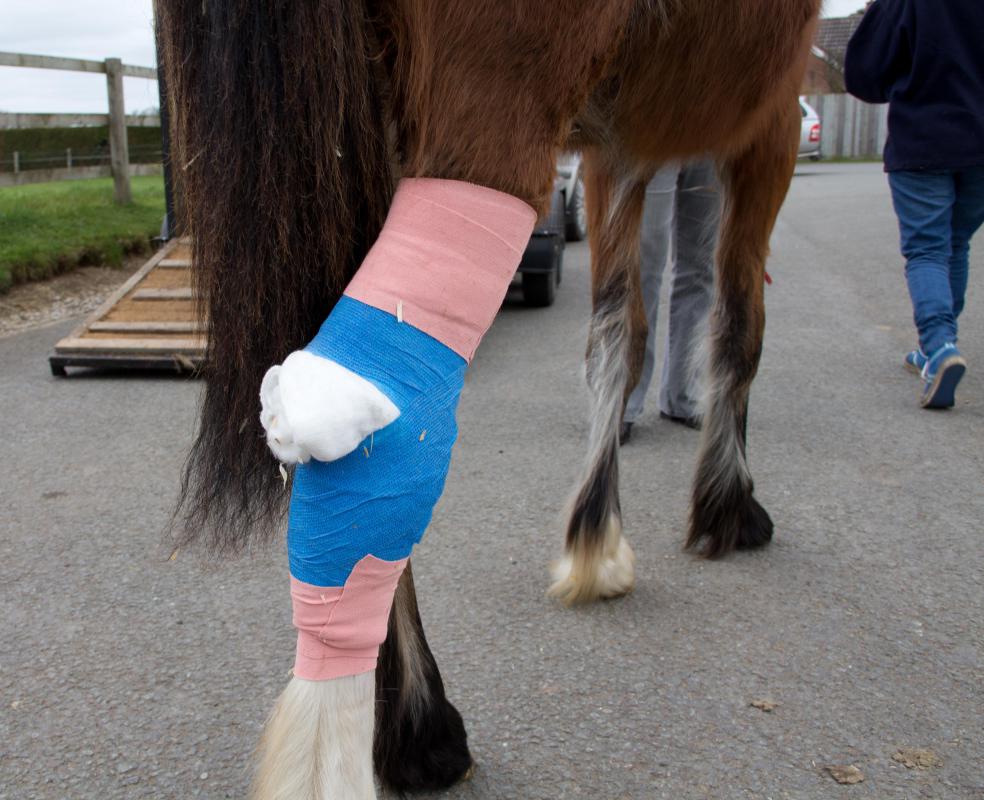
![The anatomy of a horse's leg makes a break difficult to treat.]() By: chelle129The anatomy of a horse's leg makes a break difficult to treat.
By: chelle129The anatomy of a horse's leg makes a break difficult to treat. -
![Treating a horse with a broken leg can be very expensive.]() By: Monkey BusinessTreating a horse with a broken leg can be very expensive.
By: Monkey BusinessTreating a horse with a broken leg can be very expensive. -
![Horses have a hard time healing from a broken leg.]() By: Eric IsseléeHorses have a hard time healing from a broken leg.
By: Eric IsseléeHorses have a hard time healing from a broken leg.


Discussion Comments
My eighteen year old thoroughbred fractured his leg fie months ago when my mare got him in the radius. I kept him in a stable for two weeks then turned him out in a stable sized paddock for a couple of weeks.
Five months on, his leg has healed and although it isn't quite level, he is making good progress. I took a huge risk with his treatment, but I had to think of his mind and how he'd cope with splints, slings, etc. There is hope. George is living proof!
@anon251891: Owning another human being (and loving or not loving it) is indeed showing contempt. However, horses are not human beings. Owning and loving one is therefore not showing contempt.
All these commenters who own and love their horses: If you love someone then you do not own them. The most legitimate form of love towards another, human or nonhuman, is to let them be.
If you own a horse then you show contempt for their self determination and freedom.
My horse Bertie had to be put to sleep on Monday. I was his proud owner for 19 years. He was out in the field playing and stumbled and broke his left hind leg above the hock. I made the decision to have him put to sleep as I couldn't bear him suffering. I loved him so much, and I will never ever forget all those years I was lucky enough to have with him. R.I.P Bertie Boo. Your mummy will always love you.
I had to euthanize my horse, my baby, my best friend in January after he broke his cannon bone, a complete fracture, and knee ligaments playing in the field. I lay with him, watching him die, the longest 20 minutes of my life waiting for the vet. In fact, I still cry every day and would have done anything to save him.
The vet said he had to be put down and nothing could be done for him. He was in such a bad way, lay there helpless. I had him for seven years and part of me died with him. People that think all the cases are black and white need to think again. I wouldn't wish what I've been through on my worst enemy. RIP Skippy my lad. I love you.
My horse (ex-racehorse) broke his hock in two places two years ago. He was three years old at the time. He was operated on to remove the fragments of bone, spent three weeks in hospital and a total of four months on box rest. He's now a very talented up-and-coming little dressage horse. It's not always clear cut.
My fit 24 year old mare, reared and fell breaking her forearm. The vet said there was no alternative but to put her out of her misery. She was in great pain.
As the grandson of someone who raced thoroughbreds, it's more of a financial decision than a quality of life decision. Trained horses have a tendency to want to run with the the rest of the group. So horses with broken legs have to be separated.
We had a horse break a leg in a race. It had to be stabled separately and kept far away from the rest of the group. I think it is sad that this article is written in a manner that makes it out to be in the best interest of the animal.
Broken legs in horses can heal and they can fully recover. I had a horse that I imported from Russia and several weeks later he slipped and fell on the yard. Heard the break instantly. He broke his leg above the stifle. Against the advice from the vet (put him down immediately) we set to work to get him better. Make no mistake, this was a two year slog but worth every minute. Eight years later he's almost at Prix St Georges level in dressage and was never lame again!
My 15.2 hand 5 year old gelding has just broken his hind leg above the hock joint. We are hoping to let nature take its course and mend his leg. he is very quiet and people friendly.
We might get a fiberglass cast to set the leg. His skin has broken and he has a clean break through his hind leg. and comments
I just saw a pony on the main road that was hit by a car. i won't go into it but it had a broken leg on the lower cannon. my initial thoughts were to get the poor animal put out of its misery. I do sympathise with the person above whose horse had to be euthanized.
My own mare, bless her, when she was alive, if the same had happened to her I know even if that contraption did work, stopping the animal from going mad from being couped up would compromise her quality of life. RIP and if there is a heaven it will be a sweet place.
just yesterday, an amazing horse ripped all the tendons and supporting structure in his back leg, and he needed to be put down. Love you Bentley, and God bless.
Another problem is simply the weight of the horse: a horse cannot lie down for more than a few hours without complications.
Due to its large weight, the muscles the horse is lying on will start to receive less circulation (in other words, less oxygen, nutrients etc) and will start to necrose after several hours.
Humans and dogs will get bed sores after being recumbent for an extended period of time. Horses and other large, heavy animals will actually undergo muscle necrosis, and won't be able to get up at all anymore.
A recumbent horse then also starts to get other problems that eventually lead to death.
I have just met Mr. Garrett Dawson the inventor of the equine leg brace and I must say I have never met a man that is more sincere in wanting to help save horses from being "put down". His heart and soul goes into his brace. I cannot believe they did not use it on Barbaro to start with, as the horse would still be alive. - C of Vegas
What about the Dawson Leg Brace? Read that this device has saved horses with the worst type of fractures and put many a horse back into racing.
Last night, my horse was hit by a car. He broke his leg high in his left hind. We were forced to euthanize him on the spot because a: the cost of anything else is too steep, and b: there is less than a ten percent chance that a horse's leg will heal, and less than a ten percent chance that the leg will stay set. Euthanizing a horse with a broken leg is the humane thing to do. The break is painful, and unrepairable.
In the pasture next door to us, there is a mare who is about to foal. She is lying down today and cannot get up. There is one problem. The mare broke a small bone in one of her hind knees. Does anyone have any advice? This is not our horse.
this is 100% true...but what if someone was to create a Bionic leg for a horse...it would take tons of research and things like that, and maybe years to get it made but would ot be worth it? I think so.
thank you for taking time to put this out. i'm in sixth grade, and doing a project on injuries and diseases and other such, and needed info. this was exactly what i was looking for.
I have always wondered why a broken leg could cause a horse to have to be put down. I thought that it was cruel, but now it makes sense - that it might actually be cruel to let a horse go on with a broken leg. Hopefully veterinary science will get to the point where broken legs can be treated in horses.
Post your comments