
At WiseGEEK, we're committed to delivering accurate, trustworthy information. Our expert-authored content is rigorously fact-checked and sourced from credible authorities. Discover how we uphold the highest standards in providing you with reliable knowledge.
Who Was Wagner?
 Tricia Christensen
Tricia Christensen
Tricia Christensen
Wilhelm Richard Wagner (1813-1883) was a German composer who is best known for his operas. He is also sometimes referred to by the last name of Geyer, since his father died before he was a year old, and his mother quickly remarried an actor, Ludwig Geyer. Some claims have been made that Geyer was actually Wagner’s biological father, but these claims have not been proven. Geyer died when he was six.
Early on, Wagner seemed to have a taste for music and could play many theatrical tunes by ear. He was not a great piano player however, and his tutor was frustrated that he would not perform even the simplest of scales. He was far more interested in writing plays, and saw music merely as a means to enhance the drama of the stories he wished to tell.
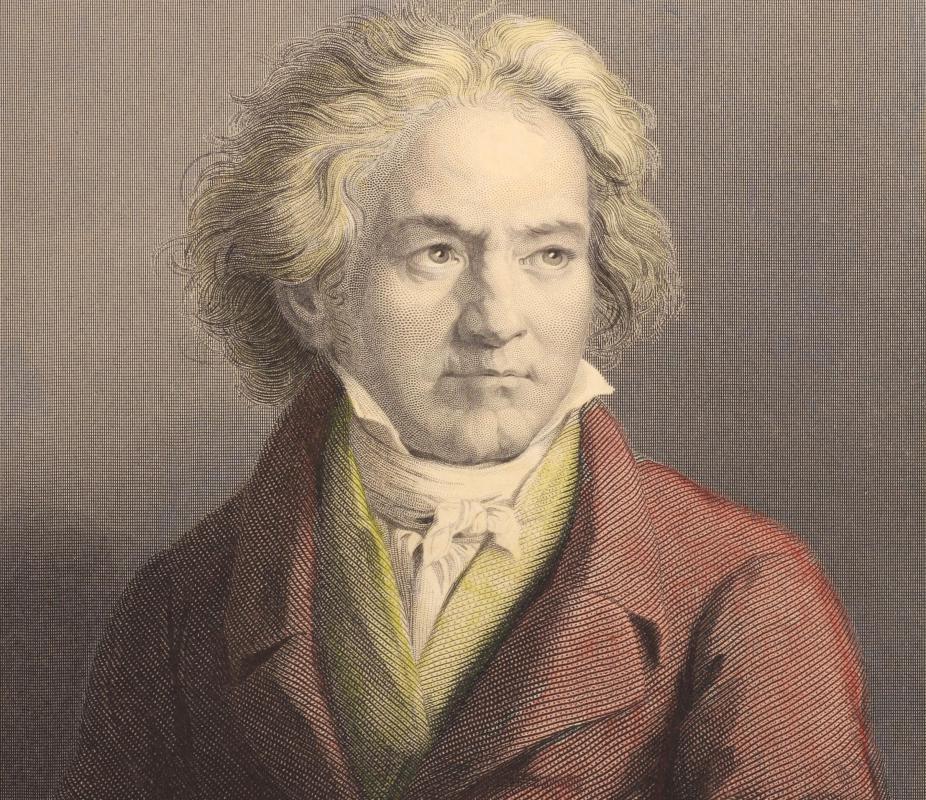
His interest in music of itself seems to date from about the age of 18 . It was at this time that he “discovered” Beethoven. Two years later, he composed his first opera, Die Feen, or The Fairies which was not performed during his lifetime.

Though Wagner enthusiastically worked on his next opera, and also held the position of music director for several theaters and was frequently in debt. His marriage to Christine “Minna” Planer was stormy. She ran off with other men several times, and the two incurred so much debt that they had to abruptly flee from Riga, Russia, to England to escape their debtors.

While traveling to England, he was inspired by his ship voyage to create Der Fliegende Holländer, (The Flying Dutchman), which would become one of his better-known operas. By 1840, Wagner and Planer lived in Paris and he spent time arranging the operas of other composers.
Back in Germany, he was able to stage both The Flying Dutchman and Rienzi, his third opera. However, his political position in the nationalist movement of Germany and his minor participation in various staged uprisings forced him to flee Germany when the movement was crushed.

These years of exile were made more difficult by his wife’s deepening depression and by his own contraction of erysipelas, a condition caused by strep bacteria, causing inflammation of the skin and fatty tissues. In spite of these conditions, his great work, Der Ring des Nibelungan, or The Ring of the Nibelungs was composed during this time. Tristan und Isolde was composed about five years later.
In between creating operas, he unfortunately began to develop philosophy strongly promoting anti-Semitism. His 1850 pamphlet, “Jewry in Music,” is a vicious attack against Jewish composers. His anti-Semitic stance is somewhat in question given he was a supporter of several Jewish composers. Later reviews of his work form the contradictory conclusions that he was extremely anti-Semitic and that his operas have layered negative reference to Jews. Others feel that because Hitler appropriated Wagnernian music as proper Nazi music, claims of anti-Semitism are exaggerated.
Wagner’s later life saw his marriage end after he had numerous affairs. His most scandalous liaison was with the illegitimate daughter of Franz Liszt, Cosima von Bülow. The affair was conducted very much in the open, adding to the disgust of his former friends. Liszt would not speak to him, even after he married Cosima.
Later works include some of Wagner’s best-known pieces, Parsifal, The Valkyrie, and Siegfried. He is also known for his composition which English speakers commonly refer to as the Wedding March. He is also said to have greatly influenced cinematic scoring. His influence can be felt in the works of Jerry Goldsmith, Danny Elfman and John Williams.
His work remained influential after his death, and particularly the Modern British authors like T.S. Eliot, James Joyce, and Auden praised him. His ideas concerning death are quite similar to those developed by Freud, but predate Freud. Though some today find his operas heavy handed, others delight in them, and there is no denying their influence on modern composition.
Tricia Christensen
Tricia has a Literature degree from Sonoma State University and has been a frequent WiseGEEK contributor for many years. She is especially passionate about reading and writing, although her other interests include medicine, art, film, history, politics, ethics, and religion. Tricia lives in Northern California and is currently working on her first novel.
Learn more...
Tricia Christensen
Tricia has a Literature degree from Sonoma State University and has been a frequent WiseGEEK contributor for many years. She is especially passionate about reading and writing, although her other interests include medicine, art, film, history, politics, ethics, and religion. Tricia lives in Northern California and is currently working on her first novel.
Learn more...AS FEATURED ON:
AS FEATURED ON:









-
![Beethoven's music helped sparked Wagner's interest.]() By: Georgios KollidasBeethoven's music helped sparked Wagner's interest.
By: Georgios KollidasBeethoven's music helped sparked Wagner's interest. -
![Wagner was born in Germany in 1813.]() By: believeinme33Wagner was born in Germany in 1813.
By: believeinme33Wagner was born in Germany in 1813. -
![Wagner is best known for his operas, most of which are still popular today.]() By: KalimWagner is best known for his operas, most of which are still popular today.
By: KalimWagner is best known for his operas, most of which are still popular today.


Discuss this Article
Post your comments