
At MyLawQuestions, we're committed to delivering accurate, trustworthy information. Our expert-authored content is rigorously fact-checked and sourced from credible authorities. Discover how we uphold the highest standards in providing you with reliable knowledge.
Who Owns the Rights to a Song?
 Michael Pollick
Michael Pollick
Michael Pollick
When it comes to the ownership rights to a song, the legal and ethical waters get a bit murky. Establishing the ownership of any creative work can be fraught with peril, although there are some basic copyright laws that do make things a little clearer. One might assume the songwriter himself or herself owns the exclusive rights to a song that he or she created, but that's not always the case in the professional music business.
A songwriter, much like any other literary composer, is automatically granted rights to a song the instant it is created. But this is considered to be more of an intellectual copyright until that song has been registered, transcribed in printed form, or otherwise established in a permanent medium (such as a recorded demo). If another musician learned the song's unique melody and lyrics, then deliberately claimed the song as his or her own, the original songwriter may have a difficult time proving his ownership of a song that was never recorded or published. Scenarios such as this can and do happen in the music industry, especially when songwriting teams split up or band members become solo artists.

Even though the original songwriter may own the intellectual rights to a song, he or she may not be in a position to control all of the possible uses of that song. Songwriters and musicians under contract to a studio may have to relinquish certain rights as part of their agreement. In that case, the studio itself may assume certain rights to ownership, particularly when it comes to derivative works such as sampling, covers by other artists, and compilation albums. Songs created by artists while under contract to a studio may be considered "work product," in the same sense that an engineer working for NASA or General Electric could not claim a patent for an invention created on company time.

There is also a separation between the performance rights to a song and the recording rights. Many times, the publisher of a song, which may or may not be the composer, controls the mechanical rights of that song. Producers and musicians interested in recording the song and releasing it on an album must obtain the mechanical rights to do so. This is one way an artist can exercise some control over the use of his or her music, especially when the artistic visions of the songwriter and interested parties could potentially clash. In some ways, whoever holds the mechanical rights to a song effectively controls the future of that song. Quite often, this is the original songwriter working as the head of his or her own music publishing company.
Michael Pollick
A regular MyLawQuestions contributor, Michael enjoys doing research in order to satisfy his wide-ranging curiosity about a variety of arcane topics. Before becoming a professional writer, Michael worked as an English tutor, poet, voice-over artist, and DJ.
Learn more...
Michael Pollick
A regular MyLawQuestions contributor, Michael enjoys doing research in order to satisfy his wide-ranging curiosity about a variety of arcane topics. Before becoming a professional writer, Michael worked as an English tutor, poet, voice-over artist, and DJ.
Learn more...AS FEATURED ON:
AS FEATURED ON:


-
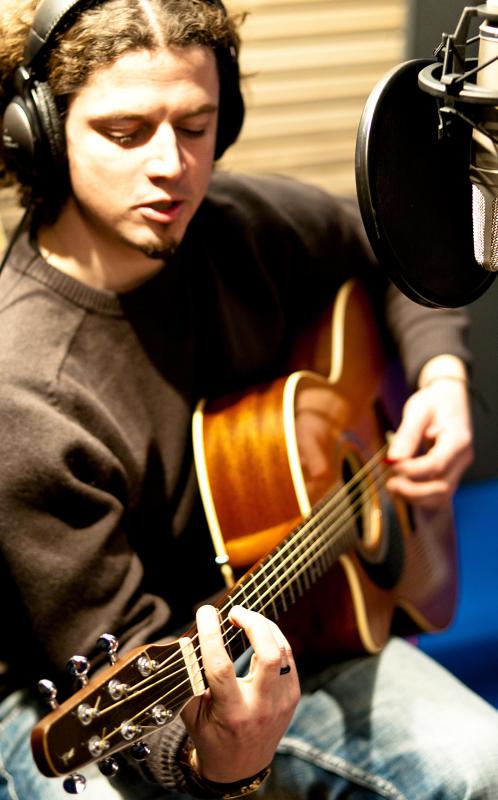
![Songwriters may give up their intellectual rights to songs created under contract for a studio.]() By: ARochauSongwriters may give up their intellectual rights to songs created under contract for a studio.
By: ARochauSongwriters may give up their intellectual rights to songs created under contract for a studio. -
![Exclusive rights include the right to transmit copyrighted works by radio.]() By: dan talsonExclusive rights include the right to transmit copyrighted works by radio.
By: dan talsonExclusive rights include the right to transmit copyrighted works by radio.

Discussion Comments
Not exactly the same thing, but how does it work with a band name? Any advice would be useful! Not to further complicate it, but do national borders matter? Basically, my solo project and a rock band in France have the same name. I've started establishing a fanbase, way more than them, so I don't really want to change it.
My songs, music and lyrics, and my image have been made into an album without my permission and has been selling everywhere. How do I sue them? Where do I go in California?
1) Do original singers enjoy automatic right(s) for a particular song? If so, what kind of rights are they from the aspect of copyright?
2) What kind of right(s) are enjoyed by the lyricists?
3) What are the composers' right(s) for a particular song?
4) Suppose a song has been written by a lyricist (who is not the composer or singer for that song), and composed by a composer (who is not the lyricist or singer for that song) and sung by a singer (who is neither the lyricist nor the composer for that song), what individual right(s) on that song do they enjoy?
How do you copyright your own song that you have wrote and sell it and perform it so you cannot be charged with going to jail. And how does the music industry work?
I discovered that someone sold my music and lyrics to sundazed beatrocket records, who have been selling my material as a vinyl album (Kings Verses) for about 10 years now. No one ever contacted me. Can someone do this and get away with profiting from my work? I was 16. The US copyright office allowed me to copyright this material last year. Have I lost all rights to any royalties, etc.?
If a deceased musician had songs that were recorded, but unreleased until years after death and vocals from a different source are added, does that source receive royalties from the estate of the deceased?
There is no literal way to avoid being plagiarized. If someone in the entertainment industry or other industries notorious for plagiarism, decides your work is a money-maker and plans to steal it; they will do it, in spite of the consequences of the law.
Moreover, you own the song or songs if you are the copyright holder at the U.S. Library of Congress. This means you have sole power over licensing.
There's a writer online claiming to have written nearly all pop music and films of the late 80s and 90's. Is that legal. The writer uses social media, too. Is this done to get hits on one's blog and is it legal.
The concept of owning ideas is antiquated. Ideas should and will (eventually) be free and universally accessible.
Pure originality, or innovation, is a myth. Everything that has ever been created builds upon what was created before it.
I like to think of myself as a faucet, where all the ideas I've ever been exposed to can flow through. Tracing the source of an idea that has contributed to the flow is a waste of time and makes us all less efficient.
Who owns the rights to a song? Everyone who has lent the songwriters their ears. The sooner we all realize this, the sooner we can change the laws to reflect this truth.
"If you have samples in your music, they must all be legally cleared and paid for." Yeah, right. Tell that to Girl Talk, or Super Mash Bros. They sample everything and pay nothing to the copyright trolls (nor should they). And why haven't they been taken to court and sued out of existence? Because the copyright "owners" would lose badly and that would open the floodgates.
Copyright laws are broken and badly in need of reform (and not the usual let's help big business stay in control type of reform).
@anon143832: It's not always easy to determine who currently owns the copyright to a song, because song publishers have been known to sell off the rights to certain songs to other publishers, or to not renew their rights and allow the song to fall into the public domain.
I would look closely at the information contained on a 45 rpm single or 33 rpm album to see if there is a writing credit listed. Sometimes the label itself may control the rights, like Decca or Atco, or individual songwriters may be listed under the title.
Many times, a professional production such as a TV series or motion picture will have a designated staff member who can negotiate the rights to use a song through a "clearing house".
You may see credits at the end of a movie or TV show for "musical clearance". If a TV series wants to use a poignant Bob Dylan song at the end of the show, for example, the clearing house would be contacted and negotiations for the one-time use of the song would begin. This wouldn't necessarily be a face-to-face meeting with Dylan himself, but most likely with agents who have the right to approve or disapprove any use of Dylan's copyrighted music.
It may be a licensing fee situation, or it may be a more artistic concern. The songwriter may not want his or her music associated with that particular kind of movie or TV show.
Do I need to own all the rights to the music I’m selling? You need full permission to do this!
You must own the copyright for the sound recordings or have the authority or permission from the owner(s).
If you didn't write the song/composition, that's OK, but you must find out who the copyright owners are, and pay the publisher their mechanical royalties the same way you would for CDs sold, but based on your download/sales activity.
If you have samples in your music, they must all be legally cleared and paid-for. No “mix tapes” of other people's music, even if you are mixing in your own music.
It's *very* important you have all rights and permission! Files distributed on the internet are watched very carefully by lawyers. You can't just “get away with it”. Do everything thoroughly and legitimately. The publisher is the owner of the copyright to a song (The song, not the recording. Just the words and music. Melody, harmony, lyrics.). Hope this helps you! ~Nicole
all right, I want to post a song but not sure who owns this song because many people have sung this. any help? song is Loco by K.O.S.
I found a song on the internet that my dad sang back in the 50's. How do I find out who owns the rights to the song?
Does anyone know who I should contact for a license to perform a song in a a musical production?
i would like to record donny hathaways "a song for you" for my little boy who has cancer. can anyone give me any advice?
I am the yearbook sponsor at Onalaska High School in Onalaska, Texas. I need to find out who has the copyrights to the Eagles’ song “The Long Run”. We plan to use the lyrics for the theme of our yearbook.
Any information you may have would be helpful. Thanks in advance for your assistance.
I want to use the music to a popular 1970's song to create a training video that will be distributed for free. We have made up new lyrics.
How do we get permission to do so?
-anon1003
i want to change a few lyrics from a song that was sung about a boxer from the 1930's. the guy who sung it has also been dead thirty two years. Is it possible for me to do this? -pah
hi e1, I want to use the la cucaracha tune behind my radio commercial because my food van has airhorns that play it. I've written lyrics and the radio station says that there may be copyright issues. Any idea how I can do this.
I want to use a song from a popular rap artist
not the lyrics just the music, how can i get permission to use the music for radio play and possibly to sell it on a cd?
Post your comments