
At Sports&Hobbies, we're committed to delivering accurate, trustworthy information. Our expert-authored content is rigorously fact-checked and sourced from credible authorities. Discover how we uphold the highest standards in providing you with reliable knowledge.
Which Type of Horse is Suitable for Hunting?
 Mary McMahon
Mary McMahon
Mary McMahon
Hunting on horses is an ancient sport, as numerous paintings and tapestries attest. In many regions of the world, sportspeople continue to hunt from horseback, both to retain ancient traditions and because it can be exhilarating, challenging, and extremely fun. However, not all horses are suited to hunting. A hunting horse needs to have a unique set of skills and abilities, and riders who are acquiring a horse for the first time should consider the purchase carefully. Such a horse should also not be confused with a hunter class show horse, although many hunters are suitable for hunting, since the same skills demonstrated in the show ring are needed in the field.
Temperament is an important trait in a hunting horse. These horses need to be able to handle loud noises, varying terrain, and sometimes confusing commands with equanimity. This type of horse is sometimes referred to as bomb proof, since it takes a lot to rattle a well trained ones. If the rider intends to hunt to hounds, a horse should be familiar and comfortable with hounds. A hunting horse must also be interested in the thrill of the chase, and willing to commit large amounts of energy to his or her rider.
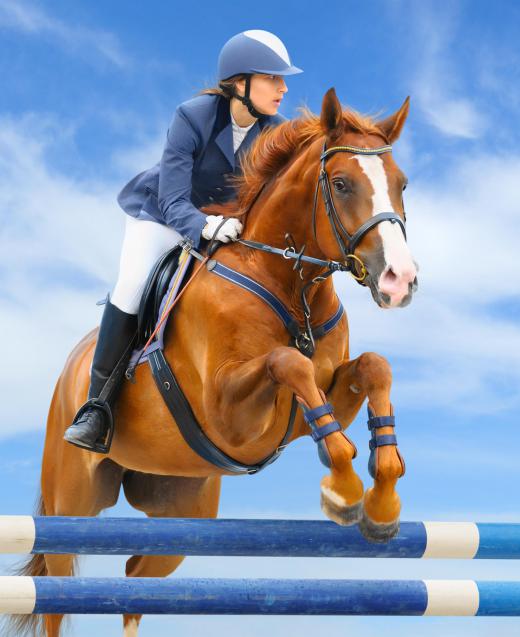
In terms of skill, a hunting horse needs to be able to jump over a variety of obstacles and handle a range of terrain. Hunts do not follow set or established trails, so horses may encounter fences, hedges, walls, creeks, and very uneven ground. The horse should be extremely surefooted and confident. In addition, stamina is a must, since a hunt field can travel quite a distance in pursuit of quarry.
Popular breeds for hunting include thoroughbreds and quarterhorses. Some riders work with larger breeds such as warmbloods with success. However, extremely heavy horses like draft horses are not advised for the hunt field. Very small ponies may also have difficulty, especially crossing high fences. However, a small sturdy pony can be an excellent choice of hunting horse for a small or new rider, especially if he or she rides with the hiltoppers, behind the main hunt field.
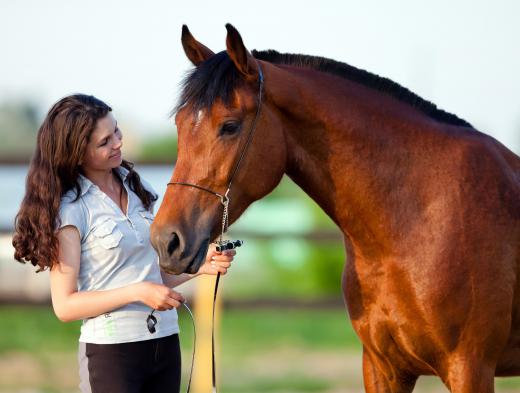
To pick out a good hunting horse, it helps to talk to the hunt master who oversees your hunt. As a general rule, people who are interested in taking up the sport should seek out a local hunt, and ask to ride as a guest, sometimes borrowing horses from other members. Once someone is accepted into a hunt as a member, he or she can look into the purchase of a horse suited for the regional terrain. The hunt master may have recommendations for breeds of horses, trainers, or even a specific horse available for sale.
Mary McMahon
Ever since she began contributing to the site several years ago, Mary has embraced the exciting challenge of being a Sports&Hobbies researcher and writer. Mary has a liberal arts degree from Goddard College and spends her free time reading, cooking, and exploring the great outdoors.
Learn more...
Mary McMahon
Ever since she began contributing to the site several years ago, Mary has embraced the exciting challenge of being a Sports&Hobbies researcher and writer. Mary has a liberal arts degree from Goddard College and spends her free time reading, cooking, and exploring the great outdoors.
Learn more...AS FEATURED ON:
AS FEATURED ON:


-
![Temperament is an important consideration when choosing a horse for hunting.]() By: Eric IsseléeTemperament is an important consideration when choosing a horse for hunting.
By: Eric IsseléeTemperament is an important consideration when choosing a horse for hunting. -
![A hunting horse needs to be able to jump a variety of obstacles.]() By: Kseniya AbramovaA hunting horse needs to be able to jump a variety of obstacles.
By: Kseniya AbramovaA hunting horse needs to be able to jump a variety of obstacles. -
![A hunt master may have recommendations for breeds of horses, trainers, or even a specific horse available for sale.]() By: Alexia KhruschevaA hunt master may have recommendations for breeds of horses, trainers, or even a specific horse available for sale.
By: Alexia KhruschevaA hunt master may have recommendations for breeds of horses, trainers, or even a specific horse available for sale. -
![Hunting horses must be trained to tolerate the loud noise of gun shots.]() By: Pierrette GuertinHunting horses must be trained to tolerate the loud noise of gun shots.
By: Pierrette GuertinHunting horses must be trained to tolerate the loud noise of gun shots. -
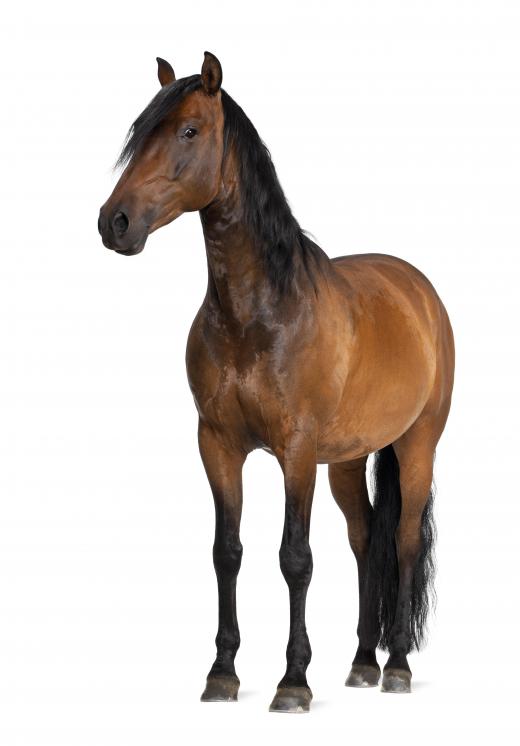
![Some hunters prefer warmblood horses, an example being the Trakehner.]() By: dozornayaSome hunters prefer warmblood horses, an example being the Trakehner.
By: dozornayaSome hunters prefer warmblood horses, an example being the Trakehner. -
![The Hanoverian, a type of German breed, may be preferred by hunters who choose warmbloods.]() By: Kseniya AbramovaThe Hanoverian, a type of German breed, may be preferred by hunters who choose warmbloods.
By: Kseniya AbramovaThe Hanoverian, a type of German breed, may be preferred by hunters who choose warmbloods.


Discussion Comments
I ride a quarter horse. They can have really great stamina or really poor. It all depends on whether or not the rider gets his horse in shape! Don't bad mouth quarter horses because of their owners.
I disagree that Quarter horses do not make good hunters. I hunt on the west coast and have known several excellent hunters that are Quarter horses. The breeding and bloodlines of Quarter horses are so varied and expansive that it is fairly easy to find an excellent hunter amongst certain lines. I currently hunt a 15.3hh quarter horse gelding, who I adore.
That being said, to this day my favorite hunter is the running, or appendix quarter horse. My first hunt at eight years old was on a 16.3hh appendix gelding, and at 12 my trainer was gracious enough to sell my parents my first horse, a 12 year old appendix gelding who had belonged to her husband (both hunters), for a ridiculously low price.
Appendix quarter horses are quarter horses crossed with thoroughbreds. The breed tends to carry the height and speed of the thoroughbred, with the substance and bone of the quarter horse. They also tend to possess the attitude and sound mind more typical of quarter horses.
If writing a story about the queen out for a hunt, I would tend to recommend writing in a thoroughbred, as it would be fitting in England.
This is nice information and all, but I was looking for specific breeds and their names. I'm writing a short story about a queen going hunting, and this didn't help whatsoever. I'm not a horse-girl, I didn't grow up dreaming of horses at night and riding at day. I don't know what breeds constitute as a good hunting horse, and vague articles like this aren't helpful. At all.
Some additional points:
1) Quarterhorses, generally speaking, do not make good field hunters. The quarter horse excels at short bursts of speed, but generally does not possess the stamina required for a day of hunting.
2) Suitable horses for hunting will also depend on where you are hunting, for example, hunting on the east coast requires a horse that is more "4-wheel-drive" than "racer" as the terrain is quite varied and sure-footedness is important. Hunting on the west coast differs in that the horses have to cover larger territories, and often at a faster pace, therefore a speed horse is better suited. I've seen people bring their heavy east-coast hunter to the west, where it could not keep up. Similarly, west coast hunters may not have the jump or "4-wheel-drive" characteristics necessary to succeed on the east coast.
3) Most importantly, a beginner, or someone new to hunting, should look for a horse that has already hunted for several seasons. Most sellers will allow you to try the horse out for hunting before buying.
Post your comments