
At DelightedCooking, we're committed to delivering accurate, trustworthy information. Our expert-authored content is rigorously fact-checked and sourced from credible authorities. Discover how we uphold the highest standards in providing you with reliable knowledge.
Which Foods Commonly Contain MSG?
 Tricia Christensen
Tricia Christensen
Tricia Christensen
Monosodium glutamate, more commonly known by the abbreviation “MSG,” is commonly added to prepared and so-called “convenience” foods, particularly those that are frozen. The substance is also notoriously linked to Chinese restaurants in North America and Europe, though many different kinds of fast food restaurants use the substance. It is also common in fermented and aged foods, most notably soy sauce and certain cheeses. In most places consumers can determine whether or not a particular food contains monosodium glutamate by reading the ingredient label, but not always — in some cases, more extensive research is required to find out what is really included.
Fast Food and Restaurant Meals

Foods prepared in chain restaurants and fast food establishments are some of the biggest sources of MSG. Cooks will often add it liberally to a variety of dishes in order to enhance the taste, usually as a way to make the food seem more flavorful than it actually is. Hamburgers that are prepared in a hurry on an assembly line often don’t have much of a distinctive flavor, for instance; the same is true for pizzas, fried chicken dishes, and even French fries. Taking the time to cook these things slowly or add spices or quality ingredients is not usually cost-effective. It is easier — not to mention cheaper — for restaurateurs to simply add artificial taste enhancements to get similar results.

Chinese restaurants often take the brunt of the media’s attention for the additive. These sorts of establishments are by no means the only players in the game, but they are often among the most notorious. Different restaurants have different policies, of course, but it is very common for cooks to add liberal amounts of monosodium glutamate powder to everything from noodle dishes to stir-fries and soups. This often makes the meals taste delectable without requiring much careful cooking at all. Chefs will almost always leave the additive out if asked, but it is often put in pretty much automatically.
Heavily Processed Foods

Another source is foods that have been processed extensively. Canned soups are a good example, as are pre-packaged deli meats, some bacon products, and things like pepperoni and cured ham slices. Foods that depend on a lot of chemical preservatives to stay fresh often also contain monosodium glutamate in order to keep them tasting good no matter how long they have been on the shelf.
“Convenience” Products

Frozen foods are another place to look. Chicken nuggets, fish sticks, and frozen pizzas often contain at least some of the additive for many of the same reasons that other processed foods do. The freezing and reheating process necessarily strips a lot of nutrients from most foods, which can negatively impact how they taste. Adding flavor boosters is an easy way for manufacturers to make sure that consumers will actually enjoy the flavor of the food as well as its convenience.

Many processed snack foods are sources as well. Potato chips and flavored popcorn products are good places to look, as are some crackers and boxed cookies. Basically any food designed to bring quick, inexpensive satisfaction is a potential candidate.
Fermented or Aged Foods
MSG is also frequently added to things like soy sauce and fermented bean paste, two ingredients commonly used in Asian-style cooking. Some aged cheeses may also contain it, even if in trace amounts. Natural fermentation often leaves a bitter, somewhat pungent aftertaste that is not always desirable. Adding MSG often balances the flavor, adding a savory element that makes the final product tangy without being overpowering.
What to Look For

In many countries, food manufacturers must disclose whether or not they use MSG in their foods. This is particularly true in the United States and throughout Europe. In the US, the federal Food and Drug Administration (FDA) has classified MSG as “generally recognized as safe,” but nevertheless requires that any food marketed for commercial sale list “monosodium glutamate” on the ingredient list. Manufacturers don’t have to say how much they’ve used, but they do have to let consumers know that it’s been included. The European Union’s food labeling laws are very similar, and both Australia and New Zealand also require all additions of the food additive to be noted somewhere on the label.

Canada is a notable exception. That country does not require foods to disclose MSG additions, but rather focuses its efforts on truth in advertising. Foods cannot say they contain “no additives” if they make use of monosodium glutamate, for instance. In most cases, this rule extends to other glutamate-derived ingredients as well. As such, in Canada, any food that is not labeled “no additives” might include the compound — but then again, it might not. Consumers often have to do a lot of the legwork themselves when it comes to researching what, exactly, their food contains.

Things get more complicated when it comes to restaurants, as most establishments never publish comprehensive ingredient lists for their foods. Patrons are always free to ask, but there are rarely any guarantees that the information they get will be accurate. Short of actually testing food samples, there is no good way to be absolutely sure about what served food actually contains.
Health Concerns
Most people are curious about MSG additions because of the risk the additive carries when it comes to certain negative health effects. A number of scientific studies have linked regular consumption of the compound to headaches, nausea, and elevated heart rate. Some have also suggested that it may have a mild neurotoxic effect on the brain, which can be particularly harmful in children. Eating only small amounts of MSG-containing foods is rarely a cause for alarm, but people who want to err on the side of caution often try to avoid the substance entirely.
Allergic Reactions
Some people are also allergic to monosodium glutamate, which presents a whole range of concerns and precautions. In the majority of cases, those who react to this compound seem to actually be most sensitive to the glutamate component. There are many other glutamate-based additives that are not labeled as MSG, which can be confusing. People trying to avoid glutamate-based foods should look for these other, related additives on food labels — some of the most common are hydrolyzed yeast, hydrolyzed vegetable proteins, autolyzed yeast, protein isolate, modified corn starch, yeast extract, and modified food starch. These are not technically MSG, but are related enough to cause reactions in most who are truly allergic.
Tricia Christensen
Tricia has a Literature degree from Sonoma State University and has been a frequent DelightedCooking contributor for many years. She is especially passionate about reading and writing, although her other interests include medicine, art, film, history, politics, ethics, and religion. Tricia lives in Northern California and is currently working on her first novel.
Learn more...
Tricia Christensen
Tricia has a Literature degree from Sonoma State University and has been a frequent DelightedCooking contributor for many years. She is especially passionate about reading and writing, although her other interests include medicine, art, film, history, politics, ethics, and religion. Tricia lives in Northern California and is currently working on her first novel.
Learn more...AS FEATURED ON:
AS FEATURED ON:


-
![Pepperoni often contains MSG.]() By: Kayros StudioPepperoni often contains MSG.
By: Kayros StudioPepperoni often contains MSG. -
![Potato chips often contain MSG.]() By: andersphotoPotato chips often contain MSG.
By: andersphotoPotato chips often contain MSG. -
![Some bacon products include MSG.]() By: sparkiaSome bacon products include MSG.
By: sparkiaSome bacon products include MSG. -
![Popcorn can also contain MSG.]() By: HandmadePicturesPopcorn can also contain MSG.
By: HandmadePicturesPopcorn can also contain MSG. -
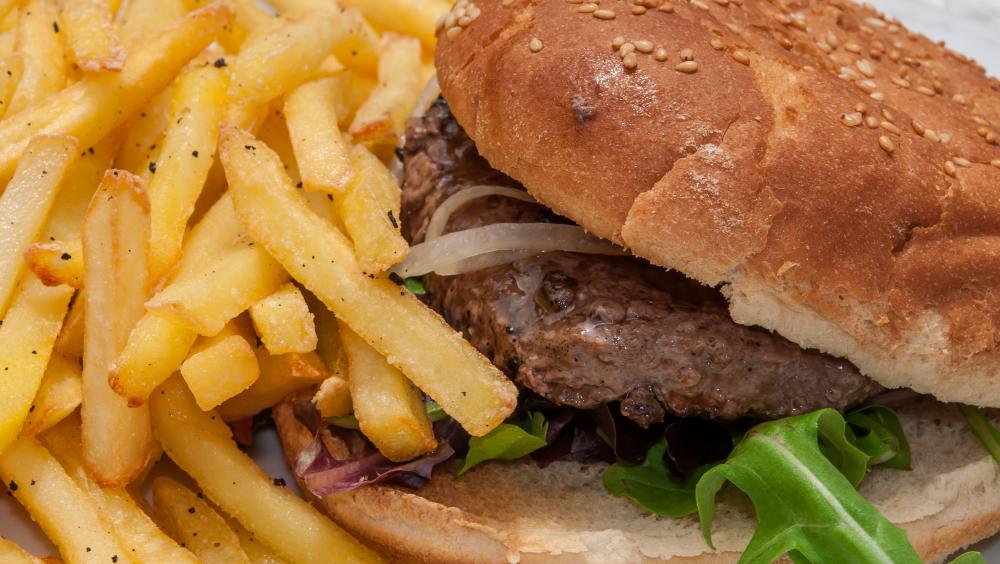
![MSG might be added to hamburgers for fast-food restaurants.]() By: KzenonMSG might be added to hamburgers for fast-food restaurants.
By: KzenonMSG might be added to hamburgers for fast-food restaurants. -
![French fries can contain MSG.]() By: skampixelFrench fries can contain MSG.
By: skampixelFrench fries can contain MSG. -
![Asian cuisine is very popular in the United States, especially as takeout.]() By: Pangfolio.comAsian cuisine is very popular in the United States, especially as takeout.
By: Pangfolio.comAsian cuisine is very popular in the United States, especially as takeout. -
![MSG may lurk in otherwise healthful noodle dishes and stir-fries.]() By: torsakarinMSG may lurk in otherwise healthful noodle dishes and stir-fries.
By: torsakarinMSG may lurk in otherwise healthful noodle dishes and stir-fries.




Discussion Comments
Why does the FDA allow Tyson to inject their beef and possibly chicken with preservatives to extend the shelf life for four or five days exclusively for WalMart and Kroger? Should this practice be acceptable in the meat industry?
This entire article is crap. MSG is as harmless as common table salt and found in natural foods like tomatoes, corn, and peas yet people get paranoid because of the "chemical" name. It's called "Chinese food syndrome."
My son has seizures and has to avoid aspartame and msg. I am finding it increasingly difficult to find foods not containing these. Yes, eating out is a nightmare but I have found some restaurants very helpful.
I started getting really bad heart palpitations after I ate foods from restaurants even when I ordered the healthier items. I found out that most restaurants use MSG. It is really hard to avoid that product in America. It should be banned.
They should ban the following: trans fats (partially hydrogenated oils or shortening), high fructose corn syrup because it has mercury, aspartame and most artificial sweeteners, BHTs and BHAs, THBQ, all possible sources of MSGs including natural flavors, nitrates and nitrites in lunch meats and any possible ingredient known to cause cancer.
My wife has pretty good luck staying away from these hidden names for monosodium glutamate: Hydrolyzed Vegetable Protein, Sodium Caseinate (in white sauces or creams), Autolyzed Yeast Extract.
Also anything labeled "No MSG Added" is a red flag for one of these items being in the ingredients label. She's had good luck with the label of "No MSG", but you need to read the label!
Campbell's soups are just about 100 percent full of MSG. Some, not all, of their Healthy Request brand are safe, but again, read the label.
The biggest issue is eating out! It is amazing the number of restaurants that have no idea what ingredients are in their food.
I have just watched a video of someone who suffers with fybromyalgia as I do. After doing lots of research, they avoided foods with msg and now they no longer suffer the symptoms of fybromyalgia so I am now going to give it a go and research what foods that I can eat that do not contain msg to see if it makes any difference. It would be great if it does, as as it would mean a whole new lease of life for me.
I feel sick every time I eat anything with MSG. I have nausea, slightly increased heart rate, an uncomfortable bloated feeling in my stomach and headache. It seems to be getting worse too. Anytime I feel this way I look to see what I have just eaten and sure enough, it contains MSG. I wish the stuff would be banned! I am sure there are other things they can use besides MSG!
Every time I eat food containing msg – mainly Chinese – which is a lot, I am violently sick, feel dizzy and get a headache, so I am trying to avoid anything containing msg.
I have lost a lot of time of school due to consuming food containing msg and I didn't even know I had allergies. I was sick at least every day to every other day. I thought it was a virus but the hospital told me otherwise. Also, if it helps anyone, Walkers crisps contain MSG and KP dry roasted peanuts and McCoy's crisps.
My son would get terrible headaches and throw up after eating food with msg. I found I was allergic to msg at Cracker Barrel. I had probably eaten about four or five bites of my chicken fried steak when someone noticed purple splotches and swelling on my face. Within seconds, I passed out! That was my first and last time to eat at Cracker Barrel. We both have to really be careful with food choices, but it has led to us eating healthier, all natural foods prepared at home.
Unless anyone has any information or show research that can help to back up MSG's 'so called damaging effects' don't say anything. Yes people are allergic to it but then people are allergic to milk, gluten and other substances.
Most of all Asian foods, including Chinese food and Japanese food, contains a lot of MSG. Every time I eat Chinese feed, I feel nauseous afterward.
To #10. Meats smoked naturally, that is, with smoke, do not. But smoke flavoring, which comes in a bottle, probably does. I know that many BBQ places use a meat rub during the smoking process that has hydrolyzed proteins (hence free glutamates) in it. The process itself does not.
I've done a bit of research, read labels etc. and almost every processed food, especially those that contain powder, or liquid (soups are really bad, not drinks) contain MSG glutamates in one form or another. Do not be fooled by the label "no MSG." That just means "no monosodium glutamate", but there are other forms of free glutamate, which is the real culprit. And the false reports that most people don't seem to be affected by it. They just don't know it.
Almost everyone I know has some form of gastrointestinal problem, which, I believe, is caused by MSG. You don't just have a problem for "no reason." There is a cause and effect.
I first realized this when my stomach would hurt any time I ate Chinese food. Did research and learned about MSG. Took 30-something years for it to affect me. In my adulthood, I ate Chinese food fairly often. And, also, there is more MSG in more products than, say, 30 years ago.
Likewise, I have fairly serious GI problems and at a fairly young age, considering. MSG is poison and should be banned! There are plenty of safe herbs and spices that add plenty of flavoring to foods. I think this is why you don't typically find MSG in Indian food. Because Indian people know how to use natural spices to flavor their food, and I must say, they do an excellent job!
I'd like a test powder/liquid that would indicate MSG in food. Anything available?
it is true. Like "-anon80670", posted before.
MSG is derived from fermenting sugar beet molasses. It is added to food to "enhance" flavor.
It causes obesity, damages brain cells, diabetes, cardiovascular disease, and many more unhealthy things. It is not found in pork or shrimp unless it is added to it and today, it is added to almost anything.
Is MSG or other forms of glutenates used in the smoking process?
MSG is derived from fermenting sugar beet molasses. It is added to food to "enhance" flavor. It causes obesity, damages brain cells, diabetes, cardiovascular disease, and many more unhealthy things. It is not found in pork or shrimp unless it is added to it and today, it is added to almost anything.
from where is msg is produced? i mean is it really taken mostly from pork?
do any fruits or anything natural contain msg?
i have been told i have an intolerance to yeast and to aviod MSG, but it is quite confusing. can you help with what foods i can and cannot eat.
It seems that when i eat foods such as chinese, avocado dip, some bbq. I have pain in my gut and the middle of my back. not always but a lot. What might cause this?
no they don't but they do commonly contain it but if you want i can research it for you!
Do shrimp naturally contain any MSG?
Post your comments