
At WiseGEEK, we're committed to delivering accurate, trustworthy information. Our expert-authored content is rigorously fact-checked and sourced from credible authorities. Discover how we uphold the highest standards in providing you with reliable knowledge.
Which Countries Have Received the Most Nobel Prizes?
 Tricia Christensen
Tricia Christensen
Tricia Christensen
Usually, most countries have a good-spirited competition regarding their numbers of winners of Nobel Prizes. The United States has clearly led the pack with over 300. The United Kingdom and Germany hold more than 100 each, while France has just over than half that number and Russia slightly fewer. Sweden and Switzerland each hold more than 20, while Italy, Canada, Japan, and several other countries are not far behind.
If it takes a village to raise a child, then it might be said that it takes a country to raise winners of Nobel Prizes. The awards are often thought to confer honor not only on the individual winners, but also on their country of origin. This has not always been the case, however; Aleksandr Solzhenitsyn won the prize for literature, but his writing caused him to be exiled from the Soviet Union. The honor felt like more of a slap in the face to the now defunct USSR.

In evaluating the numbers, some are concerned that the US is losing its ground, particularly in the science fields over the last 15 years. American researchers won the most science awards during the 1960s. Though US citizens still earn slightly over 50% of those awarded in this field, this is a great deal fewer than in previous years.
Some feel that these awards represent a litmus test for a country's success in producing innovators and developers. They point to the decreasing number of Nobel Prizes to Americans as representative of the US falling behind in crucial development of sciences. Other suggest that these figures are not proof alone, however, and may merely mean that other countries are now catching up and building on scientific development. Britain and Japan are now second and third in science prizes in a measurement of the last 15 years.

Nobel Prizes might also be analyzed by gender or race, as opposed to country. In the last 10 to 15 years, it seems that there has been a very specific attempt to include women and races that have not been adequately represented. This is not always the case, but in in the future, there may be a more equally balanced grouping of winners. Much of this will be based on the economic and educational opportunities available in individual countries, for people of both genders and for those in developing countries of a particular race.
Tricia Christensen
Tricia has a Literature degree from Sonoma State University and has been a frequent WiseGEEK contributor for many years. She is especially passionate about reading and writing, although her other interests include medicine, art, film, history, politics, ethics, and religion. Tricia lives in Northern California and is currently working on her first novel.
Learn more...
Tricia Christensen
Tricia has a Literature degree from Sonoma State University and has been a frequent WiseGEEK contributor for many years. She is especially passionate about reading and writing, although her other interests include medicine, art, film, history, politics, ethics, and religion. Tricia lives in Northern California and is currently working on her first novel.
Learn more...AS FEATURED ON:
AS FEATURED ON:









-
![The United Kingdom follows the United States in Nobel winners.]() By: Les CunliffeThe United Kingdom follows the United States in Nobel winners.
By: Les CunliffeThe United Kingdom follows the United States in Nobel winners. -
![Germany has taken more than 100 Nobel Prizes.]() By: believeinme33Germany has taken more than 100 Nobel Prizes.
By: believeinme33Germany has taken more than 100 Nobel Prizes. -
![The US has received the most Nobel Prizes.]()
The US has received the most Nobel Prizes. -
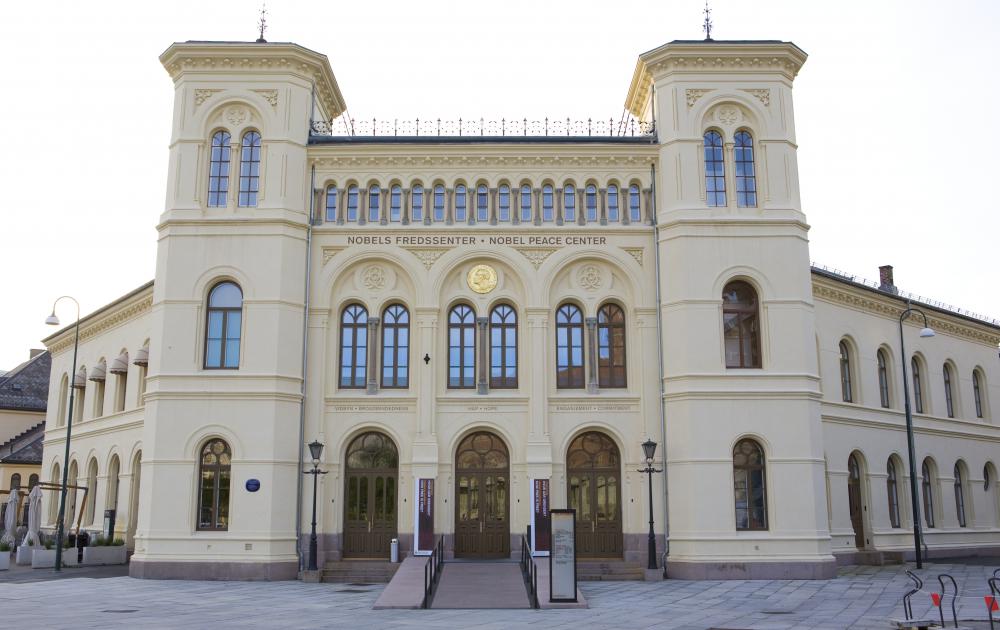
![Nobel Peace Center in Oslo, Norway.]()
Nobel Peace Center in Oslo, Norway. -
![One of the medals awarded to Nobel Prize winners.]()
One of the medals awarded to Nobel Prize winners. -
![Switzerland is home to more than 20 Nobel Prize winners.]() By: pavalenaSwitzerland is home to more than 20 Nobel Prize winners.
By: pavalenaSwitzerland is home to more than 20 Nobel Prize winners. -
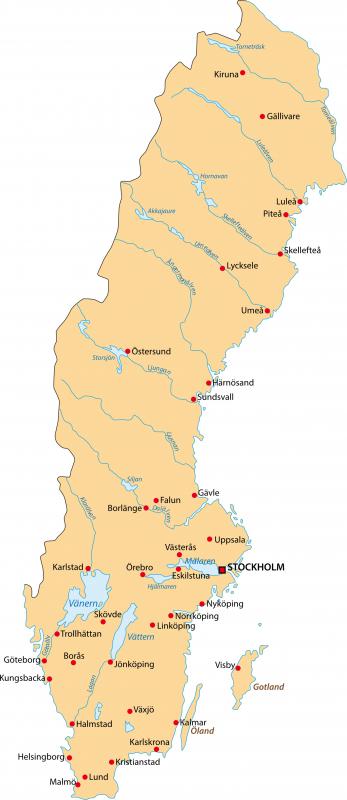
![The determining body for the Nobel Prize in Medicine is the Karolinska Institute, a medical school near Stockholm, Sweden.]() By: lesniewskiThe determining body for the Nobel Prize in Medicine is the Karolinska Institute, a medical school near Stockholm, Sweden.
By: lesniewskiThe determining body for the Nobel Prize in Medicine is the Karolinska Institute, a medical school near Stockholm, Sweden. -
![France has won over 50 Nobel Prizes.]() By: benkenogyFrance has won over 50 Nobel Prizes.
By: benkenogyFrance has won over 50 Nobel Prizes.





Discussion Comments
If winners are Jewish Americans, living in America, then why do you think Israel should get credit for that? You have a lot of Jews living in Russia also, so should we credit Russia or any other country that has Jews?
If a Catholic living in Africa gets it, then we should say the U.S. because we have the largest number (not per capita) of Catholics in the U.S.? That is illogical.
The US relies on foreign-born scientists much more than any other country, that's why. Don't believe me? Ask Michio Kaku.
Unfortunately, these statistics are a bit misleading. It does not take into account that in recent decades most Nobel Laureates got just 1/2, 1/3, or 1/4 of a Nobel Prize. This led to a recent inflation of laureates. Plotting laureates instead of their prizes distorts the graph, biasing its visual impact towards recent times, and in particular, towards the US, which has led the Science Nobel Prize Count by citizenship since 1965 (by birth since 1975). -Jürgen
Does anyone know what state in America has won the most Nobel prizes?
The United States today is the undisputed world leader in science and technology and dwarfs Britain in almost every field. Anon40046 is talking about music and popular culture. Without American rock and roll and blues, there wouldn't be the Beatles, Led Zeppelin or Elton John; the contemporary British music is just a copy from America.
Sorry dude, the brain drain you mention in your post was mainly the result of British doctors emigrating to the US after 1948 NHS reform in Britain, but not so much scientists and engineers.
@Anon 47646: Of course the USA was built on European immigration/brains. There is no other way, but soon after World War II, Americans started to surpass Britain. In my opinion, the most successful nation in science and engineering before and during World War II was Germany. After World War II, Britain took credit for many inventions which came from Germany -- the jet engine and radar, for example. Britain today is nowhere near the US in any field. Remember without the GPS, the rest of Europe is blind.
Nonsense anon 6502. The US has the best institutions in the world and leads the world in science and technology Princeton, Stanford, MIT, Caltec, Harvard, Yale, Berkeley, in Art, literature or diplomacy, probably -- I don't know.
But when it comes to engineering and technology, Britain is even behind France and Germany.
Probably the country that should claim that title should be Israel because most of Nobel laureates are Jews even if they got the prize for another country.
What you guys really want to look at is this much more elaborate study. Look up "Evolution of National Nobel Prize Shares in the 20th Century" by J. Schmidhuber. It shows in detail how the USA replaced Germany as the Nobel Prize leader in the second half of the century, and does not just naively count laureates, but their true prize fractions.
So this guy posted about the Nobel Prize/population ratio of Ireland, showing off his country's eight Nobel Prizes with 4 million people. Get this: Switzerland has about seven million people and has 22 Nobel Prizes. So almost twice as many people as Ireland but almost three times as many Nobel Prizes.
I think the nobel prize is also a part of showing racism. If your skin is white, bravo. You won the nobel and oscar. If your skin is black, get out. You don't deserve it.
Given that Ireland has a population of 4 million and has won eight Nobel prizes, (a ratio of two per million), can we assume that the Irish are smarter than either the Americans or the British? Probably!
I do not believe that anyone is arguing whether the US, is the head of the world or not. I am American and have been living in Europe for the past year. All I ever hear is how we Americans have no culture and are a child of Europe.
Though we did have our origins from Europe, we are our own "deal" per se. To make fallacies saying that because we are diverse we don't own any of our achievements is crazy. Furthermore, everyone is proud of where they are from, and every place offers something unique to the global community.
A genius can be born in a village in the congo, or the most prestigious manor in the UK. Everyone just needs a chance. And lately, America has been viewed as that place, because we are a reflection of the world demographic. (more or less).
With that said, we have many of the same problems every country faces, so the USA isn't any "smarter" than the UK, or Europe. It's all about opportunity.
I just want to add a small, tiny, but outstanding country's name to this conversation: Hungary. The Hungarians gave 13 Nobel-scientist to the world. The Hungarians dominated the 20th century's physical science, or we can say the technological developments generally.
Everybody can whine whether Europe is better than America or the other way around as much as they want, however, the fact is that Asia is going to dominate the world in the future with technology invented by Europeans (and to a lesser extent the Americans).
@ anon6502: Your argument that the UK has more nobel winners per capita is not true.
The nobel price was awarded for the first time in 1901. Back then, the USA had 75 million inhabitants, the UK had 30 million inhabitants. In 100 years the US population quadrupled while the UK population just doubled.
A lot of "American" scientists were not born in America. For instance, many European scientists fled to America because of war in their native countries.
Another interesting note is that until the second world war, the Nobel prices were being dominated almost exclusively by European countries, especially Germany.
Fact is, that Europe made America so rich and the leader of science by fighting each other.
It's sad that prizes are being given out for Affirmative Action.
I understand the meaning of altruism, and sympathy for less successful races, but slanting the choice on who will get the Nobel prize diminishes its value, and is plain out not fair as it should go to the one of most merit.
To anon6502. I disagree with you. USA is without any question the dominating scientific power today. American scientists grabbed almost all of 2009 Nobel prizes. I'm from Costa Rica and was given a scholarship to Stanford University. I had the choice to go to England but i preferred to study in America which is the cradle of innovation and best universities worldwide. The world's greatest minds are studying in the world's best universities which are in America. 60 percent percent of the best top 100 universities are in the USA. The USA also invests more than the five next countries combined in I&D.
What are you saps arguing about? Who's better? Who has won more awards. Who gives a crap? We're all in this world together.
"The USA was built on European immigration/brains. So for Americans to keep harping on that they lead the world - wake up!" By that logic, (for evolutionists) the African continent should take the credit, because that's where we all came from, and (for creationists) all Nobel Prizes should be given to God. Also, if Europe is so academically superior as you say, why is there the "Brain Drain" effect? The UK/Europe are clearly not in that state of devastation that they were in just after World War II, so shouldn't American academics be going to Europe?
I'm not trying to be arrogant or wind people up but the UK's innovation, inventions, Nobel Prizes, popular culture (music, literature, Tv, etc) is unsurpassed for such a tiny island. Anyone who really knows what they're talking about - and is unbiased - will be aware of the UK's fantastic history. The USA may have more prizes, but that doesn't explain the whole story.
The USA imported many, many UK and German intellectuals. In the UK it is known as the 'brain drain'. The USA'S technological prowess is a direct result of European brains, economical power, and weakening of Germany, the UK and Japan as a result of the war - the UK was bankrupted. In two World Wars it went from being the richest, most powerful nation in the world to a country on it's knees. Only the USA benefited from massive economical growth/wealth during WW2.
I don't envy the USA's super-state status. For 200 years the UK was the superpower, now it's the USA's turn, next it will be China (God forbid!)
Also, the inventions, innovation and influence the UK has imparted over the last 400 years is - without question - unsurpassed. And that's a fact!
The USA was built on European immigration/brains. So for Americans to keep harping on that they lead the world - wake up!
Pretty inane discussion about the UK. The UK and USA have both good (and shared!) intellectual traditions and good Nobel prize records. Just for good measure, though, I note that the internet (on which Wiki, Facebook, etc. works) was invented by a Brit (Berners Lee) but in the US! Not certain if the "future" is China and India - this is just defeatist.
How silly. Youtube, Wikipedia, Facebook, Microsoft, Google, Yahoo, etc.--the currency of contemporary living--were developed and commercialized in America, not the U.K.. The technology attendant to the armed services alone dwarfs the contributions of the U.K. We have scores of world leading research institutions. You have a small handful. The U.K. indulges in an easy mockery of the U.S., but is not in the same league and is hardly likely to be.
I strongly advise you all to read Robert Marc Friedmans The Politics of Excellence: Behind the Nobel Prize in Science, 2001.
I think you just proved Emants point even further.
Wrong. Google St. Lucia (Sir Arthur Lewis and Sir Dereck Walcott) 2 winners per 180,000 population. 11.11 nobel prizes per 1m.
Sweden got 29 prizes - 8 mill inhabitants -> over 3 prizes pr 1 million people.
Strange how few prizes the french got, considering all the great literature that country has given us. Not to mention russia.
with anon's logic - Sweden would be the dominant country in the world, with the highest prize/people-ratio. Not a bad word about Sweden - or anon or the Uk for that matter.
To aron: Us still grabs around 50% of the science-prizes every year, even tho they only got 5% of the worlds population + many non-Us laureates are educated in the Us. Considering the Us isolated itself for almost 50 years last century, 260 prizes is extreme. Young russians, indians, etc wants to study at Stanford, CalTech and MiT. It's fair to say that Us is the dominating scientific power today, as it is when it comes to culture, inventions and sport. The future however will - in case of science - belong to China and India, not Us or Uk.
The USA is 5 times bigger in population than the UK, but has only won 3 times as many nobel prizes. The USA has 0.85 nobel prizes per 1m citizens while the UK has 1.5 per 1m citizens. Almost twice as many proportionately. Britain is also increasing its number of wins at a higher rate. Britain effectively leads the way in the western world with regard to invention, innovation, art, literature and diplomacy. A huge proportion of the world's other Nobel laureates were educated in British schools and universities.
Post your comments