
At DelightedCooking, we're committed to delivering accurate, trustworthy information. Our expert-authored content is rigorously fact-checked and sourced from credible authorities. Discover how we uphold the highest standards in providing you with reliable knowledge.
Which Cooking Oils Need Refrigeration?
 Tricia Christensen
Tricia Christensen
Tricia Christensen
Some types of cooking oil benefit from refrigeration, while other types can be safely kept outside of the refrigerator. No oil should be kept near a heat source, like an oven or stovetop, or near central heating vents. It can be affected by both light and heat, and over time may become rancid. The oils that should be refrigerated include those with a lower saturated fat content, like safflower, sunflower, and canola.
The basic rule for storing oil is that those with higher saturated fat content, such as lard, palm or coconut, tend to be fairly stable. These can be stored outside of the refrigerator for longer periods of time. They should be stored in a dark place, not near a window with lots of light, since light can affect the quality of the oil.

Oil with a high polyunsaturated or monounsaturated fat content such as safflower, sunflower, canola or olive are much more delicate and should be stored in the refrigerator. Some argue that olive oil is not as useful when refrigerated, since it may become cloudy and may harden. Do not heat the olive oil in a microwave to get it back to a liquid state. Instead, simply allow it to stand out for a few minutes. When it returns to room temperature, it is still in good condition.

Still some tend to prefer not to refrigerate olive oil and claim refrigeration also affects taste. It may be advisable to buy it in small quantities if one tends not to refrigerate it. This will mean the oil is quickly used and runs less risk of becoming rancid. Be certain to store it in a cool dark cabinet, as this will extend its life.
Rancid oil should be discarded. They often have an unpleasant smell and a bitter taste. They may cause some stomach upset if used, and occasionally grow bacteria, though this is uncommon.

Oil that is being heated requires careful monitoring. When it starts to smoke, it is overcooked, making it essentially burned. Most oils will list a smoke point on the bottle. Some, like nut oils, have a much higher smoke point and may be better choices for deep-frying. Peanut oil is one of the best choices, as it does well at high heats.
Even with proper care, oil still has an expiration date, which should be observed. In general, one should throw it out after about six months, earlier if it has not been refrigerated. Before using suspected rancid oil, take a quick taste to be sure there is no bitterness.
Tricia Christensen
Tricia has a Literature degree from Sonoma State University and has been a frequent DelightedCooking contributor for many years. She is especially passionate about reading and writing, although her other interests include medicine, art, film, history, politics, ethics, and religion. Tricia lives in Northern California and is currently working on her first novel.
Learn more...
Tricia Christensen
Tricia has a Literature degree from Sonoma State University and has been a frequent DelightedCooking contributor for many years. She is especially passionate about reading and writing, although her other interests include medicine, art, film, history, politics, ethics, and religion. Tricia lives in Northern California and is currently working on her first novel.
Learn more...AS FEATURED ON:
AS FEATURED ON:


-
![Refrigerate oils with high polyunsaturated fat content, such as olive oil.]() By: Angel SimonRefrigerate oils with high polyunsaturated fat content, such as olive oil.
By: Angel SimonRefrigerate oils with high polyunsaturated fat content, such as olive oil. -
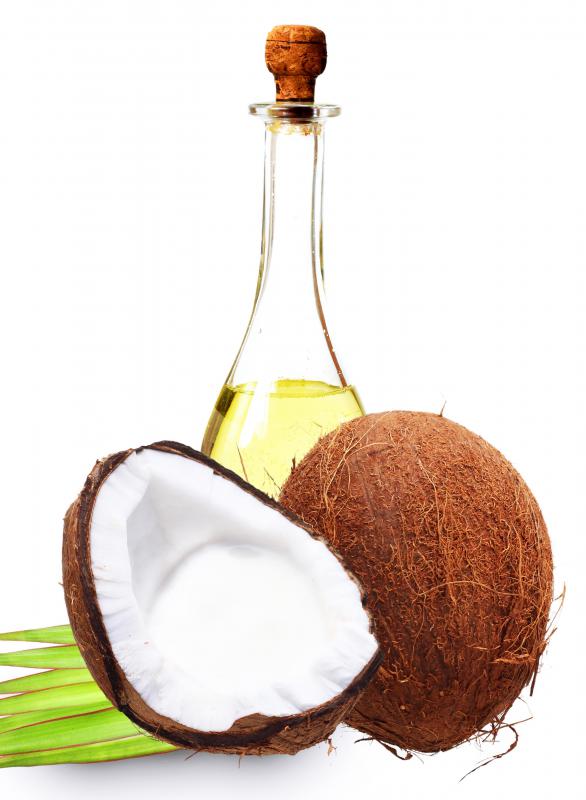
![Oils with high saturated fat content, such as coconut oil, don't need to stay cold.]() By: Valentina R.Oils with high saturated fat content, such as coconut oil, don't need to stay cold.
By: Valentina R.Oils with high saturated fat content, such as coconut oil, don't need to stay cold. -
![Peanut oil has a high smoking point and is widely used in many countries to fry foods.]() By: WimLPeanut oil has a high smoking point and is widely used in many countries to fry foods.
By: WimLPeanut oil has a high smoking point and is widely used in many countries to fry foods. -
![Canola oil should be kept in a cool place when not used for cooking.]() By: branexCanola oil should be kept in a cool place when not used for cooking.
By: branexCanola oil should be kept in a cool place when not used for cooking. -
![Because of it's high polyunsaturated and monounsaturated fat content, sunflower oil should be refrigerated.]() By: Serhiy ShullyeBecause of it's high polyunsaturated and monounsaturated fat content, sunflower oil should be refrigerated.
By: Serhiy ShullyeBecause of it's high polyunsaturated and monounsaturated fat content, sunflower oil should be refrigerated.



Discussion Comments
Actually, olive oil is not supposed to be refrigerated. It degrades the flavor and benefits of the oil. I got this straight from UC Davis olive center. As long as it is stored in dark glass, in a cupboard away from direct heat you should be fine.
I have done a tremendous amount of research for an olive oil post on my blog.
In my house we only use ghee, the clarified butter that is used in Indian cooking. Ghee isn't supposed to be refrigerated either. It just needs to be in a closed container, not out in the open.
But if I had other kinds of oil, I think I would keep it in the refrigerator. The fridge doesn't harm oil, it's just going to prolong its life and keep it fresh for longer. Coffee is the same way. It stays fresh if you keep it in the fridge. I think most people just have a tendency to keep it out but it's better to refrigerate liquid oils.
For all you folks who don't like to refrigerate their cooking oils, that's okay, but just make sure to keep it in a cool and dark place.
The least you can do is keep the oil in dark glass bottles or containers. This will actually protect the oil from sunlight which might heat up the oil and cause it to go rancid more quickly.
@ivanka-- I've been using olive oil for years and have never refrigerated it. I didn't even know that it's supposed to be refrigerated.
But if that's the case, why don't they refrigerate oils in the grocery store? It's always sitting out in the dry foods isle.
I don't know. I've never had anything bad happen without refrigerating my olive oil. And I consume it fast enough that it really doesn't have time to go bad. So I'm just going to continue to leave it out.
I'm assuming peanut oil probably doesn't need to be refrigerated, since it does so well in high heat. Since it can handle high heats, peanut oil probably won't spoil quickly at room temperature.
@LoriCharlie - If you use it a lot, and buy it in small bottles, you're probably using it up fast enough to stop it from going rancid. But as the article said, it really is best to store it in the refrigerator.
One oil that I never put in the fridge is coconut oil though. It's actually solid at room temperature, so I assume if I stuck it in the fridge, it would be frozen when I was ready to use it! I do keep canola oil in the fridge though.
I guess I'm a rebel, because I've never, ever refrigerated olive oil. My mom always told me not to because it has a low freezing point. Instead, I leave it right out on the counter next to the stove. I've never had a bottle go rancid, but I do use it quite a lot.
Obviously you want to follow directions given with your fryer.
Peanut oil has a very high smoke point, something like 450F, maybe that has something to do with why the directions are saying not to use it in your particular fryer.
Just set up a brand new GE deep fryer to use tonight. The directions say not to use peanut oil for frying, but does not state why. This article says peanut oil is one of the best. I am confused. Oh, I will be deep frying fish, if that is a factor in the answer! Thanks!
Just another note: many people reuse their oil, especially when cooking french fries or things such as that. When you cook with oil, the heat breaks down the oil and damages it. Therefore, it is not a good idea to reuse the cooking oil.
In Mediterranean countries where large quantities of oil are produced yearly, oil was, and it still might be, kept in rock containers. The size of the containers varied but usually they could hold 4 to 5 gallons of oil.
These containers were kept in completely dark spaces, usually in cellar where it was cool and dark. Needed amounts would be bottled, and the rest would continue to be stored in the cool, dark place.
The oil would be used during the year, until the following harvest.
Since most people do not keep large amounts of oil at home, and do not have rock containers, for best results, it is still important to find a cool and dark place in the home.
The refrigerator is a good place, but so is pantry, if it is cool and dark. In refrigerator the oil will solidify, but that will not affect its quality. The oil will be good for about a year.
Post your comments