
At InfoBloom, we're committed to delivering accurate, trustworthy information. Our expert-authored content is rigorously fact-checked and sourced from credible authorities. Discover how we uphold the highest standards in providing you with reliable knowledge.
When did Flowering Plants Evolve?
 Michael Anissimov
Michael Anissimov
Michael Anissimov
Although land plants have been around for 470 million years or longer, the earliest evidence of flowering plants, in the form of the fossil Archaefructus liaoningensis, dates to just 125 million years ago, in the early Cretaceous period. This means that flowers have only existed for about a quarter of the time of land plants in general. Fossil evidence of pollen, considered to be a strong indication of flowering plants, is a bit older, dated to about 130 million years ago.
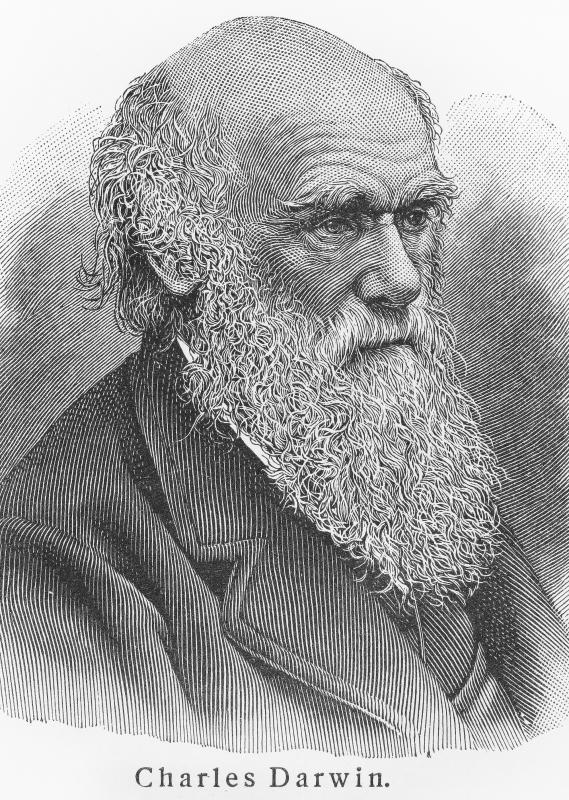
The evolution of flowering plants was a long time in coming, but today, they are the most successful group of land plants, found on every continent but Antarctica, and on remote islands. Their abrupt appearance and success was so extreme that Charles Darwin called it an "abominable mystery." Since Darwin's time, however, more fossils have been found that reveal a series of intermediate steps before full-fledged flowers.

The evolution of plants is generally one where groups that exploit fundamental evolutionary innovations — such as vascular tissue, bark, seeds, or flowers — have the tendency to almost completely replace more primitive plants when they really get going. Furthermore, these evolutionary innovations tend to emerge in the most complex plants at the time. Accordingly, flowering plants evolved from the most sophisticated seed plants, which themselves had replaced most seedless plants about 370 million years ago, during the late Devonian period.

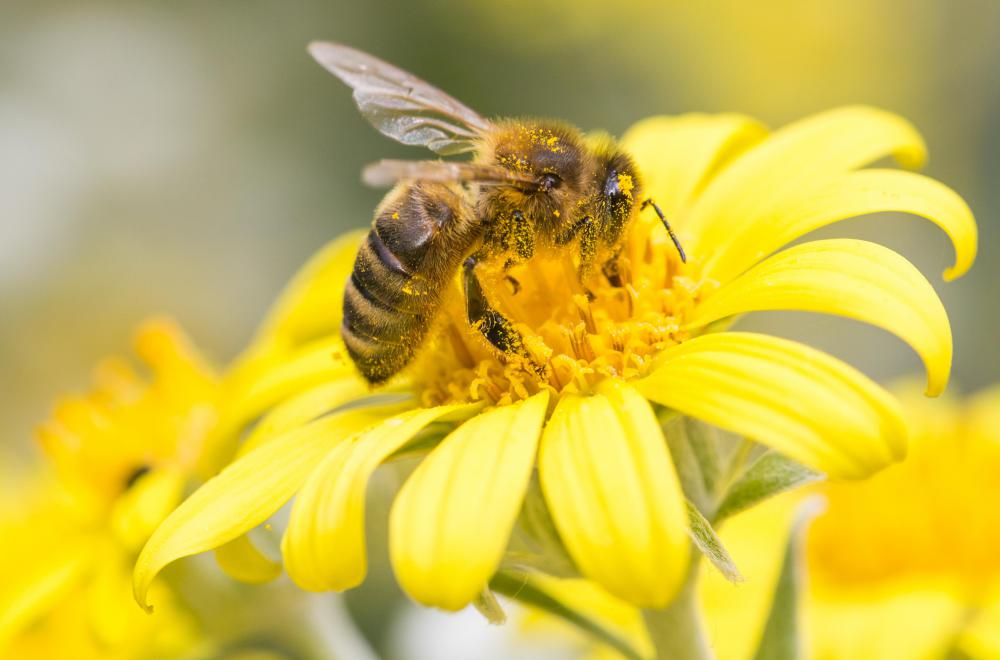
Flowers are a very successful evolutionary innovation because they allow a more complex range of interactions with other organisms. This opens up various symbiotic partnerships, especially with pollinating insects such as bees. The constant exchange of pollen between plants, facilitated by bees, helps these plants to stay genetically diverse and resistant to disease or other hardship.

Flowering plants diversified into the two main groups, monocots and dicots, just 5 to 10 million years after they initially evolved. By the end of the Cretaceous, 65.5 million years ago, half of today's main flowering groups had evolved, and they accounted for 70% of global plant species. The success of the plants around this time had caused scientists to speculate the the dinosaurs may have gone extinct by eating flowers. This was before scientists came to agree that the dinosaurs most likely went extinct from an asteroid impact.
Michael Anissimov
Michael is a longtime InfoBloom contributor who specializes in topics relating to paleontology, physics, biology, astronomy, chemistry, and futurism. In addition to being an avid blogger, Michael is particularly passionate about stem cell research, regenerative medicine, and life extension therapies. He has also worked for the Methuselah Foundation, the Singularity Institute for Artificial Intelligence, and the Lifeboat Foundation.
Learn more...
Michael Anissimov
Michael is a longtime InfoBloom contributor who specializes in topics relating to paleontology, physics, biology, astronomy, chemistry, and futurism. In addition to being an avid blogger, Michael is particularly passionate about stem cell research, regenerative medicine, and life extension therapies. He has also worked for the Methuselah Foundation, the Singularity Institute for Artificial Intelligence, and the Lifeboat Foundation.
Learn more...AS FEATURED ON:
AS FEATURED ON:









-
![Charles Darwin referred to the abundance, appearance, and success of flowering plants as an "abominable mystery."]() By: nickolaeCharles Darwin referred to the abundance, appearance, and success of flowering plants as an "abominable mystery."
By: nickolaeCharles Darwin referred to the abundance, appearance, and success of flowering plants as an "abominable mystery." -
![Flowering plants are found on every continent except Antarctica.]() By: Marina GorskayaFlowering plants are found on every continent except Antarctica.
By: Marina GorskayaFlowering plants are found on every continent except Antarctica. -
![Evidence of pollen dates to nearly 130 million years ago.]() By: cbckchristineEvidence of pollen dates to nearly 130 million years ago.
By: cbckchristineEvidence of pollen dates to nearly 130 million years ago. -
![Bees helped promote the evolution of flowering plants.]() By: sbgoodwinBees helped promote the evolution of flowering plants.
By: sbgoodwinBees helped promote the evolution of flowering plants. -
![Vascular plants are defined by two types of transport tissue: xylem and phloem.]() By: designuaVascular plants are defined by two types of transport tissue: xylem and phloem.
By: designuaVascular plants are defined by two types of transport tissue: xylem and phloem.


Discussion Comments
I suspect that you will find interesting a proposal that angiosperm plants evolved on the Ontong-Java Plateau before the Cretaceous. Also, you may see an explanation for the boundaries of the temperate deciduous forest as a function of glaze ice storms.
@titans62 - There are actually quite a few plants that don't have flowers. The flowering plants far outnumber them at this point in history, though. You are correct that ferns are one of them. They also developed several million years before another group of common non-flowering plants - conifers.
A lot of people think conifers make flowers, but they don't. I have heard that is part of why pine trees and other evergreens send out clouds of pollen. Since they don't have flowers, they don't have natural pollinators, and the pollen has to land just right in the cone to be accepted.
In my back yard, we also have a tree called Ginkgo, which you have probably heard of. Contrary to popular belief, they do not flower and are more closely related to pines than oaks.
@jcraig - I believe a lot of insects can also pick up certain colors, so I'm sure flowers developed colors at the same time. Perhaps that helped attract the first insects, as well.
The one thing I am still confused about is what is a flowering plant and what isn't. The article says angiosperms are flowering plants. Doesn't everything have flowers, though? The only thing I can think of is that maybe things like ferns wouldn't have flowers. I think they use spores or something. What else could there be?
@kentuckycat - Good question, but it begs another one - Why did plants develop nectar in the first place? I am not a botanist, so I don't know if it serves any function as far as collecting pollen is concerned. Is nectar what makes the pollen stick to the sex organs? If that's the case, I guess it's easier to explain how nectar evolved. If not, then it must have come about because insects were visiting the flowers.
Even then, there are a lot of other different pollen transportation methods. A lot of plants make their flowers so that pollen rubs off on passing animals that may not necessarily be attracted to the flowers. I think some of them may even use water.
@pastanaga - I really like the description of how those types of symbiotic evolutions happen. It all goes back to the survival of the fittest theory.
Plants probably started off with wind because it was the easiest medium. I think what is interesting is that a lot of plants probably started attracting insects at the same time. It wasn't like some animals that could see other plants being successful and following in their footsteps.
What I am curious about is when nectar was evolved, because that would have been the big attraction for insects.
@dominoe - No, I used to have trouble understanding how that happened as well, but a science teacher explained it to me. Evolution happens by degrees.
What probably happened in this case (I'm speculating, as I don't know what the current theory is) is that pollen developed from what the plants used before (and some still do), which was little gametes that were a bit like sperm, and could only move through water.
It's not hard to imagine those gametes slowly growing lighter and less fragile until they can be blown through the air in the wind.
Any species that could suddenly reproduce through the air, rather than needing water, is at a distinct advantage in lots of environments.
So, flowers probably first developed as a method of distributing pollen by wind (which some of them still do today).
Then, perhaps, one of the flowers was being eaten by a insect (because pollen is very nutritious) and it happened to move some of the pollen while going from wind flower to wind flower. Much more efficient.
From that point on, the plants that developed methods of attracting insects were going to do better than other plants and the insects that took advantage of those adaptions would also do well.
Evolution is fascinating, but it's not really a mystery anymore.
@anon87579 - Actually, I'd never heard of that theory before, but it's not a terrible one.
If flowering plants really did take over that quickly, dinosaurs (which supposedly wouldn't be multiplying nearly as fast) wouldn't have time to adapt to them.
I'm sure there are flowers around today that are poisonous if the wrong animal eats them. It's a common defense strategy. There's no point in spending all your energy in growing flowers if they are eaten before they can develop the seeds.
If a flower that was poisonous to dinosaurs spread really quickly, large numbers of herbivores would be just as quickly killed off. If you upset the ecosystem like that, you can definitely end up driving species extinct, particularly if it's a keystone species that's being killed.
I think now though they can actually see what a dinosaur had in its stomach when it died some of the time, and they might have been able to disprove the theory that way.
I can't believe that the scientists actually thought that the dinosaurs became extinct from "eating flowers."
Is it believed that flowering plants and pollinators evolved at the same time to form their symbiotic relationship? Is this a "what came first, the chicken or the egg" type question?
Post your comments