
At PracticalAdultInsights, we're committed to delivering accurate, trustworthy information. Our expert-authored content is rigorously fact-checked and sourced from credible authorities. Discover how we uphold the highest standards in providing you with reliable knowledge.
What Skills are Needed for Mechanical Engineer Employment?
Mechanical engineers research, design, and build machines and equipment of all types. They can specialize in designing engines, automobiles, consumer products, electronics, or heavy machinery, among other areas. There are several important technical and personal skills that an individual looking for employment in this field should possess. A successful engineer is creative, efficient, detail-oriented, and mechanically inclined. He or she must be a master of computer design and have specialized knowledge of physics and electricity in order to produce efficient, reliable machines.
Many different personal traits and skills are necessary to secure mechanical engineer employment. Professionals need to have strong problem-solving skills in order to invent and test new designs. Creativity and perseverance are essential in trial-and-error experiments with prototypes. Most engineers need strong communication skills as well, as they are frequently required to work in teams with other engineers and correspond with management and patent office workers. They also need strong educational backgrounds in math and physics to help them calculate statistics and determine the most efficient ways of putting machines together.

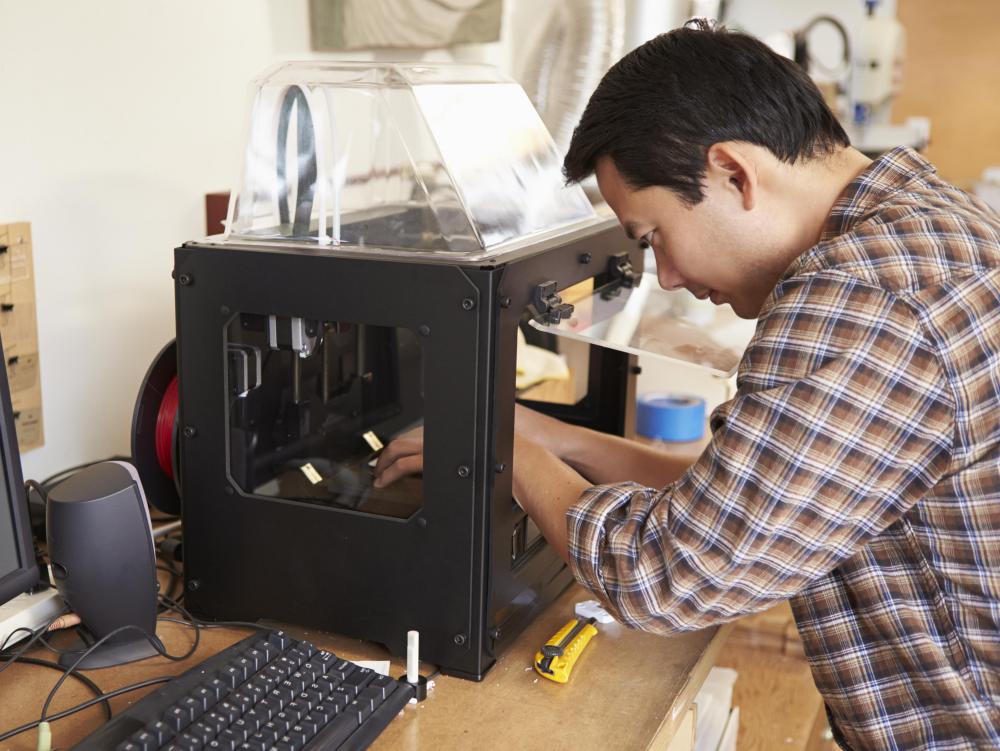
In order to be a successful mechanical engineer, an individual needs to master certain technical skills that are fundamental to the job. Computer proficiency is very important, as most professionals work extensively with computer drafting software and other programs to help them design new products and equipment. Engineers often engage in physically building prototypes, which requires manual dexterity and detailed knowledge of many different types of tools and assembly techniques. They are usually expected to work quickly and efficiently, without taking shortcuts or skipping any steps in the building process.

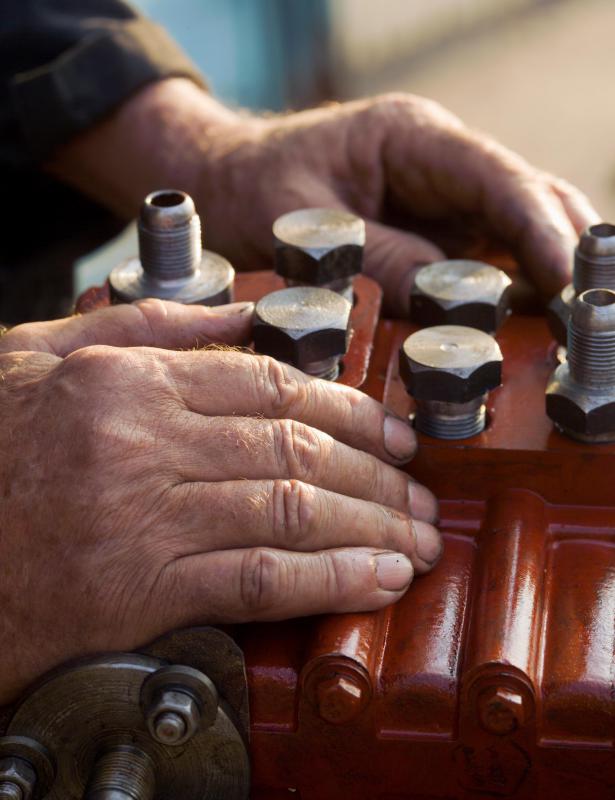
The technical skills needed for mechanical engineer employment vary by specialty. Automobile and aeronautics engineers, for example, must be skilled at assembling and troubleshooting engines, brakes, and exhaust systems. Individuals who specialize in creating consumer electronics and appliances must be able to splice wires, manipulate hand and power tools, and solder tiny parts. Those who build industrial machinery must have detailed knowledge of the properties of metals and ergonomic design to create safe, efficient, easy-to-use machines.

An individual is usually required to hold a college degree in order to find employment as a mechanical engineer. Some entry-level jobs can be found with a bachelor's degree in the field, although many companies and research institutions require new employees to hold master's degrees or higher. New engineers who are willing to work hard and are able to display their wide range of skills generally enjoy many advancement opportunities within manufacturing companies and engineering firms.
AS FEATURED ON:
AS FEATURED ON:


-
![Mechanical engineers typically are skilled in the use of computer drafting software.]() By: Marzky Ragsac Jr.Mechanical engineers typically are skilled in the use of computer drafting software.
By: Marzky Ragsac Jr.Mechanical engineers typically are skilled in the use of computer drafting software. -
![Manual dexterity and knowledge of an assortment of tools will help a mechanical engineer with work such as building prototypes.]() By: Monkey BusinessManual dexterity and knowledge of an assortment of tools will help a mechanical engineer with work such as building prototypes.
By: Monkey BusinessManual dexterity and knowledge of an assortment of tools will help a mechanical engineer with work such as building prototypes. -
![Part of the technical skills required of a mechanical engineer might be the ability to put together and troubleshoot engines.]() By: Ivan NakonechnyyPart of the technical skills required of a mechanical engineer might be the ability to put together and troubleshoot engines.
By: Ivan NakonechnyyPart of the technical skills required of a mechanical engineer might be the ability to put together and troubleshoot engines. -
![A strong background in math and physics are important to become a mechanical engineer.]() By: Lisa F. YoungA strong background in math and physics are important to become a mechanical engineer.
By: Lisa F. YoungA strong background in math and physics are important to become a mechanical engineer. -
![A mechanical engineer may oversee the use of various systems in a manufacturing facility.]() By: uwimagesA mechanical engineer may oversee the use of various systems in a manufacturing facility.
By: uwimagesA mechanical engineer may oversee the use of various systems in a manufacturing facility.



Discussion Comments
@write 79: You are wrong. I'm not so smart either, but I'm a mechanical engineer. It only takes interest and determination.
Becoming an engineer takes time and is not something you can achieve overnight. My father is a very successful engineer and now works side by side with Shell and he is the one they turn to if they need advice on engineering aspects of the business, like refining and designing holding silos. The time taken to become an engineer is well worth the wait.
I'm interested in mechanical engineering, but it seems a bit overwhelming. I'm just not sure I'm smart enough -- computer design and physics? I don't know a lot about those.
I wasn't aware that for most mechanical engineering employment, a masters degree is now required. I'm not sure I want to go to school for that long!
I think my son would be a great mechanical engineer. He's always been interested in the way machines work and how they're put together. After reading this article, I realized that he has another great quality toward this field -- he is very creative.
I hope he realizes how well he fits into the mechanical engineer career field. I just want to see him succeed doing something he seems to be made for!
Post your comments