
At HomeQuestionsAnswered, we're committed to delivering accurate, trustworthy information. Our expert-authored content is rigorously fact-checked and sourced from credible authorities. Discover how we uphold the highest standards in providing you with reliable knowledge.
What Size Propane Tank do I Need?
 Malcolm Tatum
Malcolm Tatum
Malcolm Tatum
Propane is used in many homes and businesses for practical tasks, such as heating a room or the water supply to the space. It is also possible to use the gas to heat swimming pools and grill food. Since its uses are varied, propane tanks come in several different sizes, ranging from the compact gas grill tank to large underground storage facilities. Determining the right size for you is a matter of considering what the fuel will be used for and how frequently it's used, among other considerations.
If your propane needs are associated with the home, there are several factors to consider. One of the most important considerations is the tasks that will be handled with the use of fuel. Most homes equipped with propane will use it for heating, but if you also plan on using it for cooking, heating water, and running a clothing dryer, purchasing a larger tank is definitely a consideration. This will allow you to purchase more fuel at one time and possibly avoid some expense if your local supplier issues a charge for delivery each time they fill the tank.

As can be imagined, a commercial propane tank is usually much larger than the tanks designed for home use. For larger businesses such as manufacturing plants, it is not unusual for an underground tank to be used, although large storage tanks designed for above ground installation are available. One key factor to consider when it comes to tank size is the square footage (or square meters) of the commercial space. If the fuel will be used to operate various types of machinery within the facility, this should also be considered when purchasing a tank. Since high volume users can sometimes get discounts on the fuel, installing a tank large enough to allow the facility to operate for a longer period in between refills will yield a significant savings on operational costs over the course of a year.

When help is needed to ascertain the amount of propane used within a given time frame, asking for assistance from a local propane supplier is a good idea. The supplier can help you identify each use for the propane, come up with a cumulative total for the amount of fuel needed within a specified period, and help you decide what size of propane tank would best meet your needs. Often, the supplier can also evaluate your situation and make suggestions about whether something like a gill tank would be best for you, or if something as simple as a standard storage tank would suffice.
Malcolm Tatum
After many years in the teleconferencing industry, Michael decided to embrace his passion for trivia, research, and writing by becoming a full-time freelance writer. Since then, he has contributed articles to a variety of print and online publications, including HomeQuestionsAnswered, and his work has also appeared in poetry collections, devotional anthologies, and several newspapers. Malcolm’s other interests include collecting vinyl records, minor league baseball, and cycling.
Learn more...
Malcolm Tatum
After many years in the teleconferencing industry, Michael decided to embrace his passion for trivia, research, and writing by becoming a full-time freelance writer. Since then, he has contributed articles to a variety of print and online publications, including HomeQuestionsAnswered, and his work has also appeared in poetry collections, devotional anthologies, and several newspapers. Malcolm’s other interests include collecting vinyl records, minor league baseball, and cycling.
Learn more...AS FEATURED ON:
AS FEATURED ON:


-
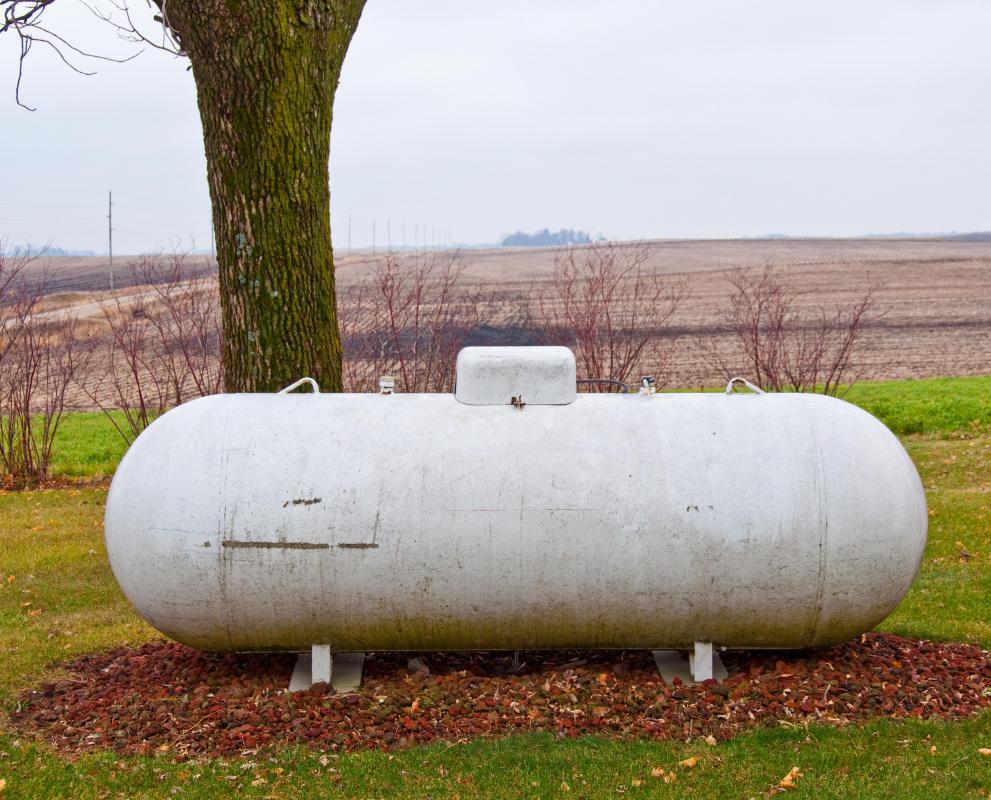
![Residential propane tank.]()
Residential propane tank. -
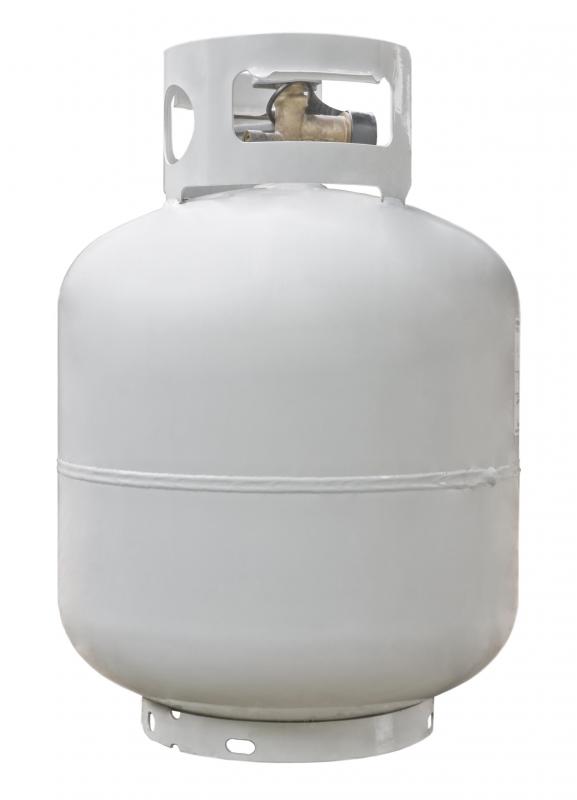
![Barbecue propane tank.]()
Barbecue propane tank. -
![Propane is commonly used for outdoor grills.]() By: Jim LambertPropane is commonly used for outdoor grills.
By: Jim LambertPropane is commonly used for outdoor grills.

Discussion Comments
@myharley - Keeping an extra propane tank refill around is a good idea. There have been times when I ran out of propane in the middle of grilling.
This can be very frustrating too. This means I have to run to the store and get my tank refilled before I can finish what I am grilling.
I like to grill all year long, so making sure I have enough propane on hand when I need it is important to me.
I always try to keep an extra grill propane tank on hand. I get pretty frustrated when I am ready to start the grill and realize my propane tank is empty.
When I am done grilling, I usually leave it turned on for a few minutes to burn off some of the residue. More than once I have forgotten to go back and turn it off. The next time I am ready to use the grill, I don't have any propane left at all.
This makes for an expensive meal, so now I make sure and stay right beside the grill until I know I have turned it off.
@golf07 - It depends on whether you buy a new or a used propane tank, but either way, you will be out some money. We were looking at buying a used tank and I think it was around $1200.
We had to take into consideration how long we thought we would be living here if it would be worth the cost. We ended up just renting the tank.
Our propane tank is only a 500 gallon tank but our delivery company is responsible for keeping the tank full.
One year they forget to come for awhile and we ran out of propane. This was not convenient in the middle of winter, but they were responsible for giving us a certain number of free gallons of propane.
After that, they always made sure to keep our propane gas tank full.
We live in the country and have a 1000 gallon propane tank we use to heat our house and garage. We have living quarters above our garage, so we keep this area heated all winter long as well as the house.
Depending on how cold the winter is, we can go through quite a bit of propane. We usually contract a certain amount of gallons to use every year based on what we have used in the past.
This way we get the best cost and don't have to worry if the price of propane gets extremely high during a cold winter.
I make sure and check our propane tank gauge every so often to see how we are doing on fuel. They charge a delivery fee every time they come, so I don't like to call them too often, but I also don't want to run out of propane.
We also pay a fee every year for the tank rental. This propane tank was here when we bought the property, so we use the same fuel service as the previous people who lived here did.
I don't know how much it would cost to buy our own propane tank, but I imagine they wouldn't be very cheap.
Post your comments