
At TheHealthBoard, we're committed to delivering accurate, trustworthy information. Our expert-authored content is rigorously fact-checked and sourced from credible authorities. Discover how we uphold the highest standards in providing you with reliable knowledge.
What Should I do for an Abscess?
 Tricia Christensen
Tricia Christensen
Tricia Christensen
An abscess may occur on any part of the body, or may occur internally. This is particularly the case with the vital organs, and especially the reproductive glands of women. One may notice pain in the area around the uterus or ovaries, suggesting the presence of an abscess or cyst.
All abscesses are the result of bacteria accumulating in a “pocket” of the body. The body responds by walling off the collection of pus, so that it is sealed from the body. However, this pocket may drain or burst creating infection in the blood.
The first goal in treating an abscess is to seek medical advice. Even one on the skin can lead to blood infection when it bursts. Most need to be treated with antibiotics to completely resolve.
It is, of course, quite difficult to treat an abscess located inside the body. Applying a heating pad over an abscessed ovary may provide some comfort. However, normally, antibiotics and pain medication are the prescribed treatment.
Usually those that affect the skin have other treatment options combined with taking oral antibiotics. Some treatments can help reduce time an abscess remains on the skin and can as well help to reduce pain.

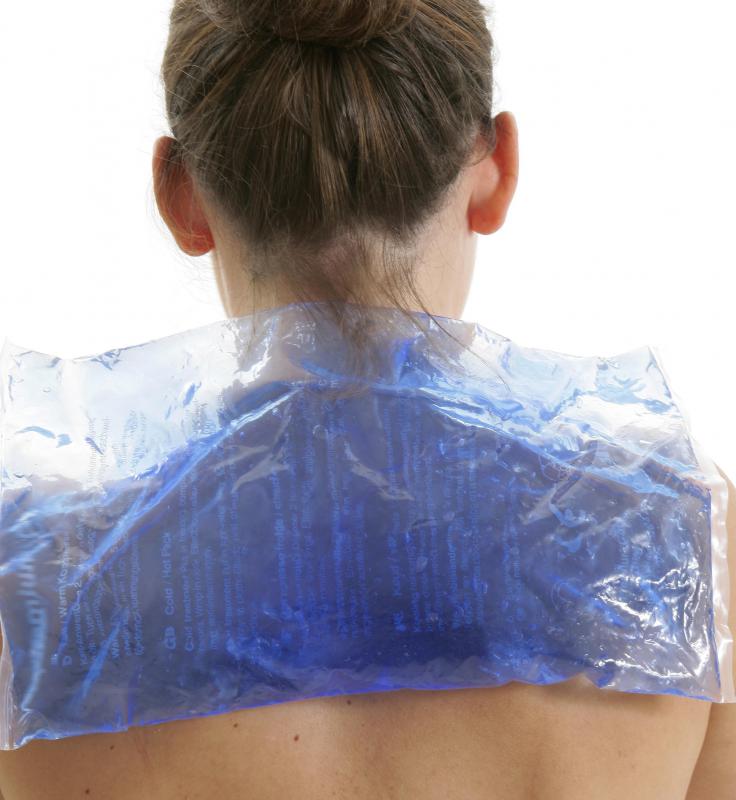
One of the gold standard recommendations for treating a skin abscess is to apply warm compresses to the site for 10-15 minutes four times a day. Doctors suggest using tap water on a washcloth that is as hot as one can tolerate. Sometimes, tap water heat may be set too high, and it may not feel to the hands as though the water is too hot.
If one is unsure about the heat of the cloth, apply the warmed washcloth to a more sensitive area like a forearm. If it feels too hot, do not apply it to the abscess. It does not need to be complicated by burned skin tissue. As well, consider turning down the heat on the water heater to avoid burning one’s self in the future.
Hot compresses allow the abscess to resolve sooner, and drain sooner. They also may provide relief from pain. Even a small one on the skin can be quite painful.
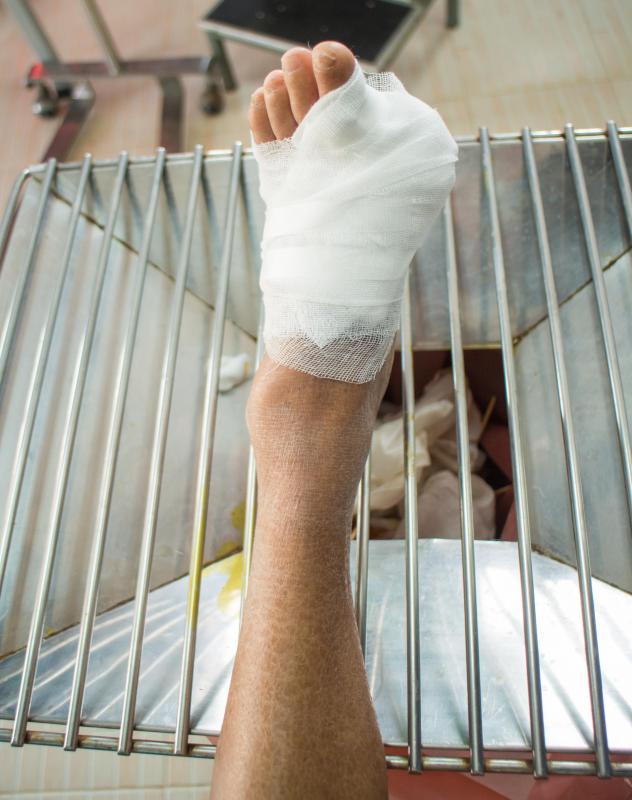
If it is located on a limb, or the hands or feet, consider elevating that limb when possible. This can also help resolve the abscess sooner. It can also help keep the pocket from swelling.
If one is treating the area with a compress and it bursts, be certain to wash the hands carefully. As well, wash the area around the skin to clean up any pus. When the abscess bursts it can spread bacteria to other skin cells.

When one is on a treatment course of antibiotics, and the abscess appears to get worse, or larger, contact a physician again. In some cases, a stronger antibiotic may be required to destroy the bacteria present. Also note signs for greater infection like a significant increase in pain, or red streaks present on the skin that seem to shoot out from it. These may indicate resistant infection.

Failure to treat an abscess can cause significant tissue damage, including gangrene. If the area begins to smell badly, or if the tissue surrounding it appears to be swelling significantly, contact a doctor immediately. Some bacteria are more difficult to treat and may warrant intravenous (IV) antibiotics.
Tricia Christensen
Tricia has a Literature degree from Sonoma State University and has been a frequent TheHealthBoard contributor for many years. She is especially passionate about reading and writing, although her other interests include medicine, art, film, history, politics, ethics, and religion. Tricia lives in Northern California and is currently working on her first novel.
Learn more...
Tricia Christensen
Tricia has a Literature degree from Sonoma State University and has been a frequent TheHealthBoard contributor for many years. She is especially passionate about reading and writing, although her other interests include medicine, art, film, history, politics, ethics, and religion. Tricia lives in Northern California and is currently working on her first novel.
Learn more...AS FEATURED ON:
AS FEATURED ON:


-
![Antibiotics are typically needed to treat an abscess.]() By: Karramba ProductionAntibiotics are typically needed to treat an abscess.
By: Karramba ProductionAntibiotics are typically needed to treat an abscess. -
![A hot washcloth is recommended to treat an abscess.]() By: SchliernerA hot washcloth is recommended to treat an abscess.
By: SchliernerA hot washcloth is recommended to treat an abscess. -
![A warm compress may be used to treat an abscess.]() By: JPC-PRODA warm compress may be used to treat an abscess.
By: JPC-PRODA warm compress may be used to treat an abscess. -
![If an abscess bursts, it can spread bacteria to other skin cells.]() By: F.C.G.If an abscess bursts, it can spread bacteria to other skin cells.
By: F.C.G.If an abscess bursts, it can spread bacteria to other skin cells. -
![If an abscess is located on the feet, consider elevating them when possible.]() By: Renee JansoaIf an abscess is located on the feet, consider elevating them when possible.
By: Renee JansoaIf an abscess is located on the feet, consider elevating them when possible. -
![An untreated abscess may necessitate amputation.]() By: memoriszAn untreated abscess may necessitate amputation.
By: memoriszAn untreated abscess may necessitate amputation.




Discussion Comments
A tooth abscess will decay the tooth nerve and eventually kill it. When your teeth die, it's as if you had hundreds of abscesses in your mouth.
My son has an abscess on his foot that has been treated with 10 days of 750mg of ciprofloxen. It is almost 99 percent better but keeps draining clear fluid. Is this normal?
I have an abscess on my wrist that hurts more than anything. St first I thought it was a bug bite, but it's starting to make my entire wrist swell up and is extremely painful. I need to go get it drained but I'm terrified of hospitals. I start to fight and kick out and strike out if I know that someone is coming at me with any surgical tools. So do they put you to sleep? And can you request being put to sleep?
What do you mean, hurts sometimes? Mine hurts 24/7, causes a 102 degree fever and makes siting excruciatingly painful. I roll around for three hours before I fall asleep, then I wake up five times. Whenever I stand, I get a short burst headache that only lasts 30 seconds, but it's still irritating and whenever I stand I get warm tearing feeling in my butt every time I get up.
Yeah it's an abscess. Why is mine the only one painful enough to make me scream and it's unrelenting, even when it's pressure-free.
I had an abscess two weeks ago and the doctor drained it. He didn't prescribe me antibiotics as I go to the doctor every day to get the wound packed and changed (I live in Canada so all of this is free and provided). But now I have a second one that I got removed as well, and the doctor wouldn't give me a reason on why I would have two in such a short period when I have never had an abscess before and still won't prescribe me antibiotics because apparently, it's not needed.
Can someone tell me why I would have two? The first one is on my leg and the second on is on my bikini line and I haven't had sex or masturbated during the time of the first one until the creation of the second one. I was down south a month ago and am scared I have a parasite, but the doctor wouldn't check for one.
I have a pilonidal abscess, which the doctor said was minor, although he did prescribe me antibiotics to take. Currently I am taking four pills for seven days. I was wondering if this action would resolve my issue because I do not want to go to a hospital, where they would have to do a surgery. The abscess is bumpy, swollen and hurts sometimes.
I've been having abscesses for about a month now spanning various places of my body. i have self drained a few of them while more has appeared over time. What should i do? if i go to a doctor, how am i going to be treated for this thing?
@lokithebeak: I would seek medical attention if you have a reoccurring abscess like that in your mouth. The danger with infections in the mouth is that they can spread to the brain.
Many areas have dental clinics that you can apply for treatment at.
I'm unable to afford the dentist and I've had a tooth that keeps getting an abscess. I take a round of antibiotics and use the hot compress to draw it out, then I drain it.
It's come back 3 times now I think in the span of about 2 years.
Can someone tell me if it well eventually resolve itself completely with me using antibiotics or will it only go away if I have the tooth pulled?
Post your comments