
At WiseGEEK, we're committed to delivering accurate, trustworthy information. Our expert-authored content is rigorously fact-checked and sourced from credible authorities. Discover how we uphold the highest standards in providing you with reliable knowledge.
Which Schools Have the Most Nobel Prizes?
 Mary McMahon
Mary McMahon
Mary McMahon
According to official counts, the University of Cambridge is associated with more Nobel Prize laureates than any other university or institute. Defining which school has the most Nobel Prizes is difficult, since some only count prizes given to people who were actively working at the university when the prize was given, while others count researchers and alumni. Also, some count prizes by separate campuses, like the University of California. Other universities with many laureates include the University of Chicago, Columbia University, and the Massachusetts Institute of Technology (MIT). In total, people from around 340 different universities and research institutes had received Nobel Prizes by 2012.
Official Counts

The University of Cambridge was associated with the most Nobel Prizes as of 2012, with 90 prizes awarded to its students, staff, alumni, and researchers. Some of the best known laureates include the physicist Nils Bohr, geneticist James Watson, philosopher Bertrand Russell, and economist Joseph Stiglitz. The University of Chicago has the next most laureates, with an official count of 87, followed by Columbia University with 82, MIT with 77, and Oxford University, with an official count of 48.
Unofficial Counts and Different Standards

Unofficial counts sometimes come up differently than the official ones because of the different criteria that each university takes into consideration when claiming laureates. Oxford, for example, only counts people who received the prize after attending the university, and doesn't count people to whom it gave honorary degrees. That means that although its official count is 48, its unofficial count is 59.

Other universities have different standards when it comes to counting someone who is staff or a researcher. While some only count people who work at the university on a full time basis, or for at least a year, others count people who worked at the university in any capacity for less than a year. Additionally, several universities or associations of universities have their parts counted separately, but would rank much higher if all of the parts were considered together. For instance, the University of London, which consists of over 30 different colleges, institutes, and bodies, has 72 prize winners associated with it in total.
Other Nobel Prize Statistics

Almost 850 Nobel Prizes had been awarded between 1901 and 2012, with fewer than 50 going to women. The average age of the winners was 59 years old, and more Americans had won than those of any other nationality. People from over 72 countries had been awarded prizes, with the US, the UK, and Germany receiving the most, followed by France, Sweden, Switzerland, and Russia. About 30 countries had only one prize winner, including Iceland, Ghana, and Yemen.
Mary McMahon
Ever since she began contributing to the site several years ago, Mary has embraced the exciting challenge of being a WiseGEEK researcher and writer. Mary has a liberal arts degree from Goddard College and spends her free time reading, cooking, and exploring the great outdoors.
Learn more...
Mary McMahon
Ever since she began contributing to the site several years ago, Mary has embraced the exciting challenge of being a WiseGEEK researcher and writer. Mary has a liberal arts degree from Goddard College and spends her free time reading, cooking, and exploring the great outdoors.
Learn more...AS FEATURED ON:
AS FEATURED ON:









-
![Harvard seal.]()
Harvard seal. -
![Campanile at the University of California at Berkeley.]() By: Eric BVDCampanile at the University of California at Berkeley.
By: Eric BVDCampanile at the University of California at Berkeley. -
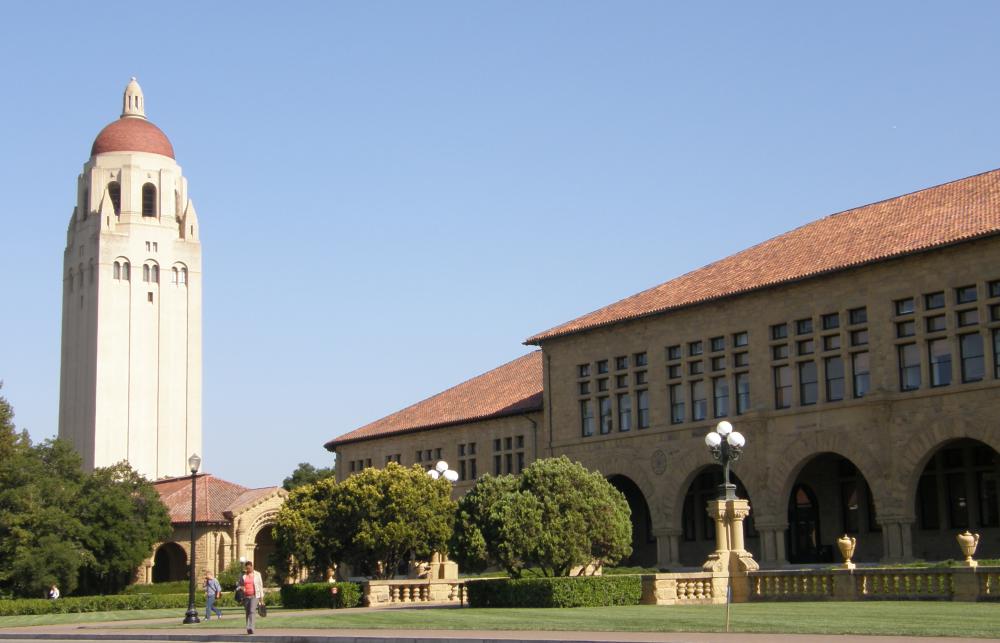
![Hoover Tower at Stanford University.]() By: Ritu JethaniHoover Tower at Stanford University.
By: Ritu JethaniHoover Tower at Stanford University. -
![King's College chapel at Cambridge University.]() By: rad100King's College chapel at Cambridge University.
By: rad100King's College chapel at Cambridge University. -
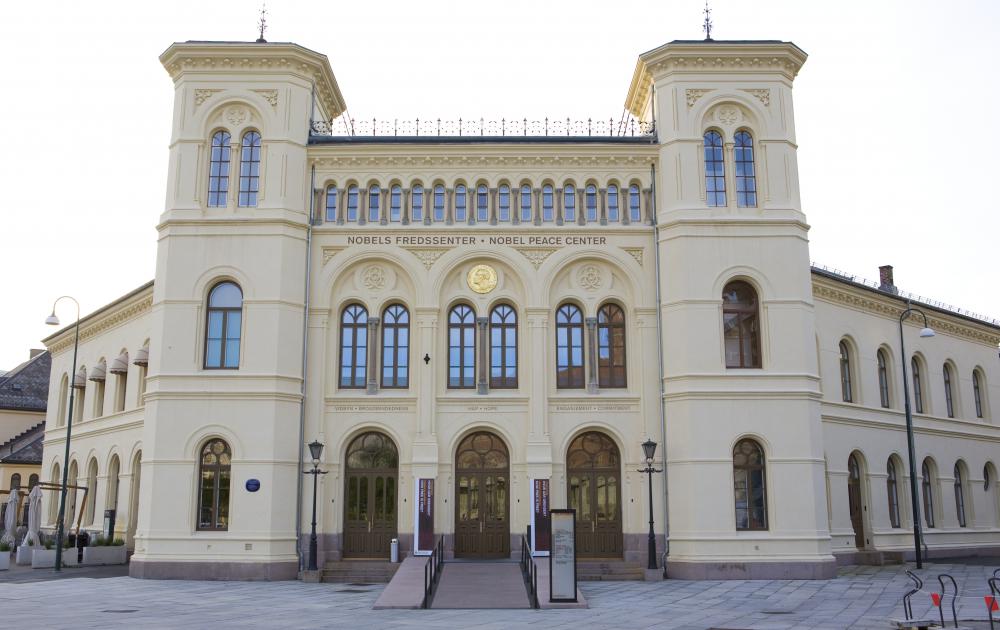
![Nobel Peace Center in Oslo, Norway.]()
Nobel Peace Center in Oslo, Norway. -
![One of the medals awarded to Nobel Prize winners.]()
One of the medals awarded to Nobel Prize winners. -
![Iceland is one of 30 countries with only one Nobel Prize winner.]() By: siimseppIceland is one of 30 countries with only one Nobel Prize winner.
By: siimseppIceland is one of 30 countries with only one Nobel Prize winner.





Discussion Comments
I like Nobel for hard sciences as opposed to intangible research and discovery.
Yes, UT Southwestern Medical School in Dallas has six living Nobel laureates on its faculty. I believe this makes it the top as far as active med school faculty goes.
@pleonasm - But, by that same ticket, Harvard (or where ever) is going to attract the best students as well, so really the whole thing is a little bit pointless.
I think it's more interesting to look at the peace prize and the Nobel prize for literature, since those are ones that can be and are awarded to people who haven't had any study at all.
If those people did chose to go to university and found their talents nurtured there, I find that more interesting and telling than if a very bright student goes to a top university and eventually wins a prize when placed against other people who did the exact same thing.
@anon296013 - That's a really good point and one I was thinking myself. I mean, Harvard has such a reputation, of course they are going to be able to attract the best of the best scientists to work and teach their students.
It seems kind of like a person claiming to have the best garden in the world because they were rich enough to hire the best gardeners. It's kind of a no-brainer.
I would be more interested in where the prize winners were educated rather than knowing where they taught or did research.
Actually, it was Theodore Roosevelt who won the first Noble Prize as an American, for his diplomatic actions that brought an end to the Russo-Japanese War.
Fun fact: Roosevelt also held the record for most hands shaken in the shortest amount of time, until he was beaten by Bill Richardson in 2002.
These are all great schools. Getting caught up in the glory of others is the wrong way to go. Instead, worry about which school has the best program for your major, campus life, and other factors to the calculus.
the double nobel laureate is actually credited to Oregon State University.
Washington University School of Medicine in St Louis: 17
But what medical school has the most living nobel prize winners in medicine on its active medical staff?
The University of Texas, Southwestern Medical School with six
How about U Penn?
What about the university of Berlin? They won 29 prizes?
What about MIT with its 61 laureates?
What about California Institute of Technology (Caltech) with its 32 prizes, which includes a double Nobel Laureate and Peace prize winner Linus Pauling?
Post your comments