
At DelightedCooking, we're committed to delivering accurate, trustworthy information. Our expert-authored content is rigorously fact-checked and sourced from credible authorities. Discover how we uphold the highest standards in providing you with reliable knowledge.
What Makes Soy so Versatile?
Many people think of the Southeastern United States as the cotton-producing capital of the country. Farmers do grow a lot of cotton there, but another cash crop is just as profitable: soybeans. In Alabama alone, over 4.7 million bushels of soybeans were produced in 2005. Soy is a complex plant that contains the basic building blocks for a variety of products. Hence, it is a very versatile plant.
With Americans choosing healthier diets, soy-based foods have risen in popularity. This is because it can be used in so many ways and contains a complete protein profile. It has all the essential amino acids and is the closest vegetable protein to meat.
Soy is used to make milk, tofu, flour, yogurt, textured vegetable protein, tempeh, miso and many other foods. Soy flour and milk can be used for baking or for making tofu, and the milk can also be drunk plain or flavored.

Many people also like soy because it doesn't have a strong flavor. Flavoring can be added to the products to make them taste as the cook wishes. Some products, like tofu, also take on the flavorings of whatever they are cooked with. Soy powder can be purchased and added to smoothies and other foods to boost protein quality and quantity.
Soybeans have been the base of many Asian diets for centuries. They're easy to grow, and with their uses in so many products, they allowed poor people to make the most of their limited farmland by relying on soybeans as their primary protein source, rather than cows or chickens, which cost more to maintain.

Vegetarians and vegans have long relied on this plant's versatility to help them eat balanced, meat-free diets. Medical studies have also shown that soy can help lower cholesterol levels, as well as ease symptoms of menopause and help prevent cancer and heart disease.
There are many non-food uses for this plant as well. It can be used in products as diverse as lotions, candles, cleaners, crayons, diesel additives, fabric conditioner, ink, paint remover and shampoo. Since soy is a renewable source, it is becoming popular as a diesel fuel, as well.
AS FEATURED ON:
AS FEATURED ON:


-
![Soy beans.]() By: teruminSoy beans.
By: teruminSoy beans. -
![Frothing soy milk with a cappuccino machine.]() By: Andrew MartinFrothing soy milk with a cappuccino machine.
By: Andrew MartinFrothing soy milk with a cappuccino machine. -
![Tofu is a soybean product.]() By: M.studioTofu is a soybean product.
By: M.studioTofu is a soybean product. -
![Soy is used to make soy milk.]() By: 3dsguruSoy is used to make soy milk.
By: 3dsguruSoy is used to make soy milk. -
![Soybeans offer a complete protein profile, making them a popular choice for those eating a healthy diet.]() By: VasiliusSoybeans offer a complete protein profile, making them a popular choice for those eating a healthy diet.
By: VasiliusSoybeans offer a complete protein profile, making them a popular choice for those eating a healthy diet. -
![Protein powder can be prepared from soy.]() By: lculigProtein powder can be prepared from soy.
By: lculigProtein powder can be prepared from soy. -
![A gluten-free green smoothie can be made with soy milk and nutrient-packed green vegetables.]() By: Johan LarsonA gluten-free green smoothie can be made with soy milk and nutrient-packed green vegetables.
By: Johan LarsonA gluten-free green smoothie can be made with soy milk and nutrient-packed green vegetables. -
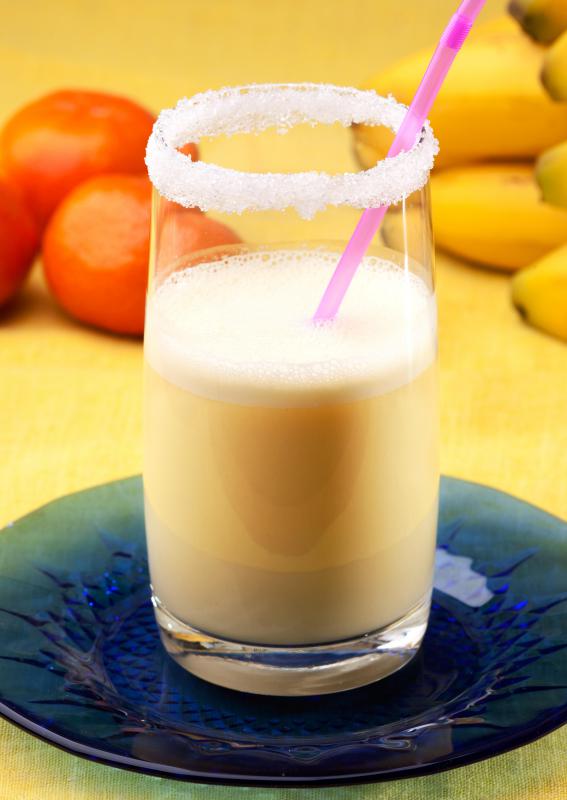
![An orange-banana smoothie made with soy milk.]() By: Tyler OlsonAn orange-banana smoothie made with soy milk.
By: Tyler OlsonAn orange-banana smoothie made with soy milk.







Discuss this Article
Post your comments