
At DelightedCooking, we're committed to delivering accurate, trustworthy information. Our expert-authored content is rigorously fact-checked and sourced from credible authorities. Discover how we uphold the highest standards in providing you with reliable knowledge.
What is Zucchini?
 Mary McMahon
Mary McMahon
Mary McMahon
Zucchini is a type of summer squash. You may also know it as a “courgette,” depending on where in the world you live. This hardy squash grows readily in a range of environments, and it has a broad assortment of uses, from sweet zucchini bread to raw “pasta” made from strips. Many markets carry this squash in the summer, and it is also a snap to grow at home, although some caution is advised, as the plants can produce way more fruit than one would think is physically possible.
Physically, zucchini are shaped roughly like sausages, with green skin which may be mottled with white spots. Some varieties come in yellow as well. The squash has a mild flavor which is perhaps best described as “springlike,” and a crisp, snappy texture when raw. When it is cooked, the texture softens considerably, and it can become mushy very quickly.

As a general rule, the smaller the type of summer squash is, the better it is. This is certainly true of zucchini, as this squash turns woody if it gets too large, and some specimens may develop prickly hairs with age as well, forcing cooks to scrape or peel the rind. A good courgette will feel heavy for its size, indicating that it has lots of moisture, and it will have a firm, even texture with no sunken spots or signs of mold. Sometimes, they can be purchased with the blossom still on. Squash blossom can be cooked in a variety of ways as well.

Raw, zucchini can be used to make dips, added to vegetable platters, or cut with a mandoline to make a pasta imitation for raw foodists. Some people also enjoy eating the raw squash out of hand, sometimes with a little salt, and the vegetable can be added to salads, as well. It can also be grated raw and added to batters for baked goods for more moisture, fiber, and texture.

Cooked, zucchini can be prepared in all sorts of ways. Larger specimens can be hollowed out and stuffed with a variety of fillings before being baked, and it can be grilled or roasted with other vegetables, tossed in stir fries, added to pasta sauces, and used in curries, soups, and stews. Adding it at the last minute is highly advised, so that it will retain its delicious crunchy texture.

If you want to grow zucchini, pick a reasonably sunny spot in the garden and amend the soil with compost or manure for added nutrition. Make a mound for each crop to grow on. Seedlings can be started at home or purchased and planted in the late spring, or gardeners can simply seed their squash plot. The soil should be kept moist, but not wet, and stakes should be used to support the plant as it grows so that the developing vegetables do not rot in close contact with the ground.
As soon as the fruit start appearing, they can be harvested. Some gardeners avoid overproduction by harvesting the blossoms, which can be battered and fried, tossed with pasta, or added to stir fries, among other things. If an excess does arise, gardeners can make preserves and chutneys, or attempt to unload unwanted squash on the neighbors, assuming they are foolish enough to leave their cars or back doors unlocked during zucchini season.
Mary McMahon
Ever since she began contributing to the site several years ago, Mary has embraced the exciting challenge of being a DelightedCooking researcher and writer. Mary has a liberal arts degree from Goddard College and spends her free time reading, cooking, and exploring the great outdoors.
Learn more...
Mary McMahon
Ever since she began contributing to the site several years ago, Mary has embraced the exciting challenge of being a DelightedCooking researcher and writer. Mary has a liberal arts degree from Goddard College and spends her free time reading, cooking, and exploring the great outdoors.
Learn more...AS FEATURED ON:
AS FEATURED ON:


-
![Raw sliced zucchini.]()
Raw sliced zucchini. -
![Grilled zucchini.]()
Grilled zucchini. -
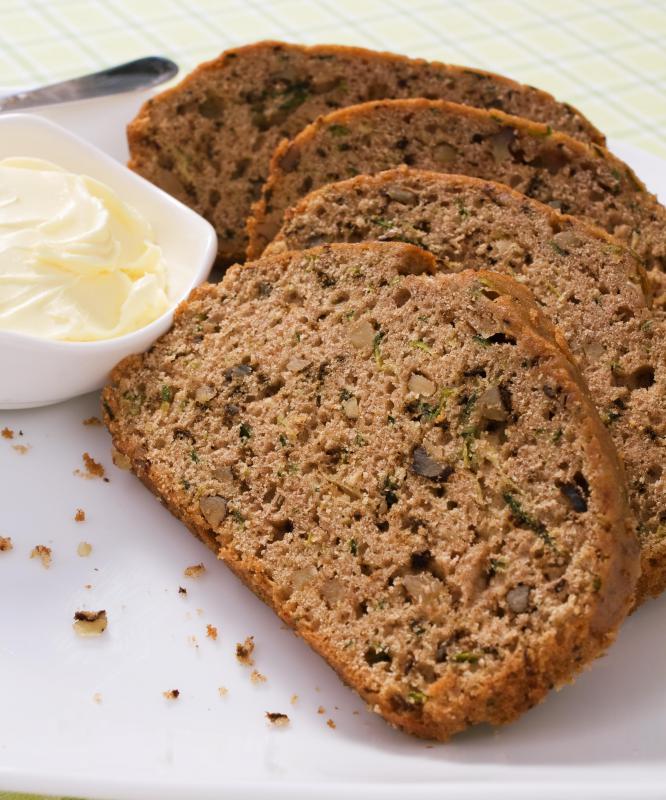
![Zucchini can be used in a variety of ways, including bread.]() By: dreambigphotosZucchini can be used in a variety of ways, including bread.
By: dreambigphotosZucchini can be used in a variety of ways, including bread. -
![Zucchini can be added to a vegetable stir-fry and served over brown rice.]() By: Stepan PopovZucchini can be added to a vegetable stir-fry and served over brown rice.
By: Stepan PopovZucchini can be added to a vegetable stir-fry and served over brown rice.



Discussion Comments
Is it normal from zucchini to release a gluey feeling substance that dries on your hands and looks as if you have had glue dry on your hands? This is the first time it has ever happened, so I threw it away. Please let me know!
I am taking care of a nine month old baby boy and his mom makes mashed zucchini and sometimes she mixed it with carrots or sweet potatoes. Oh my, the little boy loved to eat every time I gave him that food. I also try to cooked zucchini with shrimps with mixed vegetables and it really tastes so good!
My father-in-law grows his own zucchini every year and makes a ton of zucchini bread. It is honestly the best zucchini bread I have ever had.
Last year I decided to grow my own zucchini and had to then decide what to do with it. I didn't want to make regular old zucchini bread, because I knew it could never compare to my father-in-law's.
Instead I made blueberry zucchini bread. I was a little nervous about it. I never would have thought to mix blueberries and zucchini on my own. But I like zucchini and I like blueberries, so I thought I'd give it a shot. The bread ended up being absolutely delicious! I can't wait until the next harvest so I can make some more!
I love zucchini! I like eating it a lot of different ways, but my favorite it to fry zucchini slices in the same way as fried green tomatoes. It is so good! The only problem I have with it is that I end up eating way too much!
I found out first hand how much zucchini one little plant can yield. I shouldn't even say "little" plant, as the one I grew last year got so big so fast!
I loved being able to give the extra zucchini away to friends and relatives who were happy to get them. It was my first attempt at growing a garden, so the surplus of zucchini was something to be proud of!
Post your comments