
At DelightedCooking, we're committed to delivering accurate, trustworthy information. Our expert-authored content is rigorously fact-checked and sourced from credible authorities. Discover how we uphold the highest standards in providing you with reliable knowledge.
What is Yogurt?
 Paulla Estes
Paulla Estes
Paulla Estes
Yogurt, also spelled yoghurt or yoghourt, is a thick, custard- or pudding-like food, made by the natural bacterial fermentation of milk. Many people enjoy it plain or flavored with breakfast, lunch, or as a snack, and it's also an ingredient in a number of other dishes.
The process of making yogurt involves fermenting cream or milk with live and active bacterial cultures; this is accomplished by adding bacteria directly to the dairy product. Commercial varieties are usually made with a culture of Lactobacillus acidophilus and Streptococcus thermophilis, although some manufacturers use Lactobacillus bulgaricus rather than L. acidophilus. Yogurt made at home is usually started by adding a small amount of a commercial product to boiled milk.

In Western cultures, yogurt is enjoyed in a variety of ways, most popularly as a cool dish mixed with fruit. It can be used to make healthy shakes or frozen to eat like ice cream as well. Yogurt can also be used when cooking, in place of milk, sour cream, and even some cheeses. In Middle Eastern cultures, it's frequently served with meat, meat sauces, and vegetables. It can also be mixed with various other sauces or used as a tangy dollop on top of a meal.

When purchasing store-bought yogurt, consumers should always check the label for live cultures. If it has been pasteurized or heated after the cultures have been added, it's likely that the cultures will die. When properly made, it will keep well in a refrigerator at 40°F (4°C) for up to ten days. After this amount of time, the cultures often become weak.

Historically, some of the first yogurt most likely consisted of goat’s milk that fermented in the goatskin bags carried by early nomadic people of Turkish origin. Today, it's primarily made with cow’s milk in the United States, but it is also made with the milk of goats, sheep, buffalo, and even camels in other parts of the world.
It is easy and inexpensive to make yogurt at home. A cook can simply boil milk, lower its temperature to 112°F (45°C) and then add a spoonful of the store-bought variety to a small amount of the milk. She should stir it well, and then add the rest of the warm milk. The whole batch must be kept at this temperature for four to six hours so it can set. When the yogurt is ready, it should be refrigerated immediately. It can be enjoyed plain or with fresh fruit, jam, granola, honey, or any other flavor desired.
Paulla Estes
Paulla is a freelance writer and website editor who currently lives in Maine. Paulla has a B.A. in English Literature from George Mason University and over 15 years of experience as a freelancer. She relishes the flexibility and consistency of working on DelightedCooking articles, as well as the opportunity to constantly learn something new.
Learn more...
Paulla Estes
Paulla is a freelance writer and website editor who currently lives in Maine. Paulla has a B.A. in English Literature from George Mason University and over 15 years of experience as a freelancer. She relishes the flexibility and consistency of working on DelightedCooking articles, as well as the opportunity to constantly learn something new.
Learn more...AS FEATURED ON:
AS FEATURED ON:


-
![Acidophilus, often called a good bacteria, is found in yogurt, supplements and other products.]()
Acidophilus, often called a good bacteria, is found in yogurt, supplements and other products. -
![Continental breakfast including yogurt.]()
Continental breakfast including yogurt. -
![Fermenting milk in a yogurt maker.]() By: star athenaFermenting milk in a yogurt maker.
By: star athenaFermenting milk in a yogurt maker. -
![Milk is an ingredient in yogurt.]() By: vlorzorMilk is an ingredient in yogurt.
By: vlorzorMilk is an ingredient in yogurt. -
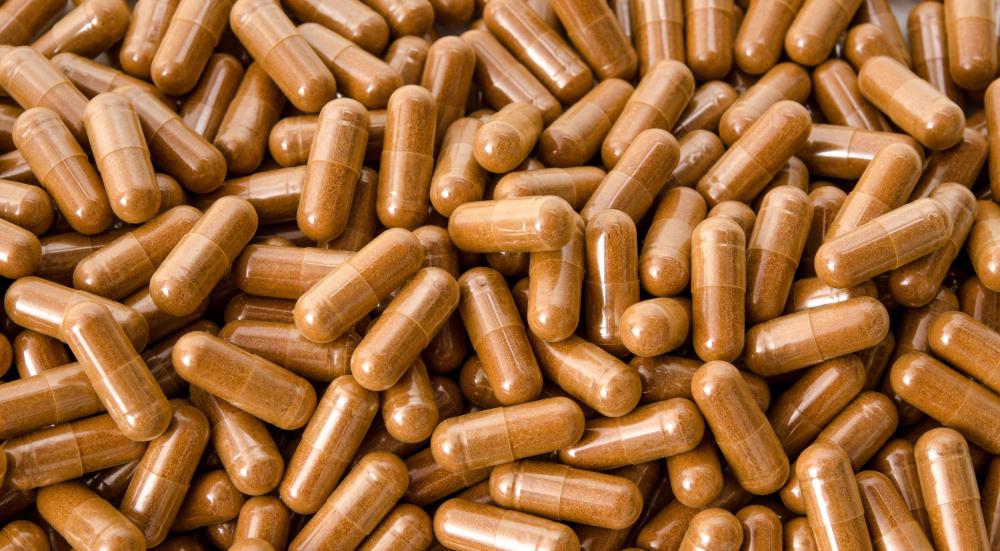
![Probiotics, which are found in yogurt, also are available in capsule form.]() By: womueProbiotics, which are found in yogurt, also are available in capsule form.
By: womueProbiotics, which are found in yogurt, also are available in capsule form. -
![Granola is sometimes used to top yogurt.]() By: nitoGranola is sometimes used to top yogurt.
By: nitoGranola is sometimes used to top yogurt. -
![Honey adds both sweetness and flavor to yogurt.]() By: Sergii MoscaliukHoney adds both sweetness and flavor to yogurt.
By: Sergii MoscaliukHoney adds both sweetness and flavor to yogurt. -
![Yogurt is popular as a snack in a single-serving cup.]() By: Anton MaltsevYogurt is popular as a snack in a single-serving cup.
By: Anton MaltsevYogurt is popular as a snack in a single-serving cup. -
![Creamy Greek-style yogurt with strawberries and blueberries.]() By: Brent HofackerCreamy Greek-style yogurt with strawberries and blueberries.
By: Brent HofackerCreamy Greek-style yogurt with strawberries and blueberries.




Discussion Comments
How was yogurt introduced to the Philippines?
Hey I was just wondering if anyone know factors that are responsible for spoilage of yogurt?
The benefits of the yogurt cultures are a bit exaggerated. They have been proven to aid in some rare situations, as antibiotic inducted diarrhea, but they are not, as many think, a generic health protector.
Since 99 percent or more of the yogurt benefits come from its nutritional effects, also present in pasteurized yogurt (where the cultures died), I think it's kind of a myth the alleged superiority of cultured over pasteurized yogurt.
I would like to know what other ingredients besides eggs and milk are in the costco food court yogurt. It must have had some sugar or cornstarch as sweet as it was, and when I asked about the ingredients, neither of those was mentioned.
I am also allergic to soy and worried that after eating it, that it may have contained trace amounts because I got an allergic reaction.
what is the difference between yogurt and curd?
yogurt is and always has been turkish. go do your research and research the word and see for yourselves.
Even the word "yogurt" itself originated from the turkish language.
In Canada you can get yogurt from Astro
Yogurt originated from India during the Mohenjo Daro and Harappa times!
I am Greek and i want to tell you that yogurt is greek. It is from the tradition and family too. yogurt is also "tzatziki." That is a greek product and it comes from yogurt and to anon84773 who is from bulgaria, you must learn that the thracians are greeks. There is a place in north Greece which is called Thrace. There are greeks and no bulgarians!
I am a student and i do catering for my GCSE and i need help to know everything about yogurt. Thank you.
I am from bulgaria,and i've got to tell you the truth: the old trackians are the creators of yogurt. My grandmother makes sour milk/yogurt/she yeast like this:
Boil the milk. Leave it to get cool/temperature-like human body/
and she put inside one little spoon sour milk from yesterday and she wrapped the jars into a blanket and left them to ferment.
Next day the yogurt is ready.
We have also-ayran/yogurt with water and salt/sometime-lemon juice, and
tarator-yogurt with water, salt, dill, cucumbers, walnuts, garlic/oil if you want.
salad-called snezhanka-thick yogurt with yogurt, garlic.
what type of organisms makes milk into yogurt and how it does it?
Hey, I'm a student at Kennet School studying biology!
How is yogurt made commercially? How do they keep it fresh? how do they ensure it's safe? how do they maintain the right conditions?
can you help us? what are the objectives if yogurt is your product? please, we need it right now.
Why does my heart feel stronger after eating yogurt with fruit? Age 75.
can yogurt be taken as a sole food owing to the array of nutrients in it? --akpa linus
Is it true that it cannot be called yogurt in the USA unless it includes L. Bulgaricus?
when i empty the yogurt in the cloth bag to make hard yogurt does the liquid that comes out healthy to drink?
I make my own yogurt, and do do that I need warm milk and culture, usually a small amount of yogurt with live bacteria culture.
To the best of my knowledge, to make curd you add an acidic liquid, like vinegar, or lemon juice to the warm milk for it to curdle.
what is the difference between yogurt and curd???
hi,
i'm student of msc in biotechnology and i've got an assignment that how we can reduce the coagulation time period of the yogurt, can you help me about this assignment...
when did yogurt arrive or was introduced on the philippines???
Post your comments