
At WiseGEEK, we're committed to delivering accurate, trustworthy information. Our expert-authored content is rigorously fact-checked and sourced from credible authorities. Discover how we uphold the highest standards in providing you with reliable knowledge.
What is Wiretapping?
 Mary McMahon
Mary McMahon
Mary McMahon
Wiretapping refers to listening in on electronic communications on telephones, computers, and other devices. Many governments use it as a law enforcement tool, and it is also used in fields like corporate espionage to gain access to privileged information. Depending on where in the world one is, wiretapping may be tightly controlled with laws that are designed to protect privacy rights, or it may be a widely accepted practice with little or no protections for citizens. Several advocacy organizations have been established to help civilians understand these laws in their areas, and to fight illegal wiretapping.
One of the earliest wiretappers was Abraham Lincoln, who listened in on telegraph conversations during the Civil War. Since then, wiretapping has become much more complex, and concerned citizens have sometimes questioned the legality of this practice, especially in countries which place a high value on privacy rights. Since the listening is covert, people are not made aware that their lines are tapped by government agencies until the operation is concluded, and while agencies must get warrants to approve wiretaps, they are sometimes given out on very shaky grounds.

There are a number of ways to carry out a wiretapping operation, ranging from concealing electronic devices in a phone to tapping into a telecommunications line somewhere along its travel from the device to a routing or exchange center. In many countries, governments have agreements with telecommunications companies which ensure easy access to lines of communication for this purpose.

While many people associate wiretapping specifically with landline phones, governments can also tap mobile phones and computer communications. It is very difficult to protect oneself from wiretapping, since it can be difficult to identify and trace taps, and while there are techniques to make it harder, there is no way to prevent a tap on a communications device. This is especially irritating for people who want to prevent illegal wiretaps, such as those used by rival companies.

Prevailing laws about wiretapping vary widely. Generally, people who suspect a wiretap on their line can report it to their telecommunications company, which may investigate the claim. If an illegal tap is found, the company will usually remove it, but legal ones achieved with the use of a warrant will not be lifted. People who are concerned about the privacy of communications should hold sensitive conversations in person, if possible, or consider adopting the use of a code to convey information.
Mary McMahon
Ever since she began contributing to the site several years ago, Mary has embraced the exciting challenge of being a WiseGEEK researcher and writer. Mary has a liberal arts degree from Goddard College and spends her free time reading, cooking, and exploring the great outdoors.
Learn more...
Mary McMahon
Ever since she began contributing to the site several years ago, Mary has embraced the exciting challenge of being a WiseGEEK researcher and writer. Mary has a liberal arts degree from Goddard College and spends her free time reading, cooking, and exploring the great outdoors.
Learn more...AS FEATURED ON:
AS FEATURED ON:









-
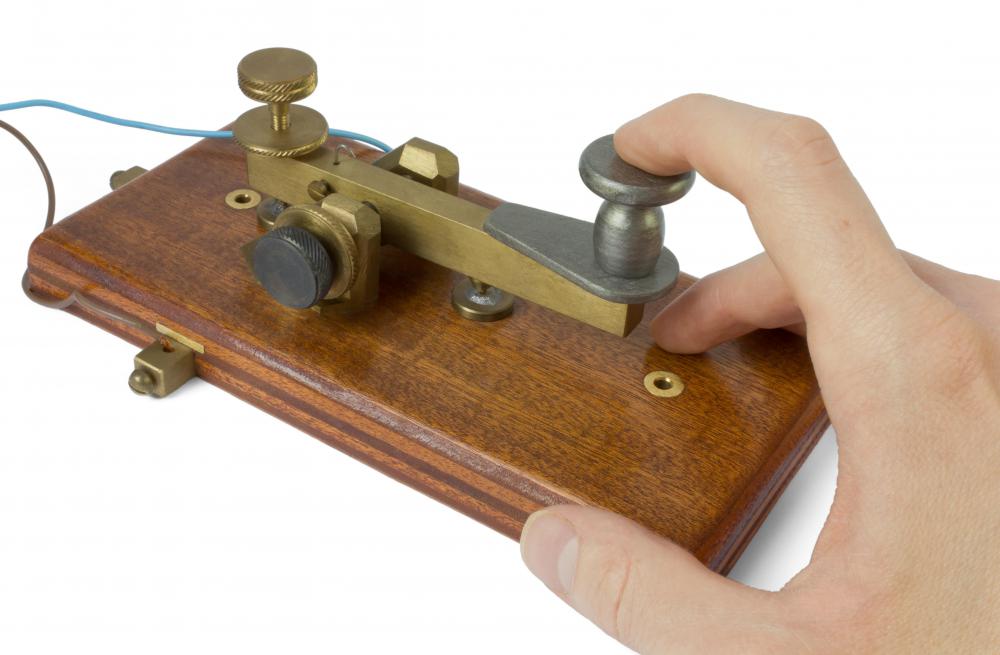
![Abraham Lincoln listened to telegraph conversations during the Civil War.]() By: emmeci74Abraham Lincoln listened to telegraph conversations during the Civil War.
By: emmeci74Abraham Lincoln listened to telegraph conversations during the Civil War. -
![Wiretapping took place under President Lincoln.]() By: Chuck AlexanderWiretapping took place under President Lincoln.
By: Chuck AlexanderWiretapping took place under President Lincoln. -
![Wiretapping can reveal sensitive information about a person or company.]() By: Africa StudioWiretapping can reveal sensitive information about a person or company.
By: Africa StudioWiretapping can reveal sensitive information about a person or company. -
![A phone tap may be used on a land line.]() By: Monkey BusinessA phone tap may be used on a land line.
By: Monkey BusinessA phone tap may be used on a land line.



Discussion Comments
I think wiretapping and other forms of surveillance are perfectly okay. I am not worried about my privacy being invaded; being seen in the shower, the government hearing me talk dirty to my husband, and the like.
What I am worried about is that they may be waiting on a warrant and the evidence needed is lost because they were too scared of violating someone's constitutional right. What about my right to be safe at any cost? What about my right to trust the government to make my birth country a secure nation?
Email wiretapping is now one of the major concerns of today.
I do think that most people are being paranoid when they suspect they are being subjected to telephone wiretapping. I know there are some people who think that the government listens in on every single conversation going on in the country, but really they wouldn't have the resources.
Even if they could pick out key words, they wouldn't have the resources. Although, if they were doing that, there wouldn't be such high unemployment I suppose!
Don't forget that they might be bugging your house as well. Then, in modern times they can also pull your phone records, so any texts you send can be made part of evidence as well.
Not to be paranoid or anything but I've seen it done recently, where a court case was changed by evidence obtained by a bug in the room. As long as the police have a warrant, they are within their rights to collect and use that kind of evidence in a trial.
If they don't have a warrant, or if someone else obtained that kind of evidence against you, it usually isn't admissible in court.
It's very difficult to check, but a simple rule of thumb is abnormal sound in your earphone.
how do you know if your phone is being tapped?
Post your comments