
At WiseGEEK, we're committed to delivering accurate, trustworthy information. Our expert-authored content is rigorously fact-checked and sourced from credible authorities. Discover how we uphold the highest standards in providing you with reliable knowledge.
What is White Noise?
White noise is the noise created when all audible frequencies of sound are combined at the same time and the same density. It is similar in nature to white light, which occurs when all the colors of the spectrum are brought together. This noise incorporates over 20,000 frequencies. Also called white sound, it is used primarily as a sleep or relaxation aid.
The actual sound produced by white noise is comparable to rainfall or ocean waves. It is a gentle tone that can be found in nature. Because it combines all frequencies of sound ranging from very low tones to high pitches, it is very useful in masking other noises and sounds.

Fans and radio stations with no broadcast are often used as white noise simulators, providing a soothing sound that blocks out other background noises. While these methods do not produce true white noise, their effects are a good example of practical uses for the sound. The main drawback to using this variety, however, is that the user has no control over the volume or frequencies produced in this manner.

A pure white signal can only be produced by generators, commercially available as "white noise machines". While expensive and rather large and cumbersome, these machines are helpful for those with sleep disorders or inner ear problems, infants who have trouble falling asleep or staying asleep, and those who wish to counteract stress. White noise cancels out background noise and produces a soothing, relaxing sound. Students and those who work in the creative arts use it to block out external sounds that could be distracting. It also seems to have some benefit to children and adults diagnosed with Attention Deficit Disorder and its related conditions, as the masking effect allows for better concentration.

Consumers can also purchase white noise that has been recorded onto a CD, which is less expensive than investing in a machine. In addition to cost effectiveness, CDs allow the user to alter the bass and treble of the noise to mask lower or higher background sounds in any given location. Recorded media that features sounds of nature work in much the same way. Other uses for this noise include frequency testing for electronic equipment, testing for architectural acoustics, and use as sensory deprivation aids. Musicians use it in electronic music to simulate higher or lower percussion sounds than those available through traditional instruments.
AS FEATURED ON:
AS FEATURED ON:









-
![A CD of white noise.]() By: kredoA CD of white noise.
By: kredoA CD of white noise. -
![White noise is often used as a relaxation aid.]() By: WavebreakMediaMicroWhite noise is often used as a relaxation aid.
By: WavebreakMediaMicroWhite noise is often used as a relaxation aid. -
![The sound of white noise is comparable to the sound of ocean waves.]() By: TanouchkaThe sound of white noise is comparable to the sound of ocean waves.
By: TanouchkaThe sound of white noise is comparable to the sound of ocean waves. -
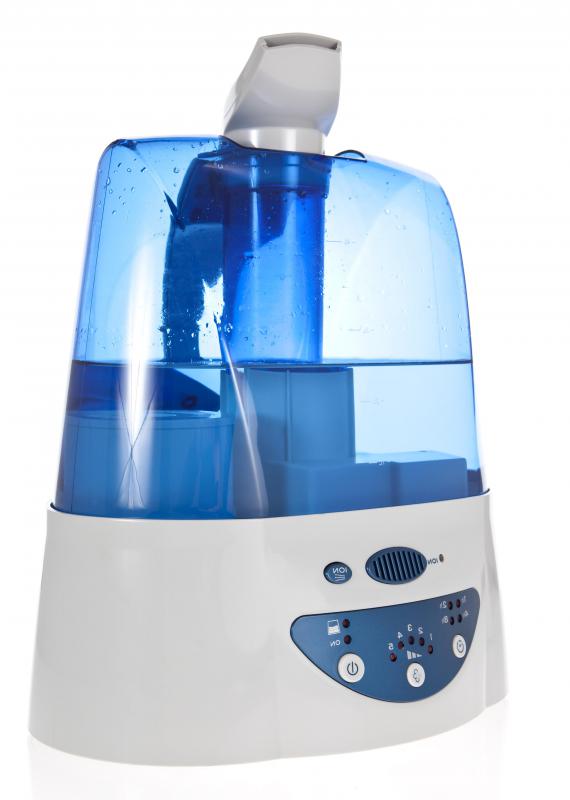
![Some humidifiers produce white noise.]() By: LusoimagesSome humidifiers produce white noise.
By: LusoimagesSome humidifiers produce white noise.


Discussion Comments
A fan on low works great for me.
@valencia - While no reputable manufacturer would claim their machine can drown out every noise you hear I think it would really help with both types mentioned.
One tip is to place the white sound machine between your bed and the problem area. That would be perfect for masking traffic in the street, or a TV playing in the next room.
People who are especially sensitive to noise would be better off with a dedicated machine, rather than the CD option. I say this because there is nothing as bad as having the sound stop, just as you are about to fall asleep.
If someone uses white noise machines to help them sleep then I am pretty sure it would help reduce stress. I know people who use fans for this reason, and they say it works well.
Do these machines work best for constant noise, such as traffic? Or would they also help with other problem areas, such as noisy neighbors?
does white noise really relieve stress?
Post your comments