
At DelightedCooking, we're committed to delivering accurate, trustworthy information. Our expert-authored content is rigorously fact-checked and sourced from credible authorities. Discover how we uphold the highest standards in providing you with reliable knowledge.
What is Wheat?
 Mary McMahon
Mary McMahon
Mary McMahon
Wheat is a type of grass grown all over the world for its highly nutritious and useful grain. It is one of the top three most produced crops in the world, along with corn and rice. Wheat has been cultivated for over 10,000 years and probably originates in the Fertile Crescent, along with other staple crops. A wide range of products are made from it by humans, including most famously flour, which is made from the grain itself.
Today, wheat is a grass that grows between 2 and 4 feet (0.6 to 1.2 meters) tall. The physical appearance of the grain is familiar to most consumers, with a long stalk that terminates in a tightly formed cluster of plump kernels enclosed by a beard of bristly spikes. The plant is an annual, which means that at the end of each year, fields must be plowed and prepared again to grow the grass.

Ancestral wheats probably looked very different, with much smaller kernels. The early domesticators obviously wanted to select for plants with particularly large kernels, since more nutrition could be eked out from each stalk. Because wheat is generally a self pollinating plant, each plant tends to produce clones of itself. When farmers want to hybridize a strain, they must physically pollinate the different plants. Farmers blending wheat for various purposes usually combine different seeds at harvest time and spread them evenly over the field.

The crops grown in the United States fall into two categories: winter wheat, which is planted in the fall and matures in the summer, and spring wheat, which is planted after the danger of frost is over and also matures in the summer. The plant's characteristic golden color at harvest time is well known and often appears in artwork.
When wheat is ready for harvest, the heads of the grain start to bend the stalks with the weight of the kernels. This, in combination with the golden color, indicates that it is ready. After harvest, the grain is separated from the stalks and chaff. The stalks are used in a variety of applications: mulch, construction material, and animal bedding, for example. On organic farms, livestock are often turned loose on the field after harvest to clean up the leftovers.

Once the kernels have been separated, they can be ground into flour. There are many classifications for flour, depending on what part of the seed is used and how hard the endosperm, the largest part of the kernel, is. The kernels have three parts: the small germ, the large endosperm, and the rough outer casing known as the bran. Hard wheats are suitable for making pasta and bread, and soft wheats are used for other products that do not require a high gluten content.

If a flour is made solely from the endosperm, it is known as white flour. If the germ is ground as well, the product is called germ flour. Flour that uses the whole kernel is called whole wheat. When making flour that doesn't use the whole kernel, the bran and germ are processed and sold separately.
After harvest, the field is cleared and prepared for planting again. Farmers using good rotation practices do not plant it in sequential years, although they may return to the field later.
Mary McMahon
Ever since she began contributing to the site several years ago, Mary has embraced the exciting challenge of being a DelightedCooking researcher and writer. Mary has a liberal arts degree from Goddard College and spends her free time reading, cooking, and exploring the great outdoors.
Learn more...
Mary McMahon
Ever since she began contributing to the site several years ago, Mary has embraced the exciting challenge of being a DelightedCooking researcher and writer. Mary has a liberal arts degree from Goddard College and spends her free time reading, cooking, and exploring the great outdoors.
Learn more...AS FEATURED ON:
AS FEATURED ON:


-
![Wheat ears along with a small pile of wheat kernels (also known as wheat berries).]()
Wheat ears along with a small pile of wheat kernels (also known as wheat berries). -
![Sunset over a field of wheat.]()
Sunset over a field of wheat. -
![Bread baked from wheat flour.]()
Bread baked from wheat flour. -
![Wheat berries.]() By: PerytskyyWheat berries.
By: PerytskyyWheat berries. -
![Wheat kernels can be ground to make flour.]() By: Studio GiWheat kernels can be ground to make flour.
By: Studio GiWheat kernels can be ground to make flour. -
![Wheat is a type of grass whose kernels include three components, including the germ.]() By: Elzbieta SekowskaWheat is a type of grass whose kernels include three components, including the germ.
By: Elzbieta SekowskaWheat is a type of grass whose kernels include three components, including the germ.


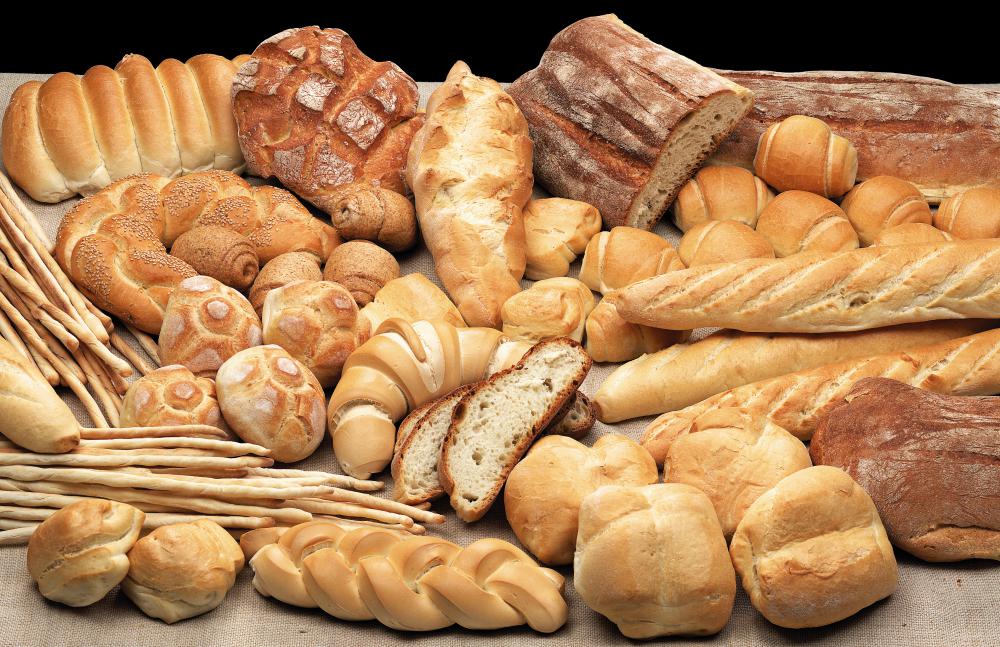


Discussion Comments
Why do the USDA and FDA push wheat products even though it is common knowledge that gliadin within the gluten protein causes dozens of autoimmune disorders including skin problems, autism, heart disease, alzheimer's, and cancer? It is also known that the lecithins in wheat cause Crohn's and colitis. The sugar in wheat causes diabetes. The exorphin component of gliadin makes it addictive.
All one needs to do is check the nearly 300 references in the book "Wheat Belly" by cardiologist William Davis. Prove it to yourself. Wheat is poison.
Washington state, particularly where I live in Whitman county, is number 6 in wheat production, but number 1 for wheat production yield per acre. The Northwest is the primary white wheat producer in the United States.
Washington, Oregon, Idaho produced 86 percent of U.S. white wheat in 2008 and continue to keep that lead.
Which are the major wheat producing states?
What animals can eat whole wheat seed, like chickens, pigs, sheep, llama, cow or horse? Can all of these eat the whole seed and if so, is there anything you should do to it or watch for?
Can wheat grow anywhere in the world and would it be feasible to feed a population very cheaply by planting and growing in areas where food is scarce?
What are the statistics for the growth and consumption of wheat?
what's the nutritional advantage and health advantage of eating raw cooked wheat grounded but not changed into flour? does it boost fertility?
what is a annual calendar used for wheat? i am trying to complete an assignment and i need help and also what types of major equipment does a wheat farm need? thanks.
What is mulch?
about milling loss. What is actual milling loss and how we can reduce that? and how much wheat can we get per area? thank you.
how much flour would i get from one stalk of wheat?
I am a Kansas farmer and I will try to answer some of the questions.
Wheat is a cereal grain. The seeds are harvested and used ground into flour for baking breads.
The major wheat producing states are Kansas, Texas, and the Dakotas. Kansas is the leading state with Texas and South Dakota flip flopping depending on rainfall, or lack of it.
Winter wheat needs to be seeded early enough in the fall that it has adequate time to develop roots and tiller, tillering is developing additional shoots from the main one. But not too early that it has a too much growth, unless it is to be grazed by cattle during the late fall and early spring.
Wheat has a very high nutrient demand. Corn might get criticized for a high nitrogen per acre use, but corn requires 0.8 units of nitrogen per bushel while wheat requirements are over 2 units per bushel. Whenever someone tells about the per acre nitrogen needs of a certain crop always find what the input to output is. Researchers are finding zinc and sulfur deficiencies in wheat the past few years.
Legumes, beans and clovers have exorbitant nitrogen requirements, but they are able to extract nitrates from the atmosphere and convert them to nitrogen, if the correct bacteria is present in the soil.
Durum wheat is the kind of wheat that is used to make pasta. Spring varieties are primarily raised in the northern plains, Montana and Alberta, Canada. Some winter varieties are raised in the Central Valley of California.
Soft wheat is raised in the higher rainfall areas typical of corn belt states: Illinois, Indiana, Ohio, etc.
Wheat will grow in areas with rainfall as low as 15 inches. Generally wheat fields in these arid areas will not a have a crop for a full year before the wheat.
Straw is the stalk, and after harvest some farmers will bale it and use it as livestock bedding or sell it for people to use to mulch garden plants.
The kernel is the grain or the seed that the plant produces.
Why do we use wheat to make most of european bread?
is wheat considered a type of fruit?
What is the exact definition of: straw
grain
stalk
&Kernel
what are the conditions which are needed for the production of wheat?
what is the amount of rainfall wheat needs?
which are the major wheat producing states?
Post your comments