
At Sports&Hobbies, we're committed to delivering accurate, trustworthy information. Our expert-authored content is rigorously fact-checked and sourced from credible authorities. Discover how we uphold the highest standards in providing you with reliable knowledge.
What is Water Polo?
 Malcolm Tatum
Malcolm Tatum
Malcolm Tatum
As a team sport that can be enjoyed in a body of water, water polo incorporates some of the elements of competitive swimming, handball and football into one popular pastime. Played with two opposing teams, the purpose of the game is to score goals against the opposing team. Each successfully completed goal is worth one point.
The water polo team is composed of a total of seven members during active games. Six of the members function as players who actively work to score against the other team. The seventh member is the goalkeeper or goalie. In most levels or types of water polo, team members must enter and exit the playing area in front of the area designated as the team bench when a game is in progress. During periods when no play is taking place, players may enter or exit at any location around the field of play.
Water polo is divided into four distinct periods. Depending on the level of the game, the length of time for each period will vary. For example, the length of periods for Olympic style competitions is different from that of the typical high school water polo team. Just as in football, each team has a limited number of time outs that can be called during each period. There are also short periods where the clock is stopped, most notably the period in between the commission of a foul and the free throw that results. The clock also will stop after one of the teams has scored, and resume when the restart takes place.
As with the lengths of the periods, the dimensions of the body of water may vary as well. One of the contributing factors is the age range and the level of the water polo players involved. Smaller areas will be used for teams involving pre-teenage players, while larger areas are usually employed for high school and adult teams. The depth of the water is also important to playing this sport. Generally, the depth will not be more than six feet or 1.8 meters for adult teams, while the games involving younger athletes will generally be less. The point of using an appropriate depth is to ensure that there is the ability for players to touch bottom easily during time outs, but also enough depth to make swimming during play safe and easy.
As the six water polo players move around the playing area to maneuver the handball into position to score, the goalie has the responsibility of deflecting any attempts by the opposite team to score. Generally, the goalkeeper is the only member of the team that can touch the ball with both hands, or touch bottom during active play. The other team members may move the ball around by tossing with one hand, or swimming through the water while pushing the ball in front. The mission is to score within a short period of time, as a team is only allowed to have possession of the ball for thirty seconds at a time. The team must either attempt to score a goal or yield control of the ball to the opposing team.
People who wish to play this sport generally require strong swimming skills and a relatively high endurance level. Along with being a strong swimmer and being able to last through a physically demanding game, the typical water polo player also should have excellent hand-eye coordination, since the ability to handle and pass the ball quickly and accurately impacts the quality of the team effort.
Malcolm Tatum
After many years in the teleconferencing industry, Michael decided to embrace his passion for trivia, research, and writing by becoming a full-time freelance writer. Since then, he has contributed articles to a variety of print and online publications, including Sports&Hobbies, and his work has also appeared in poetry collections, devotional anthologies, and several newspapers. Malcolm’s other interests include collecting vinyl records, minor league baseball, and cycling.
Learn more...
Malcolm Tatum
After many years in the teleconferencing industry, Michael decided to embrace his passion for trivia, research, and writing by becoming a full-time freelance writer. Since then, he has contributed articles to a variety of print and online publications, including Sports&Hobbies, and his work has also appeared in poetry collections, devotional anthologies, and several newspapers. Malcolm’s other interests include collecting vinyl records, minor league baseball, and cycling.
Learn more...AS FEATURED ON:
AS FEATURED ON:


-
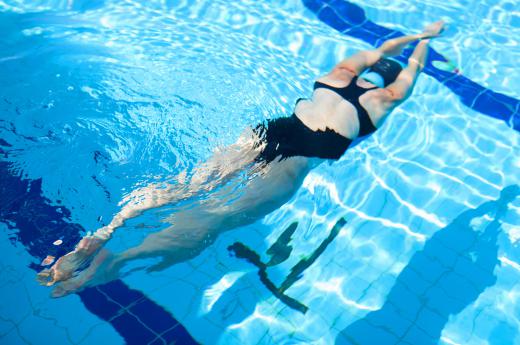
![Water polo incorporates elements of competitive swimming like efficiency and flexibility.]() By: ElinaManninenWater polo incorporates elements of competitive swimming like efficiency and flexibility.
By: ElinaManninenWater polo incorporates elements of competitive swimming like efficiency and flexibility.

Discussion Comments
Though it is not one of the most popular sports, I have a great deal of respect for water polo players. They have to be good athletes, and they have to be able to stand up to all of the physical contact that goes on above and below the water doing a water polo game.
A player can swim as much as a mile during the course of an average water polo game. In addition to swimming from one end of the pool to the other, players are constantly working their legs to stay afloat and to rise to take shots at the goal.
The article mentioned several sports that water polo has similarities to. In my opinion, the sport that water polo most resembles is basketball.
The way players move from one end of the pool to the other reminds of the way basketball players move up and down the court as they switch from offense to defense or defense to offense. The shape of a basketball and the shape of a water polo ball are the same, and the sizes of the balls are close. I think the basketball is a little larger.
Also, when I watch the members of the water polo teams pass the ball around the water as they are trying the get an open shot, I am reminded of a basketball team passing the ball around against the other teams' zone defense.
Post your comments