
At AllThingsNature, we're committed to delivering accurate, trustworthy information. Our expert-authored content is rigorously fact-checked and sourced from credible authorities. Discover how we uphold the highest standards in providing you with reliable knowledge.
What is Wahoo?
 Niki Foster
Niki Foster
Niki Foster
Wahoo is a type of edible fish native to tropical and subtropical coastal areas around the world. It is prized for its delicate white flesh and is a popular sport fishing catch. The fish is also known as Ono, meaning "delicious," in the Hawaiian Islands.
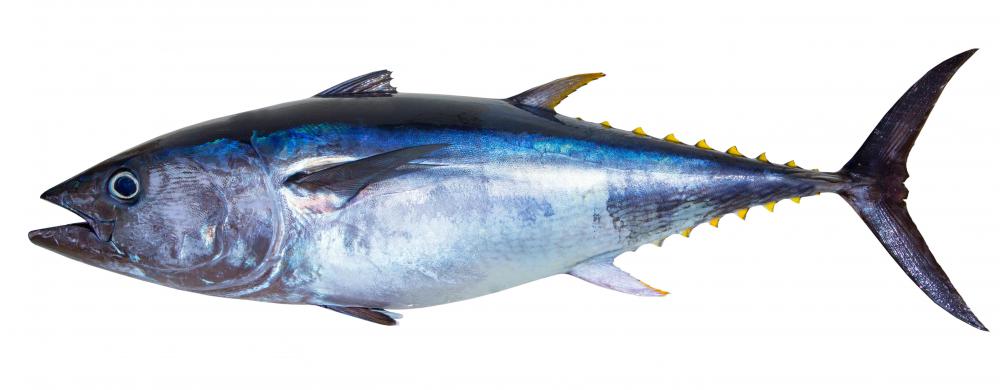
This fish is a member of the Scombridae family, which also includes tuna. Wahoo are the largest of the mackerels and may reach 8 feet (2.5 m) in length and 180 pounds (83 kg) in weight. They grow very quickly — one specimen gained 22 pounds (nearly 10 kg) in a single year — and are believed to tolerate fishing well; however, Wahoo populations have not been well researched.

Wahoo live singly or in small schools and are not caught as often as some other fish. This, along with their prized taste, makes them a relatively rare delicacy. All Wahoo are wild-caught. Some are gained as bycatch in other fishing operations, and others are caught by sport fishers, usually with a hook and line or a longline.
Longline fishing can result in bycatch of other species, so it is not the most environmentally sound fishing method. The Monterrey Bay Aquarium's Seafood Watch lists Wahoo as a good choice, but stipulates that more research is necessary to determine the effect of fishing methods on the species. The Fish and Wildlife Research Institute is currently studying populations of this fish in Florida.

Wahoo may also present a health concern due to levels of mercury in the fish. Like tuna, it is a predatory species, with a diet consisting mainly of smaller fish and squid. Therefore, amounts of toxins in the prey fish accumulate in the fish and can present a health hazard to humans. A health advisory has been issued against Wahoo by the Environmental Defense. According to their website, adults can safely eat this fish twice a month, while children can eat it for one meal each month without health risk.
Frequently Asked Questions
What exactly is a Wahoo?
Wahoo (Acanthocybium solandri) is a scombrid fish found worldwide in tropical and subtropical seas. Renowned for its speed and high-quality flesh, it's a prized catch among sport fishers. Wahoo can grow up to 8 feet in length and weigh as much as 183 pounds, though they typically average around 40 pounds.
How can you identify a Wahoo?
Wahoo are easily identifiable by their elongated bodies, blue vertical stripes, and a mouth full of sharp teeth. They have a metallic blue back and silver sides, creating a striking appearance. Their long dorsal fins and the series of 25 to 30 irregular blackish-blue vertical bars running along their sides distinguish them from other species.
What does Wahoo taste like?
Wahoo is highly regarded for its delicate, white, and flaky flesh which is often described as mild and slightly sweet. It's a versatile fish that can be prepared in various ways, including grilling, baking, or sashimi. Its low fat content and firm texture make it a favorite among seafood enthusiasts.
Where can you find Wahoo?
Wahoo are pelagic fish, meaning they inhabit the open ocean rather than coastal waters. They are commonly found in tropical and subtropical waters around the world, often near islands or along coastlines where there are sharp drop-offs or ledges. They tend to prefer warmer water temperatures, typically between 70 and 80 degrees Fahrenheit.
What is the best time of year to fish for Wahoo?
The best time to fish for Wahoo varies by location, but they are generally more abundant during the warmer months. In places like the Bahamas and Florida, peak Wahoo season is in the winter and early spring. Always check local fishing reports for the most accurate and current information on Wahoo seasonality in your area.
Are Wahoo endangered?
Wahoo are not currently classified as endangered. However, like all fish species, they face threats from overfishing and habitat loss. Responsible fishing practices and adherence to regulations are crucial for maintaining sustainable Wahoo populations. The International Union for Conservation of Nature (IUCN) lists Wahoo as a species of "Least Concern," indicating a stable population.
Niki Foster
In addition to her role as a AllThingsNature editor, Niki enjoys educating herself about interesting and unusual topics in order to get ideas for her own articles. She is a graduate of UCLA, where she majored in Linguistics and Anthropology.
Learn more...
Niki Foster
In addition to her role as a AllThingsNature editor, Niki enjoys educating herself about interesting and unusual topics in order to get ideas for her own articles. She is a graduate of UCLA, where she majored in Linguistics and Anthropology.
Learn more...AS FEATURED ON:
AS FEATURED ON:









-
![Wahoos eat small squid.]() By: hiphoto39Wahoos eat small squid.
By: hiphoto39Wahoos eat small squid. -
![The Scombridae family also includes tuna.]() By: lunamarinaThe Scombridae family also includes tuna.
By: lunamarinaThe Scombridae family also includes tuna.

Discuss this Article
Post your comments