
At DelightedCooking, we're committed to delivering accurate, trustworthy information. Our expert-authored content is rigorously fact-checked and sourced from credible authorities. Discover how we uphold the highest standards in providing you with reliable knowledge.
What is Vodka?
Vodka is a distilled spirit with a high alcohol content that can be produced from a number of different materials and possess different characteristics depending on the creator. Most produced these days is made from a grain, though some is still made from potatoes. The exact history of this spirit is unknown, though it most likely originated somewhere in the region of Poland or Russia between the 14th and 16th centuries. The word is thought to derive from Russian, meaning roughly “little water”.
The majority of vodkas produced today for consumption in the United States and Western Europe are made from either wheat or rye and are heavily filtered. By law, in these regions, vodka cannot have a distinctive color, smell, or flavor. It is, in many ways, an essential spirit, which is one reason it is so popular in mixed drinks and as a base alcohol for flavored spirits.

Traditionally, vodka may be made from virtually anything — grapes, soy, beets, potatoes, corn, wheat, and rye. Some are even made from leftover material in the oil refining process. In many Eastern European countries, vodka is not as heavily filtered as it is in the West, and so the flavors, smells, and colors from the source materials may shine through.

Vodka has also traditionally been flavored in many countries, either for pure enjoyment or for health reasons. Pepper vodka is perhaps the most widely known flavoring, favored in Russia, but fruit flavors and those flavored with spices such as cinnamon or vanilla are also not uncommon. Many nations also have a tradition of infusing the spirit with healing herbs, such as chamomile or St. John’s Wort.

The alcohol content of vodka varies widely, as it may be distilled to any level of alcohol. In most cases, vodka that contains 40% alcohol (80 Proof) is the most common, for a number of reasons. Historically, Alexander III of Russia set certain standards for production in his country, one of which was a required alcohol level of 40%. This level continues to be the most popular, in part because the United States and many European countries set their tax levels of spirits based on the alcohol content, and 40% spirits have a reasonable amount of taxation. Vodka that contains 50% alcohol (100 Proof) is also fairly common in the United States and Europe, as is watered down vodka of 20% (40 Proof). Some varieties, such as the Polish rectified spirits, may contain as much as 95% alcohol (190 Proof).

Although drunk straight in most of the countries where vodka has a long history, in the United States and Western Europe, a great deal of its popularity can be attributed to its use in mixed drinks — a practice many Eastern Europeans consider bad form. Since this spirit has a high alcohol content and little to no taste, color, or smell, it is ideal as a vessel to carry other liquids and alcohols. Bloody Marys, Vodka Martinis, and Screwdrivers are just a few of the most popular drinks that have found extraordinary success because of vodka's ability to pair well with almost anything.
AS FEATURED ON:
AS FEATURED ON:


-
![Many countries have laws which state that vodka must be completely clear and odorless after the distilling process.]() By: dla4Many countries have laws which state that vodka must be completely clear and odorless after the distilling process.
By: dla4Many countries have laws which state that vodka must be completely clear and odorless after the distilling process. -
![A vodka martini contains vodka and dry vermouth.]() By: dondesignsA vodka martini contains vodka and dry vermouth.
By: dondesignsA vodka martini contains vodka and dry vermouth. -
![The 40% alcohol content benchmark that most vodka distillers aim for was set by Russian Czar Alexander III.]() By: withGodThe 40% alcohol content benchmark that most vodka distillers aim for was set by Russian Czar Alexander III.
By: withGodThe 40% alcohol content benchmark that most vodka distillers aim for was set by Russian Czar Alexander III. -
![Beets are one source of vodka.]() By: matesBeets are one source of vodka.
By: matesBeets are one source of vodka. -
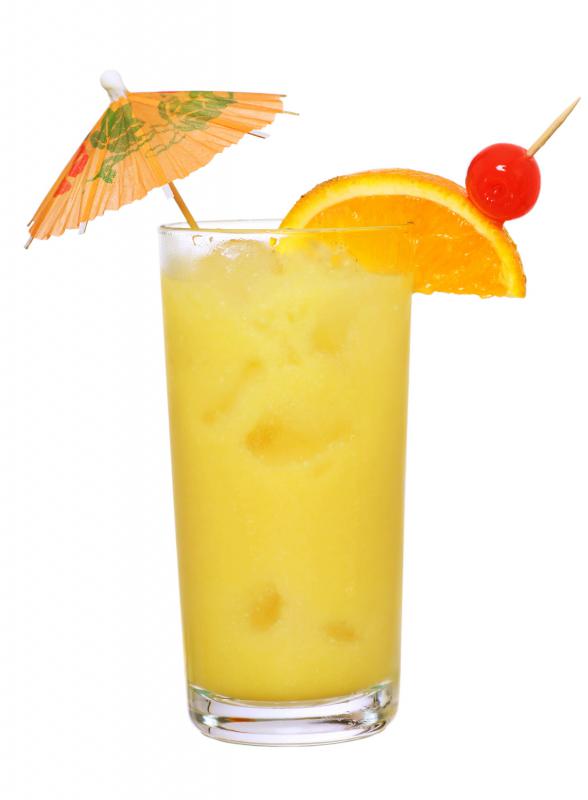
![Screwdrivers contain orange juice and vodka.]() By: quaysideScrewdrivers contain orange juice and vodka.
By: quaysideScrewdrivers contain orange juice and vodka. -
![Vodka is used to make a Bloody Mary.]() By: Danny HooksVodka is used to make a Bloody Mary.
By: Danny HooksVodka is used to make a Bloody Mary. -
![Vodka can be made by fermenting wheat.]() By: womueVodka can be made by fermenting wheat.
By: womueVodka can be made by fermenting wheat. -
![Some vodka is still made from potatoes.]() By: James MartinSome vodka is still made from potatoes.
By: James MartinSome vodka is still made from potatoes.




Discussion Comments
I didn't actually believe this whole "eyeballing" thing. I looked it up and there are really videos on youtube of college students doing it. What is the world coming to?
@alex94: Vodka eyeballing is a problem. I have done a little research on it and I know that students have said that they feel drunk sooner. However, one doctor stated that with 40% ethanol, pouring vodka in the eye would create a great deal of inflammation, so that hardly any of the alcohol would be absorbed.
There is also long term damage associated with vodka eyeballing. It can cause decreased sight in the eye. It can also cause scarring of the sclera and cornea.
@cmsmith10: Actually, yes. Vodka eyeballing does indeed exist. It is the practice of consuming vodka by pouring the liquor directly into the eye. Apparently, it is a trend that has been catching on at college campuses in the U.S. and Britain. The vodka supposedly “induces feelings of drunkenness at break-neck speeds”. It is said that it passes through the mucous membranes and into the bloodstream. That theory has been challenged by numerous professor as the validity of it.
I know this sounds crazy, but has anyone every heard of vodka eyeballing?
Since water in many Eastern European countries is "voda" or something similar, and "ka" is the ending given to words to indicate the diminutive version of a word, vodka arguably means little water, as the article states. As in, "here, have a little water!" If this is how Eastern Europeans view vodka then it would support that stereotype that they can handle their vodka!! :)
Post your comments