
At WiseGEEK, we're committed to delivering accurate, trustworthy information. Our expert-authored content is rigorously fact-checked and sourced from credible authorities. Discover how we uphold the highest standards in providing you with reliable knowledge.
What is Vitamin E?
Vitamin E is the name given to the compound Alpha-tocopherol. It occurs naturally in the human body and is replenished by what we eat. Vitamin E has enjoyed a great deal of popularity and scientific scrutiny because of its reputed properties, and indeed, it does offer important health benefits.
Vitamin E is naturally occurring in most vegetable oils, and was originally extracted for use as a dietary supplement from wheat germ oil. Since vitamin E can be obtained from vegetable oils, nuts, certain fish and dark green vegetables, it is likely that most people get enough in their diet to make supplementing unnecessary. Still, when you consider the health benefits Vitamin E is known or thought to provide, it is understandable that you might want to add more Vitamin E to your system, either through adding Vitamin E rich foods to your diet or through the use of a dietary supplement such as a gel capsule or extract.

A powerful antioxidant, Vitamin E "scavenges" the body's free radicals, molecules with an unpaired electron that can "over-react" and damage cells in the body. Free radicals are thought to contribute to aging and are implicated in a number of health risks. Antioxidants such as Vitamin E might provide important protections from these ravages. Vitamin E in particular, of all the available antioxidants, is often touted as an important tool in the battle against aging. Current research is investigating the use of Vitamin E against heart disease, cancer, Alzheimer's and Parkinson's disease. Vitamin E may prevent LDL or "bad cholesterol" from contributing to the artery blockage that causes some diseases of the heart.
Vitamin E is an oil in its natural state, so it is often added to skincare products, lotions and cosmetics. Its use as an external skin application is similar to its internal uses — that is, to work against atmospheric and environmental sources of free radicals, chiefly pollutants, to keep the skin from suffering damage and to prevent the resultant look of aging skin.
AS FEATURED ON:
AS FEATURED ON:









-
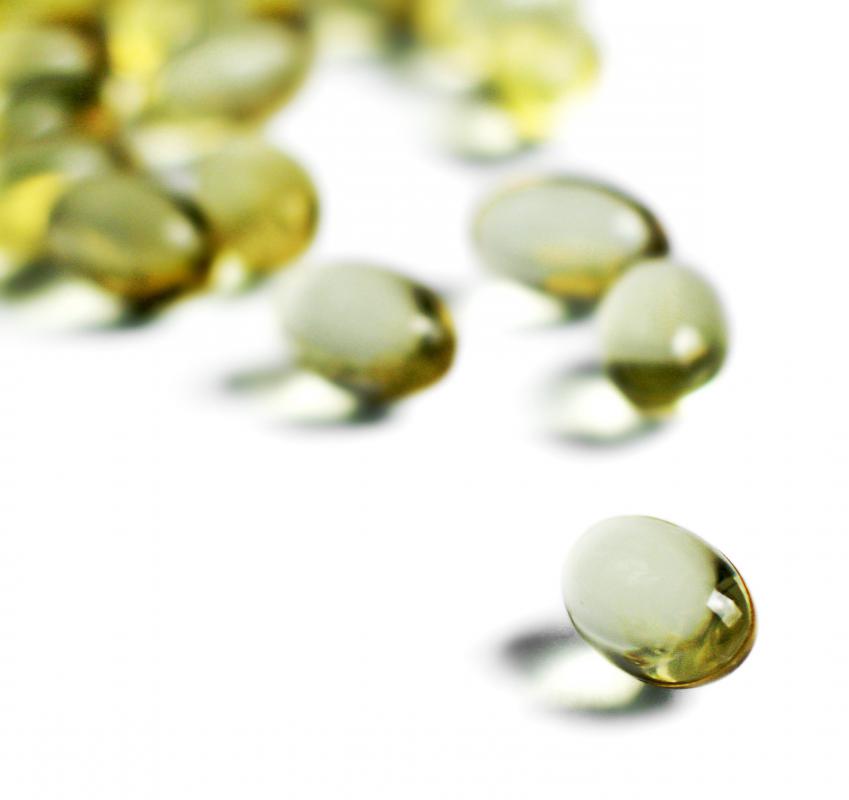
![Vitamin E supplements come in capsule form.]() By: AgamtbVitamin E supplements come in capsule form.
By: AgamtbVitamin E supplements come in capsule form.
Discussion Comments
My grandma took vitamin E every day and she lived to be 95. She also used pure vitamin E oil on her skin. She had very few wrinkles. She stayed out of the sun and I really think the oil helped moisturize her skin and protect it. I think there are a lot of great things we don't even know yet about vitamin E.
Apparently to get enough vitamin E in your daily diet, it is sufficient to eat 3 oz, about 85g of nuts a day, could be also seeds. Of course other foods have vitamin E too, such as sardines, whole grains, green leafy vegetable among other foods.
Also, one study suggests that people who take sufficient amounts of vitamin E cut their chances of developing Alzheimer's by almost one half.
Post your comments