
At DelightedCooking, we're committed to delivering accurate, trustworthy information. Our expert-authored content is rigorously fact-checked and sourced from credible authorities. Discover how we uphold the highest standards in providing you with reliable knowledge.
What is Verbena?
 Mary Elizabeth
Mary Elizabeth
Mary Elizabeth
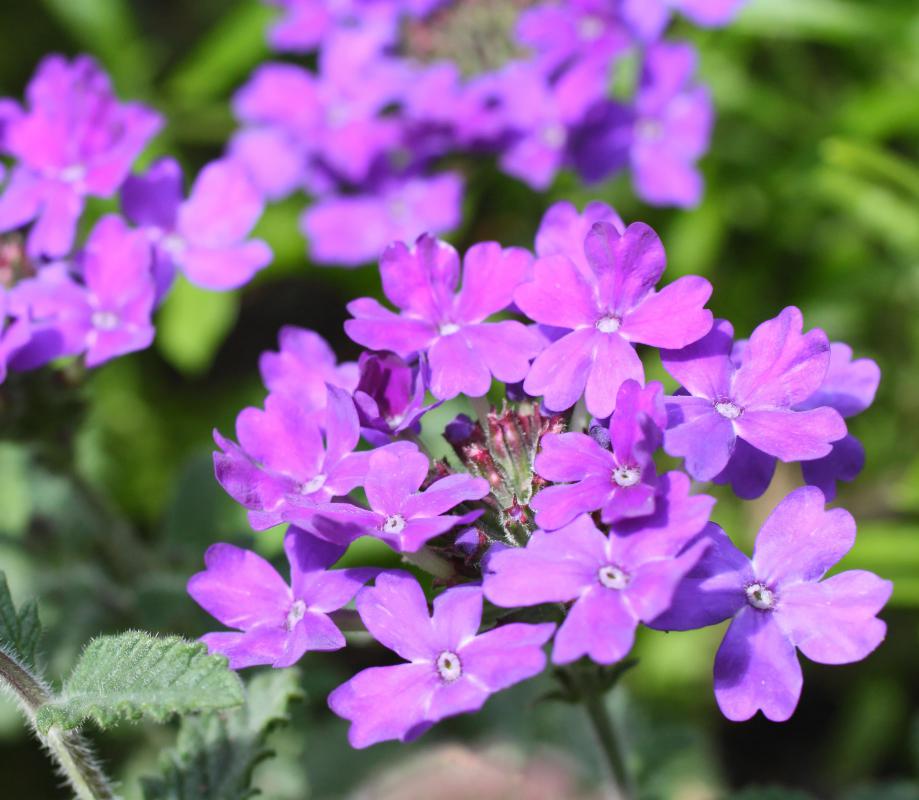
Verbena is the common name for plants in the Verbenaceae family, which includes herbs, shrubs, and trees, including teak. The family includes wild and cultivated members, some of which feature fragrant, showy blossoms. In addition, some have leaves that are used in culinary applications. Wild members that are found in the US are also called vervains.
Lippia citriodora or sand verbena, is a less well-known, but similar-looking species that is actually unrelated. Lemon verbena also shares the name, but is actually another plant, Aloysia triphylla. This herb also has another common name, citronalis, that refers to its lemony scent and flavor.

Cultivated and lemon verbenas are used in tisanes, tea-like drinks in which flowers or leaves are steeped. Tea bags with these herbs are sold grocery and health food stores. Portions of these plants are also distilled to create oils or used as condiments. The leaves of lemon verbena may be used to season fruit salads as well as other sweet dishes, ranging from sorbet to granita to cheesecake to poundcake to sangría. Cooks can occasionally find it called for in savory dishes as well, either in the form of herb flavored oil or in other forms.

These plants have also captured the literary imagination. Canadian novelist Lucy Maud Montgomery refers to a garden still scented with “sweet may, southern wood, lemon verbena, alyssum, petunias, marigolds, and chrysanthemums,” blooming in October in Anne of the Island. Sprigs figure importantly in Nobel Prize winner William Faulkner’s 1938 novel, The Unvanquished, which ends with a section entitled “An Odor of Verbena.” And novelist Louisa May Alcott refers to a “small posy of scarlet verbenas, white fever few, and green leaves” in An Old-Fashioned Girl.
Mary Elizabeth
Mary Elizabeth is passionate about reading, writing, and research, and has a penchant for correcting misinformation on the Internet. In addition to contributing articles to DelightedCooking about art, literature, and music, Mary Elizabeth is a teacher, composer, and author. She has a B.A. from the University of Chicago’s writing program and an M.A. from the University of Vermont, and she has written books, study guides, and teacher materials on language and literature, as well as music composition content for Sibelius Software.
Learn more...
Mary Elizabeth
Mary Elizabeth is passionate about reading, writing, and research, and has a penchant for correcting misinformation on the Internet. In addition to contributing articles to DelightedCooking about art, literature, and music, Mary Elizabeth is a teacher, composer, and author. She has a B.A. from the University of Chicago’s writing program and an M.A. from the University of Vermont, and she has written books, study guides, and teacher materials on language and literature, as well as music composition content for Sibelius Software.
Learn more...AS FEATURED ON:
AS FEATURED ON:


-
![Verbena oils are used in aromatherapy.]() By: serenacarVerbena oils are used in aromatherapy.
By: serenacarVerbena oils are used in aromatherapy. -
![Purple is the most common color of a verbena.]() By: JulietPhotographyPurple is the most common color of a verbena.
By: JulietPhotographyPurple is the most common color of a verbena. -
![Unusual, red verbena.]() By: lubashiUnusual, red verbena.
By: lubashiUnusual, red verbena.


Discuss this Article
Post your comments