
At DelightedCooking, we're committed to delivering accurate, trustworthy information. Our expert-authored content is rigorously fact-checked and sourced from credible authorities. Discover how we uphold the highest standards in providing you with reliable knowledge.
What is Veal?
Veal is the meat of very young cattle — mostly male calves from dairy herds. Their immature muscles are especially tender, and the meat is correspondingly more expensive. There are many well known classic recipes using this meat, and it can be handled and prepared as a delicate, mildly flavored cut of beef.
Adult cows must be "freshened" yearly in order for them to continue producing milk; this means that they must give birth to a calf. About half of the calves born are female and are raised by the dairy farmer to replace and replenish the milking herd. Only a few adult males are needed for breeding stock, so the surplus male calves are sold for meat.
Classifications

Calves are graded according to their age and weight when they are butchered. The meat is also classified by the way the calves were raised — either milk-fed or grain-fed. Milk-fed, sometimes called special-fed, are calves that were raised on a milk and liquid supplement diet. Grain-fed calves, on the other hand, initially receive milk and are then raised on a diet of grain and hay.
The difference is noticeable. Milk-fed calves have flesh that is light pink, finely textured, and very lean. The meat from grain-fed calves tends to be darker in color and fattier.
At the Market

Many people consider this meat to be a delicacy, and the prices at most markets will reflect this. A pound (about 453 grams) of veal, however, may yield at least four servings; one serving is typically considered to be 3 ounces (84 grams). While the cost by weight of regular beef will likely be much less, veal is often equally affordable when evaluated in cost per serving. Packages should be securely wrapped with no sign of leakage. The meat itself should be creamy pink, and any visible fat should be milky white.
In the Kitchen

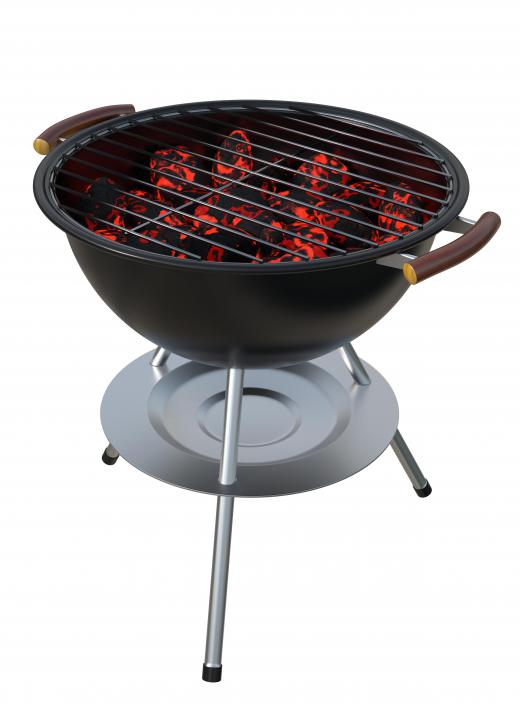
There are two basic cooking methods for veal — either dry or moist heat. Dry heat methods include roasting, grilling and frying. They are appropriate for the more tender cuts, such as leg, ribs or loin chops. Moist heat cooking, which includes braising and stewing, works best for tougher cuts of meat, such as round steak and shanks.
Specific recipes and serving suggestions for this meat can be found in many cookbooks. With some adjustments, it is usually a suitable substitute for any dish specific to beef. Reliable sources should be referenced for cooking times and temperatures to ensure safe eating; experts recommend that the meat be cooked to medium, which is 160°F (71°C). Popular preparations include thin cutlets in Marsala wine sauce and a dish called osso buco which is bone-in shanks braised for several hours.
Cooks who do not have veal or who choose not to use it can try substituting chicken breasts or pork tenderloin, although they will give the dish a different flavor and texture. Depending on the recipe, the substitute meat may need to be pounded thinly to give it a similar thickness; cooking times may also need to be adjusted.
Nutritional Information
Veal tends to have fewer calories and less fat than beef from adult cattle, although this can vary significantly depending on the cut of meat. A 3-ounce (84 g), pan fried veal cutlet, for example, has about 180 calories and 7 grams of fat. A braised loin chop or shoulder arm steak will have more calories (240 and 200, respectively) and more fat (14 and 9 grams). It also provides significant protein, zinc, and several B vitamins.
Safe Handling

Raw meat should be refrigerated at 40°F (4.44°C) or colder. Ground or cubed stew meat should be used within one or two days, while larger cuts may last three to five days. Meat can be frozen nearly indefinitely if it's wrapped properly and kept at 0°F (-17.78°C) or colder. Extended freezing, however, wil affect the quality of the meat, and cooking experts recommend that ground veal be used within three to four months, while cuts such as a roast be consumed within four to six months.
Raising Veal
Cattle are herd animals. By necessity, a newborn calf's muscles develop and toughen quickly. Many farmers traditionally limit their calves' mobility by penning them in tight spaces. This results in a more softly textured flesh that is the desirable, signature characteristic of this meat.
Most calves are sold to be butchered within 16 to 26 weeks of age. At this point, their weight will have exceeded 450 pounds (205 kg). A smaller number are butchered at 3 weeks or 150 pounds (68 kg) or less; these are known as "bob" veal. Most countries that produce the meat have a process of certifying that a cut of beef is, in fact, veal.
Controversies
Some people have strong objections with the cultivation and consumption of veal. The slaughter of such young animals is one point of contention, especially with very young calves. Animals are also often treated with antibiotics, which many people feel may increase the number of drug-resistant bacteria. Although the use of hormones in veal is banned in the US, there are indications that they are used by some producers.
Another concern is the restricted living conditions of the calves. In the US, the Department of Agriculture (USDA) has guidelines on how calves should be housed, which include the ability of the animal to stretch and lay down. Even with this room, however, the pens are still quite small and often considered unnatural. Not all producer follow these guidelines either, and there is particular objection to the use of crates that sharply restrict the animals' movements.
In response to these concerns, some farmers have adopted more organic, free range operations for raising their calves. Crating is banned in a number of countries, including the European Union and the United Kingdom, and several states in the US. Sales of free-range veal have increased in recent years, which may prompt more large producers to change their methods.
AS FEATURED ON:
AS FEATURED ON:


-
![Raw veal chops.]() By: ExQuisineRaw veal chops.
By: ExQuisineRaw veal chops. -
![Cooks without access to veal often substitute with pork tenderloin.]() By: Natalia MylovaCooks without access to veal often substitute with pork tenderloin.
By: Natalia MylovaCooks without access to veal often substitute with pork tenderloin. -
![Veal comes from very young cows.]() By: marco iacobucciVeal comes from very young cows.
By: marco iacobucciVeal comes from very young cows. -
![Many tender cuts of veal are appropriate for grilling.]() By: GraphicCompressorMany tender cuts of veal are appropriate for grilling.
By: GraphicCompressorMany tender cuts of veal are appropriate for grilling. -
![Until recently, the standard production of veal involved removing a newborn calf from its mother within 24-48 hours.]() By: Marcel MooijUntil recently, the standard production of veal involved removing a newborn calf from its mother within 24-48 hours.
By: Marcel MooijUntil recently, the standard production of veal involved removing a newborn calf from its mother within 24-48 hours.


Discussion Comments
People who complain about how the meat was treated when it was still alive -- all I have to say is that I am too poor to care how the meat got there.
If I can buy meat cheaper because the farm where they were raised decided not to increase their cost due to having to treat the animal humanely, then so be it.
I cannot afford not to feed my family because of how my food might feel before it ended up on my table.
If the cows were treated as humans working in a sweat shop for $2.99 a pound, that's fine. I can live with that, since I can afford the beef. If the cows were treated like royalty and are being sold for $9.99 a pound, then that's a problem. My family and I would probably never eat beef.
I look at life related how to keep my family's stomachs full and have them enjoy the different kinds of food available out there for the budget allotted to me by my income. If my family and I were to eat only the food that was pampered when it was still alive and kicking, and not go hungry due to budget constraints, we would need to severely limit the type of meat available to us.
Now if I were rich, I'd say milk feed veal 24/7 and make sure that you hand feed that cow while you are at it and also, make sure that you have the cows on platforms that can be moved by hands so that the cows can moved around to visit its friends and not have to move at all.
Make sure each cow has at least three attendants to see to its each and every need so as not to stress the cow. We don't want stressed meat. And when you kill it, make sure that you do it while the cow is asleep and make it quick. We don't want to taste the suffering of death in the meat, either.
I think eating a baby animal is wrong (I am not vegan).
It's a cow! Eat it!
How old are the calves typically when slaughtered for veal?
Bob B says: I am eating "Veal Parmigiana" right now. It's pretty bland, but not bad for TV dinner package frozen food. I thought veal was lamb meat anyway. Oh well.
I believe in treating a meat animal as kindly as possible in its life and slaughtering it quickly without it seeing it coming or in front of other animals. I hope that is what is done to the veal calves before it is processed.
tried it for first time grilled. it was gorgeous.
I recently had veal at a good Perth suburban restaurant. It was tough,dark and cut with the grain. When challenged, the chef claimed it was veal from a well known supplier.
I work for a pathology company and find that there is no test to differentiate between veal and beef.
Our dog ate the evidence so we cannot proceed.
I believe that veal is substituted around the world and have only enjoyed the real thing two or three times.
Yearling and girello are probably used instead.
Apart from the ethical arguments I ask to receive what is really offered on the menu.
There are things in the world that are far more morbid than veal. I guess anon63567 milked 100 bulls because you don't raise bulls for the milking industry. These animals would have been destroyed anyway so this is one way not to waste a perfectly fine product.
Koreans have been known to eat dog. that would seem gross to some but is just animal meat like any other. We kill to eat, it's life, always has been, always will. This is bigger than any of us so just relax.
veal from Strauss Brands and Midwest Veal is humanely raised. Check out the website at Midwest veal.
Where I was born the idea of veal would be seen as unethical, gross, disgusting and cruel. In some part of the world, many people don't know of the practice of veal.
Raising them in huge wide open pastures until they were older and for dairy was the main aim. We had close to 200 cows.
stress free raised veal is pasture raised with the herd and fed a diet of mother's milk and grass. it is totally free range, no antibiotics or growth hormones.
Where does veal stop becoming veal & become beef?
olittlewood, You asked a very good question. "is there any other way to raise this type of meat under better conditions? or do they absolutely have to confine them to such a small place?"
I ran across a company called Midwest Veal that is ahead of the entire Veal industry (by almost 10 years) in moving to "group raised veal" which is an animal friendly method of raising veal that lets calves have much more freedom and does not use the confines of an individual stall.
personally, i really like veal, though i eat it on very rare occasions. is there any other way to raise this type of meat under better conditions? or do they absolutely have to confine them to such a small space?
Post your comments