
At WiseGEEK, we're committed to delivering accurate, trustworthy information. Our expert-authored content is rigorously fact-checked and sourced from credible authorities. Discover how we uphold the highest standards in providing you with reliable knowledge.
What is Vascular Dementia?
 Mary McMahon
Mary McMahon
Mary McMahon
Vascular dementia is a very common form of dementia characterized by blockages in the blood supply to the brain which lead to neurological symptoms. After Alzheimer's Disease, this condition is the leading cause of dementia in the elderly. It is also preventable, especially if people start engaging in preventative care at a young age and stay committed to maintaining their general physical health to avoid medical issues.
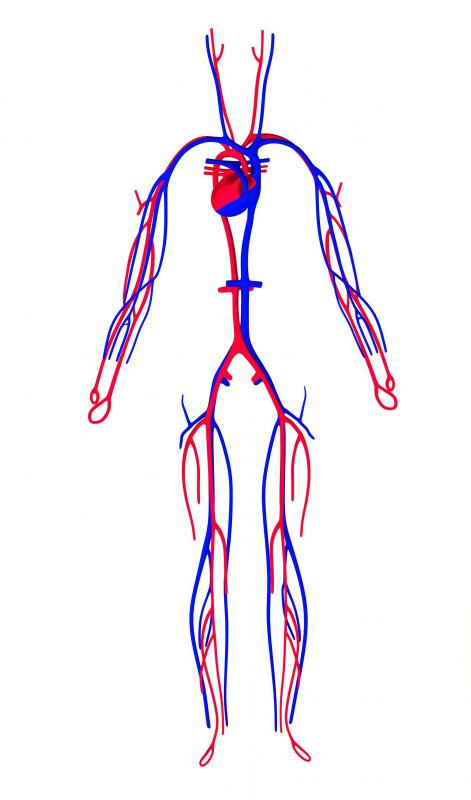
The term “vascular dementia” is an umbrella term for a very large family of conditions, all of which involve interruptions in blood supply to the brain. In multi-infarct vascular dementia, for example, a series of small strokes create infarctions or blockages in the blood vessels in the brain, while the post-stroke form occurs after someone has a major stroke. Many forms are related to cardiovascular diseases such as arteriosclerosis and hypertension, and the bulk of prevention efforts focuses on addressing these conditions to reduce risk factors for developing vascular dementia.

In all cases, the impairment of the blood supply leads to physical and neurological symptoms. Patients with vascular dementia may have difficulty walking, lose fine motor control, experience tremors, and develop urinary incontinence. They also experience confusion, memory loss, difficulty concentrating, depression, sleepwalking, agitation, inappropriate emotional responses, and trouble communicating with others. While the symptoms may be initially written off as simple signs of old age, they grow progressively worse, and the patient can become severely impaired.

Treatment for this condition involves identifying and treating the cause. Treatments can include the use of medications to manage blood pressure, embolization to remove clots, and physical therapy to help patients relearn physical skills they have lost as a result of damage to the brain. For severely impaired patients, it may be necessary to have a care provider present at all times to monitor the patient, or to place the patient in a long term care facility which will keep the patient healthy and as stable as possible.

Many different processes are involved in vascular dementia, but by taking good care of the cardiovascular system, patients can radically reduce their risk of developing this condition. Maintaining a healthy blood pressure is very important, as is exercising regularly to work the heart muscle and promote healthy circulation. Identifying the early signs of stroke and neurological impairment and getting prompt intervention can also reduce the severity of vascular dementia by limiting damage to the brain's blood supply.
Mary McMahon
Ever since she began contributing to the site several years ago, Mary has embraced the exciting challenge of being a WiseGEEK researcher and writer. Mary has a liberal arts degree from Goddard College and spends her free time reading, cooking, and exploring the great outdoors.
Learn more...
Mary McMahon
Ever since she began contributing to the site several years ago, Mary has embraced the exciting challenge of being a WiseGEEK researcher and writer. Mary has a liberal arts degree from Goddard College and spends her free time reading, cooking, and exploring the great outdoors.
Learn more...AS FEATURED ON:
AS FEATURED ON:









-
![Vascular dementia can appear suddenly after a stroke or come on gradually.]() By: rainbow33Vascular dementia can appear suddenly after a stroke or come on gradually.
By: rainbow33Vascular dementia can appear suddenly after a stroke or come on gradually. -
![Physical therapy may be necessary in cases of vascular dementia.]() By: Lisa F. YoungPhysical therapy may be necessary in cases of vascular dementia.
By: Lisa F. YoungPhysical therapy may be necessary in cases of vascular dementia. -
![People with vascular dementia may have trouble communicating with others.]() By: kolotypePeople with vascular dementia may have trouble communicating with others.
By: kolotypePeople with vascular dementia may have trouble communicating with others. -
![Vascular dementia may cause a patient to become confused and have difficulty concentrating.]() By: riccardo bruniVascular dementia may cause a patient to become confused and have difficulty concentrating.
By: riccardo bruniVascular dementia may cause a patient to become confused and have difficulty concentrating. -
![Many cases of vascular dementia are caused by diseases of the cardiovascular system.]() By: 3drenderingsMany cases of vascular dementia are caused by diseases of the cardiovascular system.
By: 3drenderingsMany cases of vascular dementia are caused by diseases of the cardiovascular system. -
![Agitation and trouble communicating with others are common symptoms of vascular dementia.]() By: Monkey BusinessAgitation and trouble communicating with others are common symptoms of vascular dementia.
By: Monkey BusinessAgitation and trouble communicating with others are common symptoms of vascular dementia.



Discussion Comments
One way to help reduce the risk of the disease is to walk. Walk daily, be physically active.
Post your comments