
At DelightedCooking, we're committed to delivering accurate, trustworthy information. Our expert-authored content is rigorously fact-checked and sourced from credible authorities. Discover how we uphold the highest standards in providing you with reliable knowledge.
What is Tripe?
Tripe is the culinary term for the stomach tissue, or offal, of most ruminant animals including cattle, sheep, and deer. These tissues are harvested and sold as a food item in many parts of the world. Most butcher shops in the United States and Europe stock primarily beef-derived tripe, though it is sometimes possible to find or at least order other varieties. The meat is usually rather inexpensive, but certain cuts and selections can be more costly.
Cleaned and prepared stomach tissues are a popular addition to dishes from most global cultures and are widely available in most places. There are several different grades and varieties available, however, which means that consumers are often wise to do a bit of research before heading to the market.
Types and Varieties
Ruminant animals have multi-chambered stomachs, and tripe generally comes from either the rumen, reticulum or omasum chambers. The texture and quality of each is comparable, but nonetheless distinguishable.

Tissues from the rumen are usually quite smooth, and are often known as “flat tripe.” The reticulum chamber typically produces the most highly priced honeycombed varieties, which are well loved both for their texture and the complexity of their flavor. Matter taken from the omasum is frequently known as “book” or “leaf” tripe, on account of its thick, almost bound feel. Omasum tissues are usually less desirable for soups and light meals, but their thickness often makes a good addition to casseroles or baked dishes.
“Green” Versions

So-called “green tripe” is also available in some places, and is harvested primarily from the abomasums chamber of the animal’s fourth stomach. Though it is edible, many people dislike this variety because it usually contains a lot of unappealing glandular tissues.
Abomasums tissues are commonly referred to as “green” because they often contain undigested matter. Any grasses, leaves, or shrubbery that the animal ate shortly before it died can often be found in this stomach chamber. Butchers will almost always thoroughly wash and clean the tissues before sale; still, the very idea of green matter makes this particular sort of tissue unappealing to many.

Most abomasums tissues processed in the United States and Europe are set aside for use in pet food, as they are often a very inexpensive means of delivering protein to domestic animals. Green versions are sometimes sold on their own as a pet snack or treat, but are also frequently mixed in with “wet” dog food blends.
Tips for Choosing and Places to Buy
In some parts of the world, stomach tissues are regularly available in standard markets. In other places, they may only be found at specialty butcher shops. Customers who do not see the tissues sold may be able to place a custom order, either directly from a butcher or over the Internet.
Tripe does not have a very long shelf life — unlike most other cuts of meat, it must usually be consumed or preserved within a few days of harvesting. Most connoisseurs recommend looking for tripe that is both thin and flexible, and that has a pale white color. Any darker or lighter, and the tissues may not be fresh.
Cooking Ideas and Recipes
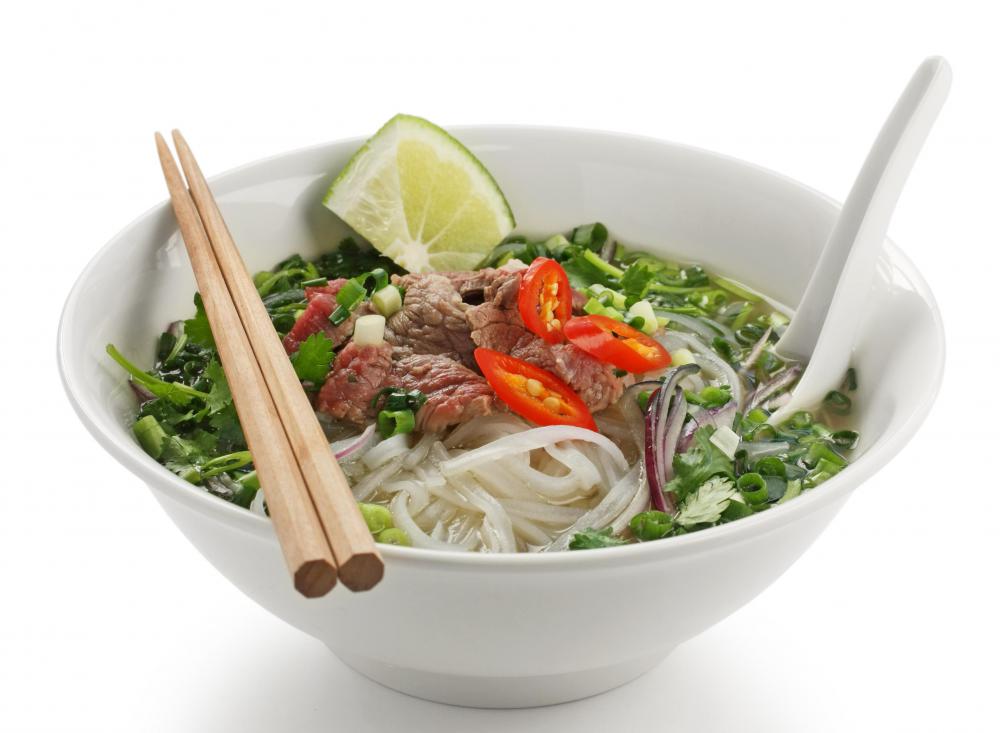
There are many different ways to prepare tripe, though it is rarely eaten on its own. In most cases, it is combined with other ingredients, either in a baked dish like the popular French tripes à la mode de Caen, or in a broth-based soup like the Vietnamese classic Pho. Noodle dishes like the Japanese favorites yakiniku and horumonyaki are also popular.
Nutritional Information
The health benefits and nutritive content of stomach tissues vary somewhat depending on the chamber from which they are derived, as well as the type of animal they are taken from. In most cases, though, the stomach tissues are high in iron, calcium, and zinc, and are excellent sources of protein and vitamin B12 — all while being very low in fat and calories.
AS FEATURED ON:
AS FEATURED ON:


-
![Boiled tripe.]() By: uckyoBoiled tripe.
By: uckyoBoiled tripe. -
![Tripe is a common ingredient in pho.]() By: uckyoTripe is a common ingredient in pho.
By: uckyoTripe is a common ingredient in pho. -
![Tripe can from the stomach tissue of deer.]() By: satoriTripe can from the stomach tissue of deer.
By: satoriTripe can from the stomach tissue of deer.


Discussion Comments
To all worried about eating or cooking tripe for the first time: tripe is cleaned by bleaching, and not the type of clorox you find in the laundry section, but an organic bleach to clean so it can be consumed by humans.
Green tripe is used in dog food due to the natural content and is good for dogs because it contains no bleach.
The whiter the tripe the better; the big honeycomb pattern found on trip is the best cut. The best way to cook tripe is when you get it home, take it out of the package and run it through warm water and wring out the tripe. Do this slowly five times. After this is done, place the tripe in a large pot or crockpot and pour in a can of chicken broth. Add some peppercorns, onion halves and some salt. Cook the tripe until you can easily run it through with a fork. After the tripe is cooked, rinse in cold water to stop the cooking process and your tripe is now ready to eat as is, stir fry, or add to soups and other recipes. Enjoy!
I was recently looking for some different recipes, because I'm am tired of cooking the same old things all the time.
I came across some recipes that call for tripe. I've never used tripe before, and I really have no idea where to buy tripe. Is it sold in a regular supermarket, or do I have to go to a specialty store?
It seems a bit odd to me that tripe for dogs is unwashed. Is there a reason for this? I know that animals can eat things that people can't, but is it really safe for our pets to be eating unwashed animal stomach?
Maybe I'm just set in my ways -- I've always just given my dogs dry food, and they seem to do just fine.
I have a friend who loves trying different kinds of foods. Her most recent discovery was lamb tripe. I'd never heard of tripe, but she suggested that I try it -- she said she loves it.
I'm not sure I can bring myself to eat an animal's stomach though, no matter what kind of animal it comes from. I'm usually not a very picky eater, but this may be a bit more than I can handle. I think I'll leave the tripe eating to her.
Post your comments