
At TheHealthBoard, we're committed to delivering accurate, trustworthy information. Our expert-authored content is rigorously fact-checked and sourced from credible authorities. Discover how we uphold the highest standards in providing you with reliable knowledge.
What is Thrombocytopenia?
Thrombocytopenia is the medical term that refers to a low or reduced platelet count. Platelets are cells in the blood that enable the blood to clot and prevent the loss of red blood cells, which carry oxygen through the body. Platelets are lost even in healthy bodies during normal bodily functions, but they are replaced with new platelets produced in the bone marrow. Thrombocytopenia occurs either when platelets are not replaced at the same rate as loss or when abnormal destruction of platelets occurs.
Thrombocytopenia can cause abnormal bleeding, especially from the nose and in the stomach and intestines. Signs of thrombocytopenia may include nosebleeds, unexplained vaginal bleeding, or vomiting blood. Thrombocytopenia can be diagnosed through routine blood work and a complete blood count, which also measures the levels of red and white blood cells. In some cases, testing the bone marrow may also be necessary. During a physical examination, the spleen may also be checked for enlargement.

The causes of thrombocytopenia can include disease, infection, and medication. Thrombocytopenia can originate in the bone marrow, in the blood stream, or outside of the blood stream. Thrombocytopenia is most often a result of chemotherapy and radiation, and occasionally affects patients taking heparin. A low platelet count does not necessarily indicate disease and is sometimes secondary to another condition.

When the bone marrow is producing platelets at a normal rate, but platelet counts are low in the blood stream, this is often the result of an infection that is destroying the platelets faster than they are produced. This condition is known as Idiopathic Thrombocytopenic Purpura (ITP).
Thrombocytopenia caused by reduced production in the bone marrow is more severe than destruction of platelets as in ITP. However, any signs of thrombocytopenia, including unexplained bleeding from the nose, gums, or lower legs or the appearance of blood in vomit or stool should be brought to the attention of a physician. People with thrombocytopenia are at a high risk of abnormal or severe bleeding, including internal hemorrhaging. Treatment for thrombocytopenia depends on the cause, but may include steroids or other medication and may require platelet transfusions.
AS FEATURED ON:
AS FEATURED ON:


-
![Disease, infection and medication may result in a low platelet count.]() By: Tim URDisease, infection and medication may result in a low platelet count.
By: Tim URDisease, infection and medication may result in a low platelet count. -
![Vomiting blood may be a sign of thrombocytopenia.]() By: Photographee.euVomiting blood may be a sign of thrombocytopenia.
By: Photographee.euVomiting blood may be a sign of thrombocytopenia. -
![Nosebleeds may be a symptom of thrombocytopenia.]() By: Michael SchützeNosebleeds may be a symptom of thrombocytopenia.
By: Michael SchützeNosebleeds may be a symptom of thrombocytopenia. -
![Signs of thrombocytopenia include frequent nose bleeds.]() By: julaszkaSigns of thrombocytopenia include frequent nose bleeds.
By: julaszkaSigns of thrombocytopenia include frequent nose bleeds. -
![Thrombocytopenia may cause the spleen to become enlarged.]() By: CLIPAREA.comThrombocytopenia may cause the spleen to become enlarged.
By: CLIPAREA.comThrombocytopenia may cause the spleen to become enlarged. -
![Thrombocytopenia is most commonly diagnosed through a complete blood count.]() By: spflaumThrombocytopenia is most commonly diagnosed through a complete blood count.
By: spflaumThrombocytopenia is most commonly diagnosed through a complete blood count. -
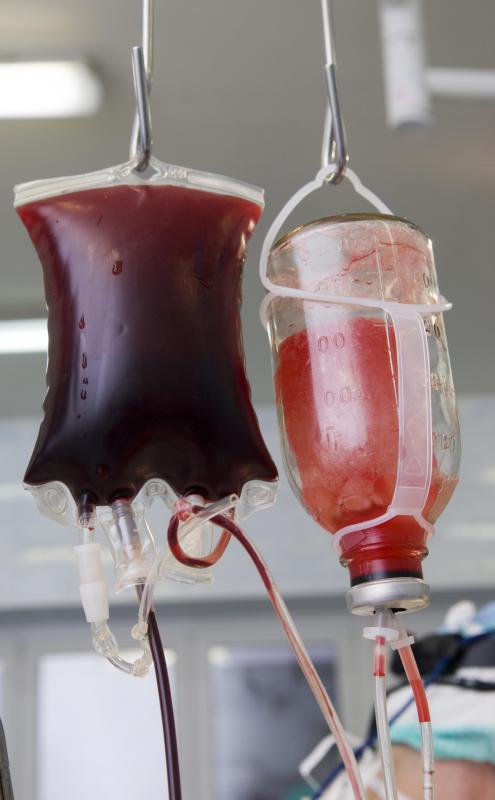
![Low levels of platelets may cause excessive bleeding, necessitating a blood transfusion.]() By: Max TacticLow levels of platelets may cause excessive bleeding, necessitating a blood transfusion.
By: Max TacticLow levels of platelets may cause excessive bleeding, necessitating a blood transfusion.


Discussion Comments
I have a blood disorder called ITP. It's where I don't make enough platelets and can bleed out on surgery table if no intervention is taking place. My aunt has a blood disorder called von willabrands type 2 b. That is where she doesn't make platelets. We are not allowed to take any NSAIDs, so if you have any blood disorders, make sure you talk to your provider about what to take for pain management if needed, or surgery precautions.
anon124099: I am also 24 and will be 25 on Tuesday. I went in for laparoscopic gallbladder removal in August. I was supposed to have it towards the beginning of the month, but during my pre-op physical my platelet count came back in the 80,000 range. My surgeon recommended that I go see a hematologist, which I did and he said that it did not look like it was ITP or leukemia based on my white blood cell and hemoglobin levels.
With that being said surgery was rescheduled for late August, with the caveat of having two units of platelets transfused before surgery. A couple weeks after surgery I got my levels checked again, after I was back into my routine of having a healthy diet and exercising four or five times per week. The levels were in the 200,000 range.
For good measure I had them checked earlier this week and they are back in the 60,000 range. I am just concerned about the possibility of a very painful bone marrow biopsy. I have spoken with a man who helped get the University of Nebraska Medical Center's Hematology Department up in running. He thinks I might have a condition that is not ITP where your counts cycle.
I go in on Monday or on my birthday, (Tuesday), if there are openings to see where to proceed from here. People ask why I do not like my birthday. Well, I haven't had a good one in 24 years and it looks like the 25th will not be so grand either.
I am very worried!! I am 24 years old and the doctor is thinking this is what i have. I have very low blood platelets. I've had iron through IV a few times and nothing is working. What is a way that you get rid of this or how is it treated.
can coumadin be used with undiagnosed thrombocytopenia?
I have my mother in the hospital at the present time with the symptoms of ITP. she was given blood transfusions and platelets, abd her platelets are fluctuating from 13000 to 23000 and one time at 11000, her hemoglobin is high, lungs are fine, heart is fine, potassium, but platelets don't want to respond.
She is 74 years old and has purpuric spots through her body and her legs are swollen. We are trying to do everything we can to see if there is a solution for her without putting her through any pain or suffering.
If there is a positive light to this situation I would like to hear about it to bring it to the doctors as well. --Rene
What is low platelets? is that hiv or what? please let me know.
My husband is suffering from having his platelets drop down without any reasons. The AIIMS doctor diagnosed ITI and advised a splenectomy.
Sometimes he bleeds into his stool. his platelets counts are between 9 thousand to 30 thousand. Other diseases diagnosed include Portal Hypertensive Gastropathy. Please tell us what will be the reason for the same.
I have a 4-week old preterm son with a platelet production problem. He was born 5 weeks premature at 34 weeks and 5 days. NAIT has been ruled out as the problem. He has had 5 platelet transfusions, needing them about once per week. The hemotologist who viewed his platelets said they looked normal in size and shape. Has anyone seen anything like this? What is it and what is next? He is completely healthy outside of this disorder. Any insight is greatly appreciated.
I am in my 36th week of pregnancy with my 2nd child. My first was born 2 years ago with NAIT (neonatal autoimmune thrombocytopenia) and all pregnancies following have a 100% of having NAIT since it is a genetic blood disorder. I am now told by a hematologist that I should have already begun G.G. treatment starting in my 20th week to avoid brain bleeds in-utero and during delivery, which can be a condition of NAIT. Although told this by a hematologist, my high risk pregnancy center advised against this because of the controversy to this kind of in utero treatment. I cannot find a clear cut answer on whether or not I should have this treatment done over the remaining weeks of my pregnancy.
Also my first child had an immediate platelet transfusion at birth and is fine now. However left untreated or unnoticed in infants/newborns this condition can be very dangerous and at worst fatal.
Edris,
Your friend should be under the care of a good hemotologist. The doctor should run a Coombs test to rule out any type of autoimmune problem. If there are not other medical reasons for your friend's drop in platelet count that she may have an autoimmune illness such as ITP or Evans Syndrome.
I wish you the best.
- Palemoon Twilight
I have an friend that hers platelets drop down without any reasons. She is in the hospital at this moment and is transfused with platelets day to day and the platelets goes from 20,000 to 5,000 and then up to 15,000(Platelets are fluctuating day by day). A lot of test was made and the doctors not have any idea at this moment of her problem. She was a healthy girls and never was sick, barely cought and simples sicknes problems. Please research and let me know which can be the problem or theory of her issue and I will be talking with the doctors before to make it know about that conversation.
Post your comments