
At HomeQuestionsAnswered, we're committed to delivering accurate, trustworthy information. Our expert-authored content is rigorously fact-checked and sourced from credible authorities. Discover how we uphold the highest standards in providing you with reliable knowledge.
What is Thread Count?
Thread count refers to the number of threads, both vertical and horizontal, in a one-inch square of fabric. It is affected by a number of factors, including ply and thickness of the threads used. The ply of the fabric refers to how many threads are wrapped together into a single thread. Single-ply fabrics use threads on their own, while two-ply fabrics twist two pieces together into a stronger thread, as well as doubling the thread count of the fabric.
Using finer threads also allows for more thread to fit in a square inch. Finer thread often results in smoother, softer fabrics, part of the reason high thread count fabrics are considered more desirable than fabrics without one. Finer thread also results in a more fragile fabric, however, which may not always be ideal. Two-ply fabrics help solve this problem somewhat by strengthening the threads and creating a more durable, though heavier, fabric.

While it has become common to shop for such things as bed linens based exclusively on thread count, it is important to take other considerations into account. How the cotton is treated can be a much more decisive factor in comfort and overall feel, as can the final finishing of the fabric.
The general wisdom is that a thread count of higher than 100 is desirable --these fabrics are known as percale -- with somewhere above 180 being ideal. While fabrics are available with counts up to 1000, anything in excess of 400 is considered by most to be simply extraneous. In the case of some fabrics, it is simply not a viable option.

The most common products for which this aspect is an issue are sheets, and more and more linen manufacturers sell their products largely on the basis of having a high thread count, as well as the inclusion of high-status materials such as Egyptian cotton. Other products are jumping into the thread count craze, however, with everything from dresses to men's shirts listing thread count on their packaging.
AS FEATURED ON:
AS FEATURED ON:


-
![Silk fabric.]() By: felindaSilk fabric.
By: felindaSilk fabric. -
![Close-up view of burlap.]() By: Ivaylo IvanovClose-up view of burlap.
By: Ivaylo IvanovClose-up view of burlap. -
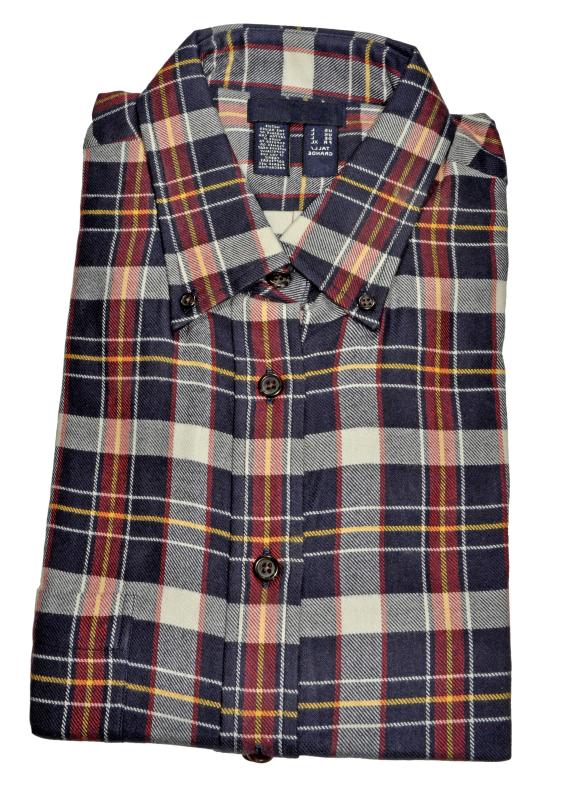
![Flannel has a very low thread count.]() By: philip kinseyFlannel has a very low thread count.
By: philip kinseyFlannel has a very low thread count. -
![Some people purchase bed linens based exclusively on the thread count.]() By: rodjulianSome people purchase bed linens based exclusively on the thread count.
By: rodjulianSome people purchase bed linens based exclusively on the thread count. -
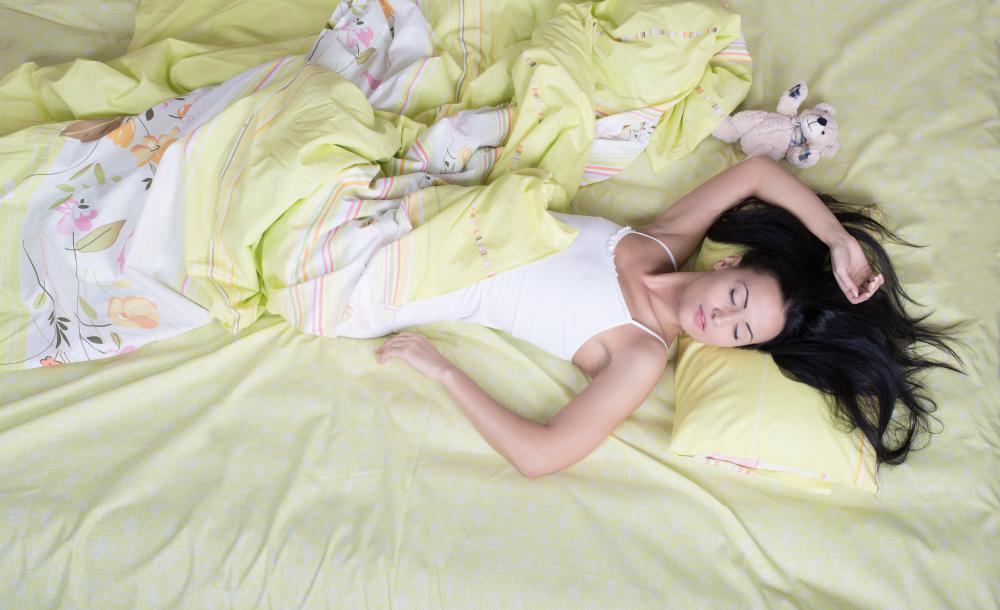
![Higher thread counts in sheets and pillow cases are considered to be of increased comfort.]() By: Artem FurmanHigher thread counts in sheets and pillow cases are considered to be of increased comfort.
By: Artem FurmanHigher thread counts in sheets and pillow cases are considered to be of increased comfort.



Discussion Comments
I also need to know if thread count is only mainly for cotton as I'm also new to this game and I'm going to be working with denim, silk, cotton poly mixes, cotton and chiffon, and I need to know if this affects all of the above because I never considered this. I am looking for the highest quality for a clothing range.
I am looking at purchasing some material for school uniforms with a thread count of 32/2. What does this mean and is it a good choice for wear and tear, etc.?
I would like the names of fabric that are single ply and cotton. Thanks in advance for any help.
If a person says he needs 32*32 60*60 viscose fabric, then what does it mean? Please explain. I'm new in the fabric field.
The use of plied yarns does not legally increase the thread count of sheeting. Thread count is the number of warp yarns per inch plus the number of filling yarns (weft or picks) per inch. A multi-plied yarn is still counted as one. The Federal Trade Commission has issued many rulings on this subject. It is illegal to label sheeting with the count including all plies. I have been producing and testing fabrics for 42 years and am well versed in the legal definition of thread count.
Actually, the description here for thread count is incorrect since it refers to threads per square inch. It is calculated by multiplying the number of weft threads by the number of warp threads, not adding.
If the threads are double twisted, you have to multiply the number of twists for both the warp and weft, as well - but now we are splitting hairs, so to speak. Threadcount is primarily a marketing tool. I ran a luxury linen shop for 25 years.
Is the quality of a terry towel determined by its weight or by its thread count/reed pick?
How do you calculate thread count? from the vertical and horizontal number of threads?
How would you interpret this information regarding three fabric types to derive the thread count?
Fabric A is 30 x 30 thread woven 75 x 75.
Fabric B is 2/80 x 2/80 thread woven 92x64.
Fabric C is 40 x 40 thread woven 120x70.
Is it referring to 30wt thread, 2-ply 80 wt thread, and 40 wt thread? If so, I would take it that the 80 wt thread, even though it is 2-ply would be very fine in texture.
What is yarn count? Is it measured by 1000, 1000D, etc?
I am just getting into the cotton fabric supply to hotel. I need to learn from scratch. Please help me with the following:
1) what is reed pick
2) what is meant by thread count.
3) Is the quality of a terry towels determined by its weight or by its thread count/reed pick?
If you are looking for more descriptions or examples of how thread counts, plys, yarns, etc. all fit together, check out the Private Quarters catalog. The company specializes in single-ply, long staple cotton, sateens and more. Great stuff and I learned a lot from browsing the catalog and reading the tips.
Does 119x58 thread count for brushed canvas sound about right? Thank you, Andrew
Thread counts is the number of horizontal and vertical threads in one square inch of fabric and yarn is wool or synthetic fibers that are woven together.
what is the formula to calculate the thread count and cotton fabric?
The article is good for the new entrepreneurs who go for towels. I too go like the same. I have a question.
In the terry towel apart from weft and wrap they use another term as pile. can you explain about it?
I am looking to purchase a nice set of sheets for my bed. I want something soft yet durable. I was looking at Egyptian cotton maybe with a 400 thread count. Is that too much? I'm clueless on fabrics and counts and this is the only one I'm a tad bit familiar with. Thanks.
actually, you can get up to 600 tc single ply yarn. i used to work for a company that makes textiles - sheeting was our main focus.
how do calculate thread count from the vertical and horizontal number of threads?
Kumotinc - Like the article says, thread count is based on the number of threads in a square inch. So, if you take a square inch of fabric and count 50 threads from top to bottom (these horizontal threads are called weft) and 50 threads left to right (these vertical threads are called warp) then you got a 100 thread count piece of fabric. Sometimes 2-ply threads (or 2-ply yarns) are used. Because a 2-ply thread is 2 threads twisted around each other, this doubles up the thread count. A 360 thread count fabric is the highest count you can get using single-ply thread. And yes, you jacquards have a thread count too.
Greenfairy4 - A difference of 2 in terms of thread count is unlikely discernible. That's just one horizontal thread (weft) and one vertical thread (warp) more per square inch.
Reload - Technically thread is a type of yarn (i.e., interlocked fibers) usually used for machine or hand sewing. But, colloquially yarn usually refers to something thicker than thread and is usually used for crocheting or knitting.
what is the difference between yarn & thread?
Help! I'm a newcomer to the fabric game. I need to know if there is a discernible difference between a 40 count thread and a 42 count thread 100% Cotton Osnaburg. As far as durability, will the results be the same?
how do you calculate thread count--from the vertical and horizontal number of threads?
also, do you consider thread counts only for cottons and not any other fabrics such as jacquards?
Post your comments