
At TheHealthBoard, we're committed to delivering accurate, trustworthy information. Our expert-authored content is rigorously fact-checked and sourced from credible authorities. Discover how we uphold the highest standards in providing you with reliable knowledge.
What is Therapeutic Cloning?
 Mary McMahon
Mary McMahon
Mary McMahon
Therapeutic cloning is cloning that is performed for the purpose of medical treatment. It could theoretically be used to grow a replacement organ, for example, to generate skin for a burn victim, or to create nerve cells for someone suffering from brain damage or a neurological condition. The process is closely related to reproductive cloning, in which a copy of an organism is produced, but the two have very different end goals.
Formally, this type of cloning is called somatic cell nuclear transfer. It involves extracting the nucleus of a cell, and putting it into an egg that has had its nucleus removed. The egg is then allowed to divide and grow. In therapeutic cloning, the growing egg is used as a source of stem cells, which are undifferentiated cells that can grow into a wide variety of different types of cells. In reproductive cloning, the egg is allowed to grow into a baby.

The advantage to this type of cloning in medical treatment is that it would allow medical professionals to grow replacements for missing and damaged body parts for their patients. This would eliminate organ and tissue shortages, ensuring that every patient who required something like a new liver or new kidneys could get what he or she needed. Using cloned body parts would also eliminate the need for immunosuppressive drugs, and reduce the risk of rejection and other problems that are commonly associated with transplants.

In addition to being used for conventional transplant medicine, therapeutic cloning has far-reaching potential applications. For example, cloning research on mice has suggested that new nerve cells can be grown with reproductive cloning techniques and used to repair damaged brains, an application that could be useful for people with dementia, Alzheimer's disease, or strokes. It could also potentially be used to produce replacement limbs and in a variety of other therapeutic applications. Using recombinant DNA technology, scientists could even create customized biological material.

There are some ethical concerns with cloning, including that used for therapeutic purposes. For people who believe that life begins at the time of conception, the product of somatic cell nuclear transfer could be viewed as a human life, and choosing to cultivate stem cells from that egg would be a questionable ethical decision. For people who do not share these beliefs, many types of cloning are still fraught with ethical problems, ranging from questions about how accessible such techniques are to the general public to concerns that problems might arise with cloned tissue, which will only be apparent after years of use.
Mary McMahon
Ever since she began contributing to the site several years ago, Mary has embraced the exciting challenge of being a TheHealthBoard researcher and writer. Mary has a liberal arts degree from Goddard College and spends her free time reading, cooking, and exploring the great outdoors.
Learn more...
Mary McMahon
Ever since she began contributing to the site several years ago, Mary has embraced the exciting challenge of being a TheHealthBoard researcher and writer. Mary has a liberal arts degree from Goddard College and spends her free time reading, cooking, and exploring the great outdoors.
Learn more...AS FEATURED ON:
AS FEATURED ON:


-
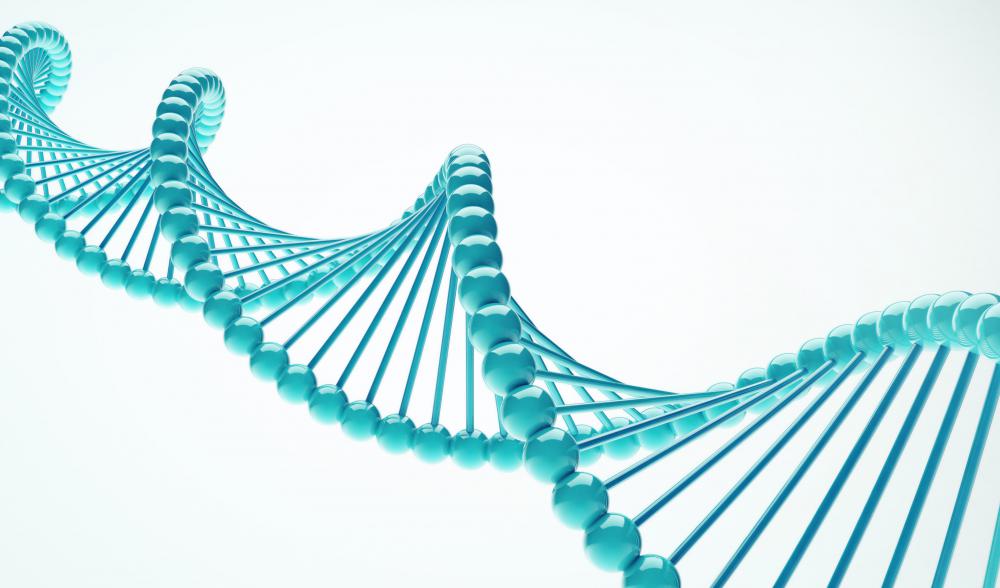
![Using DNA technology, scientists could created customized biological material.]() By: xtockUsing DNA technology, scientists could created customized biological material.
By: xtockUsing DNA technology, scientists could created customized biological material. -
![Reproductive cloning techniques may help treat Alzheimer's patients.]() By: chuugoReproductive cloning techniques may help treat Alzheimer's patients.
By: chuugoReproductive cloning techniques may help treat Alzheimer's patients. -
![Cloning research on mice has suggested that new nerve cells can be grown with reproductive cloning techniques and used to repair damaged brains.]() By: lculigCloning research on mice has suggested that new nerve cells can be grown with reproductive cloning techniques and used to repair damaged brains.
By: lculigCloning research on mice has suggested that new nerve cells can be grown with reproductive cloning techniques and used to repair damaged brains.


Discussion Comments
If you could clone every part of the human body and put it together, would that be a human?
I do need a new liver and have nothing against using my own tissue to grow a new one. I am past the age of wanting more children and I am a guy so yes, I want to see organ cloning become a reality.
I know people dying now because they are in need of a liver. I think therapeutic cloning should be okay. Reproductive cloning has different goals, and I see no purpose in it.
I personally believe that cloning should be allowed! What happens if it were to be one of your own family needing say, a liver? I'm sure you would be one of the first to say yes. And anyway, you would be using your own cells, not somebody else's. That can hardly be killing someone or something, right?
I think it would be better to ban this cloning, because in a country like India it would lead to overpopulation. Already our country is overpopulated and as an anonymous comment says, it would surely lead to poverty. --Lakshmi, Madurai
In relation to embryonic stem cell research, this science is still in it's infancy and because it does not yet yield as positive results as the adult stem cells in humans, I don't believe that research in this field should be hindered, but it should not have entire freedom. There exist certain logical and ethical restrictions and for good reason. --Jake
Therapeutic cloning is a massive feat in medical science, it could help eradicate many diseases over time by replacing defective body parts with genetically perfect ones from the clone donors. Over time there would be no genetic chromosomes to harbor these defective genes. This of course, could lead to the dehumanisation of the human race. For example, what if people stopped getting ill and even stopped dying? This would have a drastic effect upon the world's economy and life as we know it.
Cloning can be a double edged sword. There are many pros and cons. One being that, once it is let loose on the scientific community, it has to be controlled and monitored. There have to be specific rules to keep it from being misused.
On the flip side, there are many good things that can come from cloning. We can use someone's cells and regrow a body part, cure their cancer or fix diabetes. Maybe correct spinal cord injuries so they can walk again. This is using a woman's egg, removing her nucleus and inserting your DNA in the egg so it becomes a blastocyst. This is your own cells and this keeps it from being rejected by your body. This has nothing to do with religion. This is not a life or an embryo. This is a person's cells. I think it needs to be done to help mankind find cures for unbearable diseases. If it strikes your family, I am sure people who oppose it will be first in line to get it done.
There are a lot of points to make about this article, and the people before have said almost all of them. The one I like the most is, "Should we? why are we not allowed to try and clone not a human being but an organ that would keep us living?"
People often overlook the fact that we are trying to stop human nature by creating devices that would one day stop an earthquake that would kill everyone on the planet, a 10.0 (reference mega quakes history channel). We have already created a car that stops pollution to protect and save lives and scientists have already created a plan for, if an asteroid was ever on a collision course with earth, these are all protective methods that would save thousands, millions of lives, but we can't create or experiment with ideas or create a procedure in which we could save our lives with an organ, tissue or skin.
To clone part of a being could be really helpful. It could save many lives but would people be less responsible about their lives? If therapeutic cloning was easy and doesn't have the complication of having cancer afterwards or it is easily controlled in what it will become. Would people say things like "I'm going to jump off this cliff, I won't die and if I break my arm and it can't be fixed, I could just pop down to the lab for my spare arm that I made with stem cells."
Some comments on this site have said that religiously it won't be a problem because it is not killing. But isn't removing the nucleus of an egg cell killing? and the stem cells which have not been destroyed is that killing?
I am totally for therapeutic cloning but is it right? and do the benefits outweigh the disadvantages?
cloning is a very interesting concept of science that could very well have some of the answers to diseases and illnesses that we do not yet have a cure for. I understand that religion plays a very important role in many people's choices for rather or not cloning is correct to be being.
I am part of the catholic faith and i am against the killing of embryos for scientific needs, however, this type of cloning which takes a person's own cell to make a clone of their organ or for their stem cells does not seem to me to be against our religion.
We are one mind in body and soul, so a cloned egg really cannot have a soul since that egg is just a piece of us. So in other words, we really are not killing a living thing, but just like an abnormal growth from ourselves.
While cloning currently is still terribly inefficient, I believe that human cloning will eventually be perfected and become inexpensive as a result of that.
On top of this, those who say that cloning should be halted permanently, how have we gathered the scientific knowledge we have today without taking leaps of faith on the basis of what we know so far? (excuse the irony)?
My belief is we should somewhat ban it. Although i would absolutely love to have a clone of myself, there would be severe consequences on mankind. Clones would become lower-grade to most people, and somewhat of a KKK may begin, except for clones.
However, the hopes of growing body parts, and the practice of it, can be helpful. But, nonetheless, ethics rears its head again. The amount of money being spent on cloning and space travel could eradicate poverty, apparently. Imagine that. Now, why do we need to go to space? To discover other lifeforms. But, why? Curiosity? Is curiosity stopping us from helping billions of people who live in poverty? The cloning, and space, does bring the hope of cures of serious diseases, and space has the option of new technology, races, even a new fuel source. But, it also brings some diseases, wars and even an arms race. All have their pros, and cons. But, what pros and cons are their to eradicating poverty? Hmm? Makes you think.
There has been research and yes an organ can be grown is isolation in the way that it is put in an oven-like device with environmental conditions congruent to the human body. This is of course very experimental and expensive.
Now concerning ethics. Although I'm very liberal, I still believe that we spend a lot of time focusing on the things we can do and not what whether or not we should. Because yes leonidas226, we've such knowledge of the world, but little understanding, yet at the same time I'm a healthy woman with a healthy family, if this were not the case I suppose I wouldn't care about the should rather the can in order to help them. Very debatable. I suppose there isn't a right answer, just what the majority decides.
Could we grow an organ in isolation or would it require an entire new clone to "farm" from when necessary? What are the ethical implications for the layman, even those who might not hold to a more conservative religious view of human life? This has been fodder for sci-fi books and shows. Even with that in view, it is my opinion that human beings are responsible to be very careful with our knowledge of the world, especially in light of our relative lack thereof.
If cloning were possible for every human organ, the organ in highest demand would most likely be the brain. Is it possible that we could one day produce a replica of the human mind? This is almost implausible, since the human mind is beyond the ability (of the human mind) to fully comprehend at this point, with billions and billions of synapses and functions affected by environmental factors.
Post your comments