
At TheHealthBoard, we're committed to delivering accurate, trustworthy information. Our expert-authored content is rigorously fact-checked and sourced from credible authorities. Discover how we uphold the highest standards in providing you with reliable knowledge.
What is the Windpipe?
The windpipe, also known as the trachea, is a part of the respiratory tract through which air passes from the nose or mouth to the lungs. It is membranous and flexible, but its walls contain a number of rings of cartilage that protect it from injury and collapse. The trachea is connected to the larynx above it, and below it are the primary bronchi, which branch from the windpipe to the lungs. The rear of the trachea can change shape to allow for the passage of food through the esophagus, which is situated directly behind it. Surgery is sometimes performed on the trachea in operations to allow airflow into the lungs.
The walls of the trachea are composed of connective tissue and smooth muscle. A number of C-shaped rings of cartilage, usually between 15 and 20, are contained in the tracheal wall. The C shape is open to the rear of the windpipe due to its nearness to the esophagus. This allows the esophagus to expand toward the front of the throat when food passes through it. The rings of cartilage also keep the trachea from collapsing due changes in air pressure that normally occur during respiration.

At their rear, the rings contain smooth muscle fibers instead of cartilage. These band of muscle are collectively called the trachealis muscle, and they can contract to narrow the windpipe's diameter. This response helps to expel irritants in the airway through coughing and is also partially responsible for the force of sneezes.
The trachea and its rings of cartilage can be felt at the front of the throat, directly below the laryngeal prominence or Adam's apple. The windpipe is located below the larynx, which contains the human vocal cords. From there, it descends into the thorax and is connected to the lungs by the primary bronchi, which go on to form extensive networks in the lungs. Different anatomical divisions place the trachea either at the bottom of the upper respiratory tract or at the top of the lower respiratory tract. With the bronchi, it is sometimes collectively called the tracheobronchial tree.

Medical procedures that are required to establish or maintain airflow to the lungs can involve the windpipe. A tracheostomy is a procedure performed on the trachea, usually between the second and third cartilage rings, that allows for the insertion of a tube for breathing. While this operation is sometimes called a tracheotomy, the word tracheotomy more strictly refers to the cutting or incision of the trachea.
AS FEATURED ON:
AS FEATURED ON:


-
![The trachea is also called the windpipe.]() By: arsdigitalThe trachea is also called the windpipe.
By: arsdigitalThe trachea is also called the windpipe. -
![The trachea is commonly called the windpipe.]() By: Alila Medical MediaThe trachea is commonly called the windpipe.
By: Alila Medical MediaThe trachea is commonly called the windpipe. -
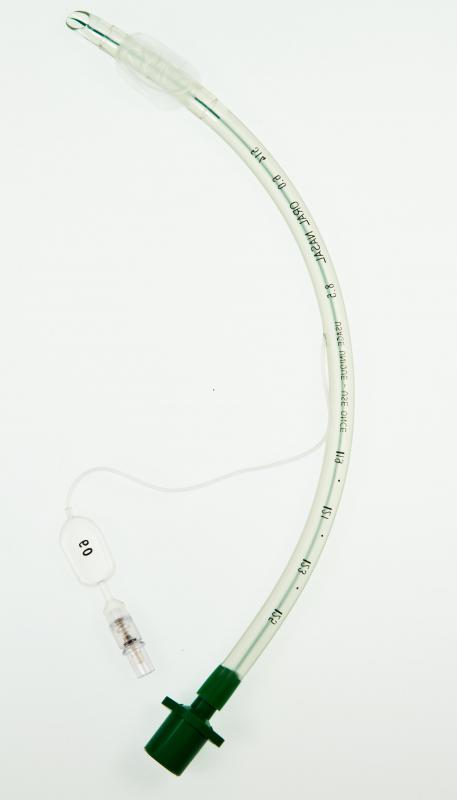
![An endotracheal tube used for breathing.]() By: ChrispoAn endotracheal tube used for breathing.
By: ChrispoAn endotracheal tube used for breathing. -
![An image of the respiratory system, including the windpipe.]() By: pixelcaosAn image of the respiratory system, including the windpipe.
By: pixelcaosAn image of the respiratory system, including the windpipe. -
![The trachea can be felt on the throat, below the Adam's apple.]() By: ricardoferrandoThe trachea can be felt on the throat, below the Adam's apple.
By: ricardoferrandoThe trachea can be felt on the throat, below the Adam's apple.




Discussion Comments
My windpipe becomes irritated when I get bronchitis. Everything from the back of my throat down to my lungs is inflamed and affected by my persistent coughing.
I feel like I'm drowning in a sea of mucus. My coughing becomes involuntary as I struggle to breathe.
The ache in my windpipe is a dull one, but sometimes, it becomes so sore that it feels as though it is either swelled or collapsing. Whatever is going on in there, it isn't good.
The only windpipe problems I've ever experienced involved food going down the wrong way. I've always been able to cough the food back up on my own, but it is a scary feeling when you can't breathe for a few seconds.
This seems to happen more often with beverages than with food, though. When liquid gets into my windpipe, I have to cough uncontrollably for several minutes to get it all out.
@wavy58 – I think they are hesitant because there is a risk of damaging the windpipe permanently. However, in some situations, they just can't wait.
There is another type of windpipe surgery. My friend's dad was injured in a car wreck, and he had to have a specialized windpipe tube inserted. He had to wear the tube for a week in the hospital.
He was placed under anesthesia and told about the surgery. It wasn't something that was done in haste.
His family had to learn how to clean it and suction it out. He could speak by covering up the hole briefly with his finger.
I've seen windpipe surgery performed on television. It's always so dramatic, because the patient can't get any oxygen through his airways.
The doctors always seem hesitant to cut the windpipe and insert the tube. It must leave a scar or some other form of damage, because it seems to be the last resort.
@behaviourism- I know what you mean, i even took a first aid course a few years ago and still don't really feel prepared to do things like Heimlich, or give some resuscitation if needed. I wish I had been exposed to these things when I was a teenager, it would have given me a much earlier concept of it- these things are just harder to learn when you get older and are studying in college or trying to work a job as well, classes aren't often enough and it doesn't feel like something you really need.
It's probably bad so many of us are ill-prepared to help people who choke from getting things stuck in their windpipes. I personally have no idea how to perform the Heimlich maneuver properly, and I know very few people who can. Perhaps they should teach things like that in schools along with health class, so people can be prepared in an emergency.
Post your comments