
At TheHealthBoard, we're committed to delivering accurate, trustworthy information. Our expert-authored content is rigorously fact-checked and sourced from credible authorities. Discover how we uphold the highest standards in providing you with reliable knowledge.
What is the Viscera?
The word viscera refers to all internal organs in the chest, abdomen, and pelvis. A list of organs would include the heart, kidneys, uterus, and bladder, among others. The term is the plural of viscus, which is a Latin word meaning an organ of the body. These organs are commonly referred to as innards, or, less politely, as guts.
Often, the internal organs would be removed from animals for a fortune-telling purpose, as it was believed that looking at the shape and movement of the organs could predict the future. Once removed, the viscera become known as offal. The most common understanding of the term is that they are the intestines, both large and small. While this is true, the intestines make up only a small part of this group, which spans from the shoulders down to the bottom of the pelvis.

This association with internal organs has also led to the phrase "visceral reaction," which refers to something that is deeply and emotionally felt, rather than intellectually, and is often characterized by a feeling in the gut. Such a reaction may not be in response to a physical stimulus in the environment, but it will often cause a sense of discomfort within the body, even if the source is unknown. While the term can have positive connotations — as in something felt at a basic emotional level — it is most often used to refer to a negative event or stimulus.

The viscera are innervated, or supplied with nerves, by the splanchnic nerve and the vagus nerve, the first of which has sensory edges that reach the spine. For this reason, pain felt in the area is often considered to be referral pain. While the pain will have at its source one of many internal organs, it will most likely be felt somewhere else in the body. A common example of this is during a heart attack, when pain is typically felt in the arm, neck, and back rather than in the chest and heart.

Properly diagnosing internal injuries can be difficult since the site of the pain will almost never be the actual location of the injury. The location of an injury to the internal organs can often be found by the use of dermatomes, which are areas of skin governed by a single spinal nerve. In the chest and abdomen in humans, dermatomes are arranged much like a stack of horizontal discs, and pain in a specific area of the skin can be traced to its dermatome origin. Once it is known which spinal segment the dermatome stems from, the pain can be backtracked into a specific area of the body, and palpation of organs in that region will likely reveal the true source of the pain.
AS FEATURED ON:
AS FEATURED ON:


-
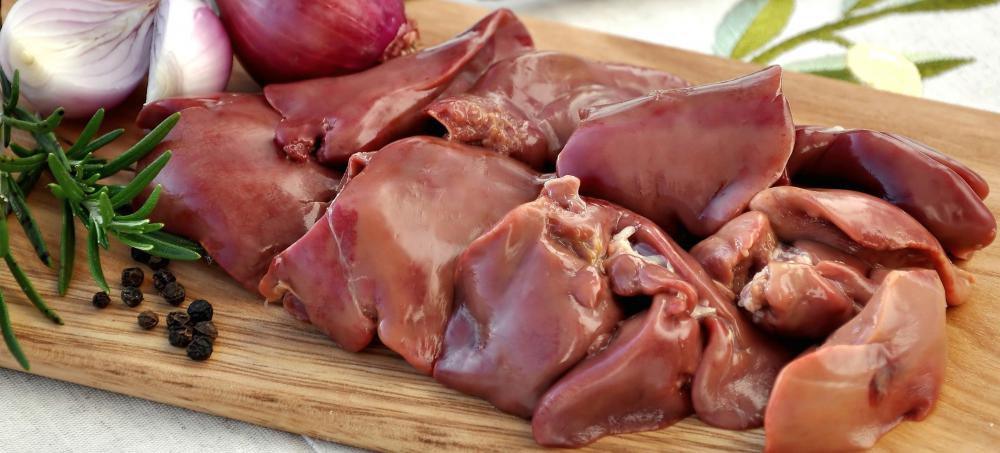
![Edible organs, such as liver and kidneys, from various animals are considered viscera.]() By: Lucia PescaruEdible organs, such as liver and kidneys, from various animals are considered viscera.
By: Lucia PescaruEdible organs, such as liver and kidneys, from various animals are considered viscera. -
![Internal human organs are also called viscera.]() By: Andrea DantiInternal human organs are also called viscera.
By: Andrea DantiInternal human organs are also called viscera. -
![Cooked offal, which is called viscera when inside the body.]() By: NaDiCooked offal, which is called viscera when inside the body.
By: NaDiCooked offal, which is called viscera when inside the body. -
![Viscera refers to the internal organs in the chest, abdomen, and pelvis.]() By: 7activestudioViscera refers to the internal organs in the chest, abdomen, and pelvis.
By: 7activestudioViscera refers to the internal organs in the chest, abdomen, and pelvis. -
![The term "visceral reaction" refers to something that is felt emotionally.]() By: Innovated CapturesThe term "visceral reaction" refers to something that is felt emotionally.
By: Innovated CapturesThe term "visceral reaction" refers to something that is felt emotionally.



Discuss this Article
Post your comments