
At TheHealthBoard, we're committed to delivering accurate, trustworthy information. Our expert-authored content is rigorously fact-checked and sourced from credible authorities. Discover how we uphold the highest standards in providing you with reliable knowledge.
What is the Uterus?
 Diane Goettel
Diane Goettel
Diane Goettel
The uterus is part of the female reproductive system that exists within the pelvis. The word "uterus" comes from the Latin word for "womb." During pregnancy, the fetus — or, in the case of twins or multiples, fetuses — develops within the womb. As the fetus develops, the womb expands to give necessary room. Humans are not the only creatures that reproduce via a uterus. In fact, the uterus is the major female reproductive organ in most mammals.
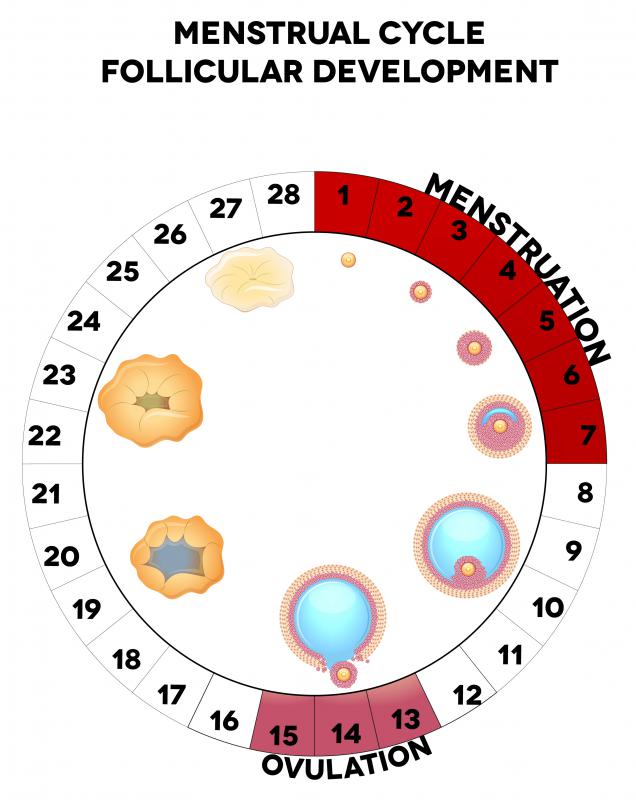
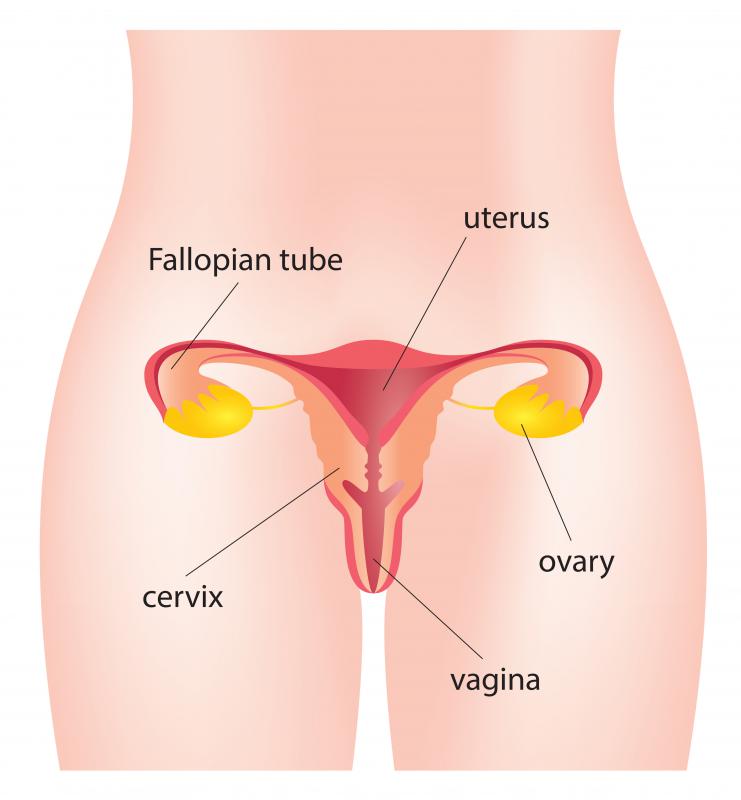
On one end of the uterus is the cervix, which opens into the vagina. On the other end, the organ is connected to the fallopian tubes. There are two fallopian tubes, each of which is connected to one of the two ovaries. During ovulation, which happens once a month in female humans, ovum travel from the ovaries down the fallopian tubes and into the womb. Ovum are commonly called "eggs" in casual speech. During ovulation, if a sperm reaches the ovum in the womb, a pregnancy can result.

If a woman does not get pregnant during her time of ovulation, then she will menstruate. Menstruation is the shedding of lining of the uterine walls. During the month, the uterine walls thicken in order to prepare for a possible pregnancy. In the event that an ovum is fertilized with sperm, then the resulting embryo will become embedded in one of these thickened uterine walls. In the months that a pregnancy does not occur and an embryo does not become embedded in one of the walls, the lining will come loose and express itself through the vagina.

In most cases, the uterus is tucked up above the bladder, which is the reason why many pregnant women find that they have to urinate far more frequently than when they are not expecting. This is because the developing fetus is literally sitting on top of the pregnant mother's bladder. There are some medical conditions in which the uterine placement or angle is abnormal. Sometimes the shape of the organ is unusual. These conditions can lead to difficult sexual function and complications with pregnancies.

After puberty, the entire female reproductive system should be checked for general health by a gynecologist. A gynecologist is a doctor who specializes in the female reproductive system. Although certain reproductive issues may need to be addressed before puberty, some issues do not become apparent until after puberty or when the woman becomes sexually active.
Diane Goettel
In addition to her work as a freelance writer for TheHealthBoard, Diane is the executive editor of Black Lawrence Press, an independent publishing company based in upstate New York. She has also edited several anthologies, the e-newsletter Sapling, and The Adirondack Review. Diane has a B.A. from Sarah Lawrence College and an M.A. from Brooklyn College.
Learn more...
Diane Goettel
In addition to her work as a freelance writer for TheHealthBoard, Diane is the executive editor of Black Lawrence Press, an independent publishing company based in upstate New York. She has also edited several anthologies, the e-newsletter Sapling, and The Adirondack Review. Diane has a B.A. from Sarah Lawrence College and an M.A. from Brooklyn College.
Learn more...AS FEATURED ON:
AS FEATURED ON:


-
![During ovulation, ovum travel into the uterus.]() By: reinegDuring ovulation, ovum travel into the uterus.
By: reinegDuring ovulation, ovum travel into the uterus. -
![The cervix is located on one end of the uterus, and on the other end, the uterus is connected to the fallopian tubes.]() By: ProMotionThe cervix is located on one end of the uterus, and on the other end, the uterus is connected to the fallopian tubes.
By: ProMotionThe cervix is located on one end of the uterus, and on the other end, the uterus is connected to the fallopian tubes. -
![The uterus can expand to accommodate a growing fetus.]() By: fixer00The uterus can expand to accommodate a growing fetus.
By: fixer00The uterus can expand to accommodate a growing fetus. -
![The primary function of the uterus is to provide a safe and nourishing environment for a fetus.]() By: lanamasterThe primary function of the uterus is to provide a safe and nourishing environment for a fetus.
By: lanamasterThe primary function of the uterus is to provide a safe and nourishing environment for a fetus. -
![Gynecologists are fully qualified medical doctors who specialize in women's reproductive system health.]() By: Zsolnai GergelyGynecologists are fully qualified medical doctors who specialize in women's reproductive system health.
By: Zsolnai GergelyGynecologists are fully qualified medical doctors who specialize in women's reproductive system health. -
![There are some medical conditions in which the uterine placement is abnormal.]() By: nattanan726There are some medical conditions in which the uterine placement is abnormal.
By: nattanan726There are some medical conditions in which the uterine placement is abnormal.


Discussion Comments
I think the uterus is an amazing organ. The fact that it starts out so small and then grows to the size that can hold a baby, and then returns so quickly to its normal size after birth, is just mind blowing!
And the fact that it can do it again and again is even more impressive!
I used to work at a urology office and we saw a lot of women with a condition called a prolapsed uterus. From my understanding, this can happen over time as a women gets older and has had multiple pregnancies and natural births.
One way a women experiencing a slight prolapsed uterus, or a woman who wants to keep her pelvic muscles strong is to do an exercise called kegals.
Her doctor, or even a physical therapist who specializes in women's health, can teach her how to do this.
It's a great first step that can hopefully keep her from having surgery or at least hold off the surgery for a while. My mom does them and has not needed the surgery. I am starting to do them as well, as a proactive step.
Post your comments