
At TheHealthBoard, we're committed to delivering accurate, trustworthy information. Our expert-authored content is rigorously fact-checked and sourced from credible authorities. Discover how we uphold the highest standards in providing you with reliable knowledge.
What Is the Structure of the Circulatory System?
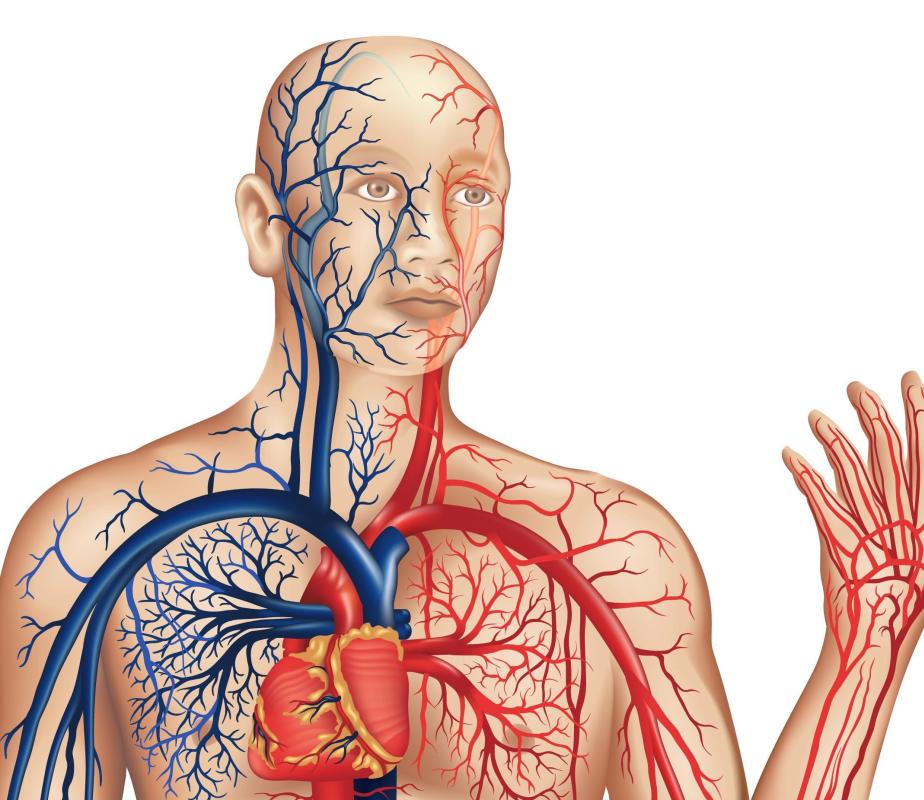
The structure of the circulatory system is a complex network of pumps and vessels that transports nutrients and oxygen throughout the body. Blood travels in a circular path through the circulatory system. The heart pumps blood to all parts of the body, and within about a minute, that blood returns to the heart to be pumped out once again. Blood carries a variety of materials to their destinations within the body, including oxygen and nutrients. All cells of the body get their resources from the circulatory system, either directly or indirectly, depending on their proximity to blood vessels.
Within the structure of the circulatory system, the heart is its center. The left side of the heart carries out systemic circulation, pumping blood to the body, and the right side of the heart pumps blood to the lungs, undergoing pulmonary circulation. Each side of the heart is composed of two chambers, one above the other, connected by valves which ensure that blood only flows in one direction. The top chamber is called the atrium, while the lower chamber is called the ventricle. Blood enters the heart through the atrium, then flows into the ventricle and is pumped out.

Vessels that carry oxygen-rich blood away from the heart are called arteries, which branch into smaller arterioles and finally into tiny capillaries that can only allow one blood cell to pass through at a time. Artery walls, and those of some arterioles, are quite thick so they can handle the pressure of the blood being pumped out of the heart. This is a particularly beneficial way in which the structure of the circulatory system is optimized; the extra thickness of the vessels near the heart provides protection against possible ruptures and major disruptions of the blood flow.

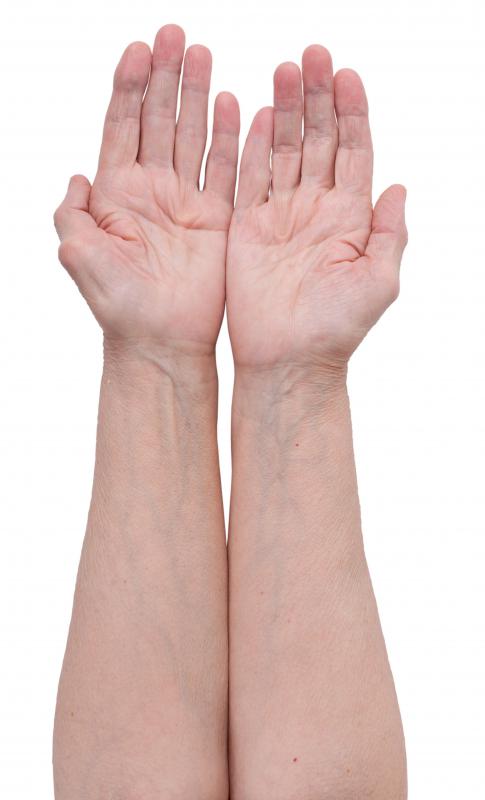
The vessels that carry oxygen-depleted blood back to the heart are called veins, and the smallest of these, which connect to the capillaries, are called venules. Veins and venules are thin-walled compared to arteries, because they are farther from the heart and don't need to be as strong to handle the pressure from blood flow. This is another optimization of the structure of the circulatory system, creating tubes that aren't reinforced when it isn't necessary. A popular misconception is that veins are blue, but they are actually not; they appear this way because of light refraction through the skin. The related idea that oxygen-depleted blood is blue is also false.
AS FEATURED ON:
AS FEATURED ON:


-
![The circulatory system.]() By: Roman DekanThe circulatory system.
By: Roman DekanThe circulatory system. -
![The structure of the aorta, part of the circulatory system.]() By: bilderzwergThe structure of the aorta, part of the circulatory system.
By: bilderzwergThe structure of the aorta, part of the circulatory system. -
![A person with visible blood vessels, which are part of the circulatory system.]() By: dimedrol68A person with visible blood vessels, which are part of the circulatory system.
By: dimedrol68A person with visible blood vessels, which are part of the circulatory system. -
![Arteries carry oxygenated red blood cells to all parts of the body.]() By: Alexandr MitiucArteries carry oxygenated red blood cells to all parts of the body.
By: Alexandr MitiucArteries carry oxygenated red blood cells to all parts of the body. -
![The smallest blood vessels are called venules.]() By: blueringmediaThe smallest blood vessels are called venules.
By: blueringmediaThe smallest blood vessels are called venules.



Discussion Comments
I never really thought about the circulatory system as an entity until I saw a show where they had basically filled the blood vessels of a person with plastic and left them to stand by themselves. It's an incredible sight and knowing that such a complex lattice is inside everyone can actually be a bit creepy.
I can definitely see why people who want to be surgeons have to take a test to make sure their hands are steady enough. And that's not even including the nerves.
@Fa5t3r - There's a couple of things wrong with that. The first one is that often being what the modern world calls overweight doesn't put very much, if any strain on the heart. Being extremely overweight might, I'm not sure.
Secondly, plenty of overweight people exercise, and their hearts are just fine. The body adjusts to whatever you throw at it, within reason.
And lastly, it's actually people who overexercise who are at greatest risk for wearing out their hearts. There's a reason that steroids are banned, for example and it's because it's muscle that actually strains the circulatory system in the long run.
Moderation is the key in all things. And yes, that includes moderation.
It's actually no surprise that the main component of the circulatory system- the heart- ends up being the thing that kills so many of us. When you think about how much work it ends up having to do over a lifetime, it's hardly surprising.
I imagine that's one of the main reasons that obese people tend to die young as well. The heart just has to work harder to get blood through a lot more space and with a lot more resistance when there is a lot of fat in the way. When you factor in that larger people are often reluctant exercisers as well, it's a recipe for heart attacks.
Post your comments