
At WiseGEEK, we're committed to delivering accurate, trustworthy information. Our expert-authored content is rigorously fact-checked and sourced from credible authorities. Discover how we uphold the highest standards in providing you with reliable knowledge.
What is the Sternocleidomastoid Muscle?
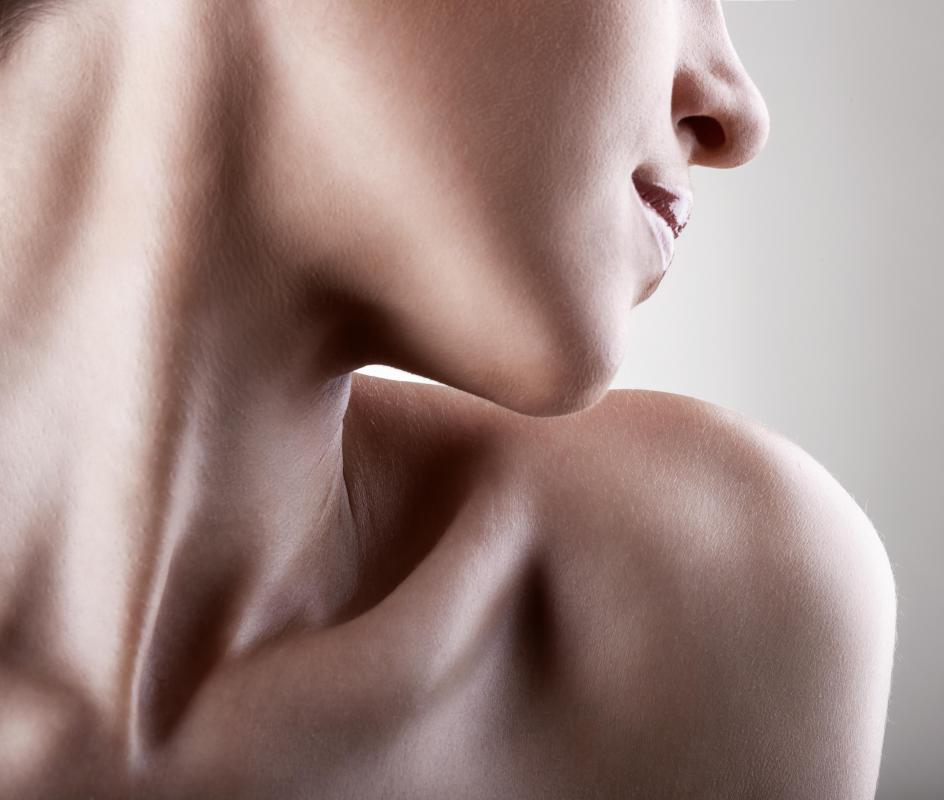
The sternocleidomastoid muscle is located in the front of the neck. There are two of these muscles, one on each side, running from the breastbone and collarbones to the side of the skull behind the ear. The starting and ending points explain the muscle's complex name, because the muscle begins at the sternum and clavicle and ends at the mastoid process on the skull, creating a strong band of muscle that lies at an angle across the side of the neck. The muscle itself is also complex, performing a variety of neck and head movements.
These muscles are used to moves the head, as well as helping with inhalation by lifting the sternum, or breastbone. Rotating and flexing the neck are other functions that it performs. It also keeps the head from falling backward too far by limiting the neck's movement in that direction. In shape, the muscle is wider in the central area and narrow at each end, though its exact shape can vary widely between individuals.

Injury to the sternocleidomastoid muscle is not uncommon, and many people also suffer from stiffness and strain in this area. An injury often does not result in pain in the immediate area of the muscle, however. Instead, it often occurs in other areas of the neck as well as causing headaches or pain in the throat and even in the eyes and ears. In some cases, pains that have been diagnosed as headaches can be traced to a spasm or strain in this muscle. Dizziness, sometimes misidentified as a sinus problem, also can result from problems with it.

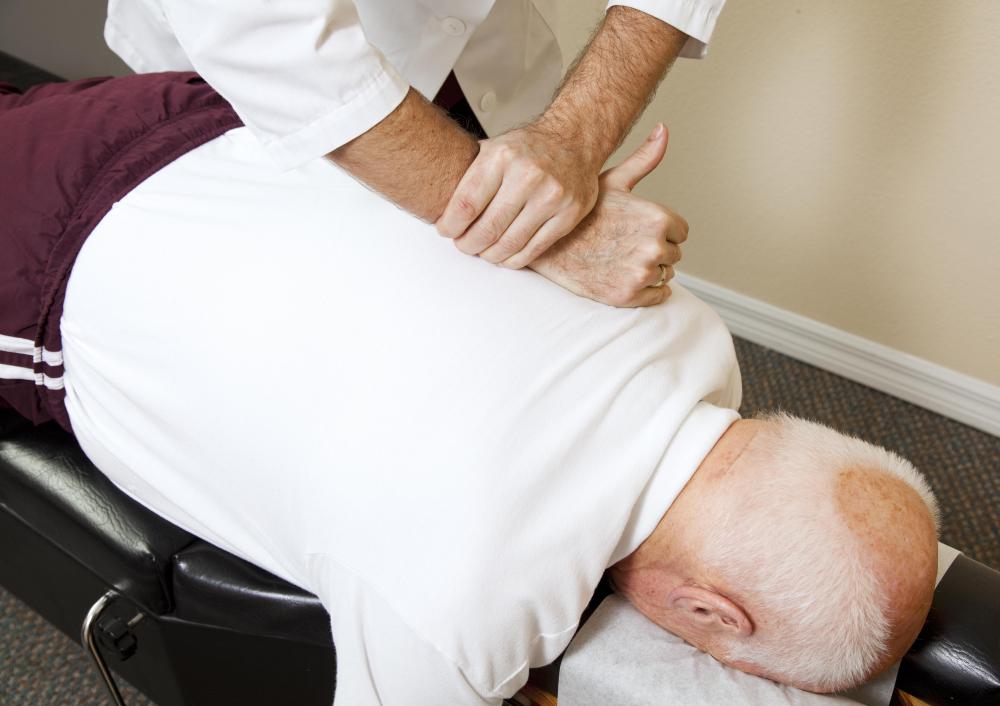
Treatment for a strain can greatly reduce these symptoms. Many people find relief with standard treatment for inflammation, such as non-steroidal anti inflammatory drugs (NSAIDs), hot or cold compresses, and massage. Physical therapy also might be recommended for pain, strain or injury. Chiropractic care also can be helpful in restoring the neck to proper alignment and easing muscle spasms, reducing the strain on the muscle and helping it relax into its normal position.

Causes for pain in the sternocleidomastoid muscle include repetitive stress and sports injuries. Carrying large weights, such as a small child, over a long period of time can also result in strain to the muscle that could lead to a variety of symptoms. Medical professionals sometimes have difficulty diagnosing this kind of pain, known as referral pain, because it occurs in areas away from the muscle itself.
AS FEATURED ON:
AS FEATURED ON:









-
![Sternocleidomastoid muscles are a set of muscles in the neck which run from the breastbone and collarbones to the side of the skull behind the ear.]() By: CLIPAREA.comSternocleidomastoid muscles are a set of muscles in the neck which run from the breastbone and collarbones to the side of the skull behind the ear.
By: CLIPAREA.comSternocleidomastoid muscles are a set of muscles in the neck which run from the breastbone and collarbones to the side of the skull behind the ear. -
![Repetitive stress may cause injury to the sternocleidomastoid mucle.]() By: Photographee.euRepetitive stress may cause injury to the sternocleidomastoid mucle.
By: Photographee.euRepetitive stress may cause injury to the sternocleidomastoid mucle. -
![The clavicle -- also known as the collar bone -- connects the shoulder to the upper torso.]() By: Artem FurmanThe clavicle -- also known as the collar bone -- connects the shoulder to the upper torso.
By: Artem FurmanThe clavicle -- also known as the collar bone -- connects the shoulder to the upper torso. -
![Chiropractic care can be helpful in alleviating pain and muscle spasms.]() By: Lisa F. YoungChiropractic care can be helpful in alleviating pain and muscle spasms.
By: Lisa F. YoungChiropractic care can be helpful in alleviating pain and muscle spasms. -
![Injury to the sternocleidomastoid muscle may cause headaches.]() By: ollyInjury to the sternocleidomastoid muscle may cause headaches.
By: ollyInjury to the sternocleidomastoid muscle may cause headaches.



Discussion Comments
The other day I flexed my neck muscles while looking in the mirror. To my surprise, the left side of my neck totally stuck out way farther than the right side. But there was no pain.
I have had a sore neck and shoulder for a week prior to noticing this, but on the right side.
Not sure if the bulging is tendons, or muscular. Do you think something is herniated? Is this just due to less activity and getting older? I am a 39 year old female.
Thanks! --Lmabes
Is a swollen sternocleidomastoid muscle related to a whiplash injury, or is that more the trapezius muscle?
Post your comments