
At TheHealthBoard, we're committed to delivering accurate, trustworthy information. Our expert-authored content is rigorously fact-checked and sourced from credible authorities. Discover how we uphold the highest standards in providing you with reliable knowledge.
What Is the Sinus of Valsalva?
The sinus of Valsalva, more readily known as the aortic sinus, refers to the three pouches behind the valves of the heart, known as the semilunar valves, which come from the aorta. These pouches catch the blood that comes back into the heart and cause the valves to close. This stops blood from going back into the chambers of the heart.
There are three sinuses of Valsalva. In addition to catching the blood to close the semilunar valve, two of the sinuses of Valsalva lead to coronary arteries, the arteries that give blood to the heart. The left aortic sinus leads to the left coronary artery, and the right aortic sinus leads to the right coronary artery. A third sinus of Valsalva is referred to as the non-coronary sinus, as it does not lead to a coronary artery.

The name comes from the famed Italian anatomist, Antonia Maria Valsalva. He was a surgeon as well as an artist, and was responsible for creating the Valsalva maneuver, a maneuver that clears the ear by creating a burst of air from compressing the diaphragm. He also created the name for the Eustachian tube, the tube of the ear canal.
There can be problems with the sinus of Valsalva, and the most common issue is an aneurysm. An aneurysm is a ballooning of the sinus. If left untreated, it can burst and cause a loss of blood to the heart and pericardium. The high amount of blood loss can also lead to death.

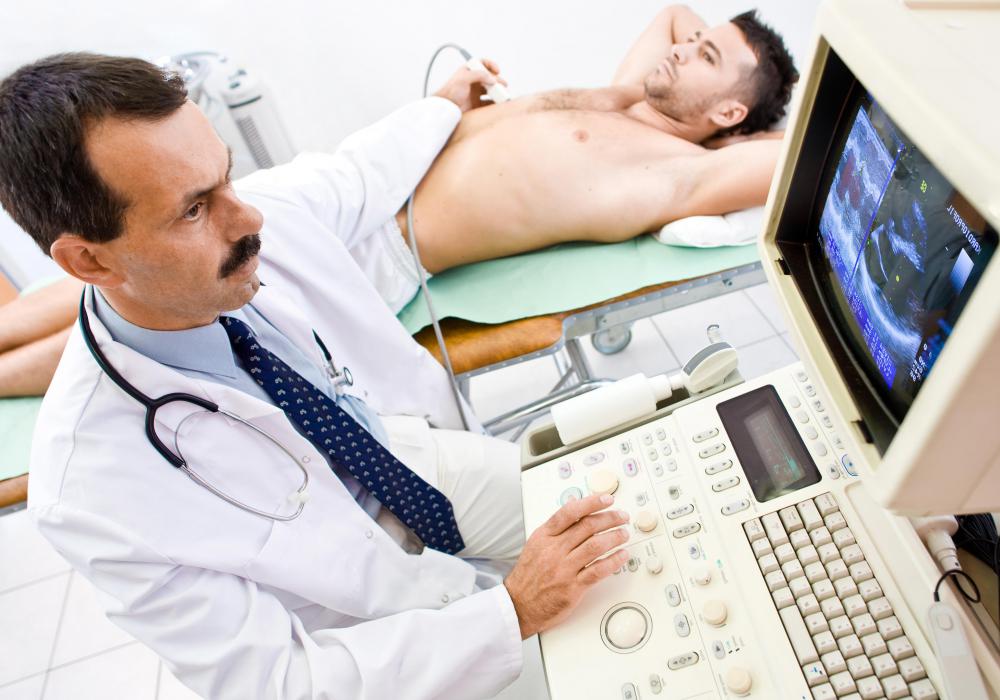
Typically, there are no signs of an aneurysm in this area, and it is often not discovered until it either ruptures or is found during a scan, usually a CT scan or echocardiogram, for another issue. The aneurysm is often a result of a congenital defect of the heart, or is the result of another syndrome, such as atherosclerosis or injury to the chest. Most aneurysms occur in the right sinus of Valsalva, and mostly in men.

If an aneurysm of the sinus of Valsalva is found before it ruptures, the treatment usually consists of medication, surgery, or both. Medication is given to control the blood pressure, thereby reducing the pressure on the heart. Surgery is done if the aneurysm is of a certain size, or if it keeps increasing in size. If the aneurysm ruptures, surgery is usually immediately performed. Fortunately, aneurysms in the sinuses of Valsalva are relatively rare.
AS FEATURED ON:
AS FEATURED ON:


-
![There are usually no signs of an aneurysm of the sinus of Valsalva, and it may not be discovered until it ruptures.]() By: joshyaThere are usually no signs of an aneurysm of the sinus of Valsalva, and it may not be discovered until it ruptures.
By: joshyaThere are usually no signs of an aneurysm of the sinus of Valsalva, and it may not be discovered until it ruptures. -
![The sinus of Valsalva, more readily known as the aortic sinus, refers to the three pouches behind the valves of the heart, known as the semilunar valves, which come from the aorta.]() By: stockshoppeThe sinus of Valsalva, more readily known as the aortic sinus, refers to the three pouches behind the valves of the heart, known as the semilunar valves, which come from the aorta.
By: stockshoppeThe sinus of Valsalva, more readily known as the aortic sinus, refers to the three pouches behind the valves of the heart, known as the semilunar valves, which come from the aorta. -
![An aneurysm of the sinus of the Valsalva is often the result of a congenital heart defect.]() By: Patricia MarksAn aneurysm of the sinus of the Valsalva is often the result of a congenital heart defect.
By: Patricia MarksAn aneurysm of the sinus of the Valsalva is often the result of a congenital heart defect. -
![A CT scan may be helpful in diagnosing an aneurysm of the sinus of Valsalva.]() By: Nejron PhotoA CT scan may be helpful in diagnosing an aneurysm of the sinus of Valsalva.
By: Nejron PhotoA CT scan may be helpful in diagnosing an aneurysm of the sinus of Valsalva. -
![Medication to control blood pressure may be given if an aneurysm of the sinus of Valsalva is found before it ruptures.]() By: Photographee.euMedication to control blood pressure may be given if an aneurysm of the sinus of Valsalva is found before it ruptures.
By: Photographee.euMedication to control blood pressure may be given if an aneurysm of the sinus of Valsalva is found before it ruptures. -
![An aneurysm of the sinus of Valsalva is often discovered on a routine echocardiogram or in imaging done for other reasons.]() By: nyulAn aneurysm of the sinus of Valsalva is often discovered on a routine echocardiogram or in imaging done for other reasons.
By: nyulAn aneurysm of the sinus of Valsalva is often discovered on a routine echocardiogram or in imaging done for other reasons.


Discuss this Article
Post your comments