
At TheHealthBoard, we're committed to delivering accurate, trustworthy information. Our expert-authored content is rigorously fact-checked and sourced from credible authorities. Discover how we uphold the highest standards in providing you with reliable knowledge.
What Is the Relationship between Lysine and Shingles?
Lysine is an amino acid that some researchers think might help cure or at least speed the recovery of people suffering from shingles, which is an illness related to chicken pox that leaves itchy red welts on the skin.
Lysine is widely recognized in the treatment for herpes simplex 1 and 2, two types of a virus that causes cold sores and genital warts. Shingles is caused by the varicella-zoster virus but some researchers theorize that the amino acid might also work for people suffering from shingles. Clinical trials conducted in many parts of the world have shown promise, but in most instances there is no clear or documented connection between lysine and shingles. Treatments might work for some people, but not always, and not dependably.
Understanding Shingles

Shingles is a painful medical condition that is caused by reactivation of the varicella-zoster virus in the body. This virus also causes chicken pox. After a person has chicken pox, which normally happens during the childhood years, the varicella-zoster virus remains in the body in a dormant state. For reasons that are unclear, some people experience a reactivation of this virus later in life. Anyone who has had chicken pox might develop shingles, but the condition is more common in older adults and in people who have weakened immune systems. There may also be a connection between shingles and people who had very mild cases of chicken pox initially.

Shingles most often begins with pain along a nerve line on one side of the body. This pain is often severe. A rash of blisters along this nerve line usually develops as well, but some people who have shingles don't get a rash. Shingles also might involve itchiness, tingling sensations, fatigue, and a headache that’s accompanied by a fever and chills.

The condition will resolve on its own over time, but treatment with prescription antiviral medication can reduce its duration and decrease the risk of complications. In most cases treatment with lysine is considered experimental, and may not be a good choice for all patients.
Basics of the Amino Acid
Lysine is an essential amino acid, and is an essential building block for proteins in both humans and animals. The body requires this nutrient, and it must be obtained by eating protein-rich foods or taking supplements. In addition to having several important roles for general health, lysine has antiviral effects and has been clinically shown to prevent strains of the herpes simplex 1 and 2 viruses from replicating.
Why it Might Work for Shingles
Research indicates that outbreaks of genital herpes and cold sores might be reduced or prevented by regularly taking lysine supplements. These sorts of supplements are often available in health foods stores or in pharmacies, and they can also sometimes be acquired in higher concentrations with a prescription. Most medical professionals are quick to warn that lysine is just a supplement and can’t actually cure or prevent any diseases in and of itself. Lab trials have shown promising results, though, particularly among people with mild to moderate outbreaks.
The benefits of lysine for people who have herpes simplex has led some doctors to theorize that the amino acid might also be helpful for treating shingles. Herpes zoster is not the same virus as herpes simplex, though they are related. Not much research has been done on the specific connection between lysine and shingles, though, and there isn’t much scientific evidence that supports the treatment. Still, many people are willing to try, and in most cases there isn’t any harm in this sort of short-term experimentation.
Dosing and Risks
Lysine generally is considered a safe supplement when used on a short-term basis. Standard doses during a herpes simplex flare-up range from 3,000 to 9,000 milligrams per day. To prevent recurrences, people might take 1,000 to 3,000 milligrams per day as something of a precaution. Research has not found any relationship between lysine and shingles, so there isn’t usually standardized dosing information available; patients can usually follow the guidelines for herpes simplex, though.
In most cases it’s a good idea for people to talk with a medical professional before self-treating shingles, even with something as natural as an amino acid. Even if lysine and shingles do have a connection, the condition still calls for medical treatment, and an expert can give personalized advice based on individual circumstances and cases. Left untreated, shingles can lead to complications like bacterial skin infection. Early treatment with antiviral drugs might prevent a complication known as postherpetic neuralgia, which involves pain that persists long after a case of shingles has been resolved.
AS FEATURED ON:
AS FEATURED ON:


-
![The structure of lysine.]() By: Bioreg imagesThe structure of lysine.
By: Bioreg imagesThe structure of lysine. -
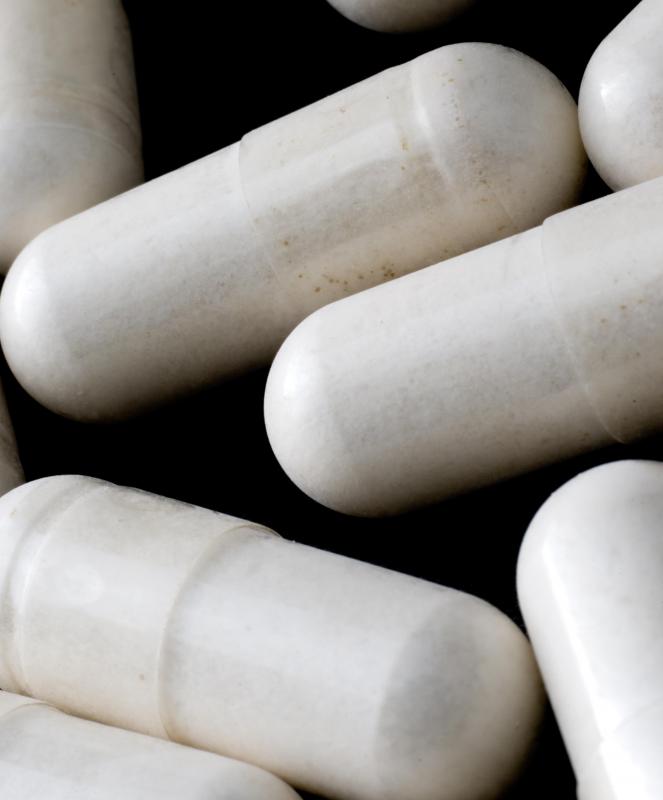
![Lysine supplements have not been shown to be helpful in treating shingles.]() By: Steve Silver SmithLysine supplements have not been shown to be helpful in treating shingles.
By: Steve Silver SmithLysine supplements have not been shown to be helpful in treating shingles. -
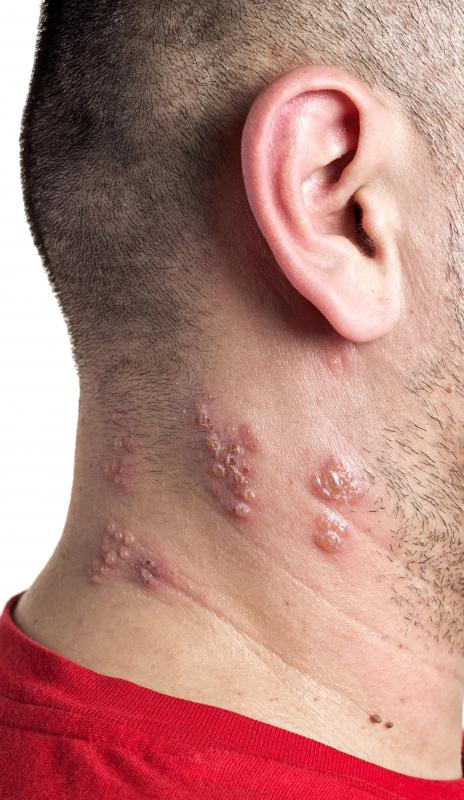
![Shingles is caused by a reactivation of the varicella zoster virus.]() By: librakvShingles is caused by a reactivation of the varicella zoster virus.
By: librakvShingles is caused by a reactivation of the varicella zoster virus.

Discussion Comments
After having a moderate case of shingles, I know the initial feelings associated with the onset. That strange numb feeling occasionally comes in the same area on my leg as the first case. Sometimes I will even get a small “pimple” in the area. I have noticed it occurs when I have eaten too many peanuts and too much chocolate.
Also, at the same time I have the feeling on my leg, I have had a cold sore threatening the same area on my nose where I had one previously. Therefore I can vouch for the connection between the immune system and these two herpes viruses being affected by the same conditions. Stress has not always been associated with it, but eating peanuts and chocolate have. I cannot vouch for the the effectiveness of taking lysine, but it does appear to be a help me as the outbreaks that were threatening seem to subside and never amount to anything.
@ZipLine-- Shingles is not caused by the herpes type 1 virus or the herpes type 2 virus. But it's still caused by a type of herpes virus. Varicella-zoster virus belongs to the herpes group of viruses. That's why it's sometimes referred to herpes varicella-zoster.
This may be why some people take lysine when they develop a shingles rash. But when it comes to treatment, we have to take the word of scientists who have studied lysine and shingles. Studies have not found lysine to be affective against the varicella-zoster virus. So it's doesn't make sense to claim otherwise.
If people have had experiences in the contrary however, I would love to hear about them.
Wait, so shingles is not herpes? I thought they were the same thing. Lysine will obviously not work for shingles then. It works for herpes.
I think that there must be a connection between lysine and shingles. I'm not saying that lysine could treat the condition, but it may help the immune system fight the virus and reduce healing time.
As far as I know, lysine is important for immune system cells. It helps fight herpes also because it makes the immune system stronger. Some people also take lysine in winter to avoid getting the flu. So there is definitely a connection between lysine and the immune system. So it probably wouldn't hurt someone with shingles to take a lysine supplement after seeing a doctor and getting proper medical treatment for the shingles.
Post your comments