
At WiseGEEK, we're committed to delivering accurate, trustworthy information. Our expert-authored content is rigorously fact-checked and sourced from credible authorities. Discover how we uphold the highest standards in providing you with reliable knowledge.
What is the Relationship Between Insulin and Glucagon?
Insulin and glucagon are both peptide hormones that work in essentially opposite ways when it comes to regulating blood sugar, and as a result, they keep sugar levels in perfect balance for most people. They’re created in different places and through different means, but in most respects they are designed to work together. Insulin comes from the pancreas and lowers the sugar, or glucose, levels of the blood; glucagon comes from the liver, and raises those same levels. Both are secreted into the bloodstream in a calculated and precise way, and are triggered by different signals and environmental stimulants. In this way, the body is able to rapidly adjust to things like intense periods of exercise or large food intakes that need to be digested. People whose peptide levels are imbalanced may have a range of serious health concerns.
Production and Location

Beta cells produce the inactive form of insulin in the pancreas. That inactive form of insulin, proinsulin, is converted into insulin during regular blood circulation, and is produced as needed to counteract spikes in blood sugar. A low level of insulin is always being secreted, but the amount increases after a meal. As the blood glucose level rises, so does the amount of insulin secreted. The release of insulin causes muscle cells, red blood cells and fat cells to take in glucose from the blood, lowering blood glucose levels back to within the normal range. As the blood glucose level falls, insulin secretion decreases. Its function is primarily regulatory.

Glucagon is regulatory, too, but in almost the opposite way. The liver stores glucose in the form of glycogen, and secreted glucagon causes the liver to convert this stored glycogen into glucose and release it into the bloodstream, raising blood glucose levels in the process. Glucagon also triggers the liver, muscle cells and other cells to make glucose using building blocks acquired from the body’s other nutrients, such as protein. This process is called gluconeogenesis and helps to maintain blood glucose concentrations during periods of vigorous exercise or starvation.
Understanding Blood Glucose

Both insulin and glucagon work together to keep sugar levels within a tightly “normal” range. Normal blood glucose levels should generally stay between 70 milligrams of glucose per 100 milliliters of blood (mg/dl) and 110 mg/dl. “Hypoglycemia” is the term given to blood glucose levels below 70 mg/dl. Levels above 110 mg/dl can be considered normal right after a meal but should almost always remain below 180 mg/dl, even after eating. A blood glucose level above 180 mg/dl means there is too much glucose in the blood, a condition referred to as “hyperglycemia.”

Blood glucose levels typically decline between meals and during exercise. When blood glucose is too low, the alpha cells of the pancreas secrete glucagon to help raise those levels. Similar to insulin, glucagon affects many cells within the body, but the liver is glucagon’s key receptor.
When Things Go Wrong
People whose peptide levels are imbalanced, which can happen for a variety of reasons, often have serious health repercussions. Sometimes lapses and lulls are just temporary, and things re-stabilize again relatively quickly. This is often the case with insulin and glucagon levels that bounce and recede in response to illness and injury. Temporary problems often have no symptoms.

Hpyerglycemia, or low blood sugar, often causes fainting and loss of consciousness. Hyperglycemia, which is blood sugar levels that are very high, can cause long-term debilitating complications including a loss of eyesight and heart, nerve and kidney damage. Those most likely to suffer from hyperglycemia are people with diabetes mellitus. This is why diabetes treatment often involves using insulin to keep blood glucose levels within a normal range and fairly balanced.
Getting Help

Many people who have chronic blood sugar balancing problems get good results from a range of stabilizing medications that seek to synthetically imitate either insulin or glucagon, or else forcefully limit production of one or the other. Sometimes the problem can be solved, which is to say that patients can stop taking the drugs at some point; more often, though, medical interventions tend to be more of a lifestyle change. Patients often need periodic monitoring and changes in dosage as needed over time.
AS FEATURED ON:
AS FEATURED ON:









-
![Insulin and glucagon maintain balance in blood glucose levels within the body.]() By: evgenybInsulin and glucagon maintain balance in blood glucose levels within the body.
By: evgenybInsulin and glucagon maintain balance in blood glucose levels within the body. -
![Blood glucose levels decline during exercise.]() By: Mat HaywardBlood glucose levels decline during exercise.
By: Mat HaywardBlood glucose levels decline during exercise. -
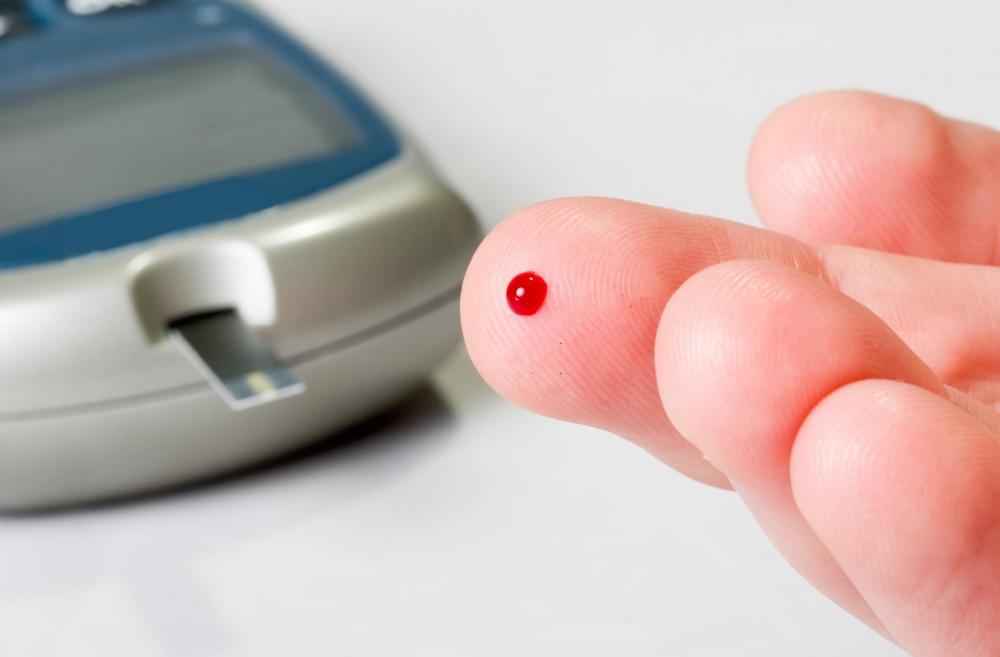
![Anything below 70 milligrams per deciliter is considered a low blood glucose level.]() By: zothenAnything below 70 milligrams per deciliter is considered a low blood glucose level.
By: zothenAnything below 70 milligrams per deciliter is considered a low blood glucose level. -
![If the pancreas fails to properly produce insulin, blood glucose levels will rise.]() By: pixdesign123If the pancreas fails to properly produce insulin, blood glucose levels will rise.
By: pixdesign123If the pancreas fails to properly produce insulin, blood glucose levels will rise. -
![Most diabetic patients need to receive daily insulin injections to control their blood glucose levels.]() By: Dmitry LobanovMost diabetic patients need to receive daily insulin injections to control their blood glucose levels.
By: Dmitry LobanovMost diabetic patients need to receive daily insulin injections to control their blood glucose levels. -
![Exercise therapy can be used to help diabetics maintain low blood glucose levels.]() By: nyulExercise therapy can be used to help diabetics maintain low blood glucose levels.
By: nyulExercise therapy can be used to help diabetics maintain low blood glucose levels.



Discuss this Article
Post your comments