
At TheHealthBoard, we're committed to delivering accurate, trustworthy information. Our expert-authored content is rigorously fact-checked and sourced from credible authorities. Discover how we uphold the highest standards in providing you with reliable knowledge.
What is the Purpose of Nose Hair?
 Michael Pollick
Michael Pollick
Michael Pollick
Nose hair does indeed have a purpose, and it is not to keep the manufacturers of trimmers in business. Hair in the nose is one of the body's first lines of defense against harmful environmental pathogens such as germs, fungus, and spores. When a person inhales unfiltered air through his or her nose, he or she is also inhaling whatever solid particles are contained in that air. The hair contained in each nostril helps to trap the larger particles in a sticky layer of mucus. This is why hygienists discourage people from completely eliminating their nose hair while grooming.
Another purpose for nose hair is to provide additional humidity to the inhaled air. As the air passes through the nasal passages, the mucus and hair provide heat and moisture. Humidity is an important factor for the rest of the respiratory system, such as the larynx and lungs. Hair in the form of tiny cilia also draw solid particles towards the interface between the nose and throat. Harmful debris is generally directed towards the back of the throat and esophagus for swallowing, while the filtered air continues towards the larynx and lungs.

While excessive nose hair may be considered unsightly, it should never be completely removed. Those who choose to remove almost all of the hair in the nose may find themselves very susceptible to allergy attacks, sinusitis and respiratory infections. Older people may also want to minimize their hair trimming because it often takes longer for the clipped hairs to grow back. Nose hair serves the same filtering purpose as ear hair, both of which may become a little overgrown as time goes by.

Hair in the nose can be safely trimmed with specialized rotary clippers or mechanical trimmers, but great care should be used to prevent infection or irritation from ingrown hairs. Excessive hair can be trimmed until it falls below the line of the nostrils, but any aggressive trimming inside the nasal cavities should be avoided. Dryness in the nasal passages can be temporarily relieved through the use of nasal sprays, but the natural balance of mucus and functional nose hair should be maintained as often as possible.
Michael Pollick
A regular TheHealthBoard contributor, Michael enjoys doing research in order to satisfy his wide-ranging curiosity about a variety of arcane topics. Before becoming a professional writer, Michael worked as an English tutor, poet, voice-over artist, and DJ.
Learn more...
Michael Pollick
A regular TheHealthBoard contributor, Michael enjoys doing research in order to satisfy his wide-ranging curiosity about a variety of arcane topics. Before becoming a professional writer, Michael worked as an English tutor, poet, voice-over artist, and DJ.
Learn more...AS FEATURED ON:
AS FEATURED ON:


-
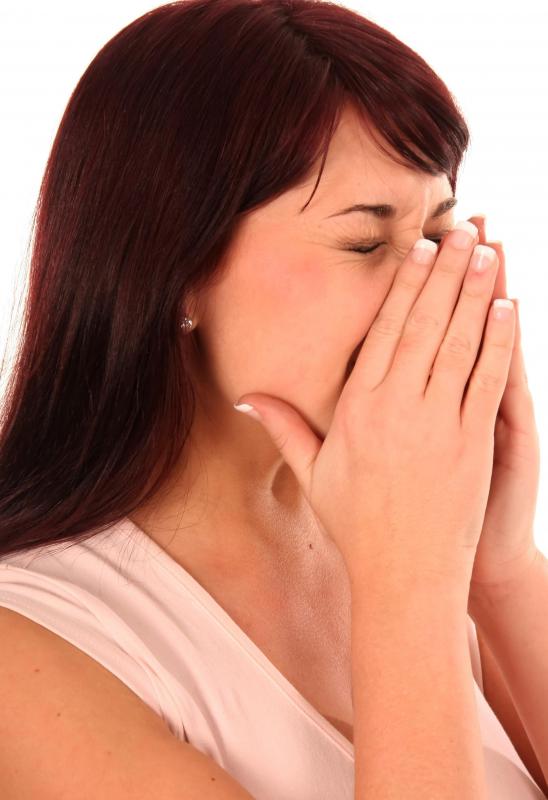
![People who remove a large majority of their nose hair may be susceptible to allergy attacks.]() By: karukaPeople who remove a large majority of their nose hair may be susceptible to allergy attacks.
By: karukaPeople who remove a large majority of their nose hair may be susceptible to allergy attacks. -
![Respiratory tract infections may occur if a person removes large quantities of nose hair.]() By: joshyaRespiratory tract infections may occur if a person removes large quantities of nose hair.
By: joshyaRespiratory tract infections may occur if a person removes large quantities of nose hair. -
![People may develop sinus infections if they remove large quantities of nose hair.]() By: Duncan NoakesPeople may develop sinus infections if they remove large quantities of nose hair.
By: Duncan NoakesPeople may develop sinus infections if they remove large quantities of nose hair. -
![The respiratory system.]() By: pixelcaosThe respiratory system.
By: pixelcaosThe respiratory system. -
![Nose hair adds humidity to inhaled air.]() By: Eléonore HNose hair adds humidity to inhaled air.
By: Eléonore HNose hair adds humidity to inhaled air. -
![Nose hair clippers are often used to groom nose hair.]() By: mybaitshopNose hair clippers are often used to groom nose hair.
By: mybaitshopNose hair clippers are often used to groom nose hair. -
![Nose hair filters the solid particles in the air.]() By: Deyan GeorgievNose hair filters the solid particles in the air.
By: Deyan GeorgievNose hair filters the solid particles in the air. -
![Nasal sprays can be a temporary solution to dryness in nasal passages.]() By: Ken HurstNasal sprays can be a temporary solution to dryness in nasal passages.
By: Ken HurstNasal sprays can be a temporary solution to dryness in nasal passages.






Discussion Comments
"The filtering purpose of ear hair" is pretty comical. But this whole daft just-so story about nose hair is an interesting example of total nonsense being passed off as received wisdom. You breathe around 10,000 liters of air daily. Running a tiny fraction of that air stream past a few coarse hairs makes zero difference to air quality. None. It's like taping half a dozen broom sticks across your open window, to keep out flies. You will notice that other species - those without sexually dimorphic facial hair - don't have hair in their noses. Cats and dogs, and just about everything else, have good and lots of hair, everywhere *except* their noses. Isn't that curious, for such a simple, important adaptation? Of course if you pluck a nose hair and culture it or examine it under a microscope you will find pollen, dust, bacteria, etc. Just as you will on beard hair, clothing, ear hair hahaha, and every other surface. Deriving a filtering function from that is barely even pseudoscience. It's a just-so story.
What's interesting is how this superficially plausible myth is repeated solemnly by 'hygienists', otolarygologists, and free-form experts of all stripes. They've all heard it stated as fact, and they pass it on with great assurance, and never ever stop to say "Wait a minute ... what is the filtering capacity of a few circumluminal hairs compared to the total load of particulates in inhaled air? Why do men get more nose hair than women, and why doesn't it make any difference in respiratory morbidity?"
What is the point of this filter, when most people pick their noses and eat all those nasty pathogens anyway? It's a stupid idea.
How do I grow nasal hair, please? I almost have none naturally.
I too recently plucked some nose hair, but the length on some of them were just incredible one was at least an inch. I really can breathe a whole lot better, but now I'm worried I've taken too much.
I tend to just yank them out with my two-finger motions. After a good clean picking of the nostril I find I breathe better. But today on the radio, I heard something about bacterial infections in the brain caused by pulling out nostril hair.
Also, do you think there is possibility they were used like cats use their whiskers to see in the dark or balance?
To all the people writing that nose hairs cannot possibly filter the air: it does not work the same way as the filter in your vacuum cleaner, but it does work.
The nose hair creates turbulence so it is, in fact, very likely that any dust, bacteria and so on will hit either the wall of the nose or the hairs where it will be stuck in the mucus.
So it is actually a very smart filter, doing its job while leaving a lot of open space to allow good air flow. Compare that to the one in your vacuum cleaner that needs a rather powerful (compared to your lungs) pump to push air through it.
I have been using tweezers for a long time now to remove nose hair. I find that this works well and if it grows back, I keep pulling.
I don't buy it. Nose hair increases as you get older. Plus, men have thicker nose hair than women. So does that mean women and children don't need nose hair, but only men do? Do men get fewer allergy attacks than women and children?
I find nose hair to be useful but it's bad when it sticks out I use nail clippers to trim my nose hair.
I have never met anybody that has nose hair thick enough to help prevent spores, fungus, or germs from entering, or to raise humidity or heat the air. Perhaps the author of this story is talking about Neanderthals or perhaps Australopithecus, because you would have to do some serious digging back into the evolution of humans to find a time when nose hair could possibly be thick enough to have these beneficial effects.
I've been waxing my nose for years now. I breathe great. If you're living in cold weather, your nose runs and the nose hairs get frozen together.
Your article is incorrect, in that, there are far too few nasal hairs to provide any real filtration. To be effective they would have to be much finer and thicker and the result would be difficulty in gaining enough breath under stress conditions. (medical scientist)
Once plucked, do nose hairs grow back; and, does the growth/regrowth rate differ between mid-aged men and women?
The sense of smell depends largely on chemical particles reaching the olfactory nerves and triggering a response from the brain. A lack of nose hairs or cilia could allow unfiltered materials to reach this sensitive area, but unless the olfactory nerves themselves are damaged or missing, a person's overall sense of smell should not be affected.
can the absence of cilia in the nose be the cause of a person not being able to smell?
Do nose hairs contribute to the smell factor?
There is no cilia in my nose. I have had 5 sinus surgeries. At present I am using Amphotericin B irrigation along with a Clindamicin/Tobramicin irrigation twice daily. Could the lack of cilia be related to the surgeries or the irrigations?
Are nose hair in any way helpful in increasing the percentage of oxygen and subsequently decreasing the percentage of nitrogen and CO2 in air reaching our lungs?
Post your comments