
At WiseGEEK, we're committed to delivering accurate, trustworthy information. Our expert-authored content is rigorously fact-checked and sourced from credible authorities. Discover how we uphold the highest standards in providing you with reliable knowledge.
What is the Pathophysiology of Cerebral Palsy?
The pathophysiology of cerebral palsy begins before birth. The cause of cerebral palsy is typically a brain injury or abnormality that happens prenatally or during infancy. This disease causes problems with brain control of muscles, leading to difficulties with posture, muscle tone, and movement.
A child born prematurely or with a low birth weight is at a higher risk for cerebral palsy. Maternal illness is another risk factor, as are injuries or illnesses in the child's infancy.

Symptoms can vary greatly, but the condition is usually evident from a young age. Often, developmental delays in motor abilities are the first sign. A person affected by cerebral palsy may show problems with muscle tone, resulting in muscles that are too tight or too floppy. There may also be a lack of coordination, which can cause difficulty walking or a struggle with fine motor movements. Some children have difficulty with eating, sucking, and swallowing.

Brain damage, which is part of the pathophysiology of cerebral palsy, is not restricted to muscle control, and so people with this disorder will show deficits in other areas, such as language. There may also be problems with the senses, especially vision and hearing. Some people may suffer from mental retardation or seizures.
Maternal illnesses, especially infections, can lead to this condition, as can genetic mutations that affect the brain. A prenatal stroke that prevents blood flow to part of the brain can also cause cerebral palsy. Head injury in an infant, from a car accident, abuse, or a different trauma, is another possible cause.

Since the muscles can be too tense for long periods of time, the normally stretchy tissue can be replaced by tissue that doesn't stretch, called a contracture. This also causes the muscles to get shorter. Constant pressure on the joints from muscle tightness can cause osteoarthritis, which can be very painful. If a person with cerebral palsy has difficulty eating or swallowing, he or she may suffer from malnutrition. Cerebral palsy can severely interfere with a person’s ability to function normally, and so can lead to depression.

There is no known cure for cerebral palsy. If a person suffers from muscle spasms, certain medications can be used to keep them under control. Physical therapy to exercise and stretch the muscles can help a person walk normally and prevent contractures. If there are severe contractures or joint abnormalities, surgery may be necessary.
AS FEATURED ON:
AS FEATURED ON:









-
![A child with cerebral palsy may have muscle tone issues.]() By: Jaren WicklundA child with cerebral palsy may have muscle tone issues.
By: Jaren WicklundA child with cerebral palsy may have muscle tone issues. -
![The damage that causes cerebral palsy usually occurs before birth.]() By: Syda ProductionsThe damage that causes cerebral palsy usually occurs before birth.
By: Syda ProductionsThe damage that causes cerebral palsy usually occurs before birth. -
![Cerebral palsy may cause seizures and cognitive disabilities in addition to loss of muscle control.]() By: Jaren WicklundCerebral palsy may cause seizures and cognitive disabilities in addition to loss of muscle control.
By: Jaren WicklundCerebral palsy may cause seizures and cognitive disabilities in addition to loss of muscle control. -
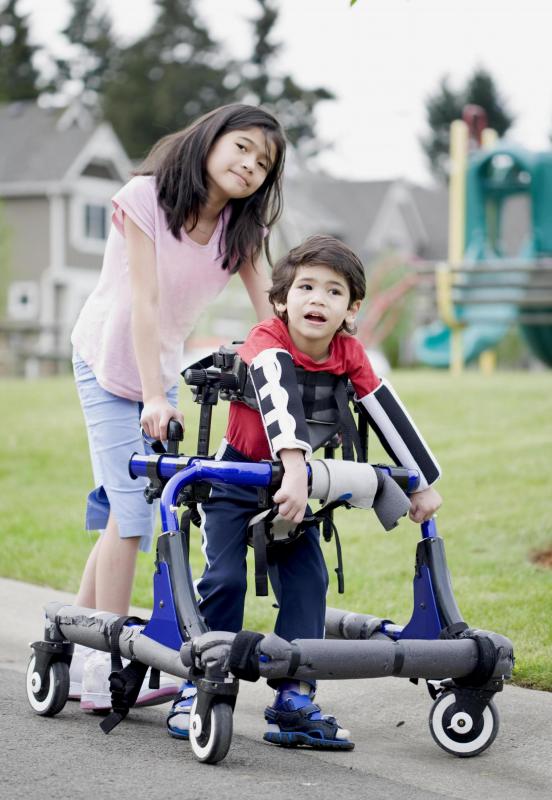
![A child with cerebral palsy may be prone to falls.]() By: ivolodinaA child with cerebral palsy may be prone to falls.
By: ivolodinaA child with cerebral palsy may be prone to falls. -
![Engaging in activities that help build fine motor skills may be beneficial to children living with cerebral palsy.]() By: Petro FeketaEngaging in activities that help build fine motor skills may be beneficial to children living with cerebral palsy.
By: Petro FeketaEngaging in activities that help build fine motor skills may be beneficial to children living with cerebral palsy. -
![Physiotherapy can be used to treat the stiff muscles associated with cerebral palsy.]() By: goodluzPhysiotherapy can be used to treat the stiff muscles associated with cerebral palsy.
By: goodluzPhysiotherapy can be used to treat the stiff muscles associated with cerebral palsy. -
![Babies suffering from cerebral palsy may require enteral feeding.]() By: sudok1Babies suffering from cerebral palsy may require enteral feeding.
By: sudok1Babies suffering from cerebral palsy may require enteral feeding. -
![Developmental delays in motor abilities, such as walking, are often the first sign of cerebral palsy.]() By: Galina BarskayaDevelopmental delays in motor abilities, such as walking, are often the first sign of cerebral palsy.
By: Galina BarskayaDevelopmental delays in motor abilities, such as walking, are often the first sign of cerebral palsy. -
![People suffering from cerebral palsy may benefit from support groups.]() By: Photographee.euPeople suffering from cerebral palsy may benefit from support groups.
By: Photographee.euPeople suffering from cerebral palsy may benefit from support groups.





Discussion Comments
Cerebral palsy often occurs in babies who are born too early or who have a low birth weight (which can often happen if the mother makes poor choices during the pregnancy, like smoking, drinking or doing drugs).
The interesting thing is that cerebral palsy rates from this are actually getting higher, even though they are getting better and better at treating these babies and making sure they don't get it. It's because we're able to save babies who were born premature at earlier and earlier ages and so they are more likely to have cerebral palsy when they grow up.
Even if they do have some intellectual disability, there's no reason for that to make any difference to how you treat someone. I once tutored a lovely girl with this condition and she was a joy to be around, and just happened to have trouble with some school subjects. The effects of cerebral palsy can be quite depressing for some people, but she never let it get her down.
The important thing to remember about cerebral palsy is that it is a very individual condition to have. When I first worked with someone with cerebral palsy I thought it was something that always affected cognitive ability, but that's not true at all. Sometimes it's only about motor ability (like being able to move) and the person is perfectly capable of going to school or university and has no real differences from an average person in terms of their intellectual abilities.
Post your comments