
At InfoBloom, we're committed to delivering accurate, trustworthy information. Our expert-authored content is rigorously fact-checked and sourced from credible authorities. Discover how we uphold the highest standards in providing you with reliable knowledge.
What Is the Neolithic Revolution?
 Michael Anissimov
Michael Anissimov
Michael Anissimov
The Neolithic Revolution is the transformation of human societies from being hunter-gatherer based to agriculture based. This period, which occurred between 12,000 and 8,000 years ago, brought along many profound changes to human society and culture, including the creation of cities and permanent dwellings, labor specialization, the baking of bread and brewing of beer, personal property, more complex hierarchical social structures, non-agricultural crafts, slavery, the state, official marriage, personal inheritance, and more. The term "Neolithic revolution" refers both to the period of time when it occurred as well as the enduring changes it caused.
Tens of thousands of years ago, there were no crops: only the primitive ancestors of the plants we recognize as being edible. After hundreds or thousands of generations of purposeful and accidental selection by human farmers, who would destroy or confiscate the seeds of plants with undesirable qualities, we domesticated strains optimized for maximum nutrition and largest yield. The so-called "Neolithic founder crops" include emmer, einkorn, barley, lentil, pea, chickpea, bitter vetch, and flax. These are all new species created by human intervention into wild ancestor species.

The use of fields for crop-growing and granaries for the storage of food simplify this whole nutrition endeavor for humans, allowing for non-farming occupations in society. Trade and barter systems emerged, as well as informal currencies. Farmers could be paid for supplying others with food. Soldiers could be trained and armies raised. The creation of personal goods and food stores meant that plundering from raiders became more common, necessitating a soldier class to protect the farmers. The Neolithic revolution was the first fundamental restructuring of human affairs seen in a couple hundred thousand years.

The Neolithic revolution first emerged in the Fertile Crescent, around present-day Iraq, which would also be the founding site of the world's first large cities, including Babylon. Mankind was most active and prosperous around the Near and Middle East at this time. Some of the oldest known human settlements were founded in Lebanon, Syria, and Turkey just a couple thousand years after the conclusion of the Neolithic revolution.
Michael Anissimov
Michael is a longtime InfoBloom contributor who specializes in topics relating to paleontology, physics, biology, astronomy, chemistry, and futurism. In addition to being an avid blogger, Michael is particularly passionate about stem cell research, regenerative medicine, and life extension therapies. He has also worked for the Methuselah Foundation, the Singularity Institute for Artificial Intelligence, and the Lifeboat Foundation.
Learn more...
Michael Anissimov
Michael is a longtime InfoBloom contributor who specializes in topics relating to paleontology, physics, biology, astronomy, chemistry, and futurism. In addition to being an avid blogger, Michael is particularly passionate about stem cell research, regenerative medicine, and life extension therapies. He has also worked for the Methuselah Foundation, the Singularity Institute for Artificial Intelligence, and the Lifeboat Foundation.
Learn more...AS FEATURED ON:
AS FEATURED ON:









-
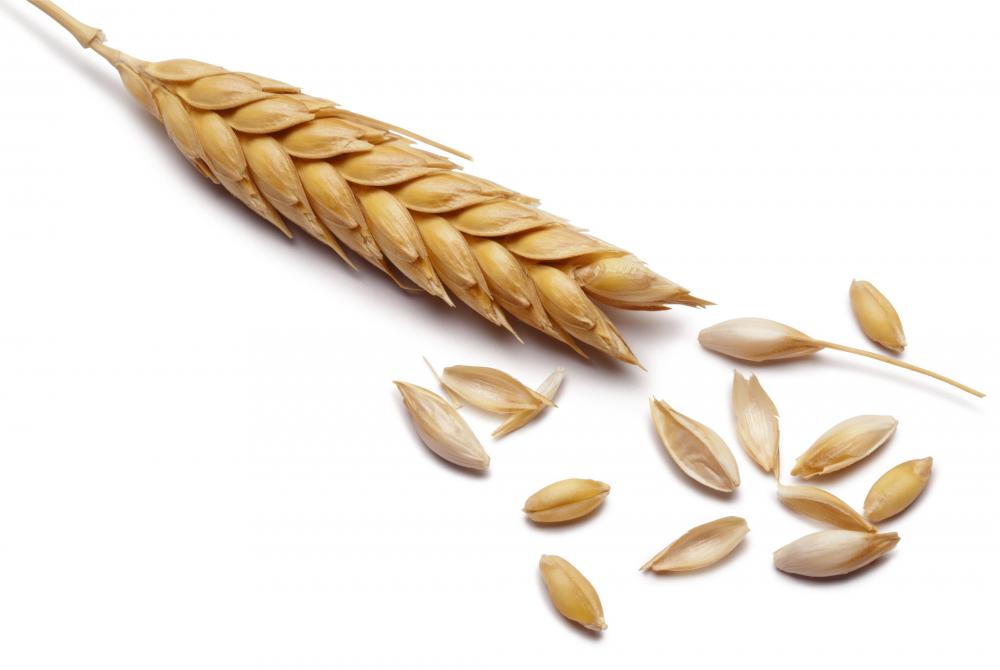
![Barley was a Neolithic founder crop.]() By: 1999istekBarley was a Neolithic founder crop.
By: 1999istekBarley was a Neolithic founder crop. -
![Chickpeas are a type of Neolithic founder crop.]()
Chickpeas are a type of Neolithic founder crop. -
![Peas are one of the Neolithic founder crops.]() By: sevenkPeas are one of the Neolithic founder crops.
By: sevenkPeas are one of the Neolithic founder crops. -
![Amber, which has been around since the Neolithic age.]() By: tadomaAmber, which has been around since the Neolithic age.
By: tadomaAmber, which has been around since the Neolithic age. -
![The first signs of human civilization are found in the Middle East.]() By: TRITOOTHThe first signs of human civilization are found in the Middle East.
By: TRITOOTHThe first signs of human civilization are found in the Middle East. -
![Stonehenge is an example of a megalithic structure that was built by a Neolithic culture.]() By: imactureStonehenge is an example of a megalithic structure that was built by a Neolithic culture.
By: imactureStonehenge is an example of a megalithic structure that was built by a Neolithic culture. -
![The Newgrange tombs in Ireland are a neolithic creation.]() By: phtphotoThe Newgrange tombs in Ireland are a neolithic creation.
By: phtphotoThe Newgrange tombs in Ireland are a neolithic creation.




Discussion Comments
A theory is not just a thought or idea. Those are called thoughts and ideas. A scientific theory must meet various criteria in order to qualify as such.
@anon69634: I do understand it and like you said, it's a theory, so it's just a thought or an idea so for me to believe in that would be plain stupidity.
I will listen to what you think is true to understand where you're coming from and your knowledge on the subject but I will never believe in it. As for me, I also believe in Jesus Christ and I will be happy to share him with you too if you're open to listening.
Seriously; thousands of years before Gregor Mendel, Neolithic (Stone Age) man created or cross-bred these edible grains? Read 'The Ascent of Man' by Jacob Bronoski, 1973
Great info for my essay! I had no idea what it was. I thought it was a war. Well, now I know!
Thank you it was very useful information for my test. Thanks- Anon
There's this notion that all happened all of a sudden, when it really took time, a long time for all things to develop. We're under the spell that it was always quick and instant as all appears to be around us, nowadays.
Thank you! This helped me organize the main ideas i needed to address in my chapter assignment. I didn't have to pick things out. Like the man below me said, short and sweet.
Love this site. It was short and sweet. Really helped me with my AP test studies. Thanks.
anon61265: believing or not you must understand the idea of evolution and its 'theory'. Although there is much proof that humans and apes have a common ancestors. They won't ask you about adam and eve in college/school.
Thanks a lot. This helped me a lot on my semester finals! Also to anon44363: humans did not change. Evolution is not true! We were created by the one true God!
this is called the neolithic revolution because it revolutionized today's way of life can be referred to by a cause and effect influence in our history.
Can anyone tell why the neolithic era is termed as Neolithic revolution instead of Neolithic culture?
Exactly what I was looking for, nice brief summary.
i have a lot of questions. hardly any of them were answered. this article needs more information and description.
Good article, but i know that what they did changed, but did humans change physically?
was it the neolithic revolution that started the modern civilization?
Great article. Well said.
great summary, thanks.
Great for a quick summary of the neolithic revolution...definitely summarizes efficiently in a short text.
What were the causes of the Neolithic Revolution? Why did these people suddenly stop hunting-gathering and change to farming/agriculture?
is the neolithic age a mistake in history? after all, this caused slavery, lowering in woman status and wars for possessions.
Does anyone know anything about the Agricultural Revolution around this whole time period too? its for some history project and i can't find it from around here only for the 18th century
This was a very good read. It helps me with my pre-test studies.
Post your comments